If there's one vegetable that likes to surprise gardeners, it's the courgette. One evening you pass a fruit that's still very young, and two days later it seems to have doubled in size! In season, harvesting quickly becomes a small ritual. And that's a good thing, because regularly picking courgettes is the best way to get an abundant crop.
You still need to know when to act and how to store these vegetables, which are as generous as they are delicate. Here are our tips to enjoy your courgettes from the vegetable garden for several days… or even several months.
When to harvest courgettes?
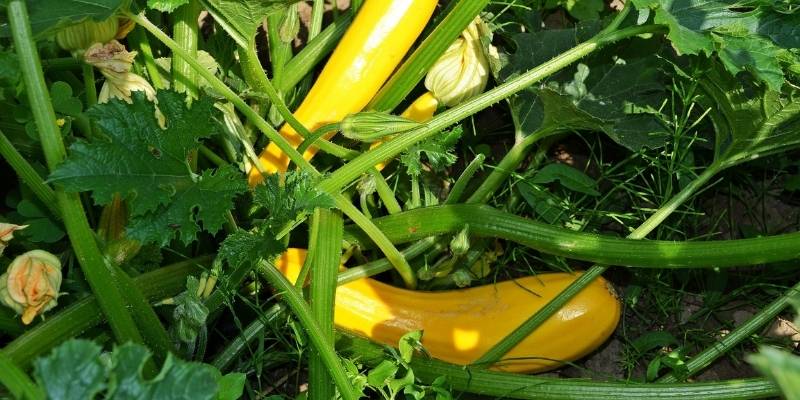
Harvesting courgettes generally starts from June to September, depending on planting date and growing conditions. It's tempting to let the fruits grow on the plant. However, a courgette picked young, when it measures about 15 to 20 cm, offers much more tender flesh, a thin skin and seeds that are still little developed. It's also at this stage that it is easiest to cook.
As a bonus, this regular harvesting encourages the plant to produce new flowers and then new courgettes. In summer, a quick visit to the vegetable garden every two or three days is usually enough to avoid unpleasant surprises.
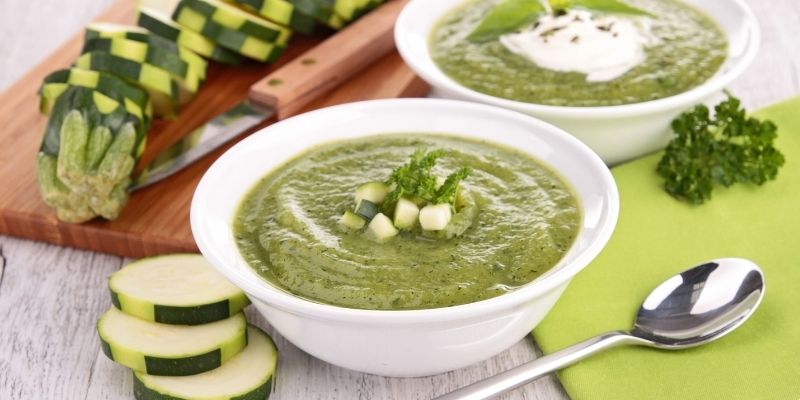
Of course, sometimes a courgette gets ahead and swells. Nothing serious: it will simply be better suited to soups, gratins or stuffed dishes than to a quick pan fry.
The right way to harvest courgettes
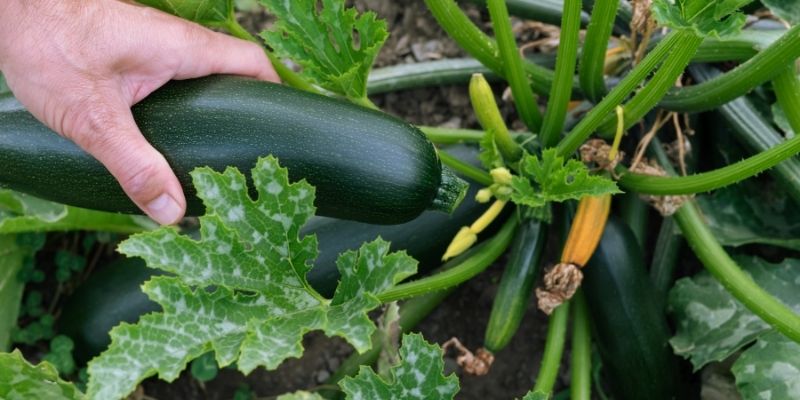
Don't pull on the fruit: courgette stems break easily. The simplest method is to use pruning shear or a clean, sharp knife to cut the stalk, leaving a few centimetres attached to the fruit.
If possible, harvest in dry weather. Courgettes freshly picked will store better and you'll reduce disease risk on the plant.
Take the opportunity to check the foliage. A yellowing or damaged leaf can be removed to improve air circulation around the plant.
How to store fresh courgettes?
Unlike winter squashes, courgettes are not meant to be kept for months. They can certainly be stored for 2 to 3 days at room temperature in the kitchen, but a little coolness can double that storage time.
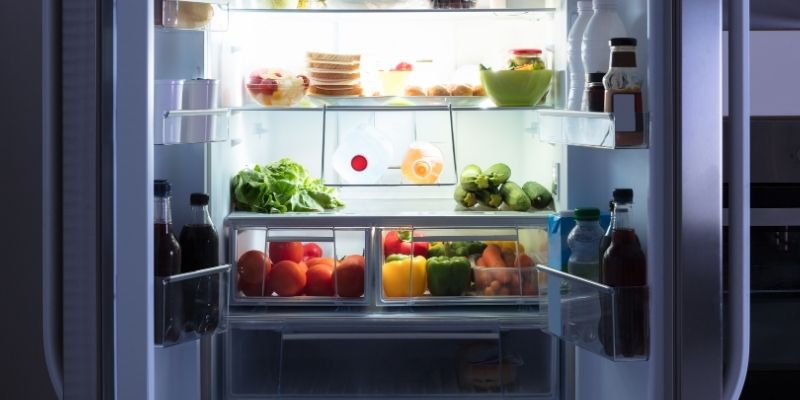
The crisper drawer of the fridge remains their best ally. Place them whole, without washing, and use within a week. They will thus retain their texture and flavour.
If you have a larder or cool cellar, between 10 and 15 °C, you can also keep them there for a few days. Simply avoid piling them up or sealing them in a plastic bag, where humidity accelerates deterioration.
When the harvests keep coming…
From July onwards, it's not uncommon for courgettes to arrive faster than you can cook them. Fortunately, they lend themselves very well to preservation.
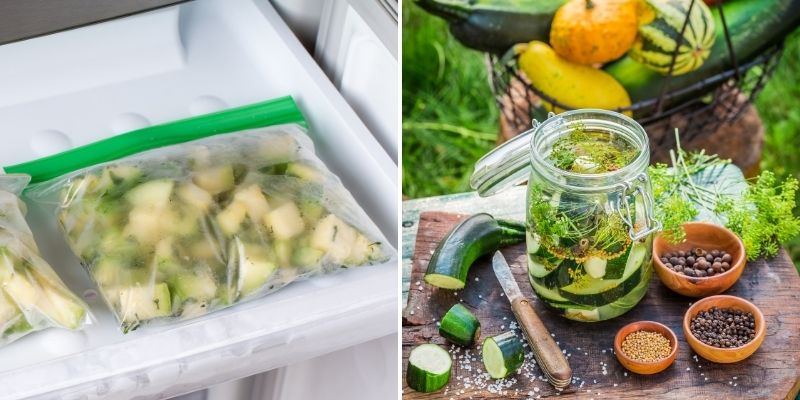
Freezing remains the simplest solution. Cut into slices or cubes, they can be used all winter in stir-fries, gratins or soups. Some gardeners blanch them for one minute before freezing to better preserve their texture, but this step is not essential.
Tip: If you've already frozen raw courgettes, you may have noticed they release a lot of water when cooked. That's perfectly normal: their flesh is very water-rich. To limit this effect, cook them straight from frozen without thawing or, better still, freeze them once prepared in soup, ratatouille or sauce. The result is generally much more flavourful and saves precious time at mealtimes.
Preserve enthusiasts can also make jars of cooked vegetables or marinated courgettes.
What about courgettes forgotten in the vegetable garden?
We've all known that courgette hidden under a leaf, discovered only when it looks more like a club than a vegetable! If its flesh is less fine and its seeds more developed, it remains perfectly edible. Once the seeds are removed, it easily finds its place in a soup, gratin or savoury cake.
You can also deliberately leave a few to fully ripen if you want to harvest your own seeds, provided you grow a non-hybrid variety.

































Comments