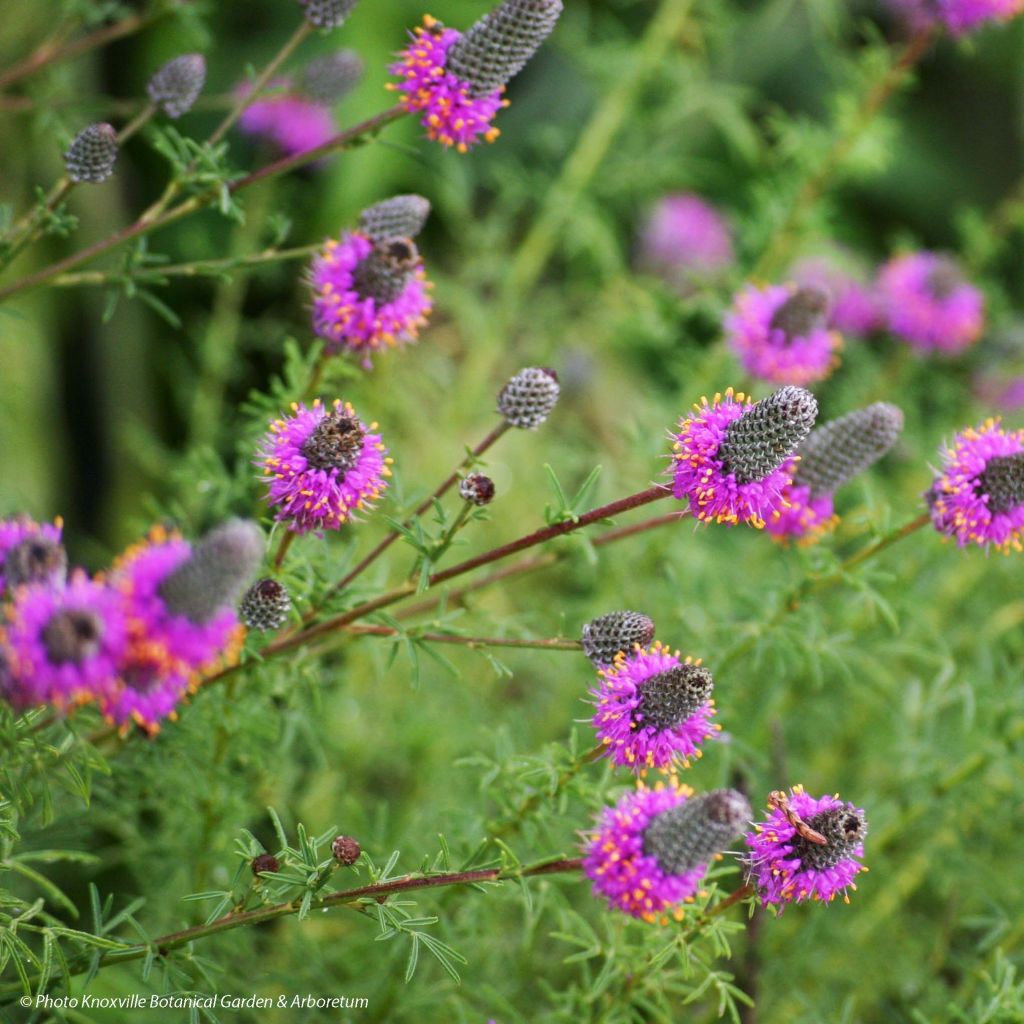
Dalea purpurea Stephanie
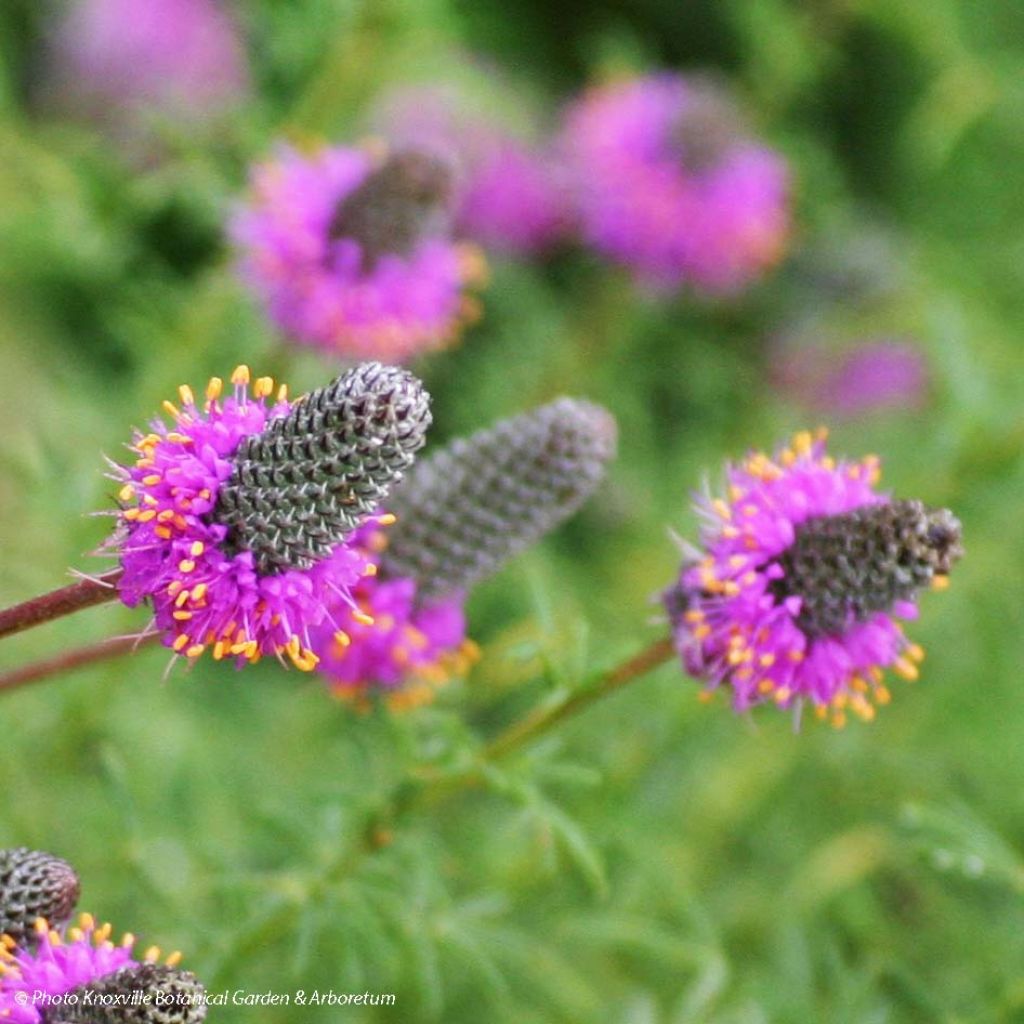
Dalea purpurea Stephanie
Dalea purpurea Stephanie
Dalea purpurea Stephanie
Purple Prairie Clover
The relatively mild frost (-5°C (23°F), thaw during the day) has blackened the buds. So far, the roots have not produced any new ones.
Julien B., 12/04/2018
Back-to-school special offer!
Get €10 off for every €50 you spend! And get up to €40 off on a single order.
How does it work?
1. Shop your favourites
Add your favourite plants to your basket. For every €50 you spend (excluding delivery charges, store credit and the plastic-free option), you’ll receive a €10 voucher.
€50 spent = €10 voucher
€100 spent = €20 voucher
€150 spent = €30 voucher
€200 spent = €40 voucher
2. Place your order
Once your basket reaches one of the spending thresholds, place your order. You can even choose your delivery date!
3. Receive your voucher
As soon as your order has been shipped, you’ll receive an email containing your personal voucher code and its value.
4. Use it on your next order
Your voucher is valid for 90 days from the date you receive it. It can be used once only, on a new order worth at least the value of the voucher, excluding delivery charges.
Please note: Vouchers can be combined with other offers, but cannot be split or refunded.
Why not try an alternative variety in stock?
View all →
Available in 0 sizes
Available in 1 sizes
Available in 1 sizes
Available in 1 sizes
Available in 1 sizes
Available in 1 sizes
Available in 1 sizes
Available in 1 sizes
Available in 1 sizes
Available in 1 sizes
This plant carries a 12 months recovery warranty
More information
We guarantee the quality of our plants for a full growing cycle, and will replace at our expense any plant that fails to recover under normal climatic and planting conditions.
Would this plant suit my garden?
Set up your Plantfit profile →
Description
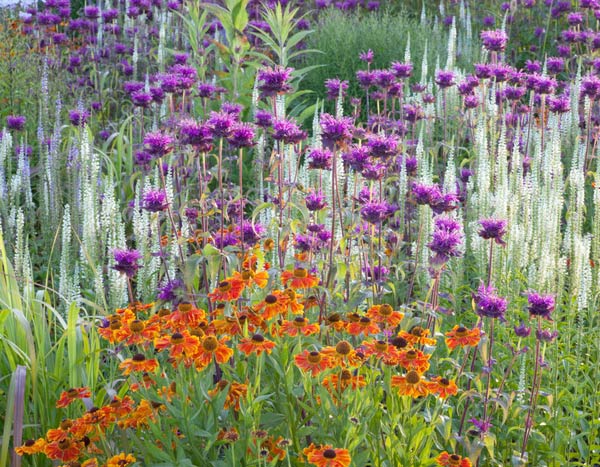
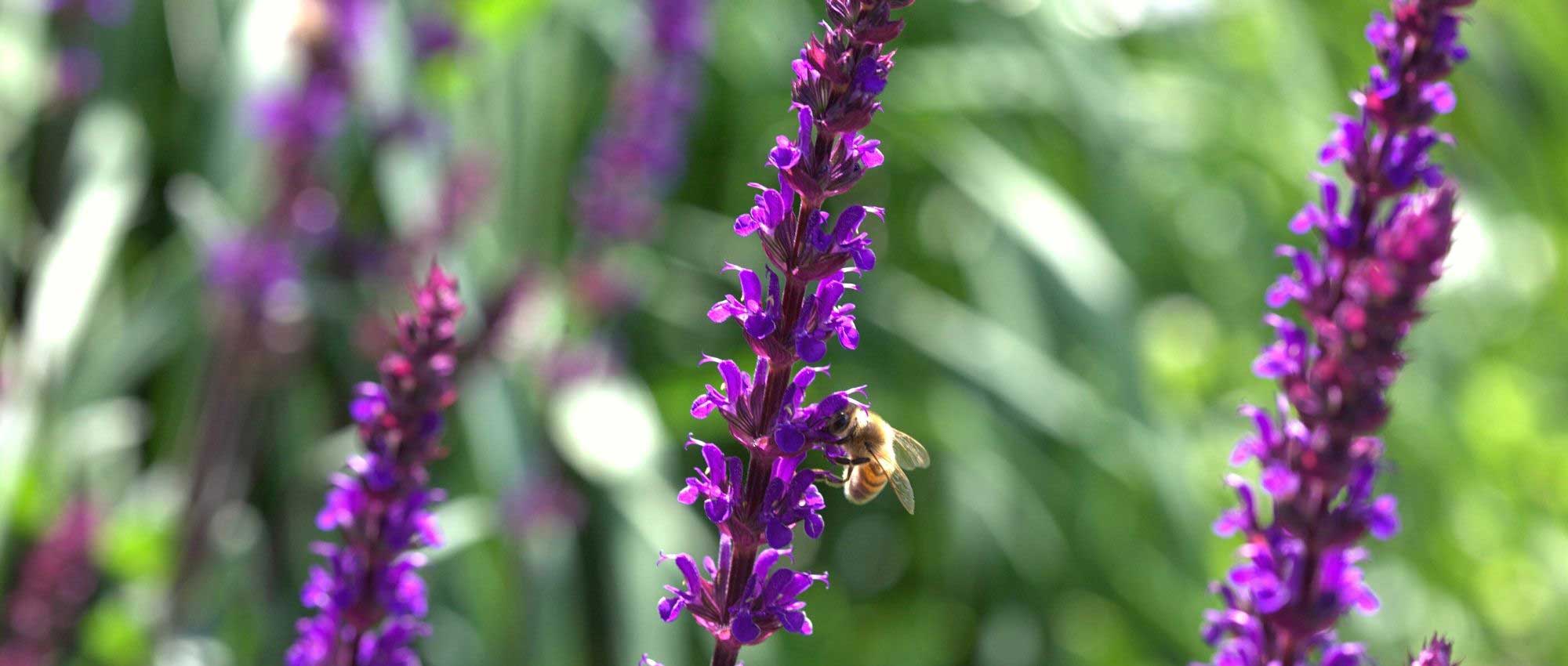
Dalea purpurea 'Stephanie', also known as Petalostemon purpureus, is a beautiful improvement of a wild perennial plant native to the great plains of the United States. Little known, this cousin of alfalfa forms a vigorous bushy clump, endowed with remarkable adaptability and a very pretty summer flowering in pink-purple, very melliferous and reminiscent of the spikes of certain lavenders. With a deep root system, very hardy, it enriches the soil that welcomes it and adapts equally well to temporarily waterlogged or dry situations in summer. Its main enemy is shade.
Dalea purpurea 'Stephanie' is a more compact, denser and more floriferous selection of a botanical species belonging to the Fabaceae family, also known as Kuhnistera violacea. In nature, it is found spontaneously in a large part of North America (except for the West Coast of the U.S.A), growing in various very sunny environments, from the floodplains of rivers to the sandy hills of Nebraska, passing through the large prairies and forest clearings, among the tall grasses, without fuss, perfectly enduring the cold and dry summers.
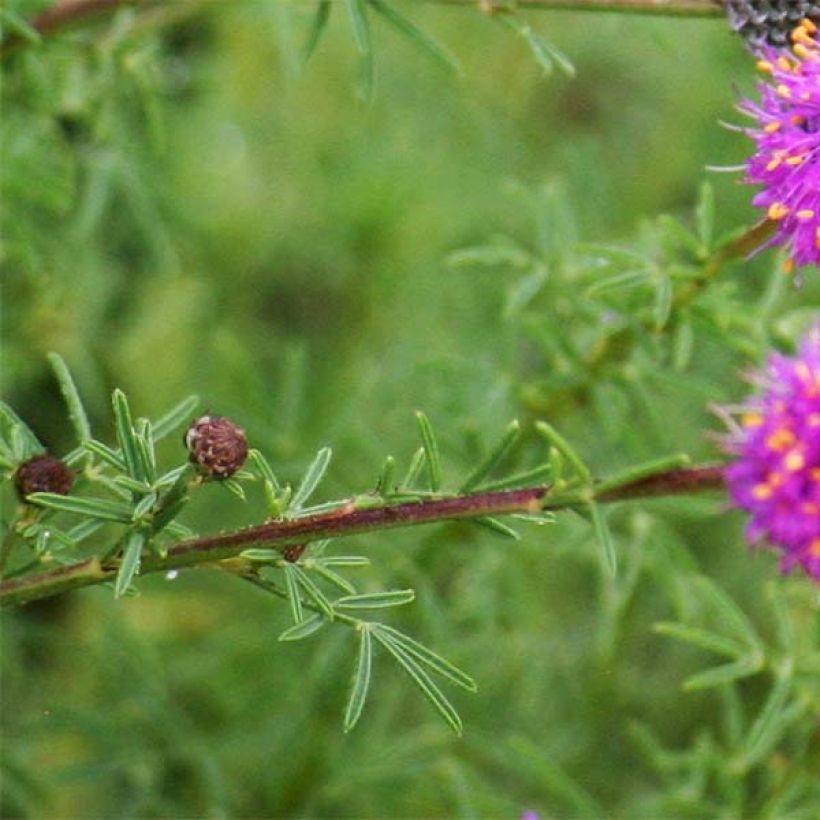
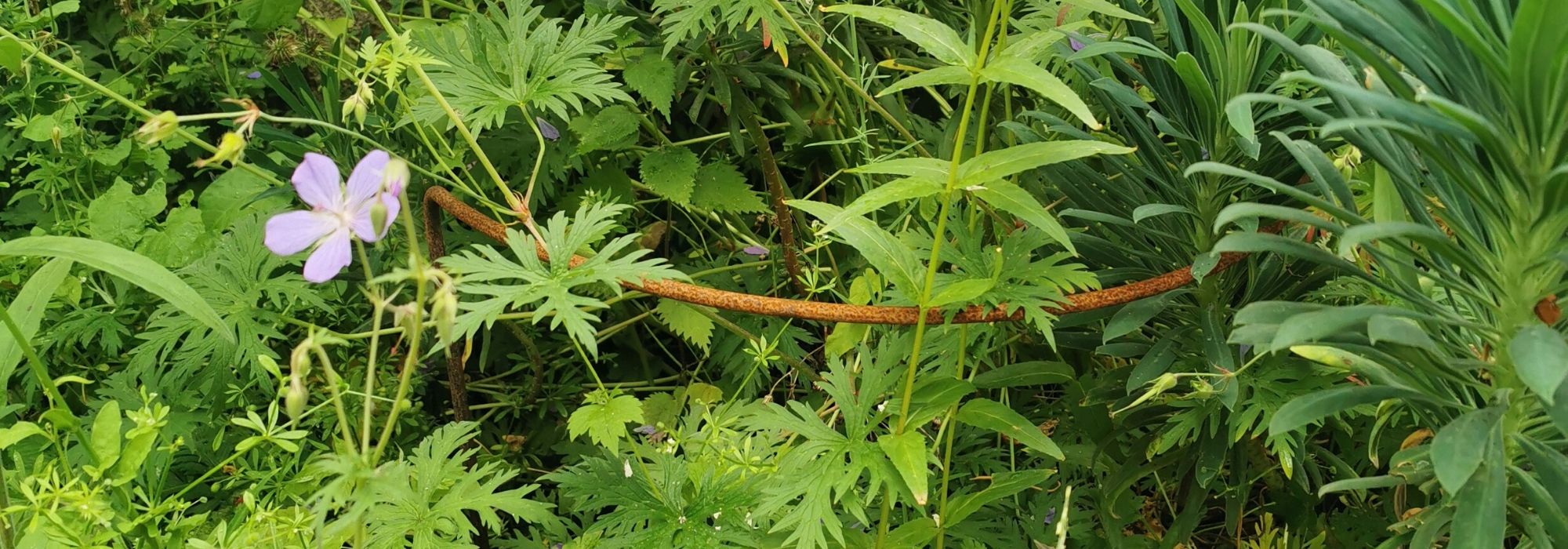
The 'Stephanie' variety, recently introduced to the market, forms a semi-woody and branched bushy clump, with a rather spreading habit, reaching a minimum height of 40cm (16in) and a diameter of 50cm (20in). The flowering takes place from June to August, in the form of numerous and curious conical spikes covered with tiny nectar-rich flowers. The colour, a bright pink-purple, is enhanced by golden stamens. The flowers generally open from the bottom to the top of the spike. The foliage, which disappears in winter, is composed of small, thick leaves, divided into three to 7 very narrow leaflets, 3-4cm (1-2in) long. This plant develops from a particular root system, which dives very deeply (up to 2m (7ft)) into the soil to draw and transform nutrients thanks to the presence of symbiotic bacteria housed in small nodules. Like all Fabaceae, this Dalea contributes to enriching the soil that welcomes it.
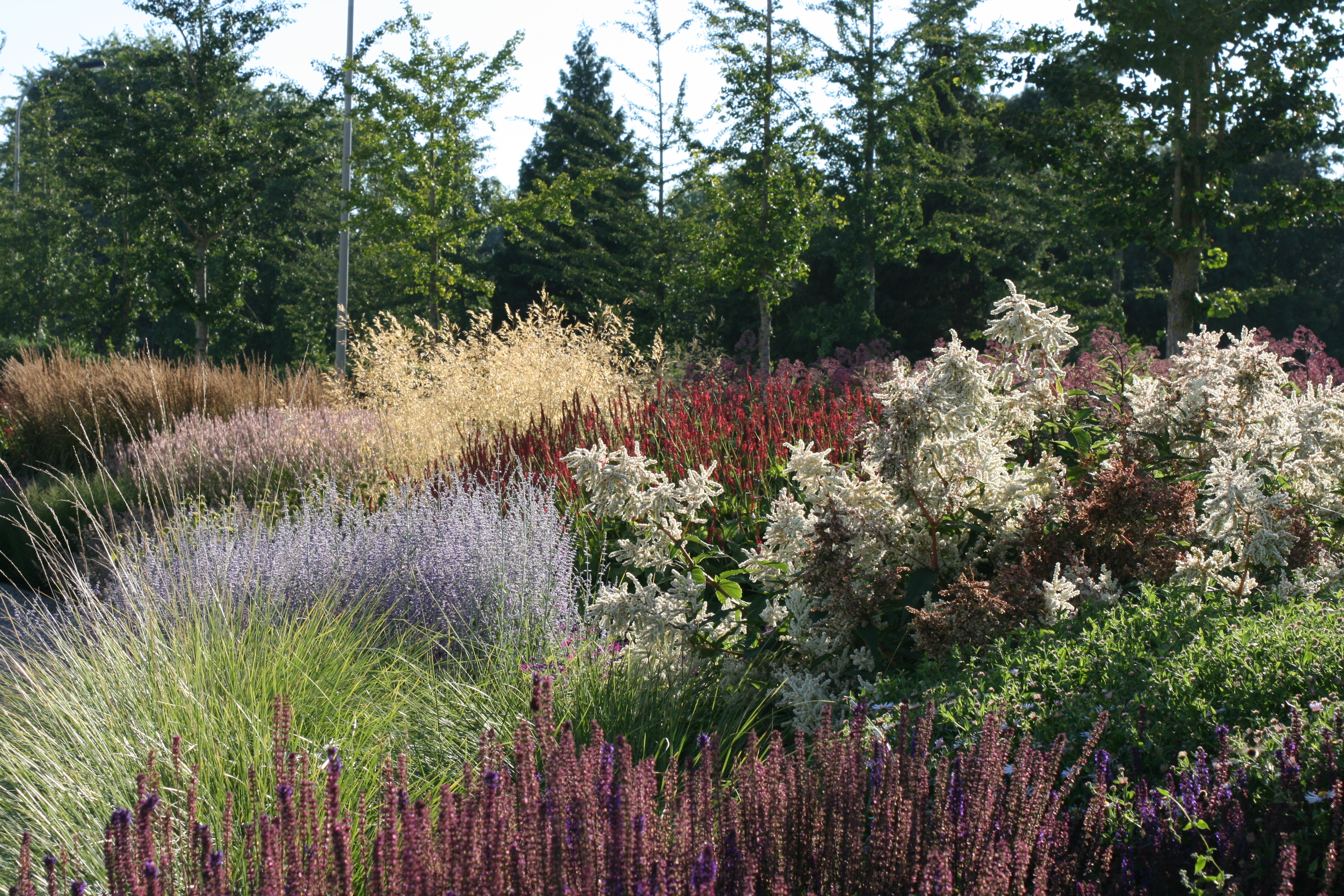
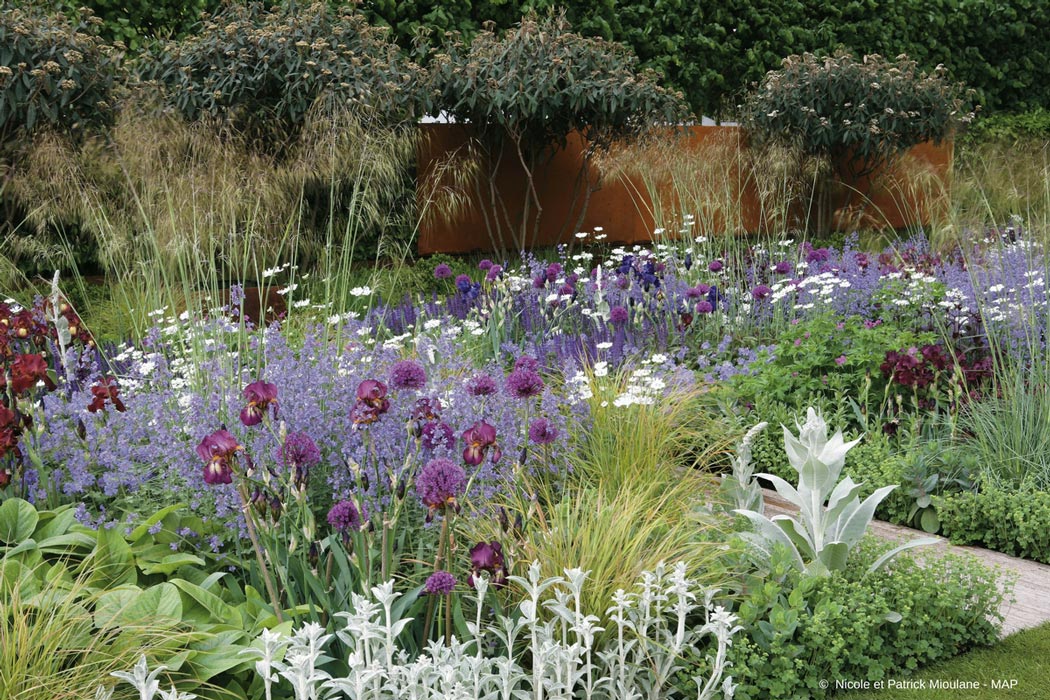
Dalea is closely related to Baptisia, sainfoin and lupins, plants considered as green manure and soil fixers, even in degraded conditions. They are not demanding in terms of soil and moisture, but they are completely intolerant to shade. Dalea purpurea 'Stephanie' will find its place in a romantic garden, a dry garden, or on the edge of a pond, in natural and rural flowerbeds. It is also useful for decorating a degraded plot of land, which often surrounds a recently built house. It looks stunning in the company of landscape roses, blue or white lavenders, Baptisias, or Allium bulgaricum. It also pairs perfectly with Amorpha canescens, Symphyotrichum sericeum (silky aster), or large American grasses such as Schizachyrium scoparium, Andropogon gerardi, and Panicum virgatum, all equally spectacular and easy to grow.
Dalea purpurea is used for the revegetation of sterile soils and erosion prevention. Its foliage is good fodder for livestock. It was once used to prepare a tea, and its roots were also consumed, while its branches were used as brooms.
Report an error about the product description
Dalea purpurea Stephanie in pictures
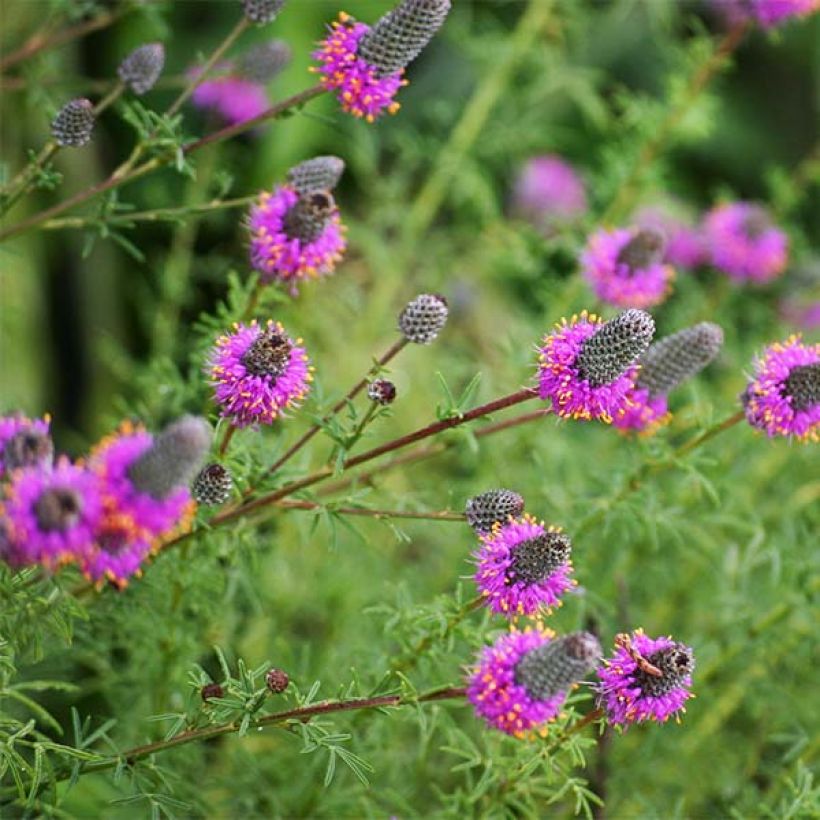
Flowering
Foliage
Plant habit
Botanical data
Dalea
purpurea
Stephanie
Fabaceae
Purple Prairie Clover
Cultivar or hybrid
Planting and care
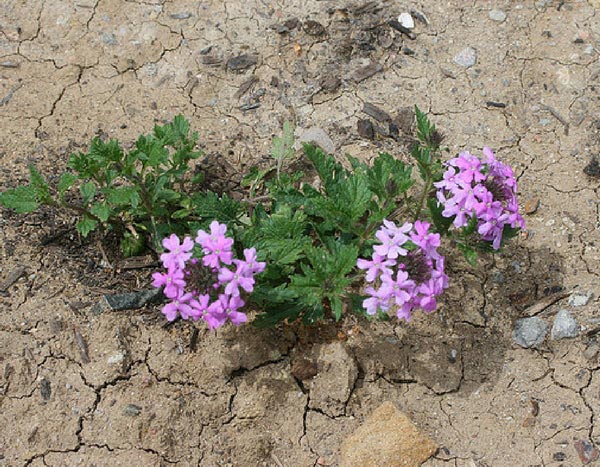
The cultivation of 'Stephanie' Dalea purpurea does not present any particular difficulty, as this plant tolerates a wide diversity of soils and climates. However, its strong taproot does not appreciate transplanting; therefore, its location should be carefully chosen, ideally in full sunlight, to allow the plant to establish itself and avoid further disturbance.
In the first year of cultivation, the plant may appear to be vegetating, which is normal as its root system spreads deeply into the soil. Add a small handful of phosphate fertilizer (a root stimulant) that you will mix with the soil at the time of planting. Add 1/3 sand and 1/3 gravel to heavy soil to ensure good drainage. Water moderately in the first year. In the second year, the plant will be established, requiring no special care, and will be able to flower abundantly for many years!
Planting period
Intended location
Care
Planting & care advice
-
-
-
-
-
-
-
-
-
, onOrder confirmed
Reply from on Promesse de fleurs
Recently viewed products
Haven't found what you were looking for?
Hardiness is the lowest winter temperature a plant can endure without suffering serious damage or even dying. However, hardiness is affected by location (a sheltered area, such as a patio), protection (winter cover) and soil type (hardiness is improved by well-drained soil).

The flowering period indicated on our website applies to countries and regions located in USDA zone 8 (France, the United Kingdom, Ireland, the Netherlands, etc.)
It will vary according to where you live:- In zones 9 to 10 (Italy, Spain, Greece, etc.), flowering will occur about 2 to 4 weeks earlier.
- In zones 6 to 7 (Germany, Poland, Slovenia, and lower mountainous regions), flowering will be delayed by 2 to 3 weeks.
- In zone 5 (Central Europe, Scandinavia), blooming will be delayed by 3 to 5 weeks.
In temperate climates, pruning of spring-flowering shrubs (forsythia, spireas, etc.) should be done just after flowering.
Pruning of summer-flowering shrubs (Indian Lilac, Perovskia, etc.) can be done in winter or spring.
In cold regions as well as with frost-sensitive plants, avoid pruning too early when severe frosts may still occur.
The planting period indicated on our website applies to countries and regions located in USDA zone 8 (France, United Kingdom, Ireland, Netherlands).
It will vary according to where you live:
- In Mediterranean zones (Marseille, Madrid, Milan, etc.), autumn and winter are the best planting periods.
- In continental zones (Strasbourg, Munich, Vienna, etc.), delay planting by 2 to 3 weeks in spring and bring it forward by 2 to 4 weeks in autumn.
- In mountainous regions (the Alps, Pyrenees, Carpathians, etc.), it is best to plant in late spring (May-June) or late summer (August-September).
The harvesting period indicated on our website applies to countries and regions in USDA zone 8 (France, England, Ireland, the Netherlands).
In colder areas (Scandinavia, Poland, Austria...) fruit and vegetable harvests are likely to be delayed by 3-4 weeks.
In warmer areas (Italy, Spain, Greece, etc.), harvesting will probably take place earlier, depending on weather conditions.
The sowing periods indicated on our website apply to countries and regions within USDA Zone 8 (France, UK, Ireland, Netherlands).
In colder areas (Scandinavia, Poland, Austria...), delay any outdoor sowing by 3-4 weeks, or sow under glass.
In warmer climes (Italy, Spain, Greece, etc.), bring outdoor sowing forward by a few weeks.
Shipping country and language
Your country of residence may be:
Your country of residence is:
For a better user experience on our website, you can select:
Your shipping country:
-
 Austria
-
 Belgium
-
 Bosnia & Herzegovina
-
 Bulgaria
-
 Croatia
-
 Cyprus
-
 Czechia
-
 Denmark
-
 Estonia
-
 Finland
-
 France
-
 Germany
-
 Greece
-
 Hungary
-
 Iceland
-
 Ireland
-
 Italy
Italy
-
 Latvia
-
 Liechtenstein
-
 Lithuania
-
 Luxembourg
-
 Malta
Malta
-
 Netherlands
-
 Poland
-
 Portugal
-
 Romania
-
 Serbia
-
 Slovakia
-
 Slovenia
-
 Spain
Spain
-
 Sweden
-
 Switzerland
Language:
-
French
-
 English
-
Spanish
-
Italian
-
German
-
Portuguese
-
Dutch
-
Finnish
My Account
Hello
My wish lists
My cart
Log in / Register
Existing customer?
This form is protected by reCAPTCHA - the Google Privacy Policy and Terms of Service apply.
New customer?
Create an account to track your orders, access our customer service and, if you wish, make the most of our upcoming offers.