Petasites hybridus
Petasites hybridus
Petasites hybridus
Petasites hybridus
Petasites hybridus
Petasites hybridus
Petasites hybridus
Petasites hybridus
Petasites hybridus
Petasites hybridus
Petasites hybridus
Petasites hybridus
Butterbur, Bog Rhubarb, Devil's Hat, Pestilence Wort
Attention once this young plant is established, if it thrives, it becomes very invasive and almost indestructible; the roots go down very deep into the soil (more than 40 cm (16in)), when you try to pull them out, they break and multiply; moreover, the roots/rootstocks are running; I have recovered some on a purchased land and for more than two years I have been trying to get rid of it because it had been planted in the wrong place by the previous owners, mission impossible.
Hortense, 30/03/2019
Back-to-school special offer!
Get €10 off for every €50 you spend! And get up to €40 off on a single order.
How does it work?
1. Shop your favourites
Add your favourite plants to your basket. For every €50 you spend (excluding delivery charges, store credit and the plastic-free option), you’ll receive a €10 voucher.
€50 spent = €10 voucher
€100 spent = €20 voucher
€150 spent = €30 voucher
€200 spent = €40 voucher
2. Place your order
Once your basket reaches one of the spending thresholds, place your order. You can even choose your delivery date!
3. Receive your voucher
As soon as your order has been shipped, you’ll receive an email containing your personal voucher code and its value.
4. Use it on your next order
Your voucher is valid for 90 days from the date you receive it. It can be used once only, on a new order worth at least the value of the voucher, excluding delivery charges.
Please note: Vouchers can be combined with other offers, but cannot be split or refunded.
Home or relay delivery (depending on size and destination)
Important: You may be charged customs duties by your country’s customs authorities upon delivery.
Schedule delivery date,
and select date in basket
This plant carries a 12 months recovery warranty
More information
We guarantee the quality of our plants for a full growing cycle, and will replace at our expense any plant that fails to recover under normal climatic and planting conditions.

Would this plant suit my garden?
Set up your Plantfit profile →
Description
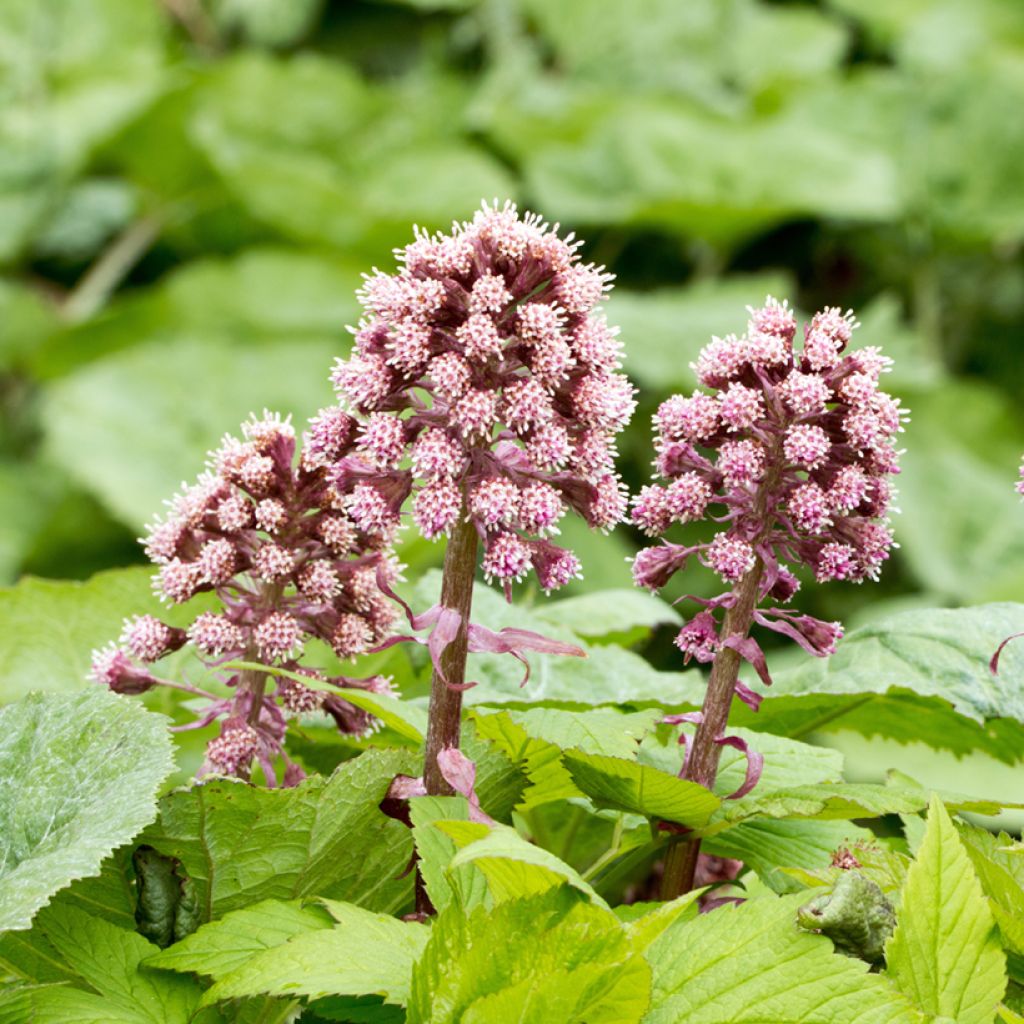
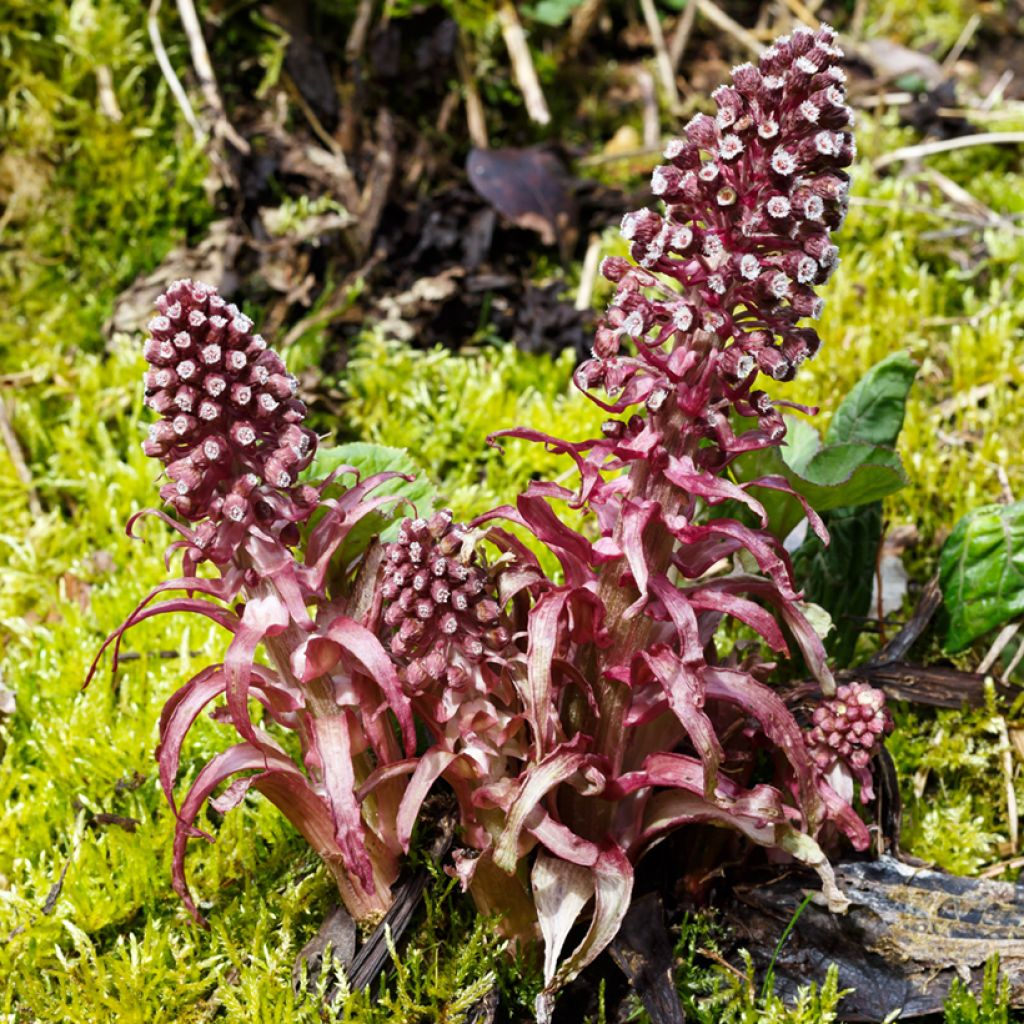
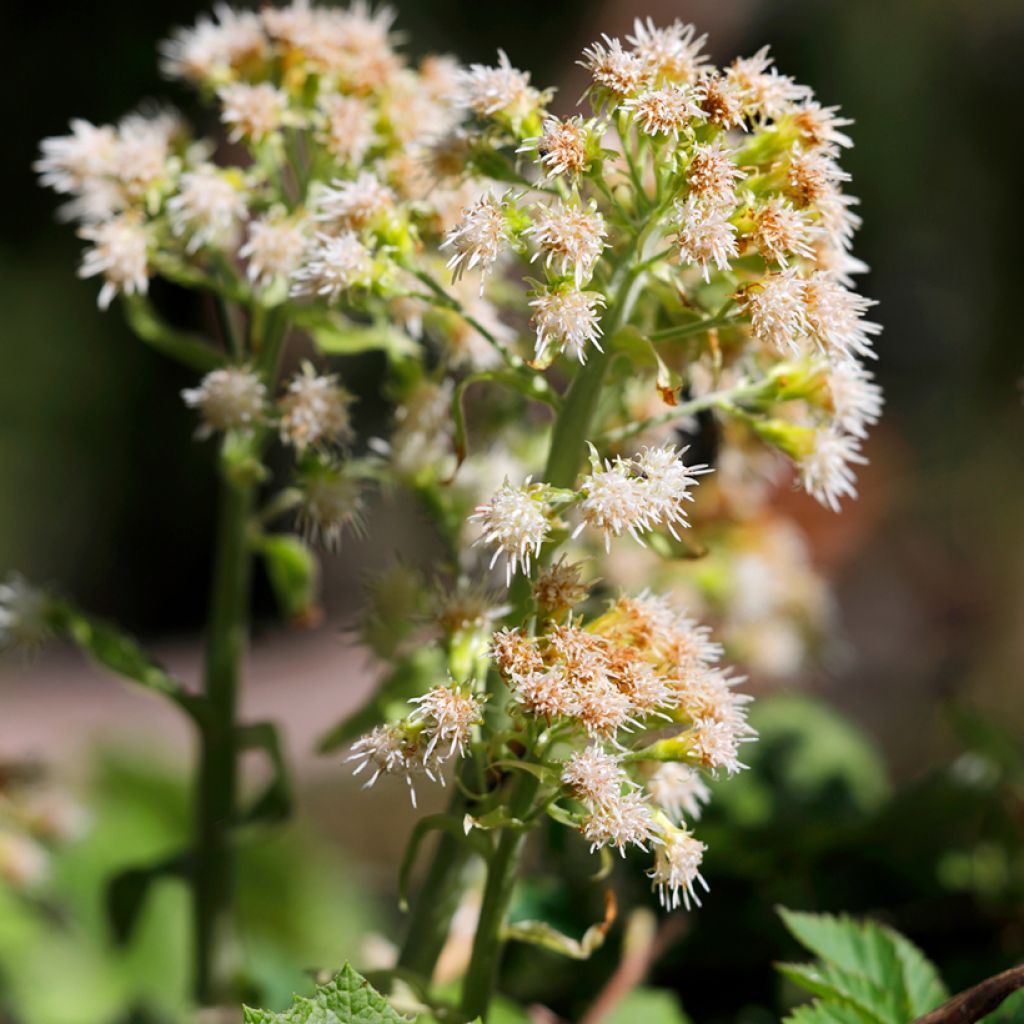
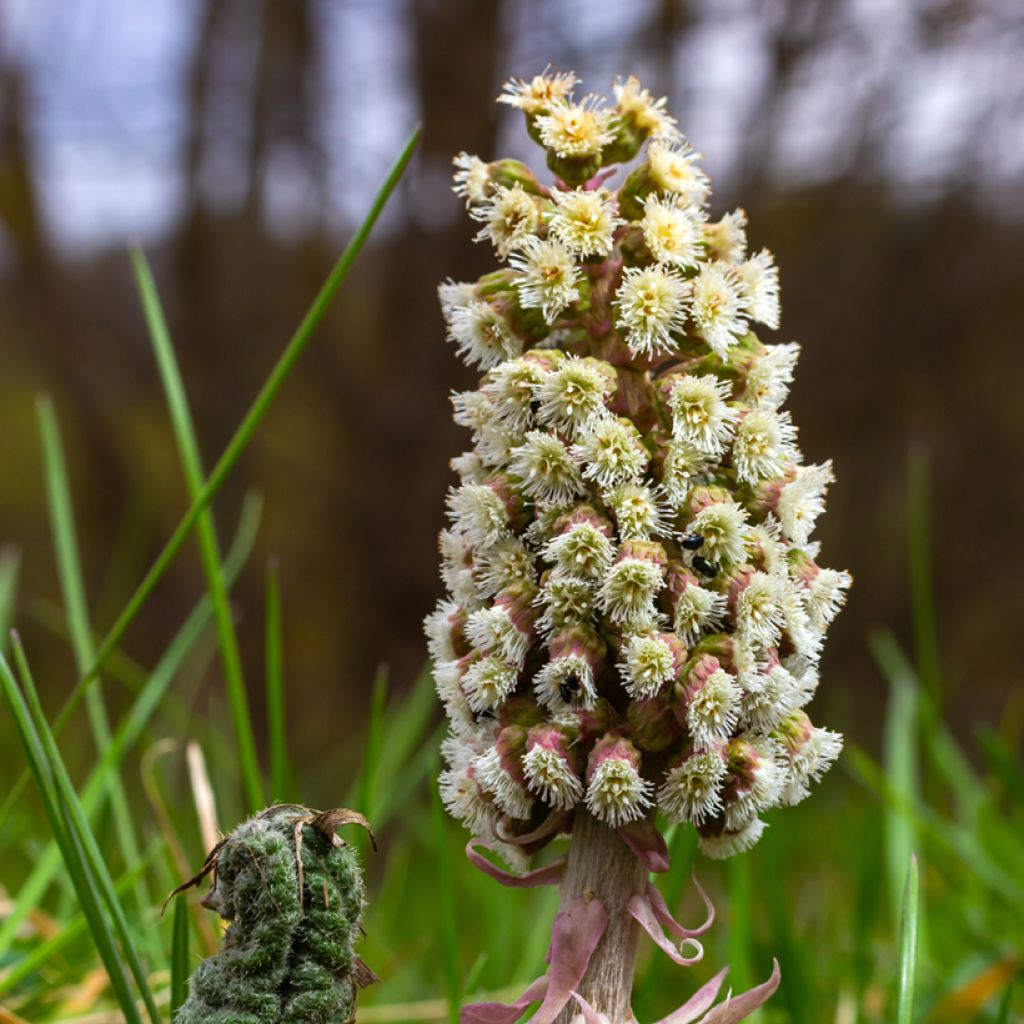
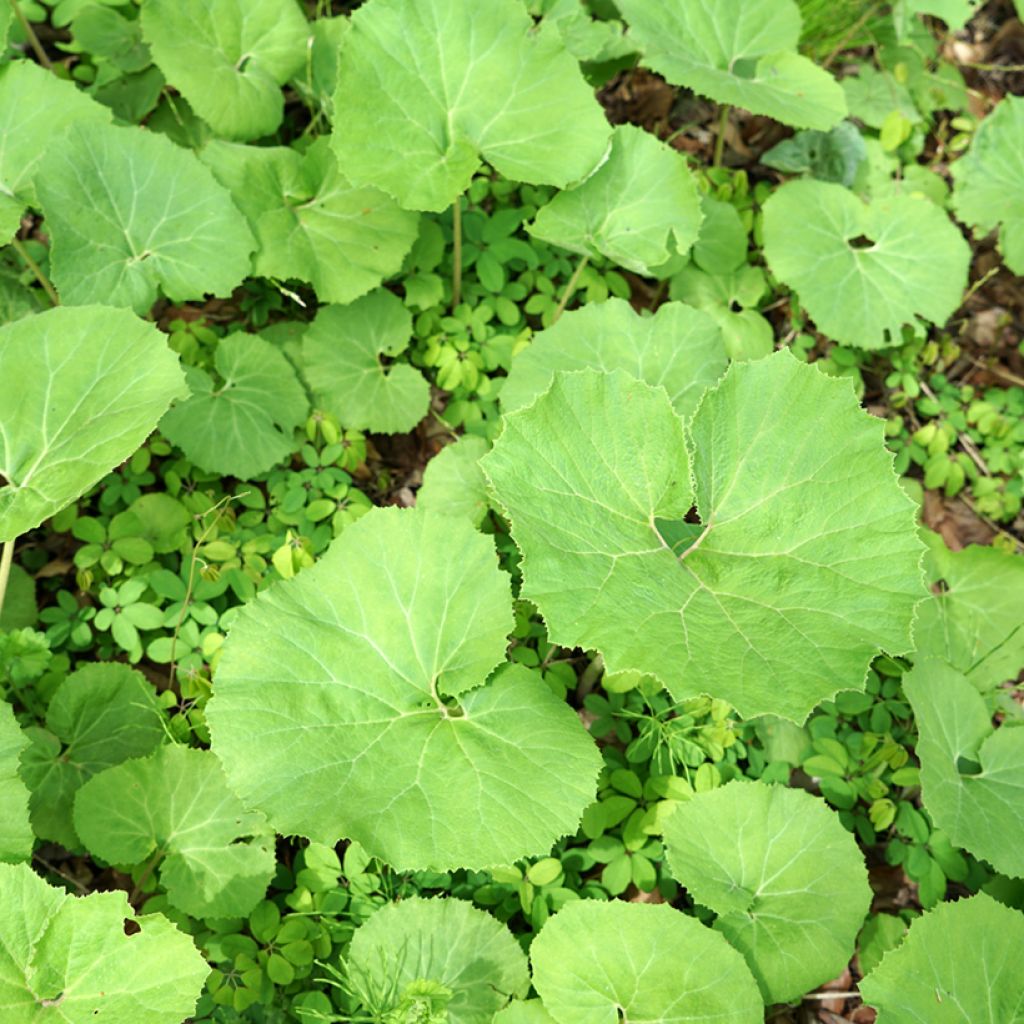
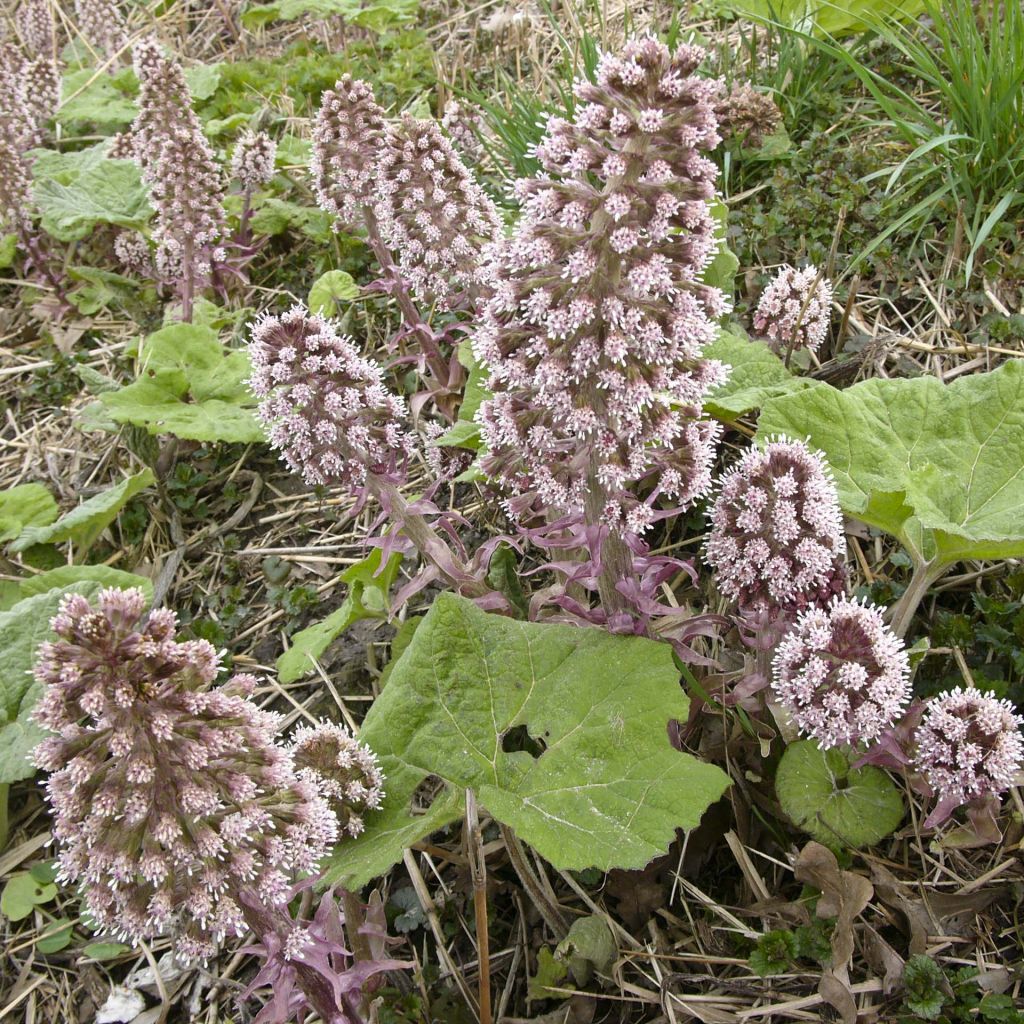
The Petasites hybridus, also known as Butterbur or Hybrid Butterbur, is a vigorous perennial that thrives in damp and shaded environments. This rhizomatous ground cover lacks neither charm when its fragrant flowering blooms nor remarkable vigour that allows it to dominate the soil of a cool understory. In early spring, its rounded and stout inflorescences appear, unfolding into purple spikes adorned with tiny pink heads, emitting a delightful vanilla scent. The flowering is followed by the emergence of huge heart-shaped leaves, flexible and soft, with a matte green colour. Useful for filling in less favourable areas of a large garden, its tendency to spread must be controlled. This plant prefers moist to wet, non-chalky soils and dislikes intense sunlight.
The Petasites hybridus, formerly known as Petasites officinalis, is a common plant in France, especially in the east of the country. This herbaceous perennial is also known as Sweet Coltsfoot, Giant Coltsfoot, Common Butterbur, Devil's Hat, Pestilent Herb, or Marsh Rhubarb. It originates from North Africa, Western Asia, Southeast Asia, and Europe, where its habitat includes various wet locations such as riverbanks, ravines, forests, and plains, up to an altitude of about 1200m (3937ft).
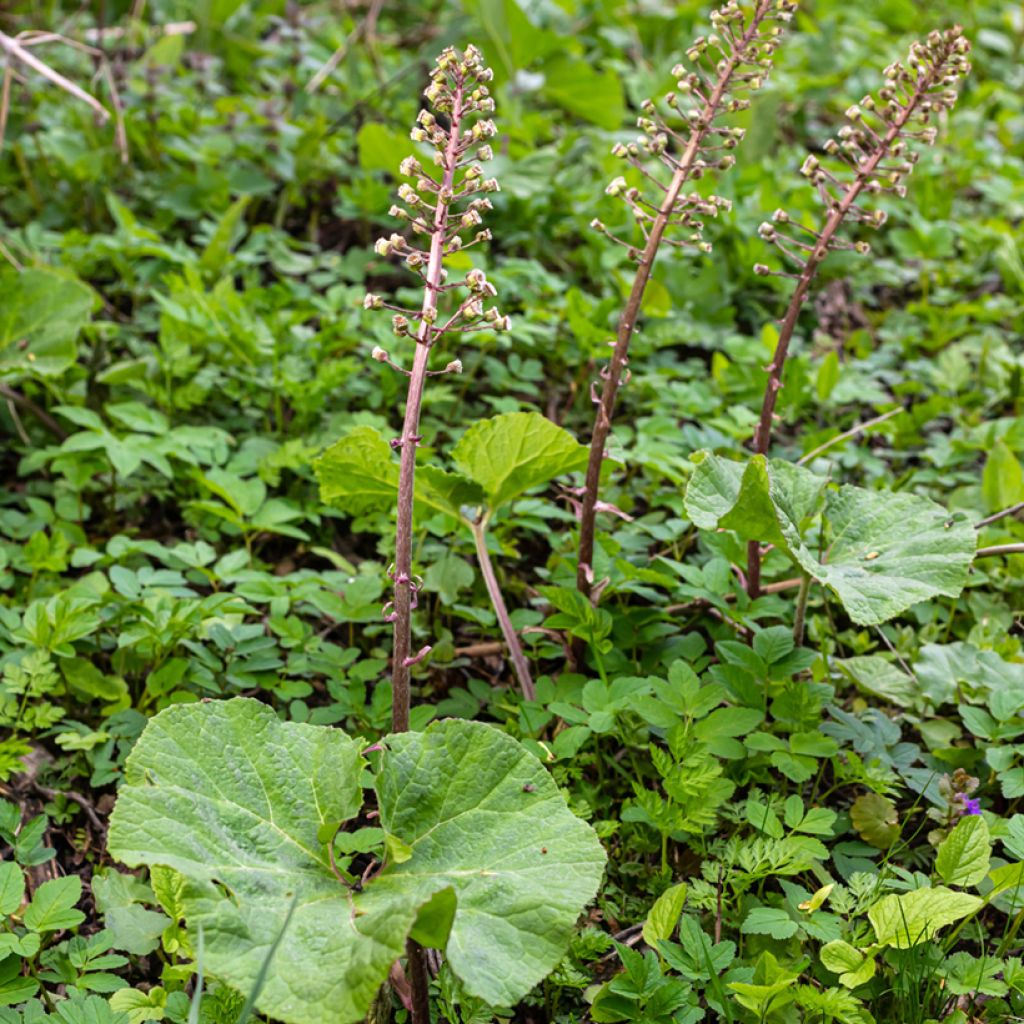
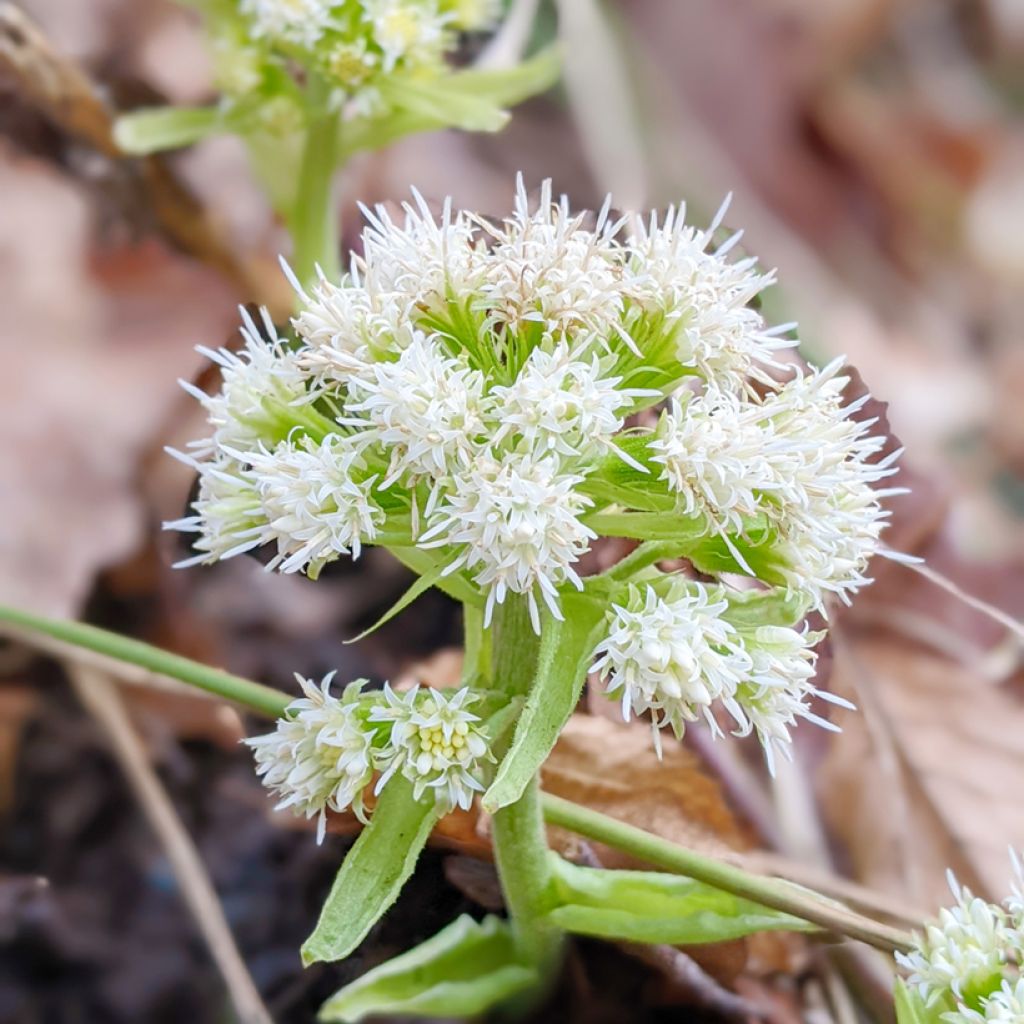
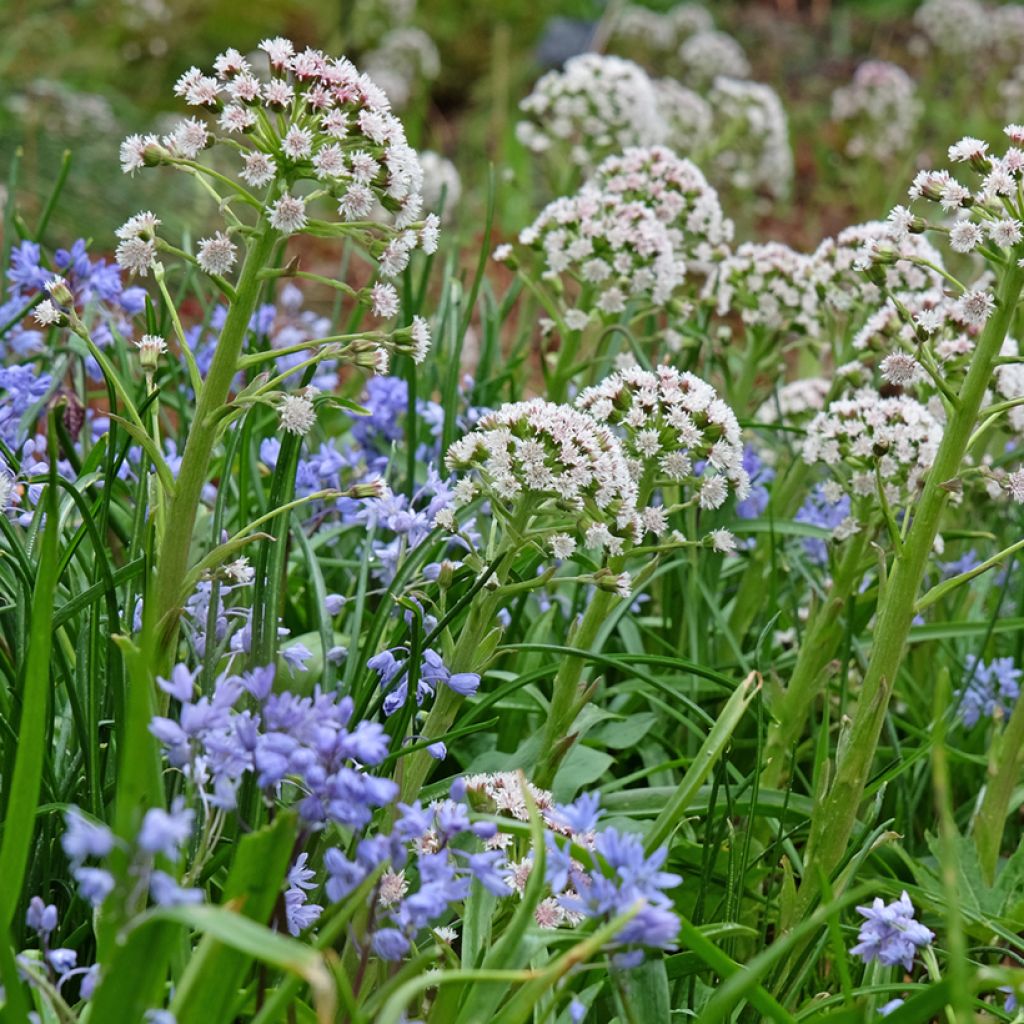
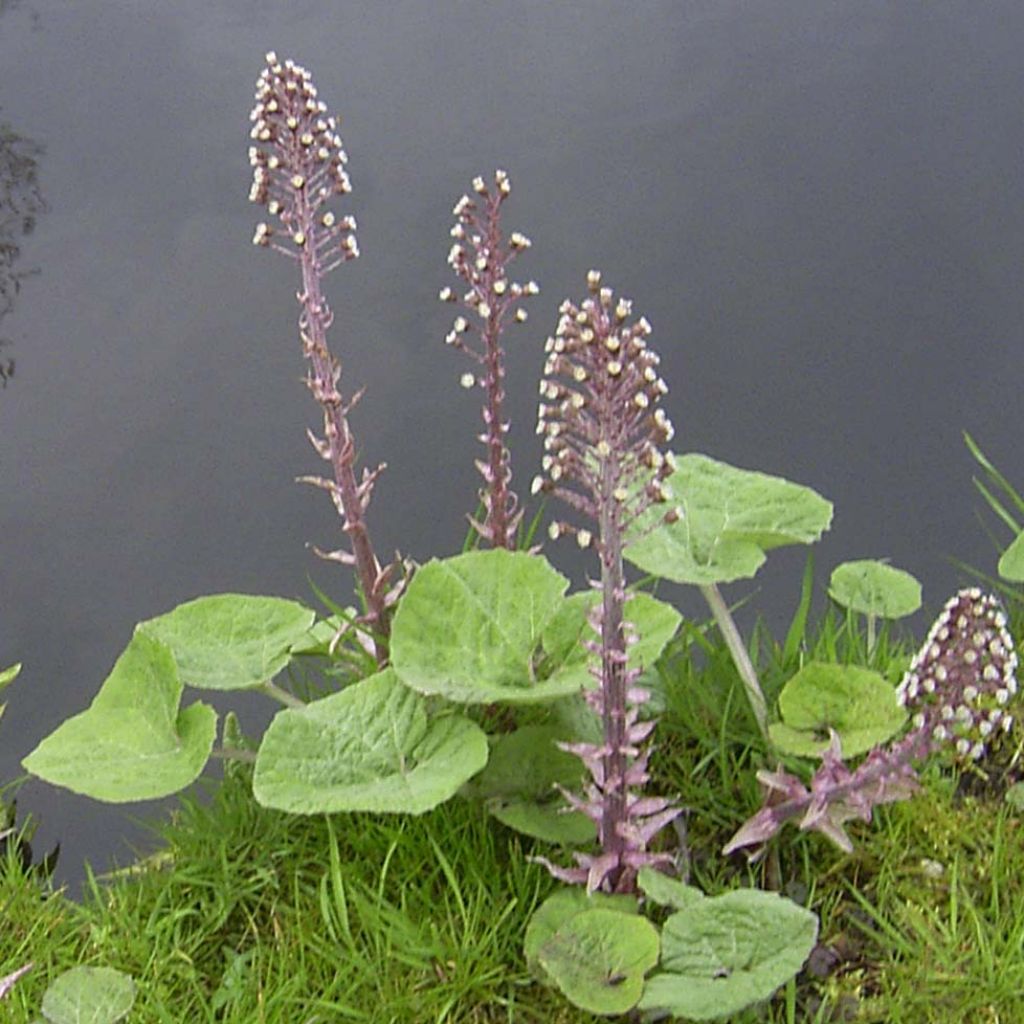
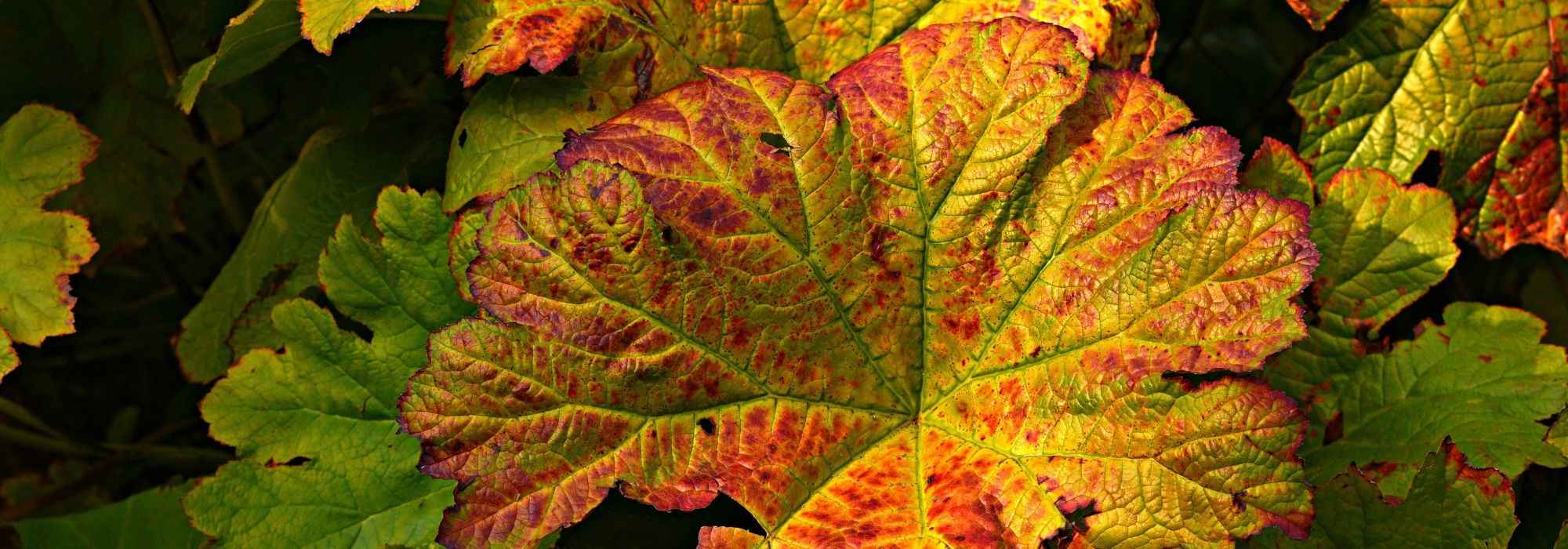
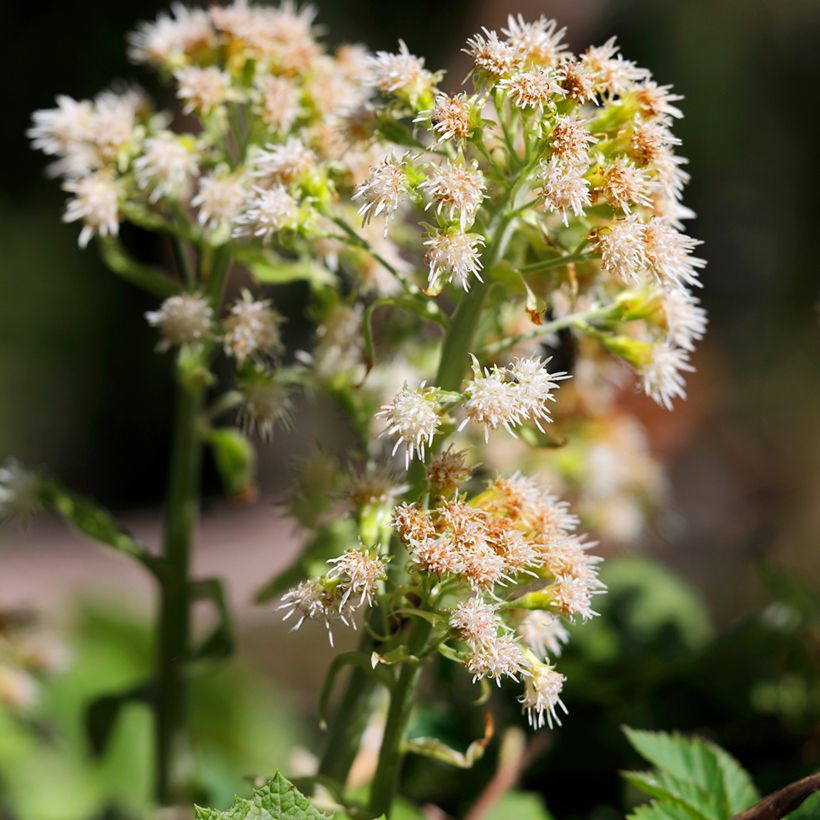
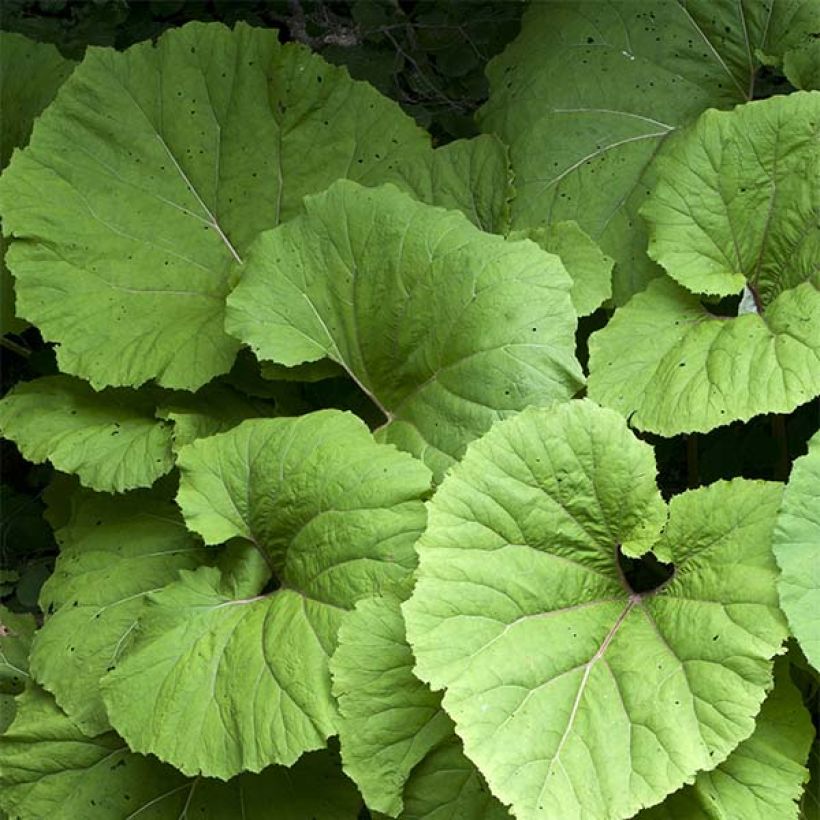
The Giant Butterbur forms a strongly carpeting clump reaching 10 to 25 cm (4 to 10in) in flower but spreading indefinitely through its robust creeping rhizome. The plant is dioecious, meaning there are separate male and female plants. Both categories of individuals flower simultaneously, from March to April, before the leaves appear. Emerging from purple bracts, the inflorescence emerges from the ground. Its shape is that of an oval cluster, 10 to 25 cm (4 to 10in) tall. It consists of small female or male heads gathered in panicles. The flowers emit a delightful, sweet scent reminiscent of vanilla. The deciduous foliage appears later. It comprises spectacular leaves with a rounded lamina, slightly soft and woolly on the underside, reaching 50 cm (20in) to 1 meter (3 feet) in diameter! Their colour is a matte grey-green on the upper side, with a dentate margin and a long petiole.
The Hybrid Butterbur is a valuable plant that brings a lush and fragrant touch to the borders of a very large garden to cover a ditch or even a neglected, very humid understory. Its fragrance will waft into the garden's more 'civilised' areas. However, care must be taken to ensure it does not exceed the allotted boundaries, as it disregards property lines and neighbourly rules. As it loves humidity and dislikes direct sunlight, it can be easily contained by creating a dry rockery in its path, where the sun prevails over shade. It can be paired with Snowdrops, Solomon's Seals, and well-established Peonies.
Properties:
The Giant Coltsfoot is also a medicinal plant. Its leaves, roots, and rhizomes are used to extract an essential oil used in phytotherapy (detoxifying extract) to treat, among other things, allergic rhinitis (hay fever). Its rhizome is also rich in active ingredients used in preparations to treat migraines (currently being clinically studied in several countries). In traditional pharmacopoeias, the leaves were commonly used in poultices to cleanse and promote healing wounds and ulcers and treat burns. The flowers have medicinal properties that have been prescribed since ancient times to treat respiratory ailments such as coughs and asthma.
Petasites hybridus in pictures
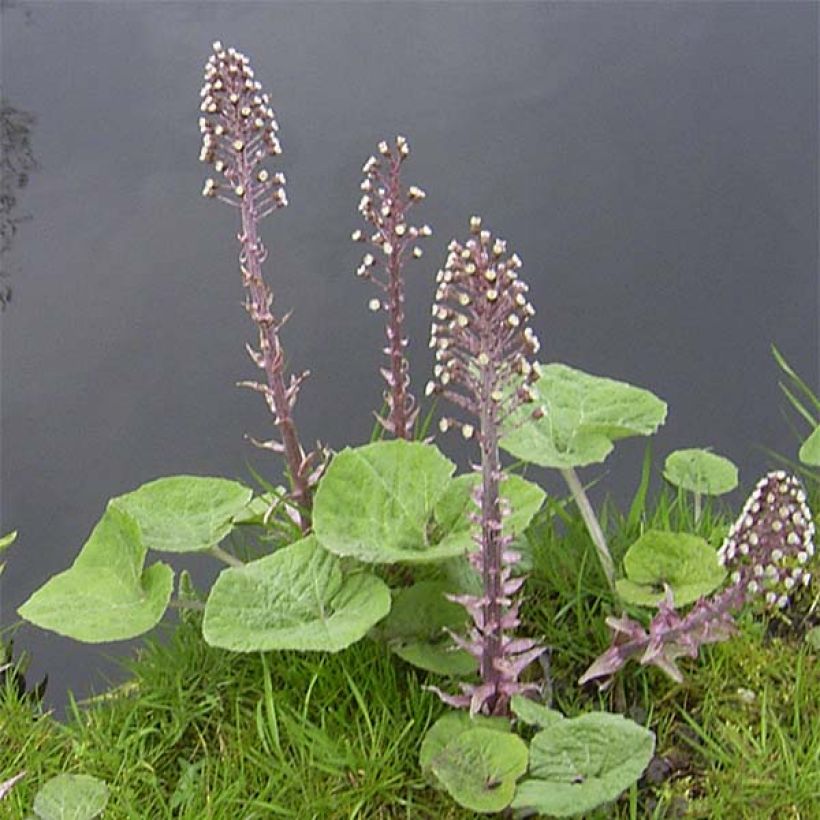
Flowering
Foliage
Plant habit
Botanical data
Petasites
hybridus
Asteraceae
Butterbur, Bog Rhubarb, Devil's Hat, Pestilence Wort
West Asia
Planting and care
The Petasites hybridus can be grown without difficulty in shade or partial shade, in a constantly moist or wet, slightly chalky, neutral or acidic soil. It is hardy at least down to -20 °C (- 4°F). Limit its lateral growth by digging around the planting area in early spring, on the periphery, to be able to remove any wandering rootstocks.
Planting period
Intended location
Care
Planting & care advice
-
-
-

-
-
-
-
-
-
, onOrder confirmed
Reply from on Promesse de fleurs
Recently viewed products
Haven't found what you were looking for?
Hardiness is the lowest winter temperature a plant can endure without suffering serious damage or even dying. However, hardiness is affected by location (a sheltered area, such as a patio), protection (winter cover) and soil type (hardiness is improved by well-drained soil).

The flowering period indicated on our website applies to countries and regions located in USDA zone 8 (France, the United Kingdom, Ireland, the Netherlands, etc.)
It will vary according to where you live:- In zones 9 to 10 (Italy, Spain, Greece, etc.), flowering will occur about 2 to 4 weeks earlier.
- In zones 6 to 7 (Germany, Poland, Slovenia, and lower mountainous regions), flowering will be delayed by 2 to 3 weeks.
- In zone 5 (Central Europe, Scandinavia), blooming will be delayed by 3 to 5 weeks.
In temperate climates, pruning of spring-flowering shrubs (forsythia, spireas, etc.) should be done just after flowering.
Pruning of summer-flowering shrubs (Indian Lilac, Perovskia, etc.) can be done in winter or spring.
In cold regions as well as with frost-sensitive plants, avoid pruning too early when severe frosts may still occur.
The planting period indicated on our website applies to countries and regions located in USDA zone 8 (France, United Kingdom, Ireland, Netherlands).
It will vary according to where you live:
- In Mediterranean zones (Marseille, Madrid, Milan, etc.), autumn and winter are the best planting periods.
- In continental zones (Strasbourg, Munich, Vienna, etc.), delay planting by 2 to 3 weeks in spring and bring it forward by 2 to 4 weeks in autumn.
- In mountainous regions (the Alps, Pyrenees, Carpathians, etc.), it is best to plant in late spring (May-June) or late summer (August-September).
The harvesting period indicated on our website applies to countries and regions in USDA zone 8 (France, England, Ireland, the Netherlands).
In colder areas (Scandinavia, Poland, Austria...) fruit and vegetable harvests are likely to be delayed by 3-4 weeks.
In warmer areas (Italy, Spain, Greece, etc.), harvesting will probably take place earlier, depending on weather conditions.
The sowing periods indicated on our website apply to countries and regions within USDA Zone 8 (France, UK, Ireland, Netherlands).
In colder areas (Scandinavia, Poland, Austria...), delay any outdoor sowing by 3-4 weeks, or sow under glass.
In warmer climes (Italy, Spain, Greece, etc.), bring outdoor sowing forward by a few weeks.
Shipping country and language
Your country of residence may be:
Your country of residence is:
For a better user experience on our website, you can select:
Your shipping country:
-
 Austria
-
 Belgium
-
 Bosnia & Herzegovina
-
 Bulgaria
-
 Croatia
-
 Cyprus
-
 Czechia
-
 Denmark
-
 Estonia
-
 Finland
-
 France
-
 Germany
-
 Greece
-
 Hungary
-
 Iceland
-
 Ireland
-
 Italy
Italy
-
 Latvia
-
 Liechtenstein
-
 Lithuania
-
 Luxembourg
-
 Malta
Malta
-
 Netherlands
-
 Poland
-
 Portugal
-
 Romania
-
 Serbia
-
 Slovakia
-
 Slovenia
-
 Spain
Spain
-
 Sweden
-
 Switzerland
Language:
-
French
-
 English
-
Spanish
-
Italian
-
German
-
Portuguese
-
Dutch
-
Finnish
My Account
Hello
My wish lists
My cart
Log in / Register
Existing customer?
This form is protected by reCAPTCHA - the Google Privacy Policy and Terms of Service apply.
New customer?
Create an account to track your orders, access our customer service and, if you wish, make the most of our upcoming offers.