
Rosa The King's Rose - David Austin shrub rose
Rosa The King's Rose - David Austin shrub rose
Rosa 'AUSA27A16' The King’s Rose
Shrub rose
Back-to-school special offer!
Get €10 off for every €50 you spend! And get up to €40 off on a single order.
How does it work?
1. Shop your favourites
Add your favourite plants to your basket. For every €50 you spend (excluding delivery charges, store credit and the plastic-free option), you’ll receive a €10 voucher.
€50 spent = €10 voucher
€100 spent = €20 voucher
€150 spent = €30 voucher
€200 spent = €40 voucher
2. Place your order
Once your basket reaches one of the spending thresholds, place your order. You can even choose your delivery date!
3. Receive your voucher
As soon as your order has been shipped, you’ll receive an email containing your personal voucher code and its value.
4. Use it on your next order
Your voucher is valid for 90 days from the date you receive it. It can be used once only, on a new order worth at least the value of the voucher, excluding delivery charges.
Please note: Vouchers can be combined with other offers, but cannot be split or refunded.
Home or relay delivery (depending on size and destination)
Important: You may be charged customs duties by your country’s customs authorities upon delivery.
Schedule delivery date,
and select date in basket
This plant carries a 24 months recovery warranty
More information
We guarantee the quality of our plants for a full growing cycle, and will replace at our expense any plant that fails to recover under normal climatic and planting conditions.
Description
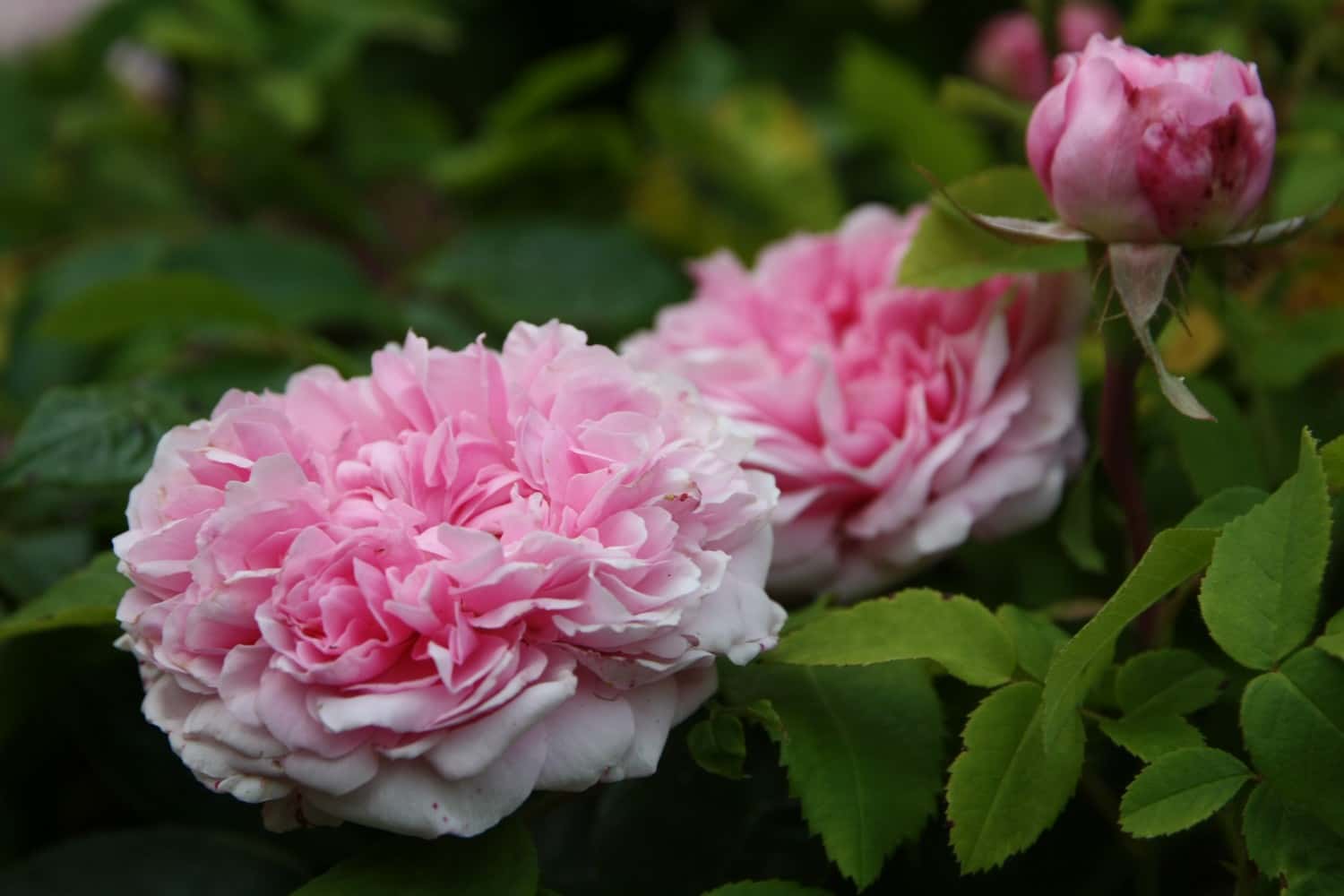
The rose The King’s Rose® ('AUSA27A16') renews the traditional image of the English rose. This variety produces open corollas, splashed with fuchsia on a white background, each one different, revealing a centre of golden stamens readily accessible to bees. Repeat flowering, healthy and with few prickles, this shrub with a spreading habit easily finds a place in beds and flowering hedges. It is particularly suited to an English garden, a cottage garden or a country-style garden.
Created by Carl Bennett of David Austin Roses and introduced in 2025 after twelve years of selection, The King’s Rose® bears the varietal designation 'AUSA27A16'. This modern shrub rose belongs to the collection of David Austin English Roses, selected for the charm of their flowers, their repeat flowering and their good performance in the garden; it is the first variety with striped flowers in this collection. It forms a medium-sized shrub with a rounded, spreading habit, reaching approximately 1.25 m in height and 90 cm in spread. From June to October, and possibly until November in mild climates, it produces medium-sized semi-double flowers, 6 to 8 cm across. The corollas open widely to reveal golden-yellow stamens, accessible to bees and other pollinators. Against a white to creamy-white background, the petals display irregular stripes, marbling and splashes of fuchsia pink to deep pink; the distribution of colours varies from one flower to another. The fragrance, light to medium in intensity, of a musky type, combines notes of fresh red apple and rose water; it is mainly released by the pollen. The deciduous foliage, which falls in autumn, consists of broad, toothed medium-green leaflets with a slightly cordate base. The branches bear very few prickles. This variety has good general resistance to the common diseases of roses. At the end of the season, flowers left on the plant produce small orange rose hips, appreciated by birds in winter.
Presented at the RHS Chelsea Flower Show in 2025, this rose was created in collaboration with The King’s Foundation. Its name recalls a conversation held in the 1990s between David J. C. Austin and the future King Charles III: both had chosen the old rose 'Ferdinand Pichard' as the first rose for their garden. When this new rose with striped flowers appeared in the 2020s, this shared memory inspired its name The King’s Rose®.
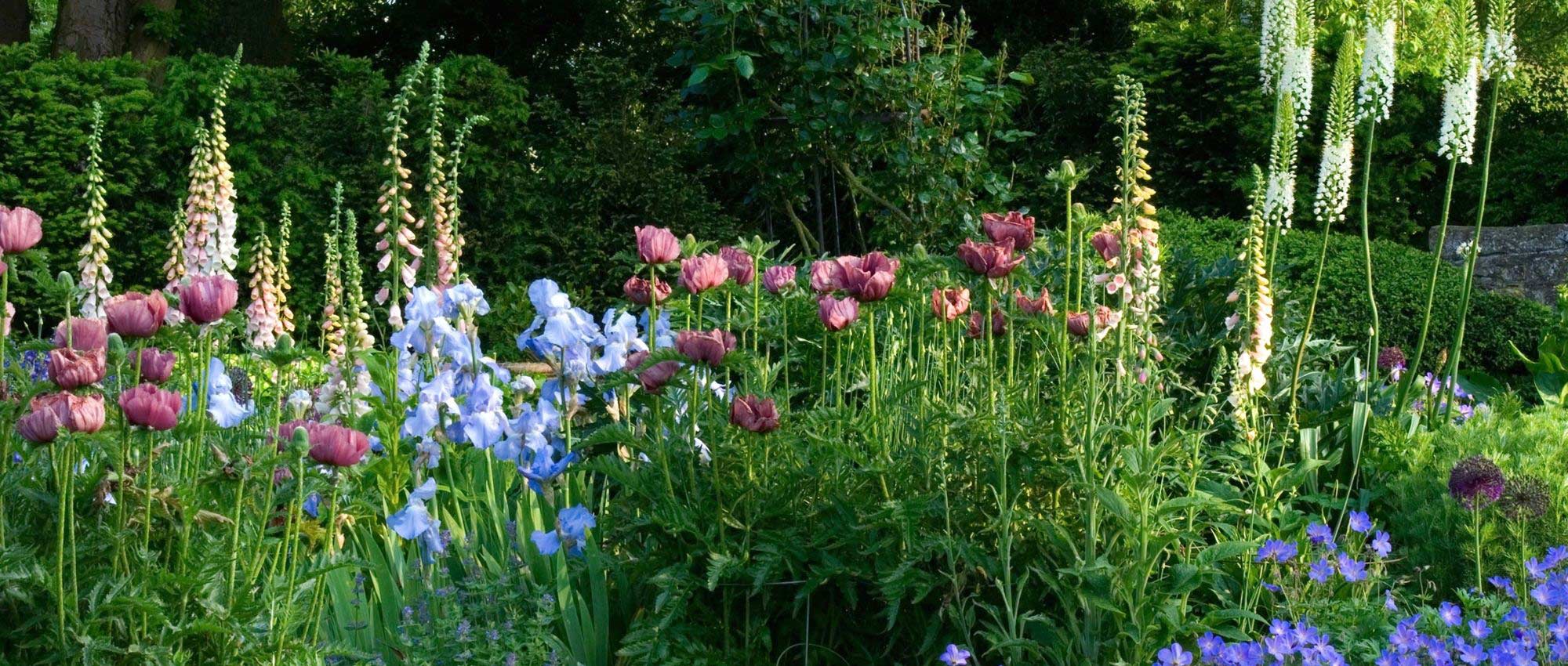
Plant this rose in sun as a solitary specimen beside a pathway, in a row to form a low hedge or in groups of three plants in a large bed. Pair it with shrub roses 'Kew Gardens', white with a lemon-coloured centre, and 'Princess Anne', deep pink. At their feet, sow nigella and plant scabious 'Butterfly Blue', 'Pink Mist' and 'Pincushion Pink'. These plants produce light flowering, borne on fine stems that weave between the branches. Their blue, white, mauve and pink shades create a country-style border visited by pollinating insects.

Plant habit
Flowering
Foliage
Botanical data
Rosa
'AUSA27A16' The King’s Rose
Rosaceae
Shrub rose
Rosa 'AUSA27A16', Rosa The King’s Rose®
Cultivar or hybrid
Planting and care
Plant your English rose The King's Rose® in a sunny or lightly shaded position. English roses are tolerant but do not like excess lime or shallow soil. They will adapt to any garden as long as the soil is deep, well worked and reasonably rich. To plant your rose, work the soil, breaking it up finely, and place an amendment such as dried blood or hoof and horn at the bottom of the planting hole. Water generously after planting to eliminate air pockets. Water regularly for a few weeks to help it establish roots. Pruning English roses is essential for flowering.
Roses are often blemished or unsightly at the end of summer, but this does not affect their development. These spots are not harmful to the rose; they are a natural phenomenon. Follow all our advice to remedy the problem and read our article: Help: my roses have spots
Planting period
Intended location
Care
Planting & care advice
-
-

-

-

-

-

-

-
This item has not been reviewed yet - be the first to leave a review about it.
Recently viewed products
Haven't found what you were looking for?
Hardiness is the lowest winter temperature a plant can endure without suffering serious damage or even dying. However, hardiness is affected by location (a sheltered area, such as a patio), protection (winter cover) and soil type (hardiness is improved by well-drained soil).

The flowering period indicated on our website applies to countries and regions located in USDA zone 8 (France, the United Kingdom, Ireland, the Netherlands, etc.)
It will vary according to where you live:- In zones 9 to 10 (Italy, Spain, Greece, etc.), flowering will occur about 2 to 4 weeks earlier.
- In zones 6 to 7 (Germany, Poland, Slovenia, and lower mountainous regions), flowering will be delayed by 2 to 3 weeks.
- In zone 5 (Central Europe, Scandinavia), blooming will be delayed by 3 to 5 weeks.
In temperate climates, pruning of spring-flowering shrubs (forsythia, spireas, etc.) should be done just after flowering.
Pruning of summer-flowering shrubs (Indian Lilac, Perovskia, etc.) can be done in winter or spring.
In cold regions as well as with frost-sensitive plants, avoid pruning too early when severe frosts may still occur.
The planting period indicated on our website applies to countries and regions located in USDA zone 8 (France, United Kingdom, Ireland, Netherlands).
It will vary according to where you live:
- In Mediterranean zones (Marseille, Madrid, Milan, etc.), autumn and winter are the best planting periods.
- In continental zones (Strasbourg, Munich, Vienna, etc.), delay planting by 2 to 3 weeks in spring and bring it forward by 2 to 4 weeks in autumn.
- In mountainous regions (the Alps, Pyrenees, Carpathians, etc.), it is best to plant in late spring (May-June) or late summer (August-September).
The harvesting period indicated on our website applies to countries and regions in USDA zone 8 (France, England, Ireland, the Netherlands).
In colder areas (Scandinavia, Poland, Austria...) fruit and vegetable harvests are likely to be delayed by 3-4 weeks.
In warmer areas (Italy, Spain, Greece, etc.), harvesting will probably take place earlier, depending on weather conditions.
The sowing periods indicated on our website apply to countries and regions within USDA Zone 8 (France, UK, Ireland, Netherlands).
In colder areas (Scandinavia, Poland, Austria...), delay any outdoor sowing by 3-4 weeks, or sow under glass.
In warmer climes (Italy, Spain, Greece, etc.), bring outdoor sowing forward by a few weeks.
Shipping country and language
Your country of residence may be:
Your country of residence is:
For a better user experience on our website, you can select:
Your shipping country:
-
 Austria
-
 Belgium
-
 Bosnia & Herzegovina
-
 Bulgaria
-
 Croatia
-
 Cyprus
-
 Czechia
-
 Denmark
-
 Estonia
-
 Finland
-
 France
-
 Germany
-
 Greece
-
 Hungary
-
 Iceland
-
 Ireland
-
 Italy
Italy
-
 Latvia
-
 Liechtenstein
-
 Lithuania
-
 Luxembourg
-
 Malta
Malta
-
 Netherlands
-
 Poland
-
 Portugal
-
 Romania
-
 Serbia
-
 Slovakia
-
 Slovenia
-
 Spain
Spain
-
 Sweden
-
 Switzerland
Language:
-
French
-
 English
-
Spanish
-
Italian
-
German
-
Portuguese
-
Dutch
-
Finnish
My Account
Hello
My wish lists
My cart
Log in / Register
Existing customer?
This form is protected by reCAPTCHA - the Google Privacy Policy and Terms of Service apply.
New customer?
Create an account to track your orders, access our customer service and, if you wish, make the most of our upcoming offers.