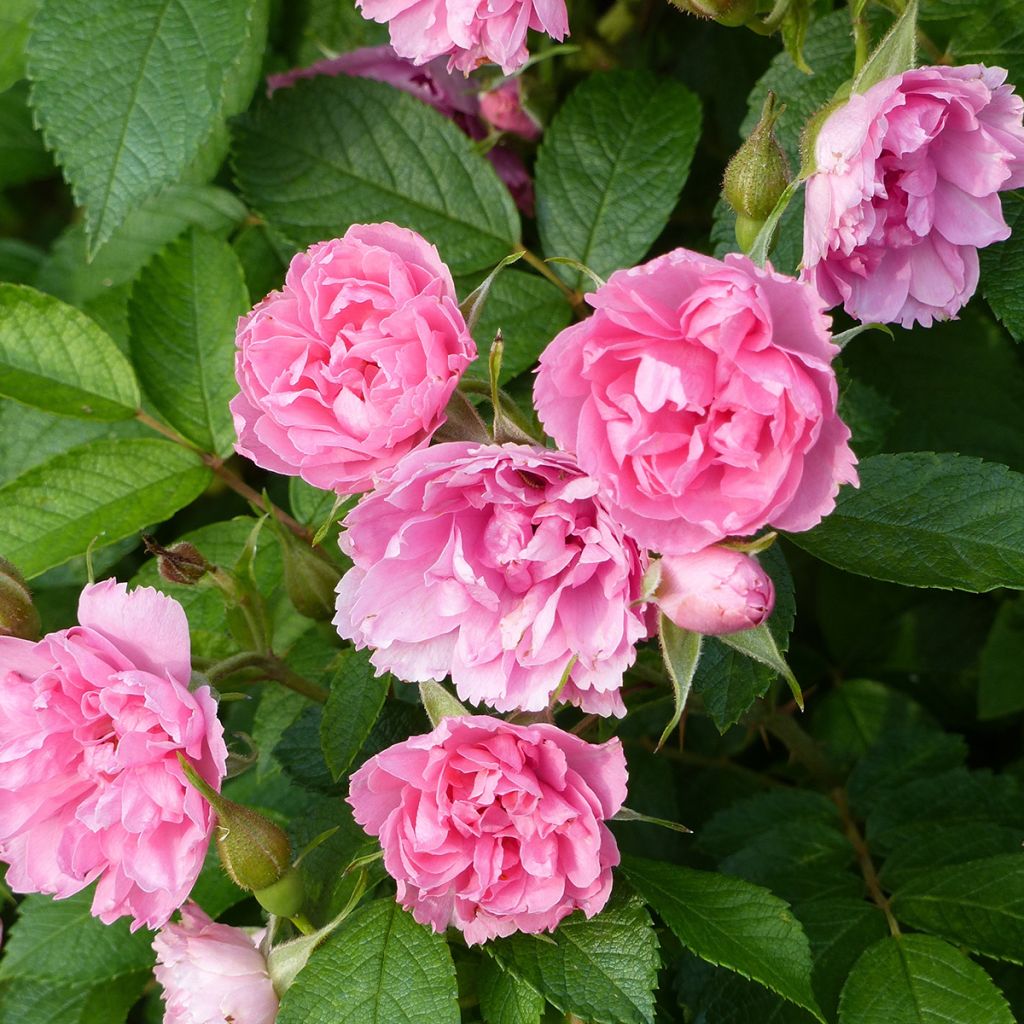
Rosa rugosa Pink Grootendorst
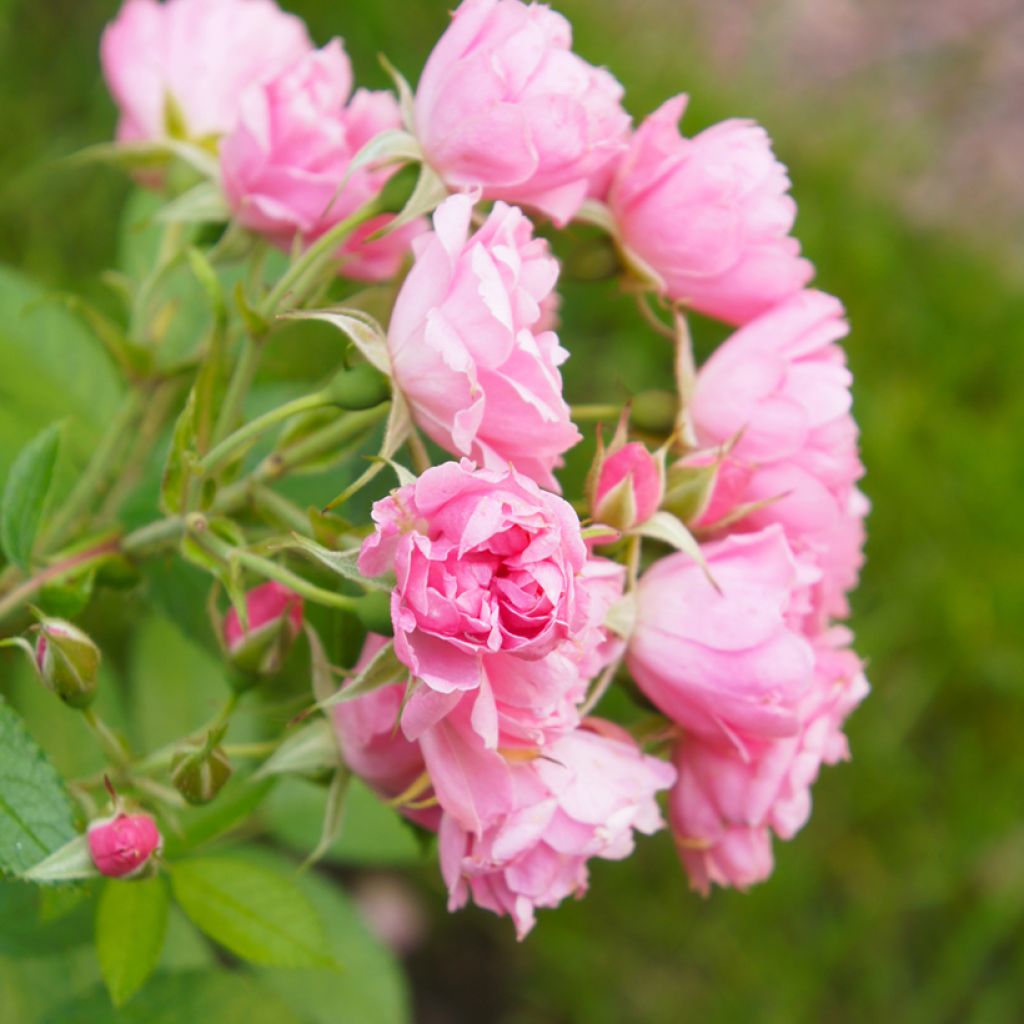
Rosa rugosa Pink Grootendorst
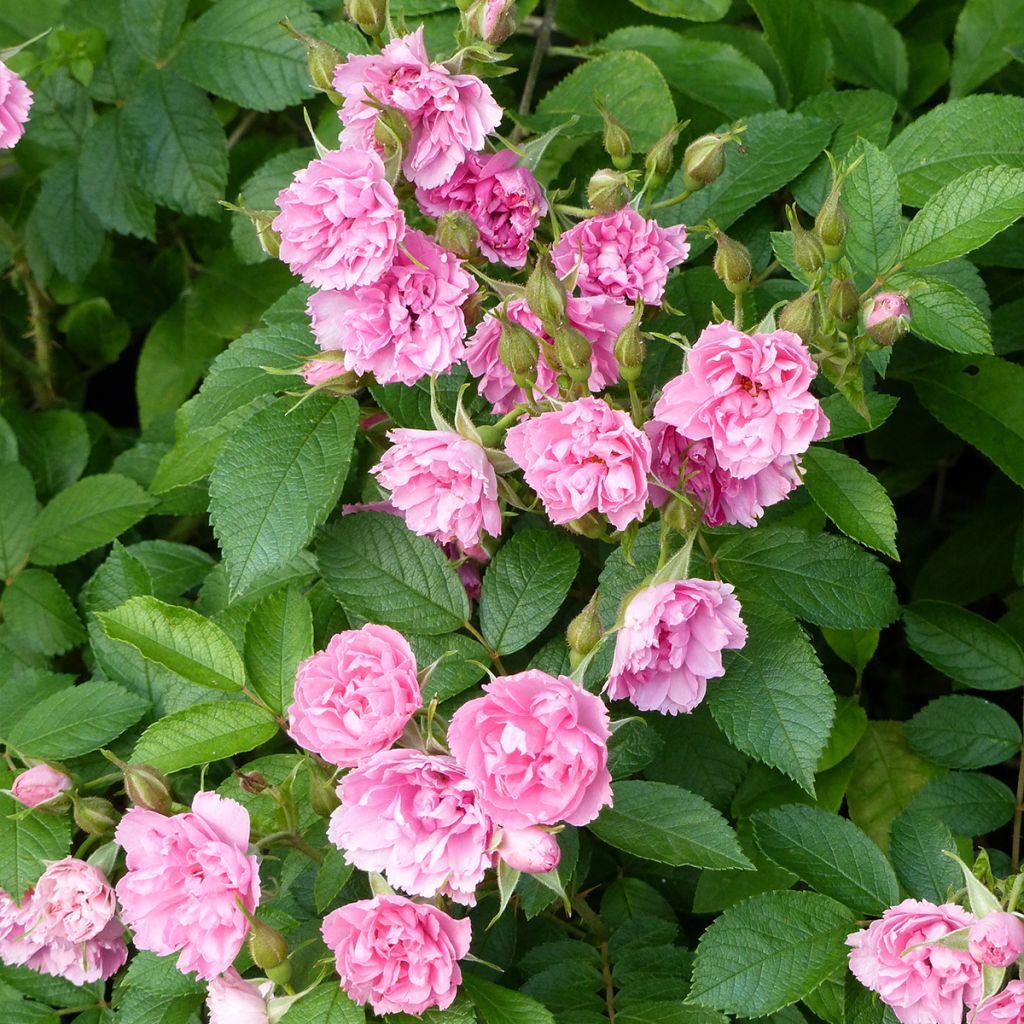
Rosa rugosa Pink Grootendorst
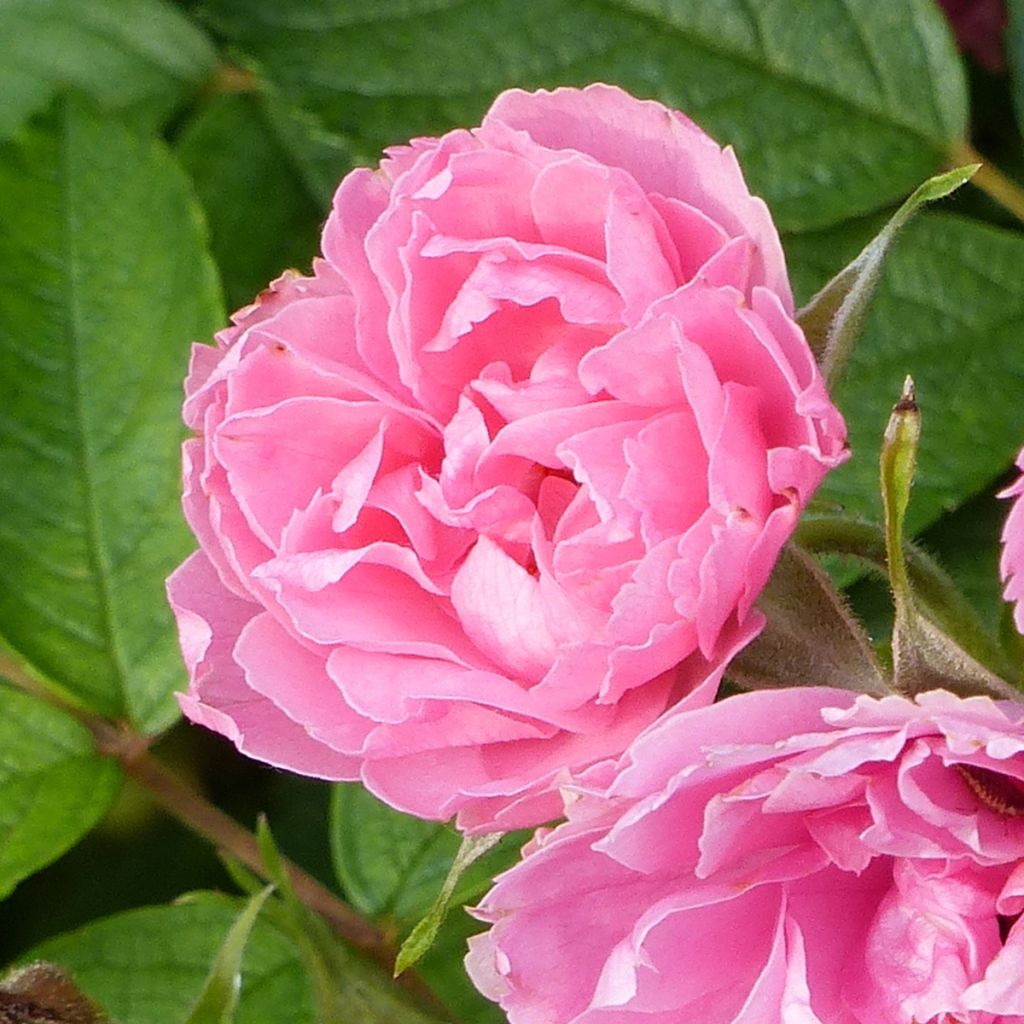
Rosa rugosa Pink Grootendorst
View more pictures
Hide images
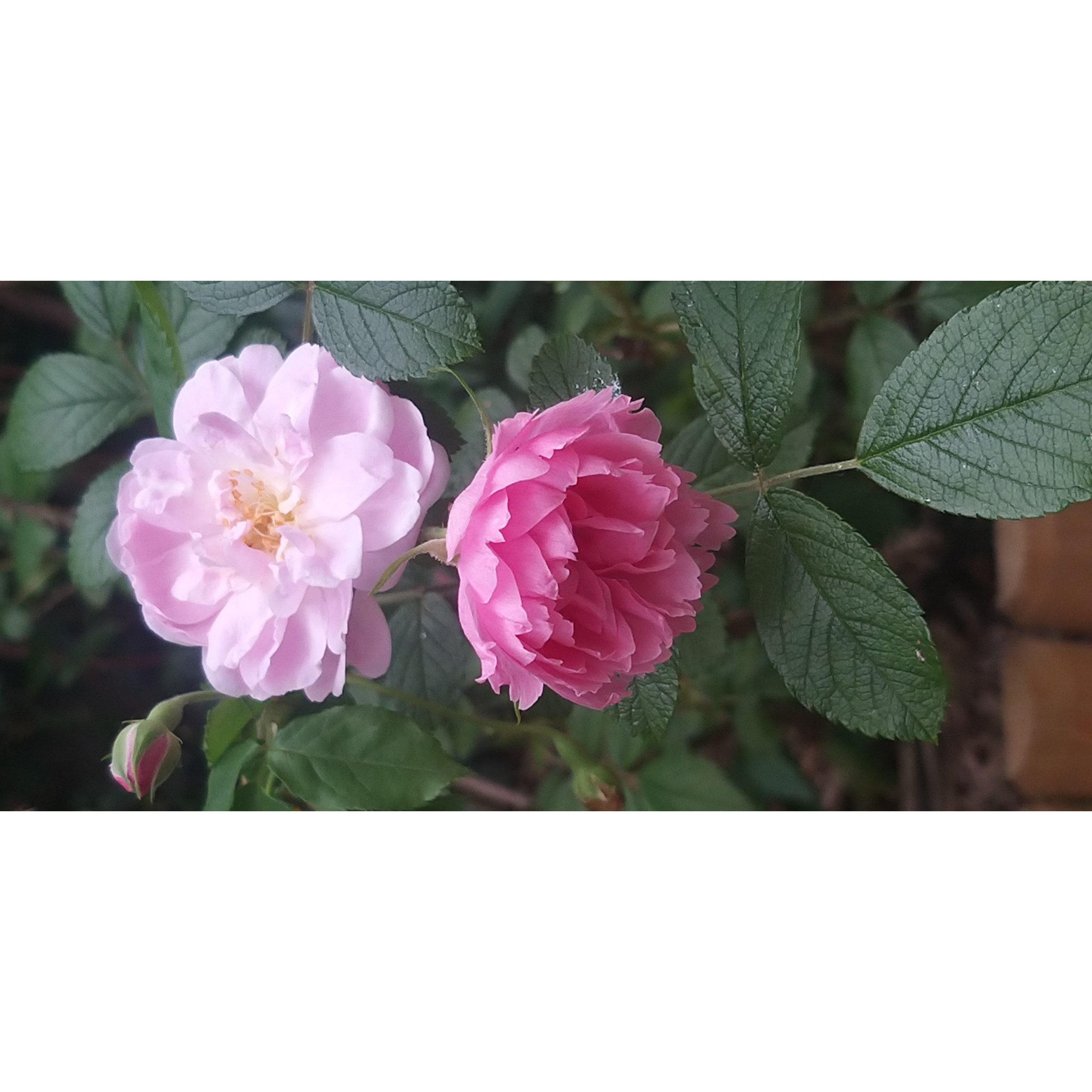
Thierry P.
Rosa rugosa Pink Grootendorst
Thierry P. • 84 FR

Thierry P.
Rosa rugosa Pink Grootendorst
Thierry P. • 84 FR
Rosa rugosa Pink Grootendorst
Rosa x rugosa Pink Grootendorst
Rugosa Rose, Japanese Rose
With several years' hindsight: both rose bushes established well and have grown well, and are not fragile compared with other roses.
Thierry, 25/06/2024
Back-to-school special offer!
Get €10 off for every €50 you spend! And get up to €40 off on a single order.
How does it work?
1. Shop your favourites
Add your favourite plants to your basket. For every €50 you spend (excluding delivery charges, store credit and the plastic-free option), you’ll receive a €10 voucher.
€50 spent = €10 voucher
€100 spent = €20 voucher
€150 spent = €30 voucher
€200 spent = €40 voucher
2. Place your order
Once your basket reaches one of the spending thresholds, place your order. You can even choose your delivery date!
3. Receive your voucher
As soon as your order has been shipped, you’ll receive an email containing your personal voucher code and its value.
4. Use it on your next order
Your voucher is valid for 90 days from the date you receive it. It can be used once only, on a new order worth at least the value of the voucher, excluding delivery charges.
Please note: Vouchers can be combined with other offers, but cannot be split or refunded.
Home or relay delivery (depending on size and destination)
Important: You may be charged customs duties by your country’s customs authorities upon delivery.
Schedule delivery date,
and select date in basket
This plant carries a 24 months recovery warranty
More information
We guarantee the quality of our plants for a full growing cycle, and will replace at our expense any plant that fails to recover under normal climatic and planting conditions.
Description
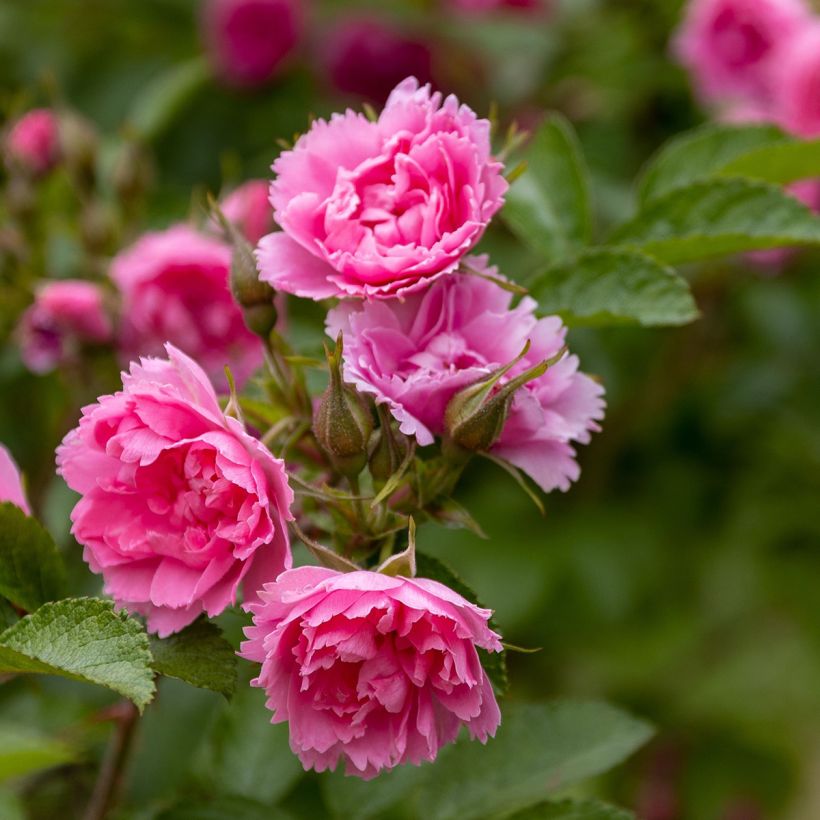
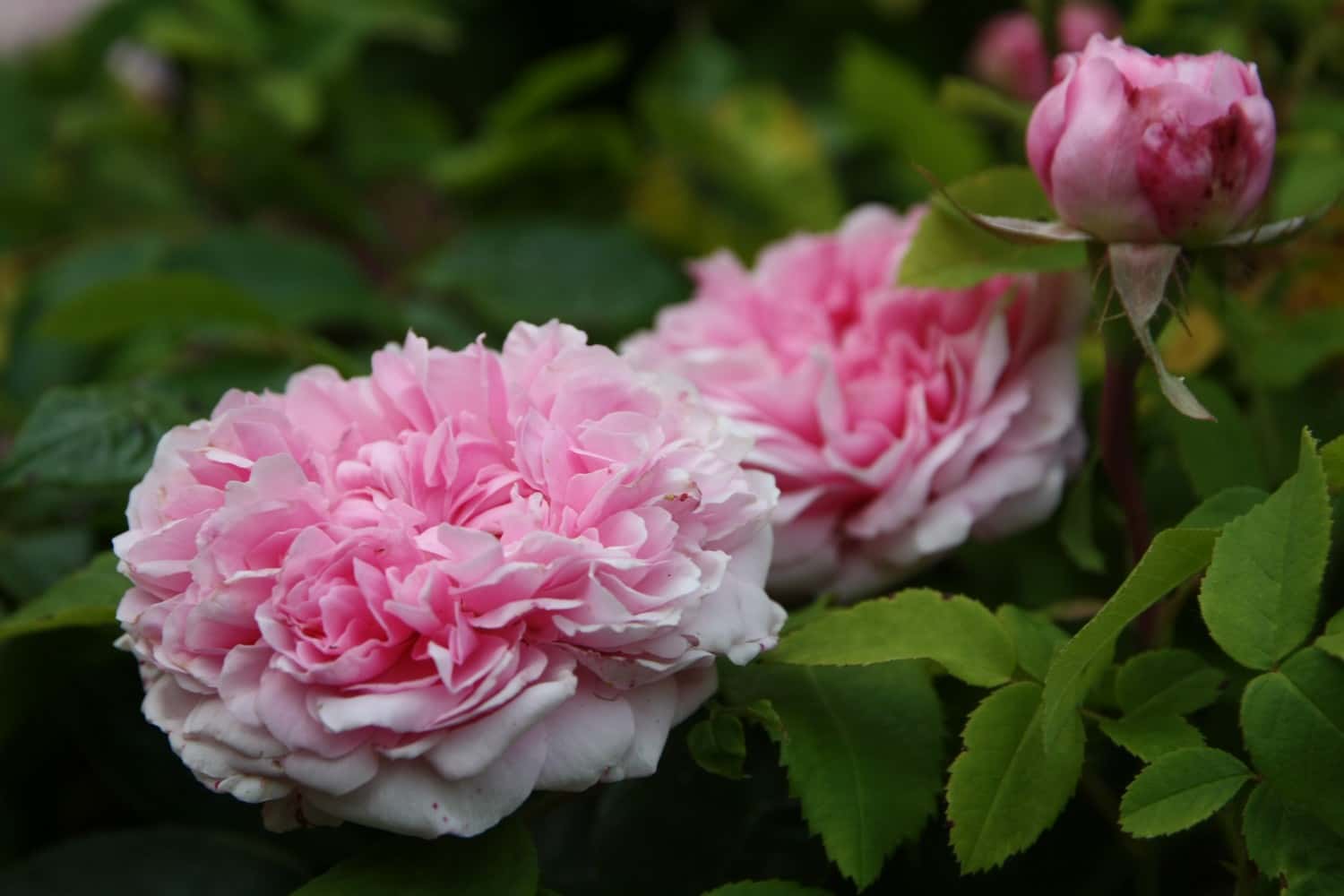
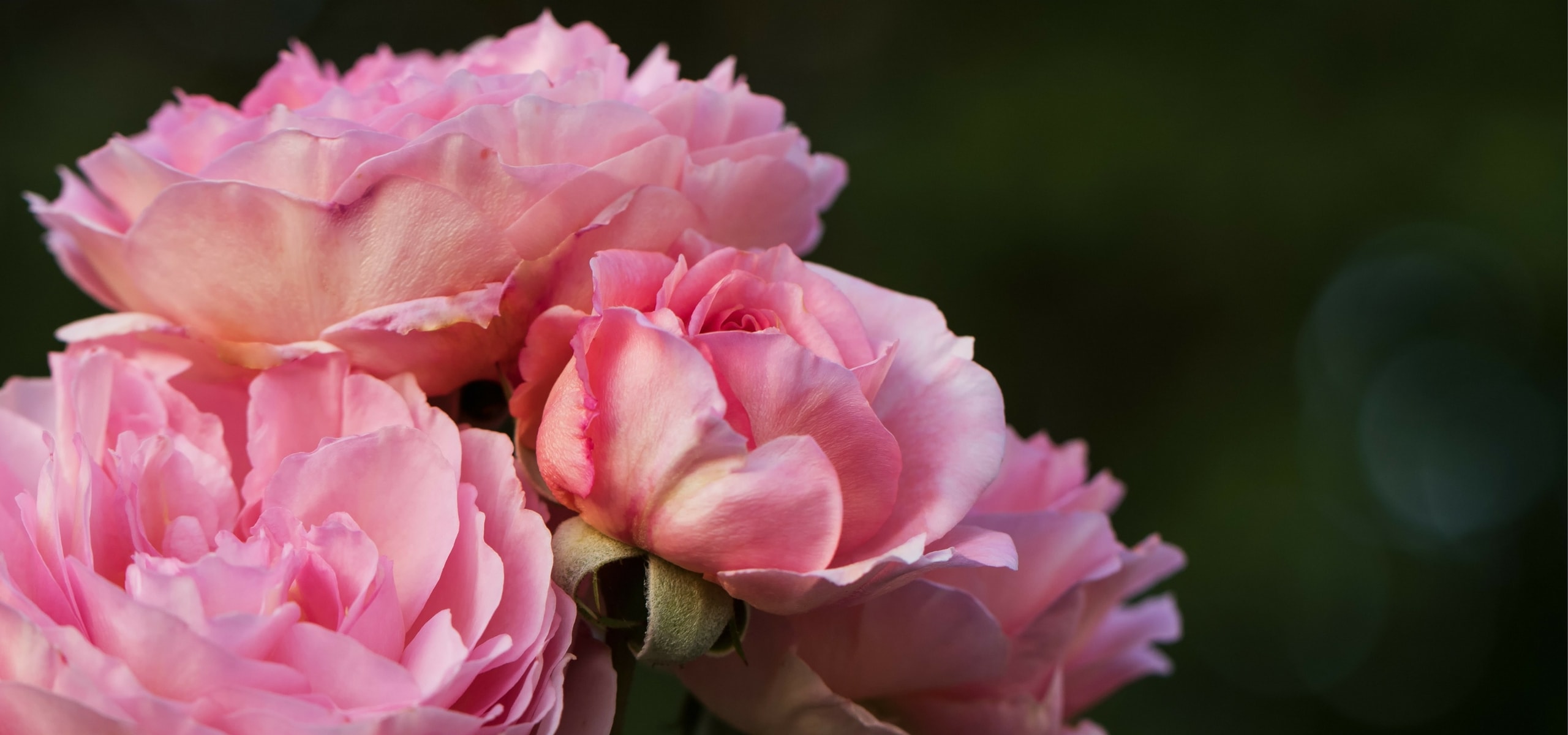
The 'Pink Grootendorst' Rose is a strong horticultural hybrid resulting from the rugosa rose and the polyantha rose. And as "good blood cannot lie", it is a truly problem-free, very floriferous, perpetual, never sick plant. It develops into a vigorous and bushy shrub, which bears small bright pink to antique pink roses, double, with fringed petals, which make them resemble carnations. They are gathered in bouquets that adorn a beautiful light to medium green waffled foliage throughout the beautiful season. The plant is very easy to grow, very hardy, and tolerates sea spray and poor soils well.
A magnificent horticultural success, the 'Pink Grootendorst' Rose was born in Holland in 1923, from the hands of Grootendorst. It is derived, among others, from the Rosa rugosa 'Rubra', the Japanese Rose native to the Far East, inhabiting coasts and sandy dunes, with remarkable hardiness.
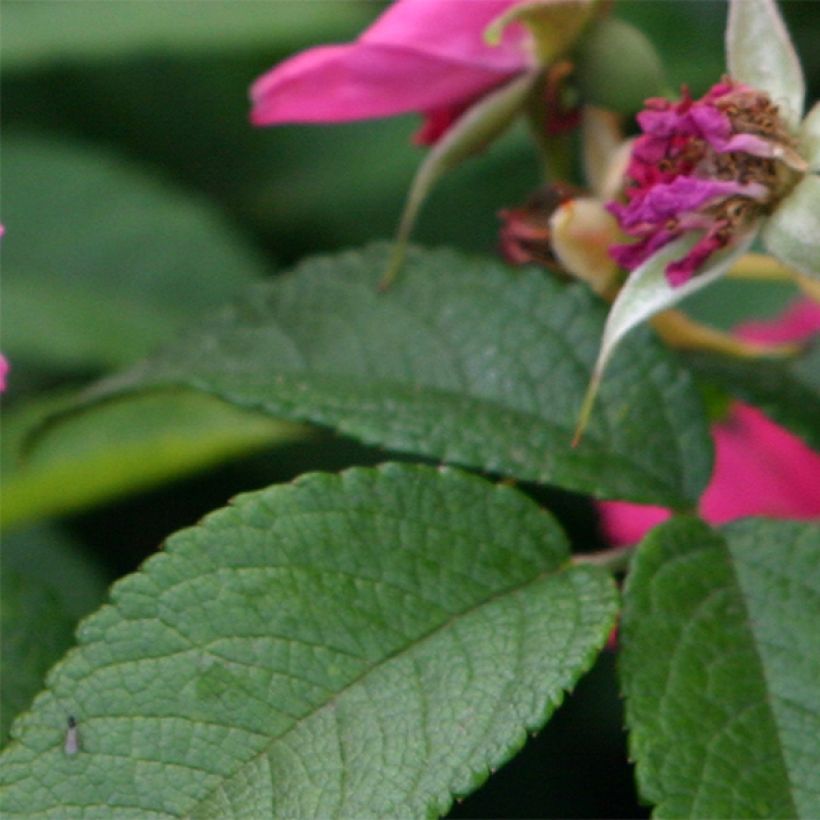
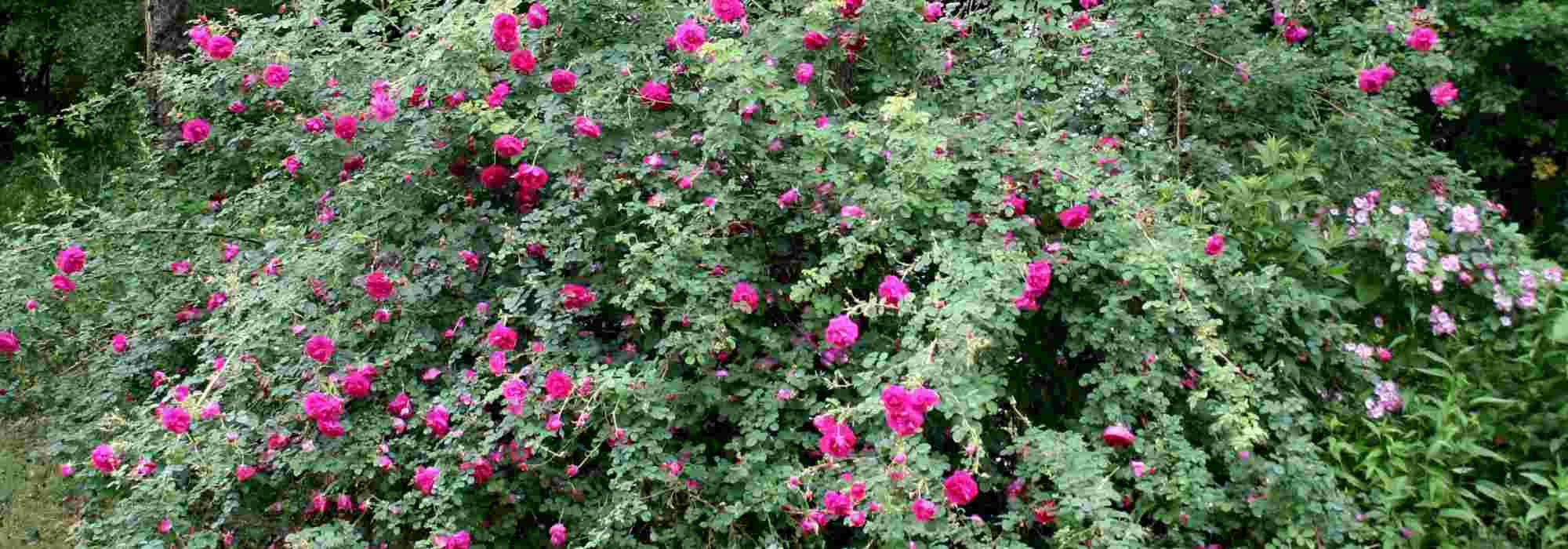
The 'Pink Grootendorst' rose quickly develops into a dense bush, which can reach 1.20m (3ft 11in) to 1.50m (4ft 11in), sometimes more, in height and 1m (3ft 4in) to 1.20m (3ft 11in) in spread. Its stems, straight and highly branched, are brown and covered in prickles. They bear roses grouped in clusters, 3 to 4cm (1.6in) in diameter, double, curiously fringed, in June-July and then in late summer. The buds, very pointed, gradually open into flowers displaying various shades of pink, sometimes pale and warm or a vintage pink. They are not fragrant and do not produce hips. The deciduous foliage, abundant down to the base of the plant, is composed of waffled leaves, cut into fairly light, shiny leaflets. And in October, as the flowering ends, the branches become beige and the leaves turn a beautiful golden yellow. All rugosa roses tend to sucker.
The passion for old roses is both widespread and well justified: these roses are not only the parents of our modern roses, but also and always the glory of our gardens. Rosa rugosa 'Pink Grootendorst' is a vigorous and well-armed rose, ideal in a landscape or defensive hedge, as the balance between foliage and flowers is perfect and it forms a thorny mass that is difficult to cross. It can be associated with its white and red siblings, the varieties 'F.J Grootendorst' and 'White Grootendorst', but also with Cotinus, lilac, mock orange, buddleias, or even with viburnums, shrubs with a rustic character and just as easy to grow. Finally, it is an excellent seaside shrub, to be planted in the front line, but in a soil that remains somewhat moist.
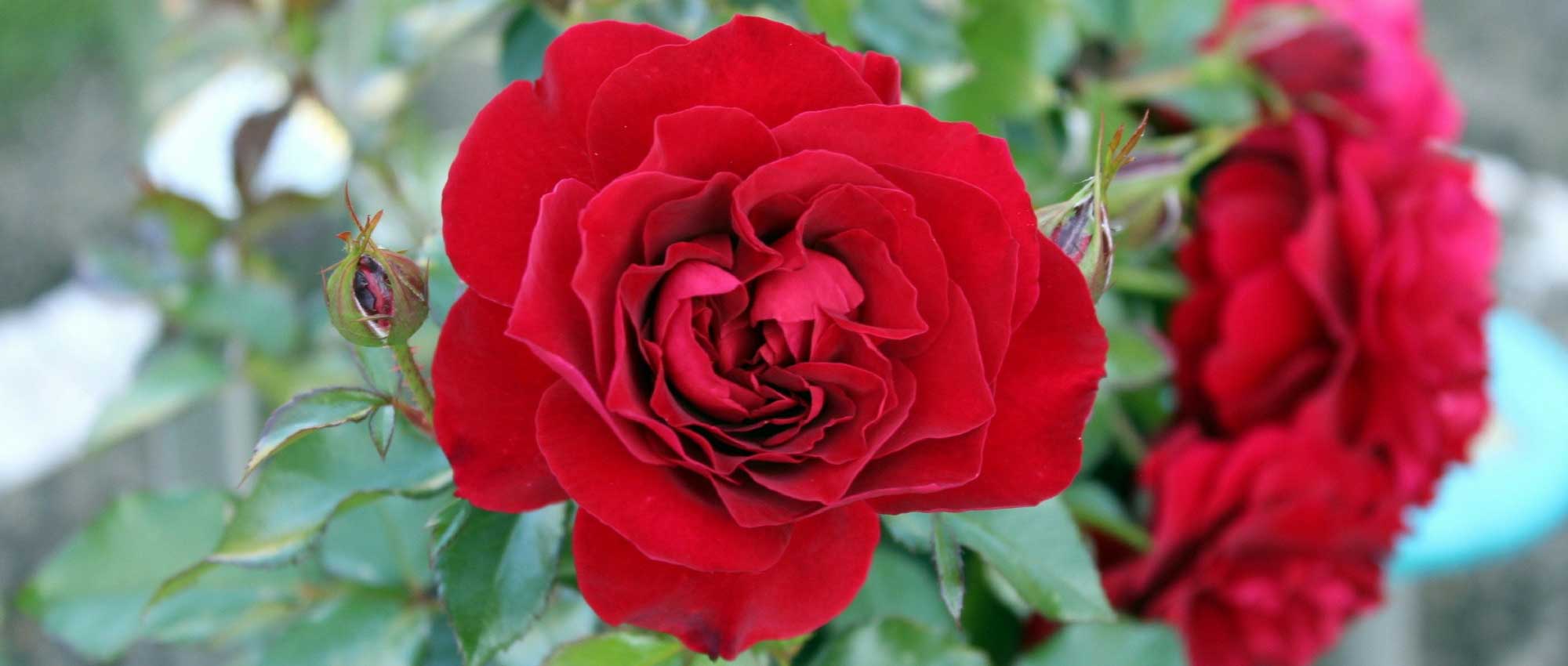
Rosa rugosa Pink Grootendorst in pictures
Plant habit
Flowering
Foliage
Botanical data
Rosa
x rugosa
Pink Grootendorst
Rosaceae
Rugosa Rose, Japanese Rose
Cultivar or hybrid
Planting and care
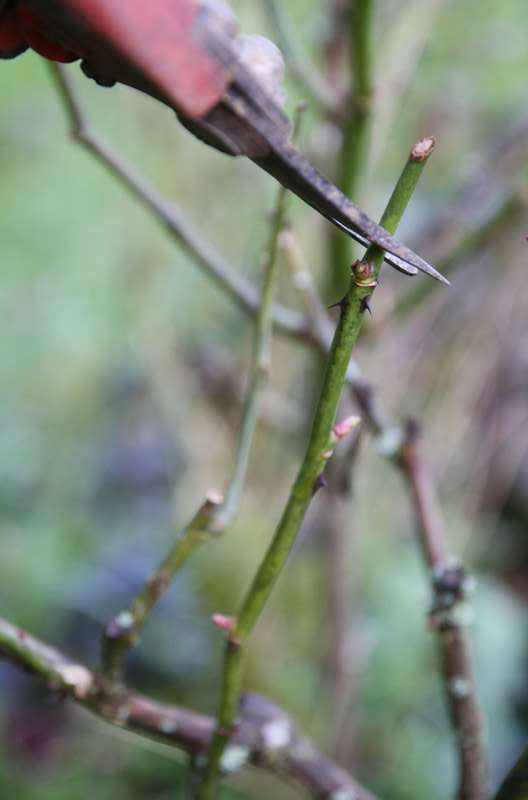
The 'Pink Grootendorst' rose is undemanding, it thrives in all regions that are not too hot, is not susceptible to diseases, cold, rain, or poor and occasionally dry soils. It adapts to any type of soil, even sandy, as long as the planting is well cared for! Plant it in well-worked and well-drained ordinary soil, in a sunny or semi-shady position that it tolerates very well. To maintain a well-bushy habit, maintenance is simple: after winter, remove the oldest branches (2-3 years old). Very hardy, this rose withstands -20°C (-4°F). It may be useful to remove dead wood in winter and to remove faded flowers. If necessary, in spring, after the risk of frost, a light pruning can be done. This variety sometimes tends to sucker, which further enhances its appearance.
To plant your rose, in a pot or in open ground, work the soil to a depth of 25cm (9.8in) by crumbling it and placing a base amendment such as dried blood or dehydrated horn at the bottom of the planting hole. Position your plant, removed from its pot, by covering the top of the root ball with 3cm (1.2in) of soil, backfill and water generously to remove air pockets. In dry weather, it is necessary to water regularly for a few weeks to facilitate rooting. Also remember to provide your rose with special rose fertilizer that stimulates plant flowering. To achieve abundant flowering of your roses, regularly bend and tie the branches. Each bending produces a lateral shoot that ends in a bouquet of flowers. Do not hesitate to use this technique, you will be rewarded. Regularly remove faded flowers.
Roses are often stained or unsightly at the end of summer, but this is not a problem for their development. These spots are not harmful to the rose, it is a natural phenomenon.
Planting period
Intended location
Care
Planting & care advice
-

-
-

-

-
-
-
-

-
, onOrder confirmed
Reply from on Promesse de fleurs
Recently viewed products
Haven't found what you were looking for?
Hardiness is the lowest winter temperature a plant can endure without suffering serious damage or even dying. However, hardiness is affected by location (a sheltered area, such as a patio), protection (winter cover) and soil type (hardiness is improved by well-drained soil).

The flowering period indicated on our website applies to countries and regions located in USDA zone 8 (France, the United Kingdom, Ireland, the Netherlands, etc.)
It will vary according to where you live:- In zones 9 to 10 (Italy, Spain, Greece, etc.), flowering will occur about 2 to 4 weeks earlier.
- In zones 6 to 7 (Germany, Poland, Slovenia, and lower mountainous regions), flowering will be delayed by 2 to 3 weeks.
- In zone 5 (Central Europe, Scandinavia), blooming will be delayed by 3 to 5 weeks.
In temperate climates, pruning of spring-flowering shrubs (forsythia, spireas, etc.) should be done just after flowering.
Pruning of summer-flowering shrubs (Indian Lilac, Perovskia, etc.) can be done in winter or spring.
In cold regions as well as with frost-sensitive plants, avoid pruning too early when severe frosts may still occur.
The planting period indicated on our website applies to countries and regions located in USDA zone 8 (France, United Kingdom, Ireland, Netherlands).
It will vary according to where you live:
- In Mediterranean zones (Marseille, Madrid, Milan, etc.), autumn and winter are the best planting periods.
- In continental zones (Strasbourg, Munich, Vienna, etc.), delay planting by 2 to 3 weeks in spring and bring it forward by 2 to 4 weeks in autumn.
- In mountainous regions (the Alps, Pyrenees, Carpathians, etc.), it is best to plant in late spring (May-June) or late summer (August-September).
The harvesting period indicated on our website applies to countries and regions in USDA zone 8 (France, England, Ireland, the Netherlands).
In colder areas (Scandinavia, Poland, Austria...) fruit and vegetable harvests are likely to be delayed by 3-4 weeks.
In warmer areas (Italy, Spain, Greece, etc.), harvesting will probably take place earlier, depending on weather conditions.
The sowing periods indicated on our website apply to countries and regions within USDA Zone 8 (France, UK, Ireland, Netherlands).
In colder areas (Scandinavia, Poland, Austria...), delay any outdoor sowing by 3-4 weeks, or sow under glass.
In warmer climes (Italy, Spain, Greece, etc.), bring outdoor sowing forward by a few weeks.
Shipping country and language
Your country of residence may be:
Your country of residence is:
For a better user experience on our website, you can select:
Your shipping country:
-
 Austria
-
 Belgium
-
 Bosnia & Herzegovina
-
 Bulgaria
-
 Croatia
-
 Cyprus
-
 Czechia
-
 Denmark
-
 Estonia
-
 Finland
-
 France
-
 Germany
-
 Greece
-
 Hungary
-
 Iceland
-
 Ireland
-
 Italy
Italy
-
 Latvia
-
 Liechtenstein
-
 Lithuania
-
 Luxembourg
-
 Malta
Malta
-
 Netherlands
-
 Poland
-
 Portugal
-
 Romania
-
 Serbia
-
 Slovakia
-
 Slovenia
-
 Spain
Spain
-
 Sweden
-
 Switzerland
Language:
-
French
-
 English
-
Spanish
-
Italian
-
German
-
Portuguese
-
Dutch
-
Finnish
My Account
Hello
My wish lists
My cart
Log in / Register
Existing customer?
This form is protected by reCAPTCHA - the Google Privacy Policy and Terms of Service apply.
New customer?
Create an account to track your orders, access our customer service and, if you wish, make the most of our upcoming offers.