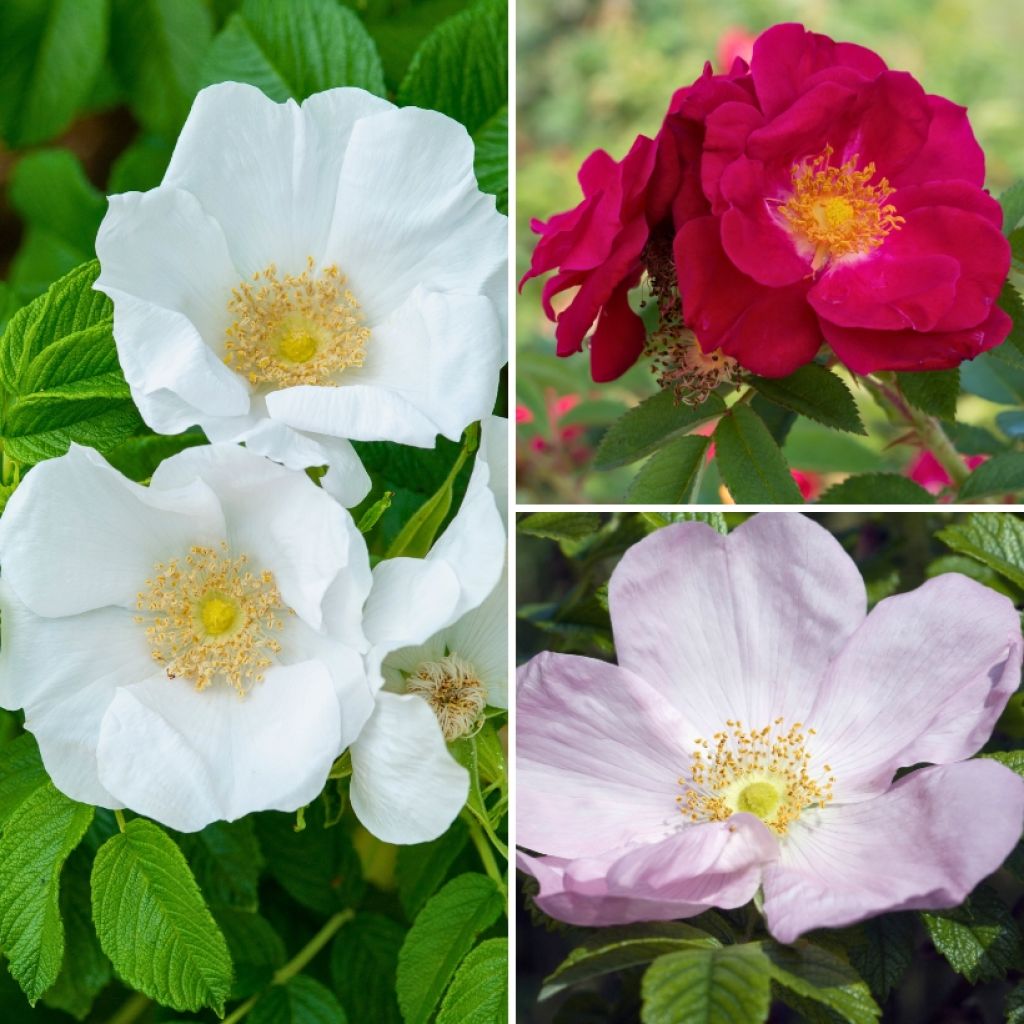
Rugosa roses Collection
Rugosa roses Collection
Rosa x rugosa Alba, Rubra, Frau Dagmar Hastrup
Back-to-school special offer!
Get €10 off for every €50 you spend! And get up to €40 off on a single order.
How does it work?
1. Shop your favourites
Add your favourite plants to your basket. For every €50 you spend (excluding delivery charges, store credit and the plastic-free option), you’ll receive a €10 voucher.
€50 spent = €10 voucher
€100 spent = €20 voucher
€150 spent = €30 voucher
€200 spent = €40 voucher
2. Place your order
Once your basket reaches one of the spending thresholds, place your order. You can even choose your delivery date!
3. Receive your voucher
As soon as your order has been shipped, you’ll receive an email containing your personal voucher code and its value.
4. Use it on your next order
Your voucher is valid for 90 days from the date you receive it. It can be used once only, on a new order worth at least the value of the voucher, excluding delivery charges.
Please note: Vouchers can be combined with other offers, but cannot be split or refunded.
Home or relay delivery (depending on size and destination)
Important: You may be charged customs duties by your country’s customs authorities upon delivery.
Schedule delivery date,
and select date in basket
This plant carries a 24 months recovery warranty
More information
We guarantee the quality of our plants for a full growing cycle, and will replace at our expense any plant that fails to recover under normal climatic and planting conditions.
Description
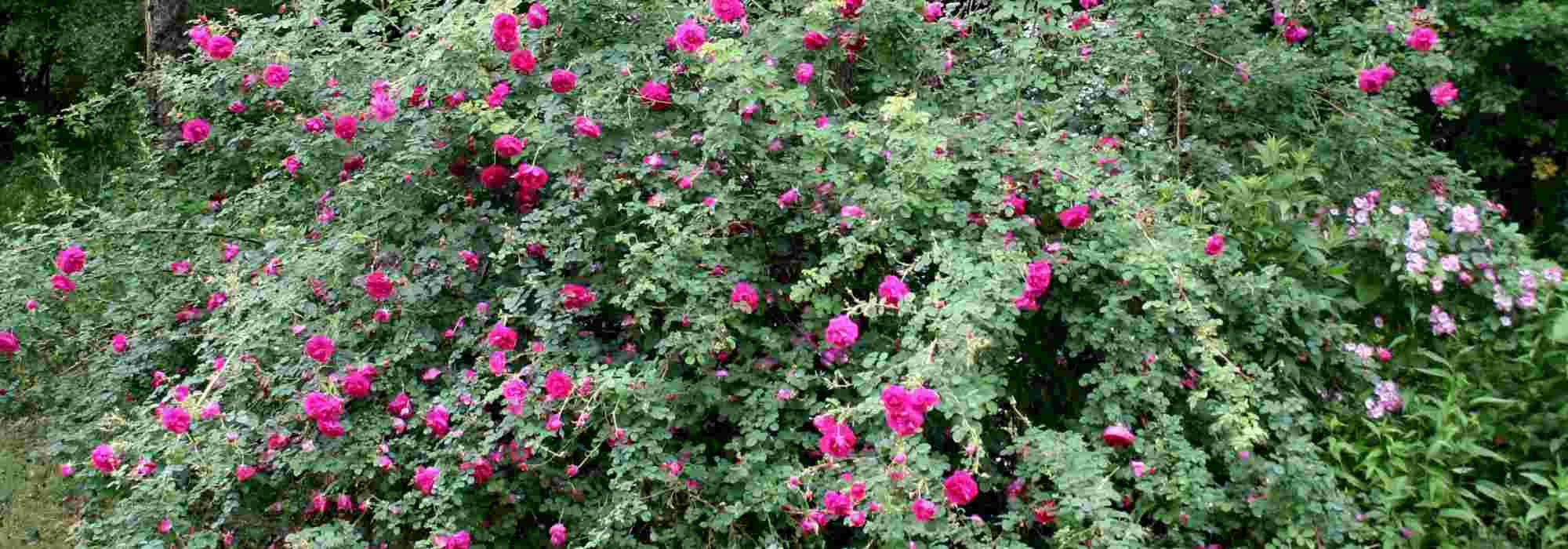
Our Collection of Rugosa Roses is ideal for nature-loving and resilient garden enthusiasts, with three naturally disease-resistant varieties, whose fragrant flowering extends from June to September. These bush roses offer simple, bright, unassuming flowers, generously offered to pollinators, followed by decorative and edible fruits. Robust and hardy, they adapt to any well-drained soil, even poor and fairly dry. You can use them to enrich a flowery country hedge or to create a large bed with natural charm.
The collection consists of:
1 x Rosa rugosa 'Alba': This rose reaches a height of 1.50 m with white, simple, and bright flowers. Its flowering starts in June and extends until September. Its thick, vivid green foliage brings a soothing contrast to the garden.
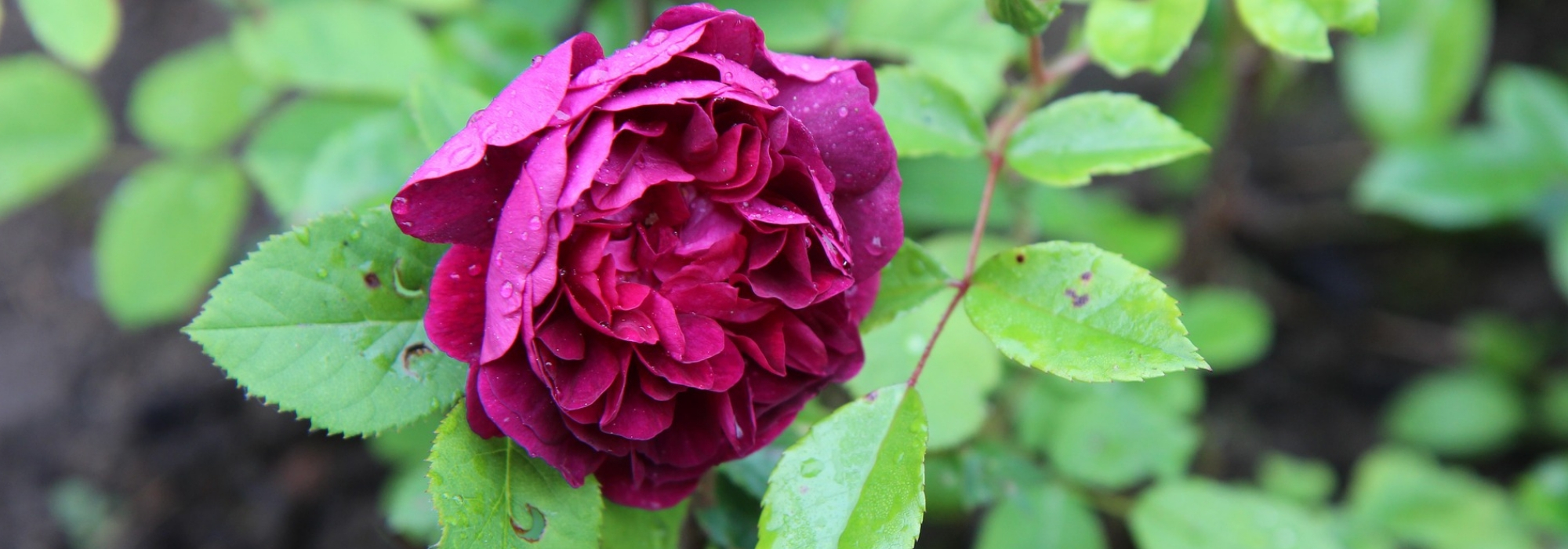
1 x Rosa Rugosa 'Rubra': A rose 1.20 m high, with deep pink, almost purple, flowers with an enchanting fragrance. Its flowering starts in June and lasts until the end of summer. The dark green, corrugated leaves are disease-resistant and withstand various climatic conditions well.
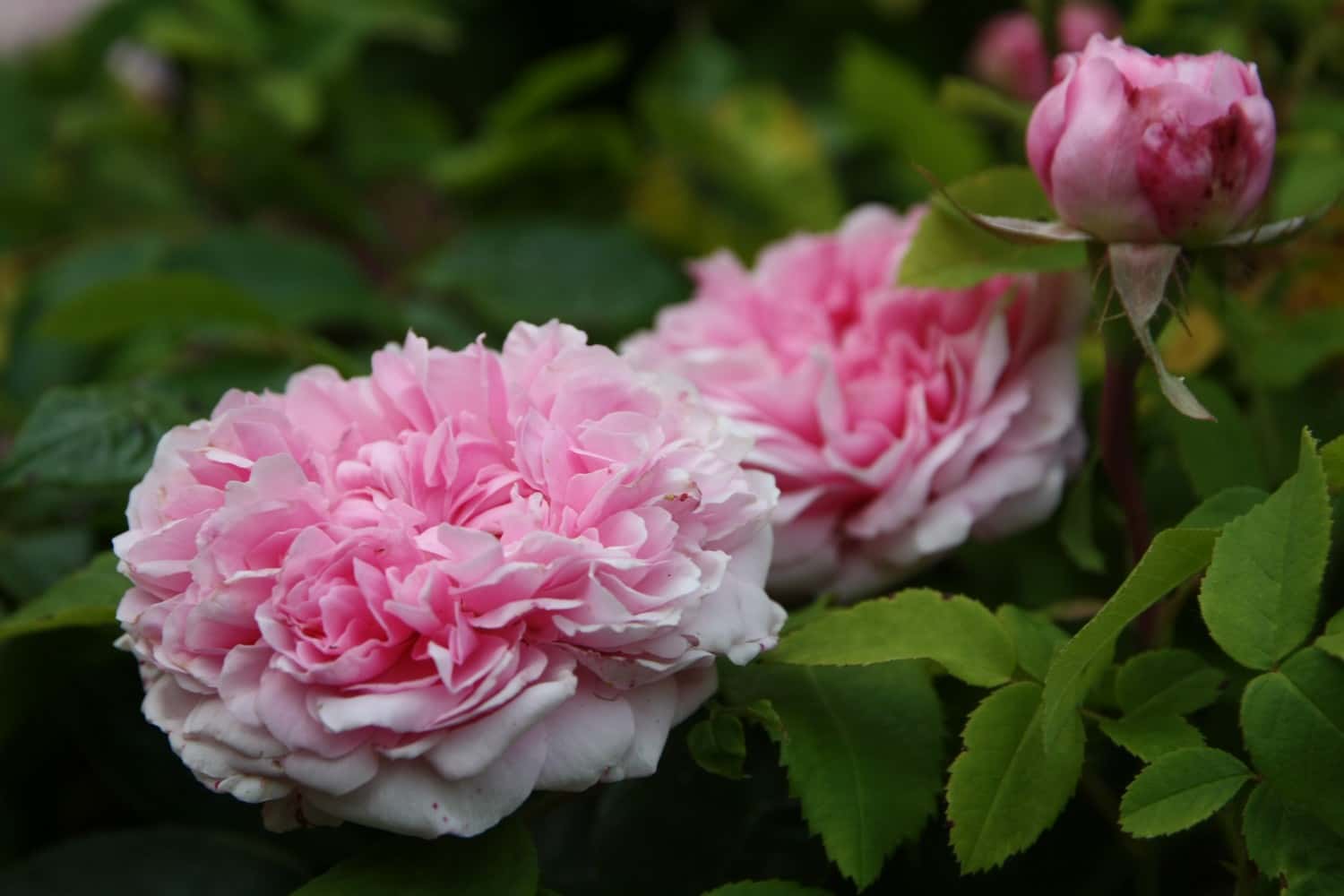
1 x Rosa 'Frau Dagmar Hastrup': This low rose of 80 cm offers a tender pink, delicately scented flowering, appearing from June. Its compact habit and intense, slightly glossy green foliage make it a perfect choice for the front of a bed.
Bare-root roses, i.e., with their roots surrounded by soil but without a pot, require careful planting to establish well. The best period for planting extends from October to December. These rugosa roses should be planted in full sun in well-drained soil, sandy, humus-bearing, or somewhat clayey. In a hedge, space the plants 60 cm apart for a dense and natural effect; in a bed, alternate heights by placing 'Frau Dagmar Hastrup' Rose in the foreground, Rubra in the background, and Alba Rugosa Rose in the centre for harmony. To create a generous and uniform hedge, plan for a plant every 70 cm.
To create a country bed with this collection of Rugosa Roses, plant three 'Lilac Beauty' Yarrows for their fine foliage and pastel pink umbels, two 'Treneague' Roman Chamomiles that will bring a touch of white and fragrant softness, and four 'Butterfly Blue' Scabiosas for their light and airy flowers, ranging from blue to mauve. Plant the yarrows and scabiosas around the roses to structure the bed, and place the chamomiles at the front for a natural and abundant effect. This bed covers approximately 4 m² and creates a robust country omposition.
In a hedge, combine these Rugosa Roses with the 'Martin' Saskatoon Serviceberry, a Japanese Quince Tree, and a 'Common Dogwood' Cornus. Planted alternately with the roses, these shrubs create a flowery, robust, and attractive hedge that shelters a rich biodiversity while structuring the garden naturally.

Plant habit
Flowering
Foliage
Botanical data
Rosa
x rugosa
Alba, Rubra, Frau Dagmar Hastrup
Rosaceae
Cultivar or hybrid
Planting and care
Rugosa roses prefer a sunny location (at least 4 to 5 hours of sun per day) but sheltered from the scorching midday rays and strong winds. They appreciate loose, permeable, and humus-rich soils. They will adapt to any garden as long as the soil is well worked and rich enough.
Roses delivered bare-root, i.e., with their roots surrounded by soil but without a pot, require careful planting to establish well. Here are the essential steps to give them the best chance of successful establishment:
-
Prepare the rootballs: Before planting, immerse the rootballs in a bucket of water for about 20 minutes. This hydrates the roots well and promotes better establishment.
-
Dig a suitable hole: Dig a hole twice as wide as the rootball of each rose, and slightly deeper. Enrich the extracted soil with compost or potting soil for a nutrient boost, especially if the soil is poor.
-
Loosen the bottom of the hole: To prevent waterlogging and facilitate root growth, loosen the bottom of the hole well and add a handful of crushed horn or slow-release fertiliser, then lightly mix with the soil.
-
Place the rose in the hole: Position the rootball so that the collar (the area between the roots and the branches) is at ground level or slightly below. Fill around the rootball with the enriched soil, gently tamping down with your hands to eliminate air pockets.
-
Water generously: Water thoroughly after planting, even if the soil is moist, to compact the soil around the roots. This also facilitates contact between the roots and the surrounding soil.
-
Mulch the base: To retain moisture and protect young roots, add organic mulch around the base. It will also help limit weeds and protect the roots in case of frost.
Planting period
Intended location
Care
Planting & care advice
-
-
-

-

-
-

-
-

This item has not been reviewed yet - be the first to leave a review about it.
Recently viewed products
Haven't found what you were looking for?
Hardiness is the lowest winter temperature a plant can endure without suffering serious damage or even dying. However, hardiness is affected by location (a sheltered area, such as a patio), protection (winter cover) and soil type (hardiness is improved by well-drained soil).

The flowering period indicated on our website applies to countries and regions located in USDA zone 8 (France, the United Kingdom, Ireland, the Netherlands, etc.)
It will vary according to where you live:- In zones 9 to 10 (Italy, Spain, Greece, etc.), flowering will occur about 2 to 4 weeks earlier.
- In zones 6 to 7 (Germany, Poland, Slovenia, and lower mountainous regions), flowering will be delayed by 2 to 3 weeks.
- In zone 5 (Central Europe, Scandinavia), blooming will be delayed by 3 to 5 weeks.
In temperate climates, pruning of spring-flowering shrubs (forsythia, spireas, etc.) should be done just after flowering.
Pruning of summer-flowering shrubs (Indian Lilac, Perovskia, etc.) can be done in winter or spring.
In cold regions as well as with frost-sensitive plants, avoid pruning too early when severe frosts may still occur.
The planting period indicated on our website applies to countries and regions located in USDA zone 8 (France, United Kingdom, Ireland, Netherlands).
It will vary according to where you live:
- In Mediterranean zones (Marseille, Madrid, Milan, etc.), autumn and winter are the best planting periods.
- In continental zones (Strasbourg, Munich, Vienna, etc.), delay planting by 2 to 3 weeks in spring and bring it forward by 2 to 4 weeks in autumn.
- In mountainous regions (the Alps, Pyrenees, Carpathians, etc.), it is best to plant in late spring (May-June) or late summer (August-September).
The harvesting period indicated on our website applies to countries and regions in USDA zone 8 (France, England, Ireland, the Netherlands).
In colder areas (Scandinavia, Poland, Austria...) fruit and vegetable harvests are likely to be delayed by 3-4 weeks.
In warmer areas (Italy, Spain, Greece, etc.), harvesting will probably take place earlier, depending on weather conditions.
The sowing periods indicated on our website apply to countries and regions within USDA Zone 8 (France, UK, Ireland, Netherlands).
In colder areas (Scandinavia, Poland, Austria...), delay any outdoor sowing by 3-4 weeks, or sow under glass.
In warmer climes (Italy, Spain, Greece, etc.), bring outdoor sowing forward by a few weeks.
Shipping country and language
Your country of residence may be:
Your country of residence is:
For a better user experience on our website, you can select:
Your shipping country:
-
 Austria
-
 Belgium
-
 Bosnia & Herzegovina
-
 Bulgaria
-
 Croatia
-
 Cyprus
-
 Czechia
-
 Denmark
-
 Estonia
-
 Finland
-
 France
-
 Germany
-
 Greece
-
 Hungary
-
 Iceland
-
 Ireland
-
 Italy
Italy
-
 Latvia
-
 Liechtenstein
-
 Lithuania
-
 Luxembourg
-
 Malta
Malta
-
 Netherlands
-
 Poland
-
 Portugal
-
 Romania
-
 Serbia
-
 Slovakia
-
 Slovenia
-
 Spain
Spain
-
 Sweden
-
 Switzerland
Language:
-
French
-
 English
-
Spanish
-
Italian
-
German
-
Portuguese
-
Dutch
-
Finnish
My Account
Hello
My wish lists
My cart
Log in / Register
Existing customer?
This form is protected by reCAPTCHA - the Google Privacy Policy and Terms of Service apply.
New customer?
Create an account to track your orders, access our customer service and, if you wish, make the most of our upcoming offers.