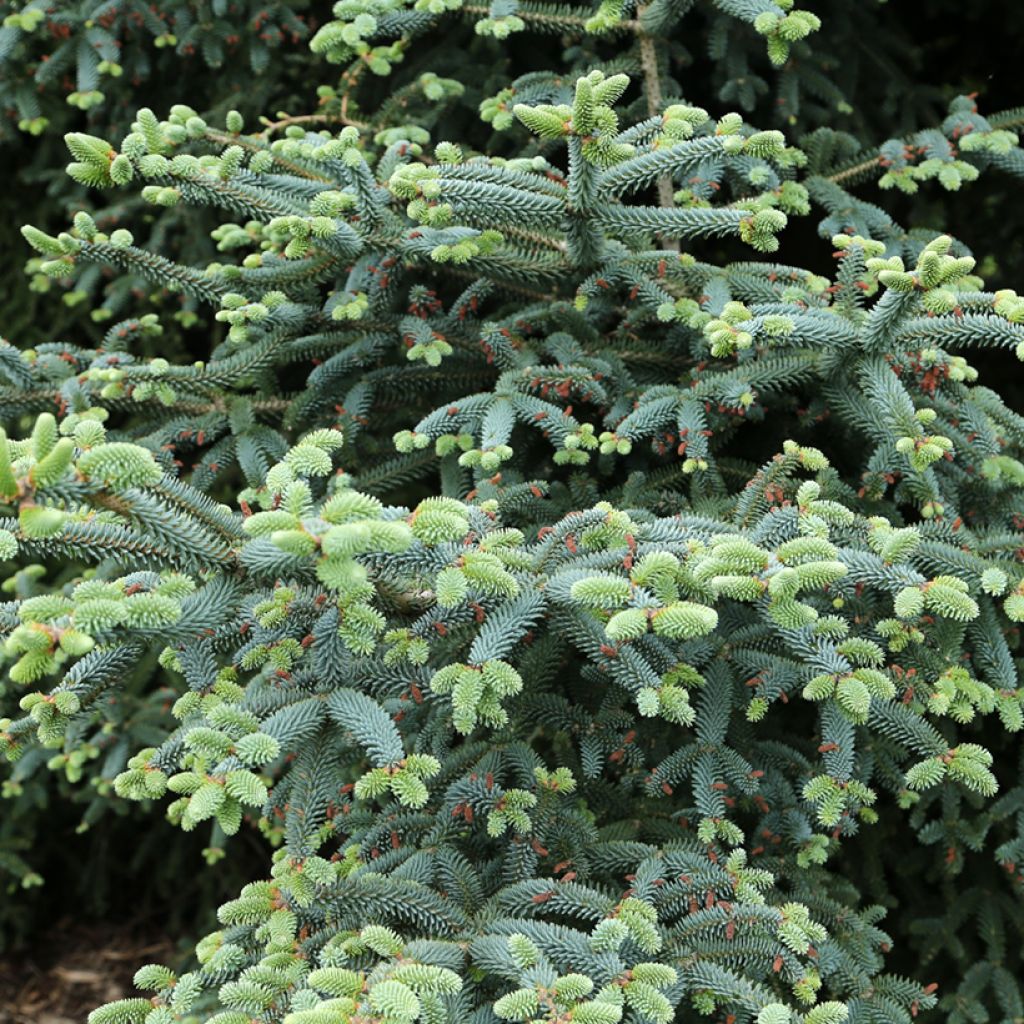
Abies pinsapo Glauca - Spanish fir
Abies pinsapo Glauca - Spanish fir
Abies pinsapo Glauca
Glaucous Spanish fir
Back-to-school special offer!
Get €10 off for every €50 you spend! And get up to €40 off on a single order.
How does it work?
1. Shop your favourites
Add your favourite plants to your basket. For every €50 you spend (excluding delivery charges, store credit and the plastic-free option), you’ll receive a €10 voucher.
€50 spent = €10 voucher
€100 spent = €20 voucher
€150 spent = €30 voucher
€200 spent = €40 voucher
2. Place your order
Once your basket reaches one of the spending thresholds, place your order. You can even choose your delivery date!
3. Receive your voucher
As soon as your order has been shipped, you’ll receive an email containing your personal voucher code and its value.
4. Use it on your next order
Your voucher is valid for 90 days from the date you receive it. It can be used once only, on a new order worth at least the value of the voucher, excluding delivery charges.
Please note: Vouchers can be combined with other offers, but cannot be split or refunded.
Why not try an alternative variety in stock?
View all →
Available in 1 sizes
Available in 1 sizes
Available in 2 sizes
Available in 1 sizes
Available in 1 sizes
Available in 1 sizes
This plant carries a 24 months recovery warranty
More information
We guarantee the quality of our plants for a full growing cycle, and will replace at our expense any plant that fails to recover under normal climatic and planting conditions.
Would this plant suit my garden?
Set up your Plantfit profile →
Description
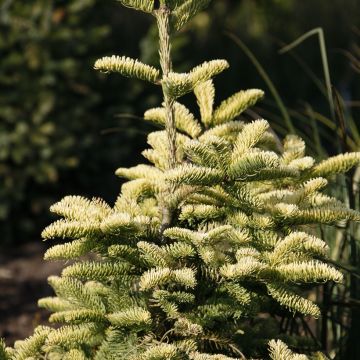
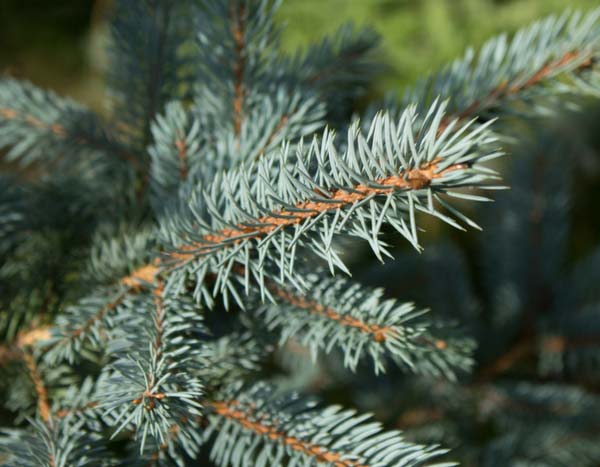
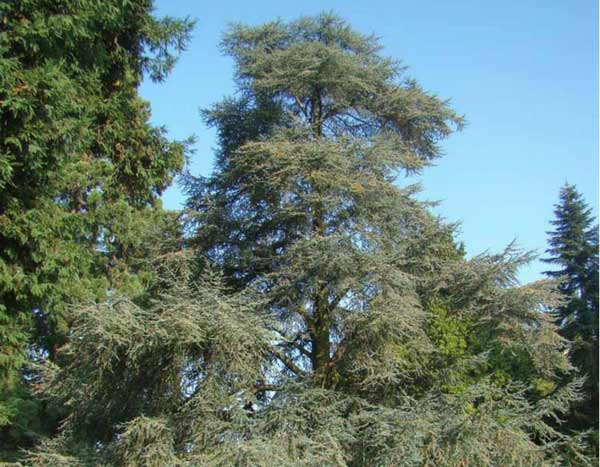
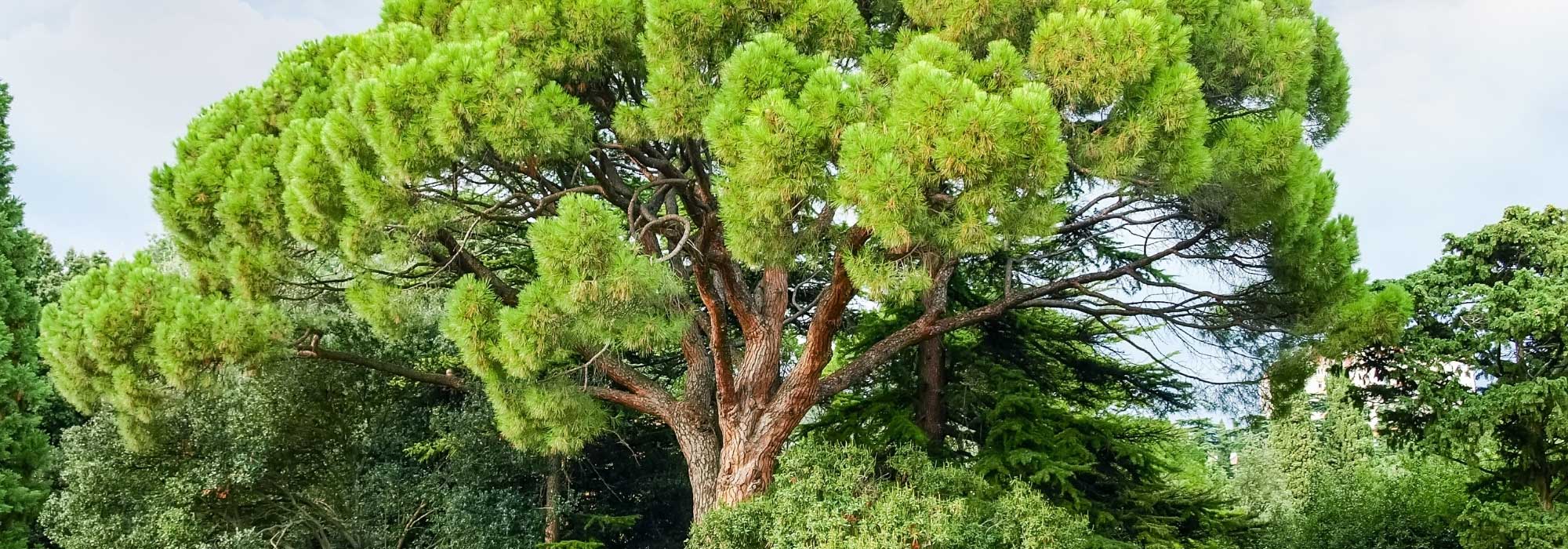
The Abies pinsapo 'Glauca' is a stunning blue-foliaged form of the Spanish or Andalusian fir. This large conifer is prized for its unique habit, forming an irregular pyramid in mature specimens, and its rigid, plastic-like blue-grey needles arranged in a brush-like fashion around the branches. Slow-growing yet hardy and drought-resistant, it is also a majestic tree that can be planted as a standalone feature in the borders of a sufficiently spacious garden. This beautiful, quintessentially Mediterranean eye-catcher will thrive in any well-drained, even poor, acidic to chalky soil.
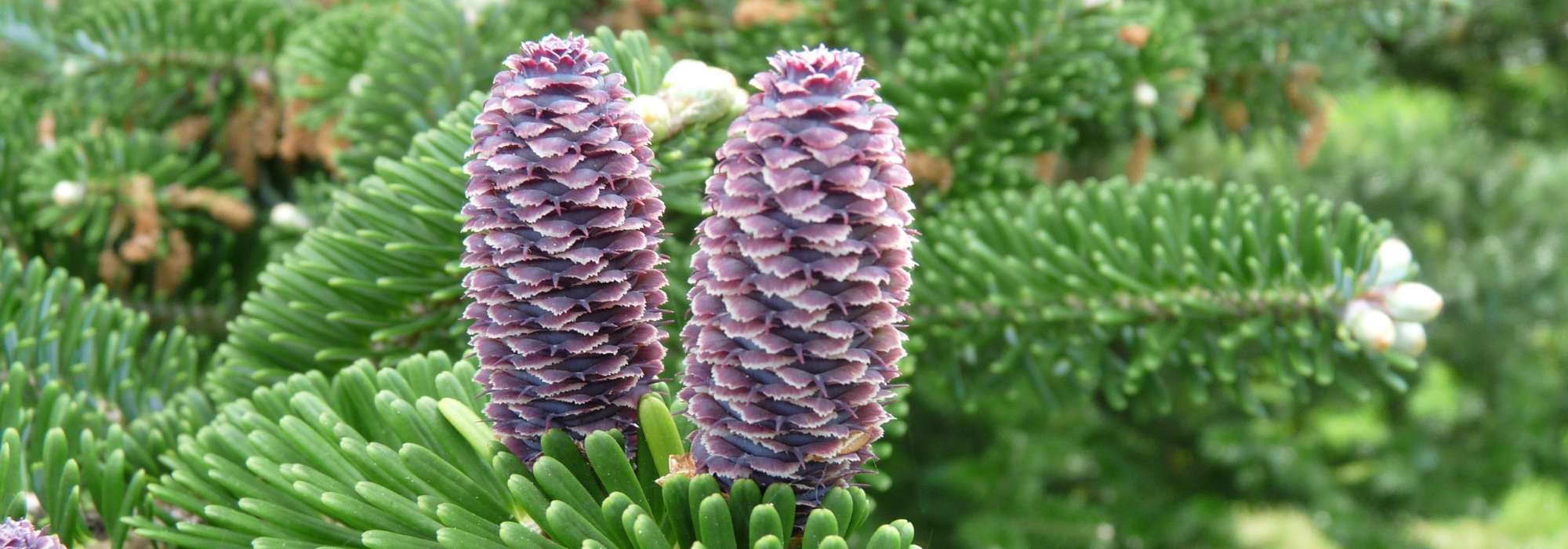
The Spanish fir, sometimes also called the Andalusian fir, is a conifer from the Pinaceae family, native to the mid and high mountains of Andalusia and Morocco. This species grows in dry, warm soils but can also withstand cold temperatures down to -25°C. With a habit that is initially cylindrical, the tree becomes tabular with age, often forming multiple leading shoots. It can reach up to 25 metres in height. The Abies pinsapo was introduced to France for its ornamental value in 1939. 'Glauca' is a horticultural selection by Desfossé & Thuillier, obtained in Orléans (France) before 1867. The blue Spanish fir 'Glauca' differs from the type species mainly in the blue-grey colour of its needles. Its growth remains slow throughout its life, unlike other firs, and it stays medium-sized, rarely exceeding 25 metres. Its almost cylindrical needles, arranged in a bottlebrush fashion and covered in a thick layer of wax, measure 1 to 2 cm in length. Marked with two white bands on both sides, they are truncate at the tip and very pleasant to the touch. The bark of the trunk becomes fissured with age. The 1 cm male cones form highly decorative clusters at the ends of lower branches, while the pinkish-white, slightly curved female cones, measuring up to 10 to 15 cm long, stand proudly upright at the top of the tree. They turn brown at ripeness and often only appear after 20 years, except in grafted specimens.
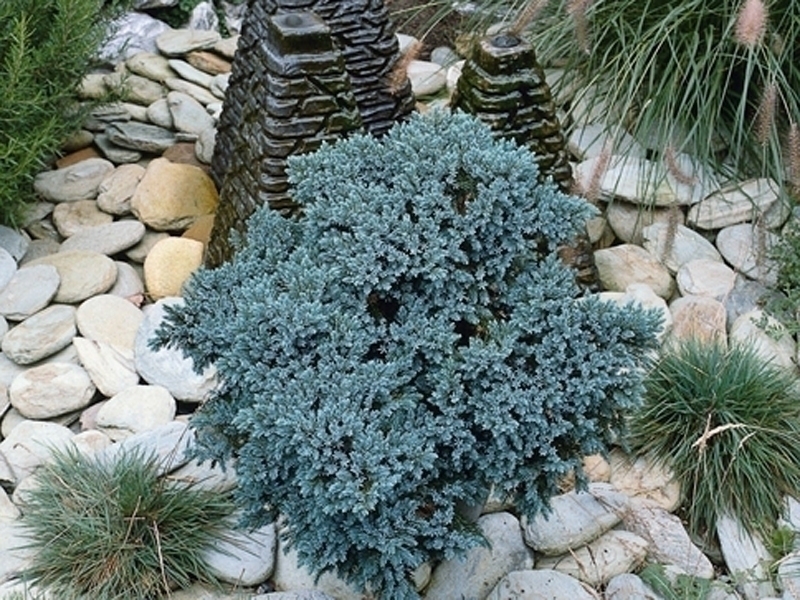
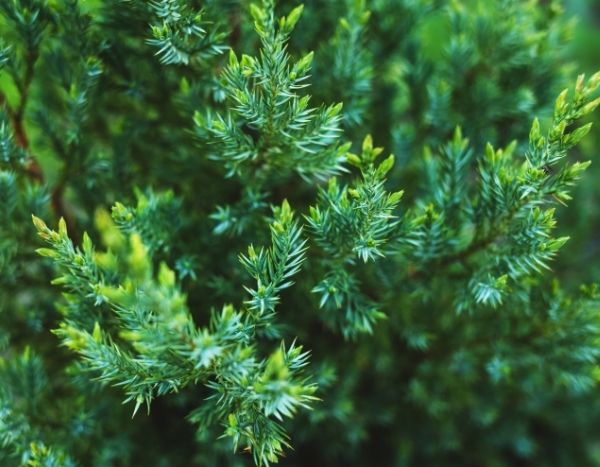
Abies pinsapo 'Glauca' is a large conifer, so its future development should be considered at the time of purchase. This tree has a straight trunk that can be pruned to improve access and very densely packed branches. Its drought resistance makes it ideal for Mediterranean gardens without irrigation, but this 'Glauca' variety also adapts easily to other climates. Plant it as a standalone specimen, surrounded by lower-growing plants. Consider pairing it with creeping conifers like the Juniperus procumbens 'Nana' or the golden creeping juniper Juniperus horizontalis 'Golden Carpet'.
Plant habit
Foliage
Botanical data
Abies
pinsapo
Glauca
Pinaceae
Glaucous Spanish fir
Mediterranean
Planting and care
Abies pinsapo 'Glauca' is best planted in autumn if summers are hot and dry, in a deep soil that retains some moisture, rich in humus, slightly acidic, neutral or chalky. It tolerates poor and chalky soils. This conifer thrives in full sun or partial shade. Water young plants regularly during the months following planting and hoe the soil in summer. The Spanish fir tolerates drought well once established, it is a fairly adaptable and hardy species, but its bark may split under intense frost. However, it is not very suited to regions that are too cold and damp.
Planting period
Intended location
Care
Planting & care advice
-
-
-
-

-
-
-
-
This item has not been reviewed yet - be the first to leave a review about it.
Recently viewed products
Haven't found what you were looking for?
Hardiness is the lowest winter temperature a plant can endure without suffering serious damage or even dying. However, hardiness is affected by location (a sheltered area, such as a patio), protection (winter cover) and soil type (hardiness is improved by well-drained soil).

The flowering period indicated on our website applies to countries and regions located in USDA zone 8 (France, the United Kingdom, Ireland, the Netherlands, etc.)
It will vary according to where you live:- In zones 9 to 10 (Italy, Spain, Greece, etc.), flowering will occur about 2 to 4 weeks earlier.
- In zones 6 to 7 (Germany, Poland, Slovenia, and lower mountainous regions), flowering will be delayed by 2 to 3 weeks.
- In zone 5 (Central Europe, Scandinavia), blooming will be delayed by 3 to 5 weeks.
In temperate climates, pruning of spring-flowering shrubs (forsythia, spireas, etc.) should be done just after flowering.
Pruning of summer-flowering shrubs (Indian Lilac, Perovskia, etc.) can be done in winter or spring.
In cold regions as well as with frost-sensitive plants, avoid pruning too early when severe frosts may still occur.
The planting period indicated on our website applies to countries and regions located in USDA zone 8 (France, United Kingdom, Ireland, Netherlands).
It will vary according to where you live:
- In Mediterranean zones (Marseille, Madrid, Milan, etc.), autumn and winter are the best planting periods.
- In continental zones (Strasbourg, Munich, Vienna, etc.), delay planting by 2 to 3 weeks in spring and bring it forward by 2 to 4 weeks in autumn.
- In mountainous regions (the Alps, Pyrenees, Carpathians, etc.), it is best to plant in late spring (May-June) or late summer (August-September).
The harvesting period indicated on our website applies to countries and regions in USDA zone 8 (France, England, Ireland, the Netherlands).
In colder areas (Scandinavia, Poland, Austria...) fruit and vegetable harvests are likely to be delayed by 3-4 weeks.
In warmer areas (Italy, Spain, Greece, etc.), harvesting will probably take place earlier, depending on weather conditions.
The sowing periods indicated on our website apply to countries and regions within USDA Zone 8 (France, UK, Ireland, Netherlands).
In colder areas (Scandinavia, Poland, Austria...), delay any outdoor sowing by 3-4 weeks, or sow under glass.
In warmer climes (Italy, Spain, Greece, etc.), bring outdoor sowing forward by a few weeks.
Shipping country and language
Your country of residence may be:
Your country of residence is:
For a better user experience on our website, you can select:
Your shipping country:
-
 Austria
-
 Belgium
-
 Bosnia & Herzegovina
-
 Bulgaria
-
 Croatia
-
 Cyprus
-
 Czechia
-
 Denmark
-
 Estonia
-
 Finland
-
 France
-
 Germany
-
 Greece
-
 Hungary
-
 Iceland
-
 Ireland
-
 Italy
Italy
-
 Latvia
-
 Liechtenstein
-
 Lithuania
-
 Luxembourg
-
 Malta
Malta
-
 Netherlands
-
 Poland
-
 Portugal
-
 Romania
-
 Serbia
-
 Slovakia
-
 Slovenia
-
 Spain
Spain
-
 Sweden
-
 Switzerland
Language:
-
French
-
 English
-
Spanish
-
Italian
-
German
-
Portuguese
-
Dutch
-
Finnish
My Account
Hello
My wish lists
My cart
Log in / Register
Existing customer?
This form is protected by reCAPTCHA - the Google Privacy Policy and Terms of Service apply.
New customer?
Create an account to track your orders, access our customer service and, if you wish, make the most of our upcoming offers.