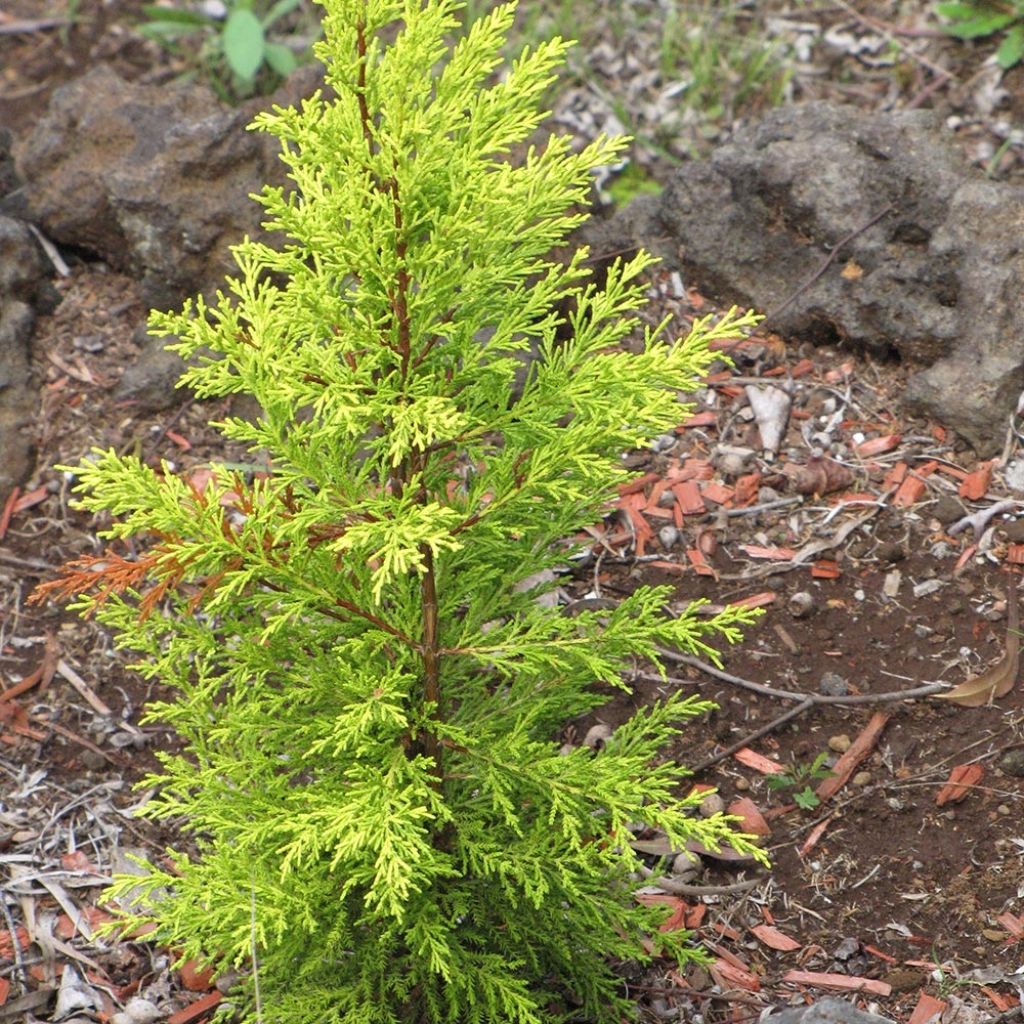
Monterey cypress Wilma - Cupressus macrocarpa
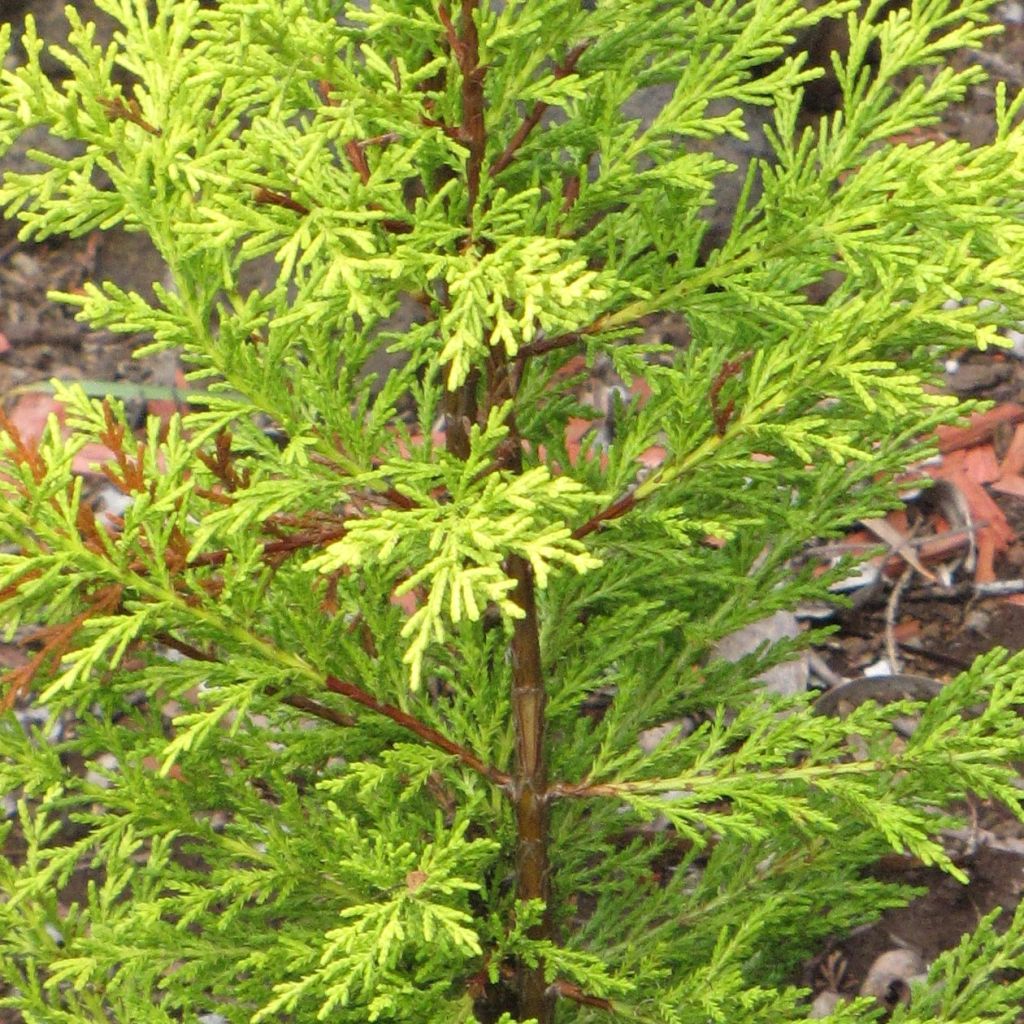
Monterey cypress Wilma - Cupressus macrocarpa
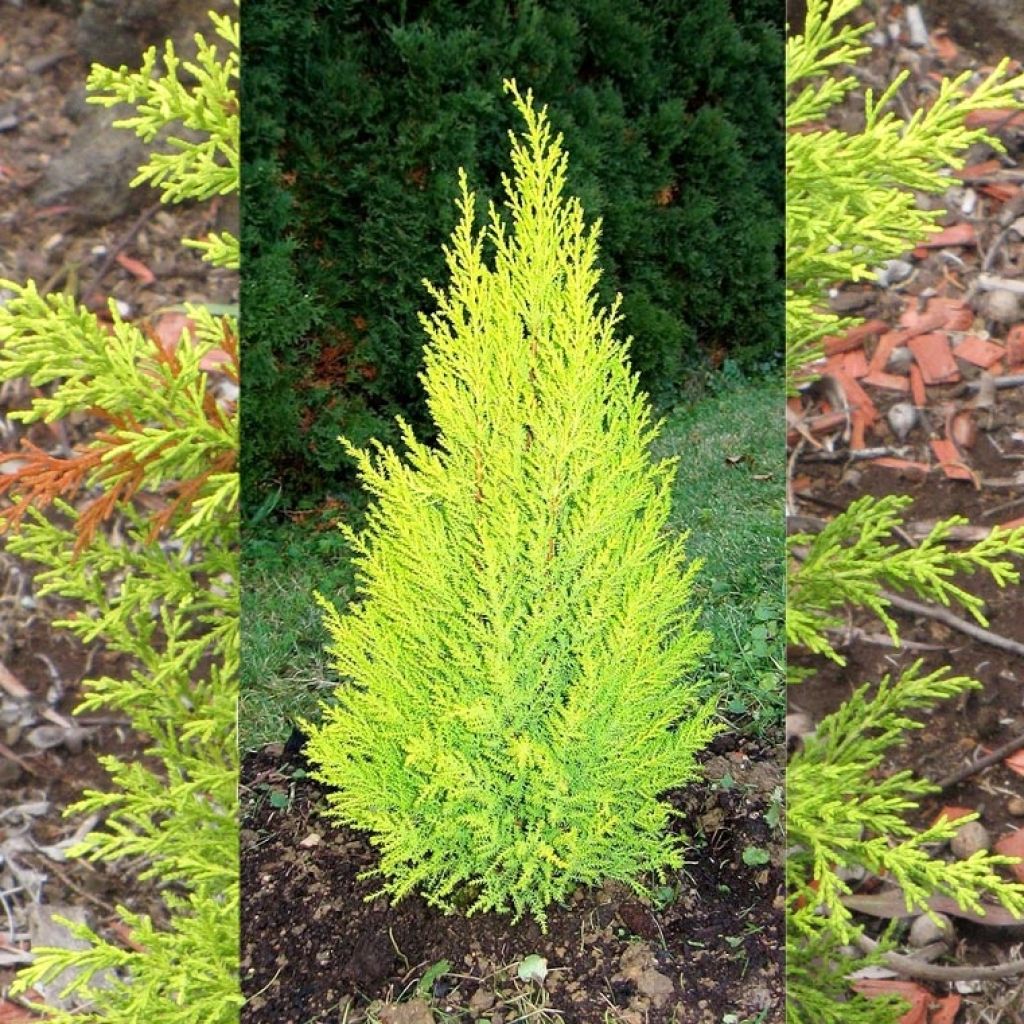
Monterey cypress Wilma - Cupressus macrocarpa
Monterey cypress Wilma - Cupressus macrocarpa
Cupressus macrocarpa Wilma
Monterey cypress
Back-to-school special offer!
Get €10 off for every €50 you spend! And get up to €40 off on a single order.
How does it work?
1. Shop your favourites
Add your favourite plants to your basket. For every €50 you spend (excluding delivery charges, store credit and the plastic-free option), you’ll receive a €10 voucher.
€50 spent = €10 voucher
€100 spent = €20 voucher
€150 spent = €30 voucher
€200 spent = €40 voucher
2. Place your order
Once your basket reaches one of the spending thresholds, place your order. You can even choose your delivery date!
3. Receive your voucher
As soon as your order has been shipped, you’ll receive an email containing your personal voucher code and its value.
4. Use it on your next order
Your voucher is valid for 90 days from the date you receive it. It can be used once only, on a new order worth at least the value of the voucher, excluding delivery charges.
Please note: Vouchers can be combined with other offers, but cannot be split or refunded.
Home or relay delivery (depending on size and destination)
Important: You may be charged customs duties by your country’s customs authorities upon delivery.
Schedule delivery date,
and select date in basket
This plant carries a 24 months recovery warranty
More information
We guarantee the quality of our plants for a full growing cycle, and will replace at our expense any plant that fails to recover under normal climatic and planting conditions.
Would this plant suit my garden?
Set up your Plantfit profile →
Description
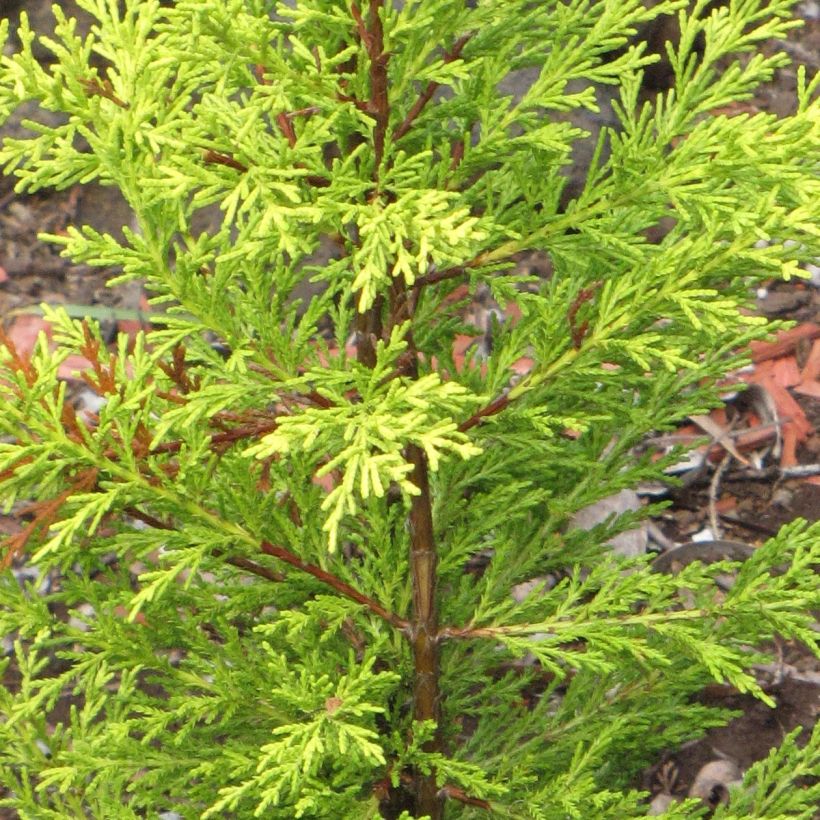
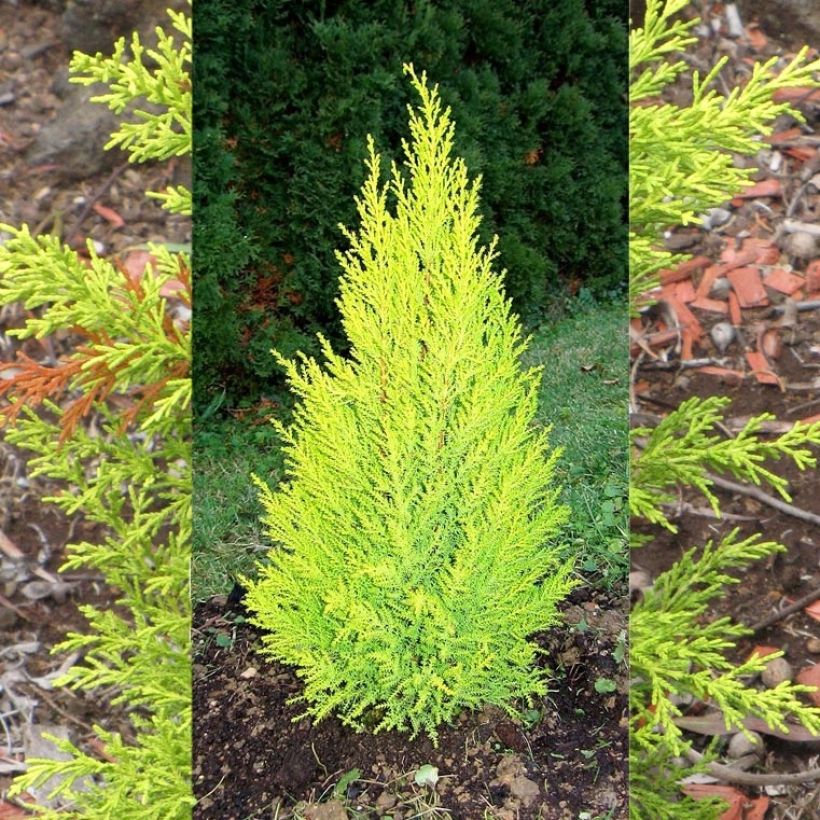
The Cupressus macrocarpa ‘Wilma’ is a variety of Monterey Cypress with so-called 'golden' foliage often used by bonsai enthusiasts or in festive table decorations. Though slow to start, this attractive conifer eventually grows upwards when planted to form, after many years, a beautiful slender column reaching 6m in height, notable for its chartreuse foliage flecked with gold. Thriving in Atlantic coastal gardens where it makes a splendid specimen, it tolerates poor, sandy soil, sea spray, and salty fogs. Choose a sheltered spot for this somewhat tender variety.
The Cupressus macrocarpa is one of the largest species in the Cupressaceae family. Commonly known as Monterey Cypress or macrocarpa, it is a tall conifer native to the Monterey area on the west coast of the United States from which it derives its name. In the wild, it grows in forests along California’s central coast, benefiting from the atmospheric moisture and fog it favours. In their native habitat, some specimens reach 36m in height with trunks up to 2.4m in diameter. Similar to Chamaecyparis, they differs in their rounded branchlets arranged in brush-like clusters and larger cones with woody scales.
Reaching 3m in 10 years, the ‘Wilma’ cultivar will rarely exceed 6m in height with a 2m spread in our temperate climates. Growing slowly, its foliage appears somewhat coarse up close, releasing a faintly acidic aroma when crushed. Its small, blunt, triangular leaves are imbricate on short cylindrical branchlets, themselves attached to twigs. Young plants under one year old bear juvenile needle-like leaves. The golden-yellow foliage in spring growth turns chartreuse from summer to winter. The female cones are globose and green when young maturing to brown. The reddish-brown bark becomes greyer with age. This tree has a taproot system, anchoring it deeply to draw water and nutrients while resisting strong winds. Hardy to -7°C in well-drained soil, it requires winter protection in colder regions.
With its narrow habit and moderate growth, the Monterey Cypress ‘Wilma’ is suited to medium-to-large gardens. Ideal for windswept coastal gardens with sandy soil, this radiant conifer makes a striking statement whether in contemporary, wild, romantic, or English-style gardens. Its luminous foliage pairs beautifully with plants featuring darker foliage, deep green or purple. For convenience or lack of inspiration, it can be pruned into a hedge like its cousin the Leyland Cypress – though this would rob the tree of its natural grace, scale and character. Widely planted along Brittany’s coast, the macrocarpa thrives in regions with cool summers and mild, wet winters.
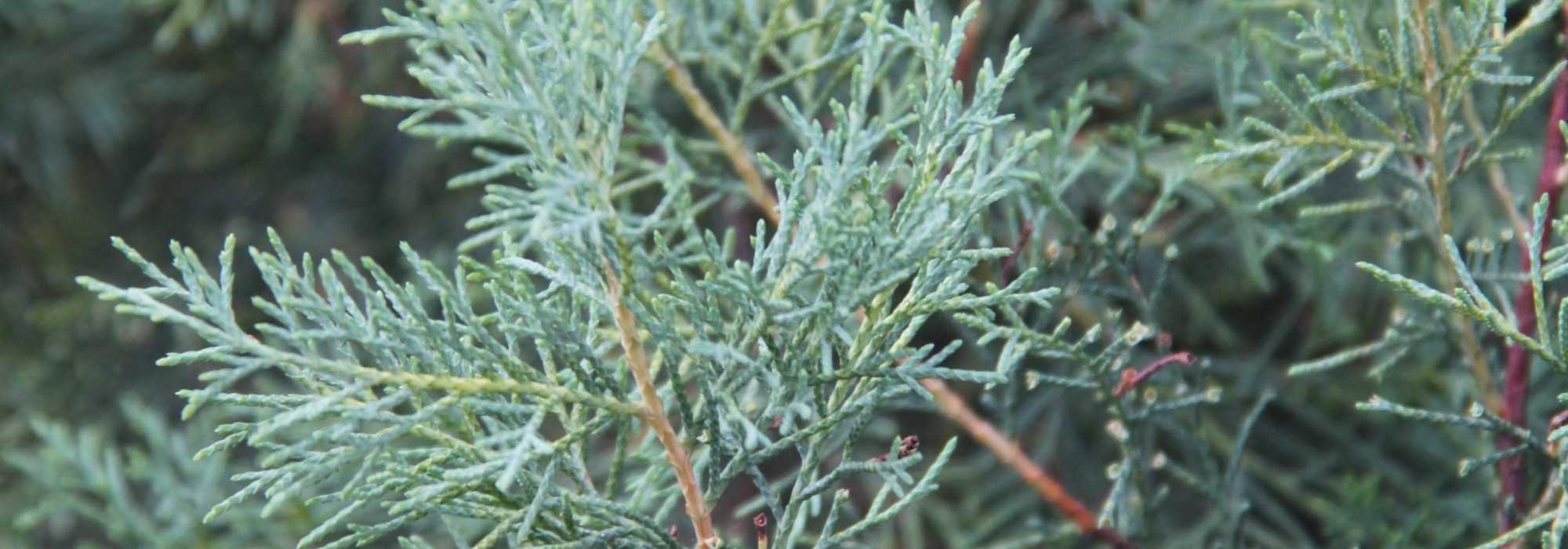
Monterey cypress Wilma - Cupressus macrocarpa in pictures
Plant habit
Flowering
Foliage
Safety measures
Botanical data
Cupressus
macrocarpa
Wilma
Cupressaceae
Monterey cypress
Cultivar or hybrid
atteinterespiratoire
Cette plante peut entraîner des symptômes allergiques.
Evitez de la planter si vous ou vos proches souffrez de rhinite saisonnière ("rhume des foins").
Davantage d'informations sur https://plantes-risque.info
Planting and care
Plant the Monterey Cypress in a sunny location in well-drained, even sandy and poor, or calcareous, deep soil, as its taproot will need to descend to find water and provide good anchorage for its tall stature. Choose its location carefully as this large taproot is averse to being adisturbed or broken. It is preferable to attempt to grow it in areas with mild winters; as a mature specimen, it will be hardy down to -7°C. It should therefore be protected in winter in regions with colder winters.
This conifer can be susceptible to cortical canker (a pathogenous fungus), especially if subjected to repeated pruning or injuries. Its most common parasitic pests include red spider mites, aphids, scale insects, and jewel beetles, which are particularly virulent in hot and dry weather; it is advisable to mist the foliage during hot and dry periods to prevent mite proliferation.
Propagation:
By sowing seeds in spring or summer. To break the dormancy of the seeds, they must be exposed to cold for at least 3 months.
Planting period
Intended location
Care
Planting & care advice
-

-

-
-

-

-

-

-

This item has not been reviewed yet - be the first to leave a review about it.
Recently viewed products
Haven't found what you were looking for?
Hardiness is the lowest winter temperature a plant can endure without suffering serious damage or even dying. However, hardiness is affected by location (a sheltered area, such as a patio), protection (winter cover) and soil type (hardiness is improved by well-drained soil).

The flowering period indicated on our website applies to countries and regions located in USDA zone 8 (France, the United Kingdom, Ireland, the Netherlands, etc.)
It will vary according to where you live:- In zones 9 to 10 (Italy, Spain, Greece, etc.), flowering will occur about 2 to 4 weeks earlier.
- In zones 6 to 7 (Germany, Poland, Slovenia, and lower mountainous regions), flowering will be delayed by 2 to 3 weeks.
- In zone 5 (Central Europe, Scandinavia), blooming will be delayed by 3 to 5 weeks.
In temperate climates, pruning of spring-flowering shrubs (forsythia, spireas, etc.) should be done just after flowering.
Pruning of summer-flowering shrubs (Indian Lilac, Perovskia, etc.) can be done in winter or spring.
In cold regions as well as with frost-sensitive plants, avoid pruning too early when severe frosts may still occur.
The planting period indicated on our website applies to countries and regions located in USDA zone 8 (France, United Kingdom, Ireland, Netherlands).
It will vary according to where you live:
- In Mediterranean zones (Marseille, Madrid, Milan, etc.), autumn and winter are the best planting periods.
- In continental zones (Strasbourg, Munich, Vienna, etc.), delay planting by 2 to 3 weeks in spring and bring it forward by 2 to 4 weeks in autumn.
- In mountainous regions (the Alps, Pyrenees, Carpathians, etc.), it is best to plant in late spring (May-June) or late summer (August-September).
The harvesting period indicated on our website applies to countries and regions in USDA zone 8 (France, England, Ireland, the Netherlands).
In colder areas (Scandinavia, Poland, Austria...) fruit and vegetable harvests are likely to be delayed by 3-4 weeks.
In warmer areas (Italy, Spain, Greece, etc.), harvesting will probably take place earlier, depending on weather conditions.
The sowing periods indicated on our website apply to countries and regions within USDA Zone 8 (France, UK, Ireland, Netherlands).
In colder areas (Scandinavia, Poland, Austria...), delay any outdoor sowing by 3-4 weeks, or sow under glass.
In warmer climes (Italy, Spain, Greece, etc.), bring outdoor sowing forward by a few weeks.
Shipping country and language
Your country of residence may be:
Your country of residence is:
For a better user experience on our website, you can select:
Your shipping country:
-
 Austria
-
 Belgium
-
 Bosnia & Herzegovina
-
 Bulgaria
-
 Croatia
-
 Cyprus
-
 Czechia
-
 Denmark
-
 Estonia
-
 Finland
-
 France
-
 Germany
-
 Greece
-
 Hungary
-
 Iceland
-
 Ireland
-
 Italy
Italy
-
 Latvia
-
 Liechtenstein
-
 Lithuania
-
 Luxembourg
-
 Malta
Malta
-
 Netherlands
-
 Poland
-
 Portugal
-
 Romania
-
 Serbia
-
 Slovakia
-
 Slovenia
-
 Spain
Spain
-
 Sweden
-
 Switzerland
Language:
-
French
-
 English
-
Spanish
-
Italian
-
German
-
Portuguese
-
Dutch
-
Finnish
My Account
Hello
My wish lists
My cart
Log in / Register
Existing customer?
This form is protected by reCAPTCHA - the Google Privacy Policy and Terms of Service apply.
New customer?
Create an account to track your orders, access our customer service and, if you wish, make the most of our upcoming offers.