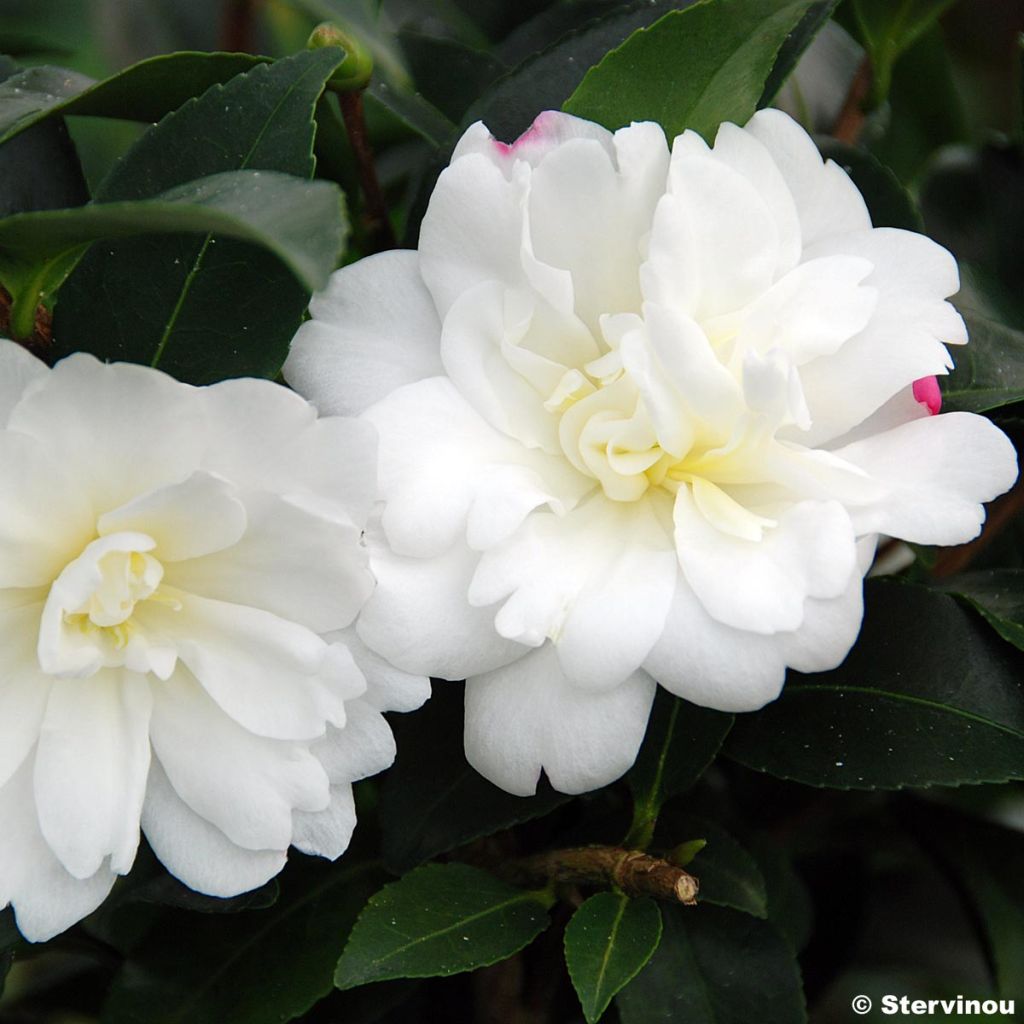
Camellia sasanqua Fuji no Yuki
Camellia sasanqua Fuji no Yuki
Camellia sasanqua x hiemalis Fuji no Yuki
Autumn Camellia, Christmas Camellia
Of the 4 autumn camellias that I ordered from you, the Fuji no yuki is the only one to have zero flowers and even zero buds after a year, even though it is a young plant in exactly the same conditions. So, very disappointing...
Anne, 27/11/2020
Back-to-school special offer!
Get €10 off for every €50 you spend! And get up to €40 off on a single order.
How does it work?
1. Shop your favourites
Add your favourite plants to your basket. For every €50 you spend (excluding delivery charges, store credit and the plastic-free option), you’ll receive a €10 voucher.
€50 spent = €10 voucher
€100 spent = €20 voucher
€150 spent = €30 voucher
€200 spent = €40 voucher
2. Place your order
Once your basket reaches one of the spending thresholds, place your order. You can even choose your delivery date!
3. Receive your voucher
As soon as your order has been shipped, you’ll receive an email containing your personal voucher code and its value.
4. Use it on your next order
Your voucher is valid for 90 days from the date you receive it. It can be used once only, on a new order worth at least the value of the voucher, excluding delivery charges.
Please note: Vouchers can be combined with other offers, but cannot be split or refunded.
Why not try an alternative variety in stock?
View all →
Available in 1 sizes
Available in 1 sizes
Available in 1 sizes
Available in 2 sizes
Available in 1 sizes
Available in 1 sizes
Available in 1 sizes
Available in 1 sizes
Available in 1 sizes
Available in 1 sizes
This plant carries a 24 months recovery warranty
More information
We guarantee the quality of our plants for a full growing cycle, and will replace at our expense any plant that fails to recover under normal climatic and planting conditions.
Would this plant suit my garden?
Set up your Plantfit profile →
Description
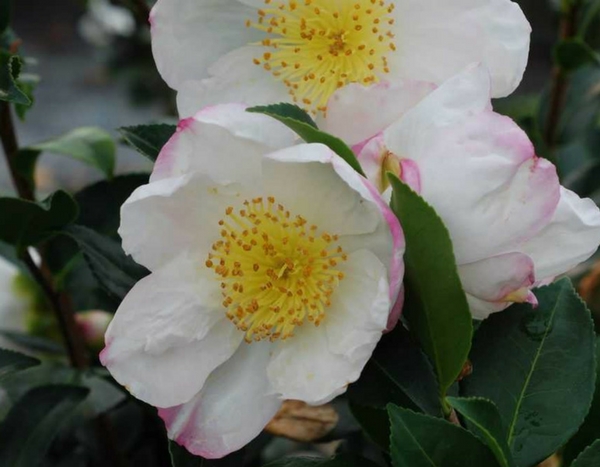
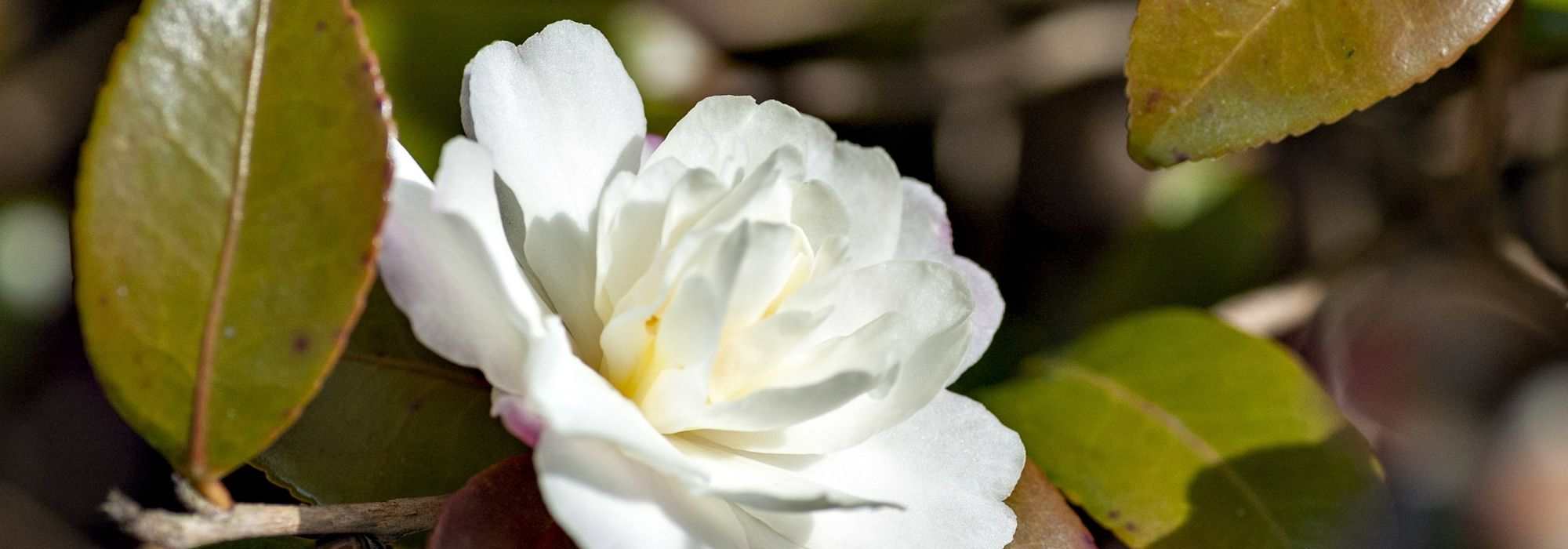
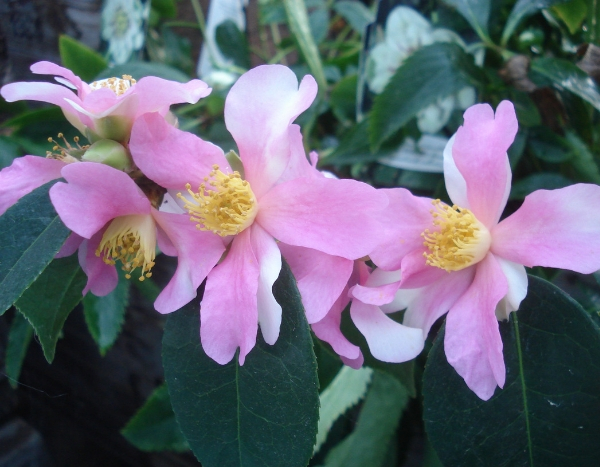
Camellia 'Fuji-no-Yuki' offers an autumnal spectacle as beautiful as snow falling on Mount Fuji. Its beautiful dark and glossy foliage becomes covered with translucent buds edged with bright pink, which open into double white flowers. It is an evergreen bush with a particularly upright habit, both vigorous and compact. It is hardy and capable of adapting to windy or sunny situations. However, it requires a limestone-free soil. Plant it alone in the garden, in a container or even in a flowering hedge.
'Fuji-no-Yuki' is one of the many hybrids of the species Camellia sasanqua, which belongs to the family of Theaceae. This plant forms a compact bush with a particularly vertical habit. It is rather slow growing, reaching 1 m (3.3 ft) in height and 0.80 m (2.6 ft) wide in 10 years. Its flowering extends from November to December. Fairly round buds appear, each one white and edged with bright pink. These pink hues remain on the undersides of the opened corollas. White, double flowers soon follow, measuring 7 cm to 9 cm (2.7 in to 3.5 in) in diameter and resembling those of gardenias with a very fine texture. They are formed by at least 9 petals around a heart of golden yellow stamens that reveal themselves late. They are not long-lasting, but continually renew themselves on the plant. The dense and evergreen foliage is composed of small shiny dark green leaves, ovate and leathery.
Camellia x sasanqua 'Fuji-no-Yuki', just like its Japanese parent, tolerates the sun and windy situations better than other camellias. It performs better in mild climates than in cold regions, where its hardiness is sometimes lacking, and its flowering destroyed. Wherever winter is not too harsh, it can be planted in isolation in the garden, or combined with other acid-loving plants (for example: Rhododendron, azaleas, Hydrangea, and Hamamelis) in a flowering hedge. Camellia 'Fuji-no-Yuki' deserves a prime spot, at the entrance of the garden or along a path. You can also dress its base with autumn bulbs, such as colchicums or cyclamen. In cold regions, it can be planted in containers on a balcony or terrace. During its flowering period, the pots can be brought inside to a veranda or cold greenhouse. It is also possible to protect your camellia during cold weather by bringing it into your home. However, take care to regularly mist the foliage and water the plant with non-limestone water.
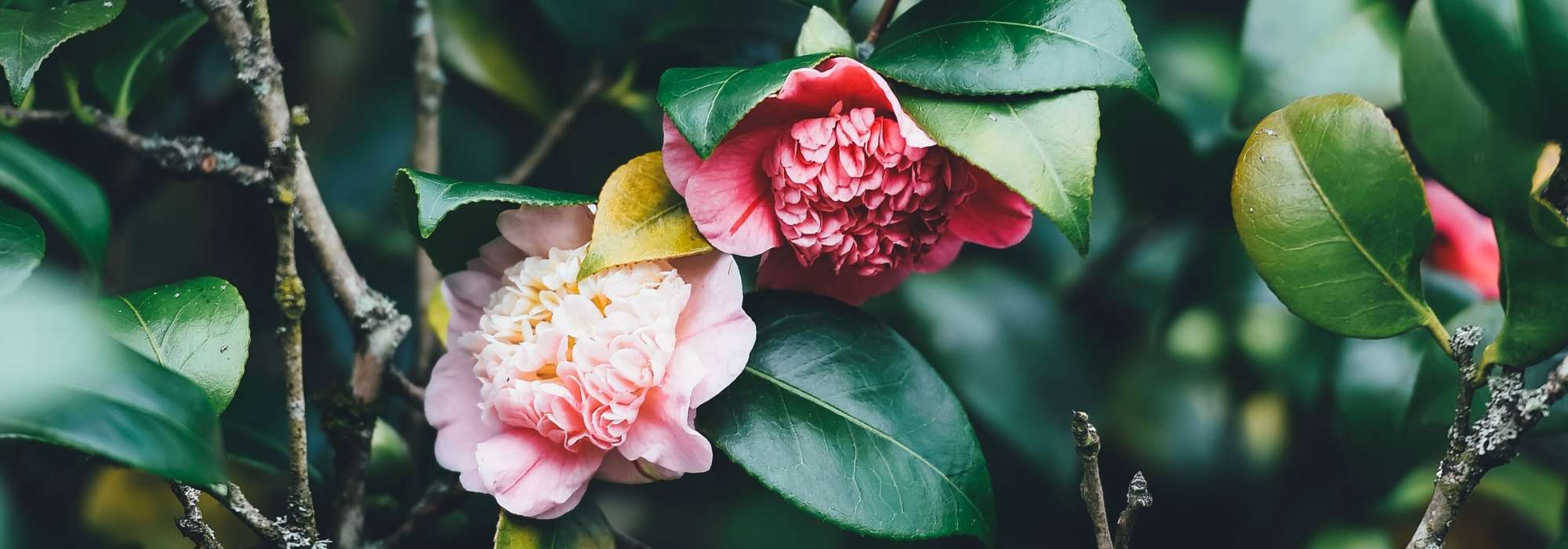
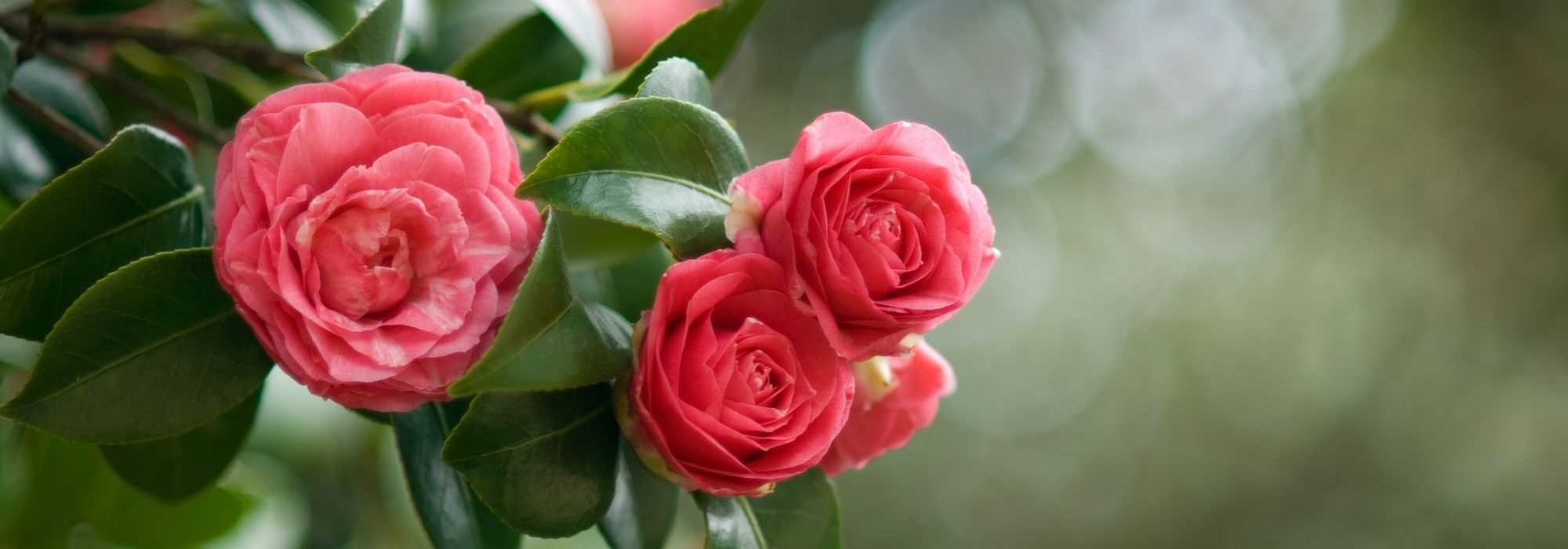
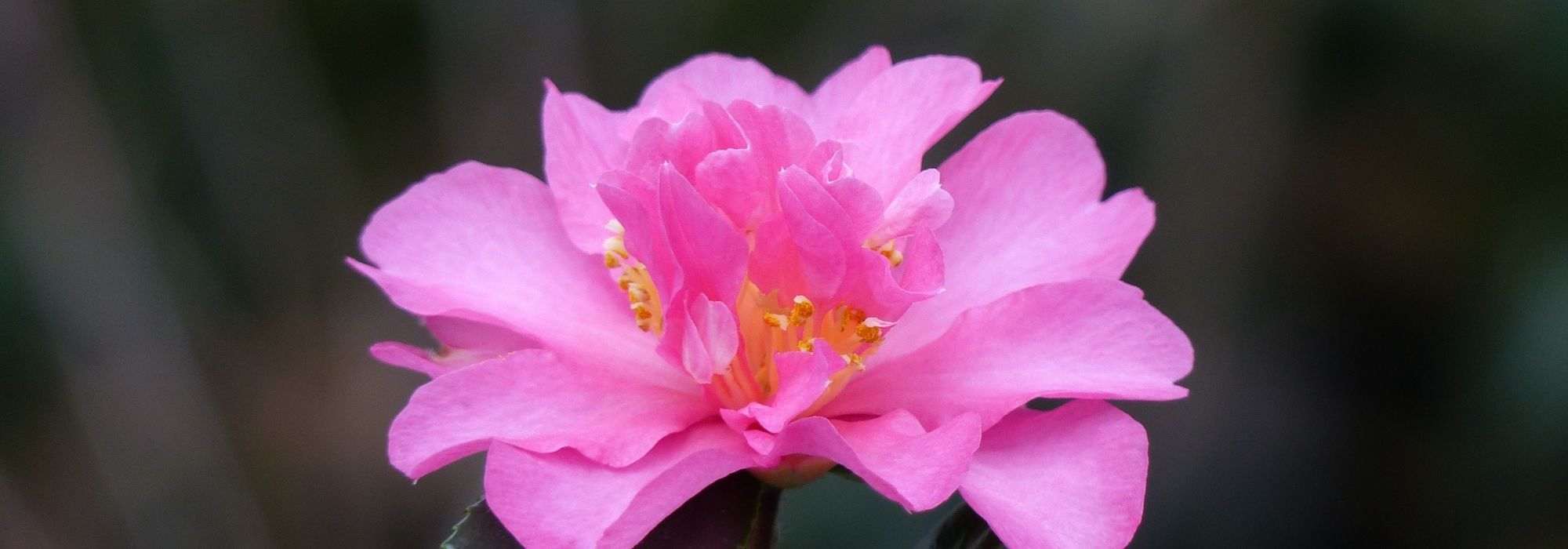
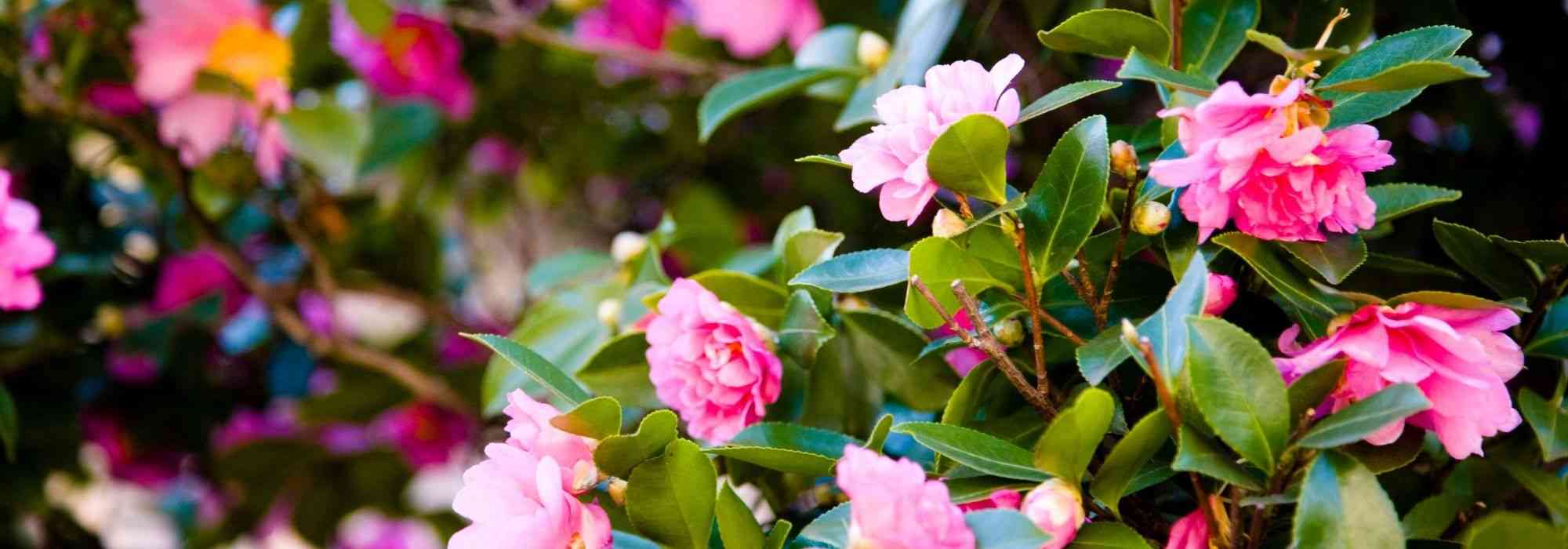
Camellia sasanqua Fuji no Yuki in pictures
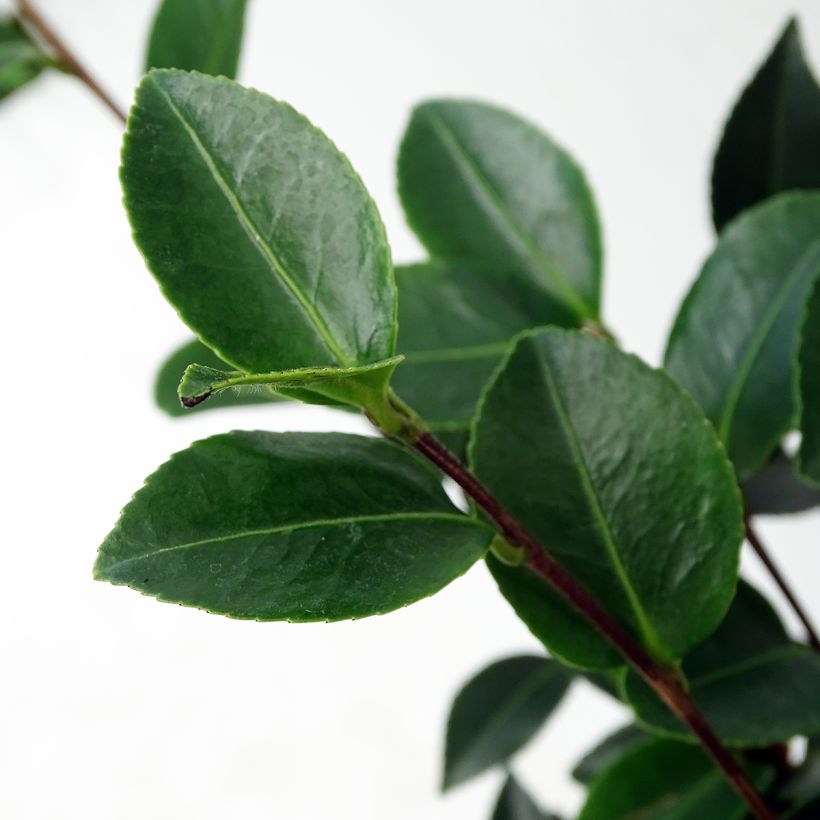
Plant habit
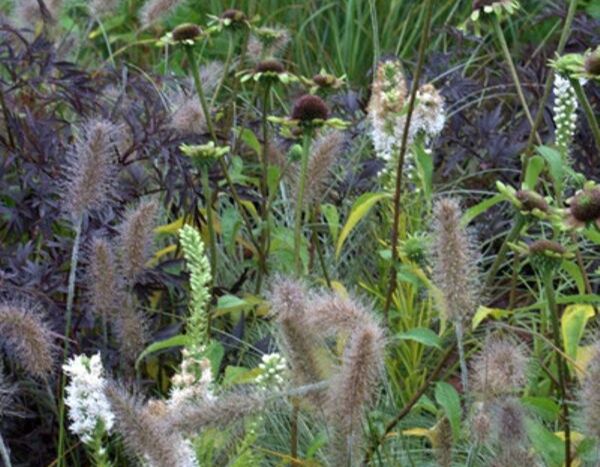
Flowering
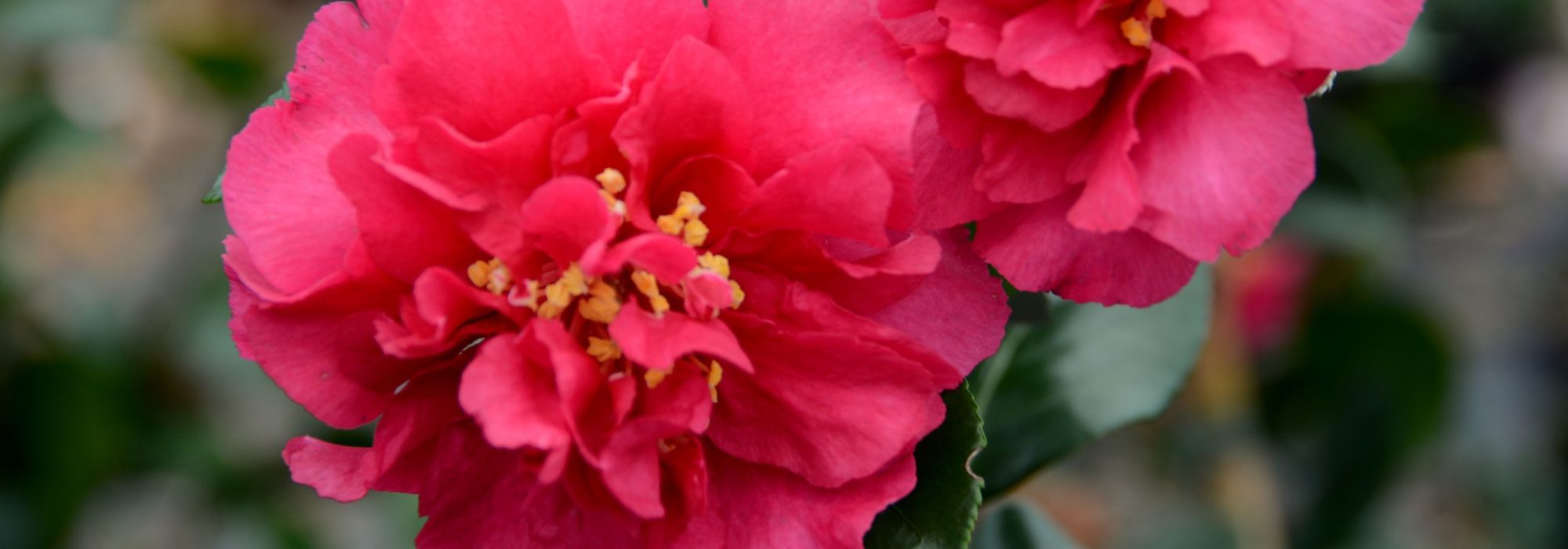
Foliage
Botanical data
Camellia
sasanqua x hiemalis
Fuji no Yuki
Theaceae
Autumn Camellia, Christmas Camellia
Cultivar or hybrid
Planting and care
Camellia 'Fuji-no-Yuki' is hardy up to approximately -12° C (10.4° F). It is a perfect bush in a mild and humid oceanic climate. The greater the temperature differences, the more the bush suffers and the less it thrives.
Preferably plant it in March-April. It prefers a non-limestone soil rich in organic matter. However, it is less sensitive than other species to this parameter; a slightly acidic forest soil or a well-drained clay-silica soil enriched with humus will be perfect. In a pot, use a mixture of ericaceous soil, decomposed leaf compost, and garden soil if it is not too heavy in limestone. Also add a drainage layer at the bottom of the container. The substrate should be loose, light and well-drained, to allow water to pass through and roots to be aerated. Clayey, heavy, compact soils should be avoided.
Place the camellia in a non-burning sun position; it needs brightness but will not tolerate a too hot south exposure in summer. Also, be careful to protect it from prevailing winds by planting it near a wall, otherwise it could lose part of its flowering. Do not bury the root ball too deeply. Cover with 2 cm to 3 cm (0.8 in to 1.2 in) of soil, no more, but enough to prevent drying out. Water abundantly, then cover the soil with bark mulch.
Before winter arrives, protect the roots that mainly develop on the surface by covering the base with a thick mattress of mixed dry leaves and sand, or any other insulating material (pine bark, flax or hemp flakes, etc). In case of snowfall, remove the snow by shaking the bush, as it could burn the foliage and weaken the bush. It is not necessary to prune this camellia. On the contrary, beautiful free forms are obtained without pruning.
Planting period
Intended location
Care
Planting & care advice
-
-
-
-
-
-
-
-
-
, onOrder confirmed
Reply from on Promesse de fleurs
Recently viewed products
Haven't found what you were looking for?
Hardiness is the lowest winter temperature a plant can endure without suffering serious damage or even dying. However, hardiness is affected by location (a sheltered area, such as a patio), protection (winter cover) and soil type (hardiness is improved by well-drained soil).

The flowering period indicated on our website applies to countries and regions located in USDA zone 8 (France, the United Kingdom, Ireland, the Netherlands, etc.)
It will vary according to where you live:- In zones 9 to 10 (Italy, Spain, Greece, etc.), flowering will occur about 2 to 4 weeks earlier.
- In zones 6 to 7 (Germany, Poland, Slovenia, and lower mountainous regions), flowering will be delayed by 2 to 3 weeks.
- In zone 5 (Central Europe, Scandinavia), blooming will be delayed by 3 to 5 weeks.
In temperate climates, pruning of spring-flowering shrubs (forsythia, spireas, etc.) should be done just after flowering.
Pruning of summer-flowering shrubs (Indian Lilac, Perovskia, etc.) can be done in winter or spring.
In cold regions as well as with frost-sensitive plants, avoid pruning too early when severe frosts may still occur.
The planting period indicated on our website applies to countries and regions located in USDA zone 8 (France, United Kingdom, Ireland, Netherlands).
It will vary according to where you live:
- In Mediterranean zones (Marseille, Madrid, Milan, etc.), autumn and winter are the best planting periods.
- In continental zones (Strasbourg, Munich, Vienna, etc.), delay planting by 2 to 3 weeks in spring and bring it forward by 2 to 4 weeks in autumn.
- In mountainous regions (the Alps, Pyrenees, Carpathians, etc.), it is best to plant in late spring (May-June) or late summer (August-September).
The harvesting period indicated on our website applies to countries and regions in USDA zone 8 (France, England, Ireland, the Netherlands).
In colder areas (Scandinavia, Poland, Austria...) fruit and vegetable harvests are likely to be delayed by 3-4 weeks.
In warmer areas (Italy, Spain, Greece, etc.), harvesting will probably take place earlier, depending on weather conditions.
The sowing periods indicated on our website apply to countries and regions within USDA Zone 8 (France, UK, Ireland, Netherlands).
In colder areas (Scandinavia, Poland, Austria...), delay any outdoor sowing by 3-4 weeks, or sow under glass.
In warmer climes (Italy, Spain, Greece, etc.), bring outdoor sowing forward by a few weeks.
Shipping country and language
Your country of residence may be:
Your country of residence is:
For a better user experience on our website, you can select:
Your shipping country:
-
 Austria
-
 Belgium
-
 Bosnia & Herzegovina
-
 Bulgaria
-
 Croatia
-
 Cyprus
-
 Czechia
-
 Denmark
-
 Estonia
-
 Finland
-
 France
-
 Germany
-
 Greece
-
 Hungary
-
 Iceland
-
 Ireland
-
 Italy
Italy
-
 Latvia
-
 Liechtenstein
-
 Lithuania
-
 Luxembourg
-
 Malta
Malta
-
 Netherlands
-
 Poland
-
 Portugal
-
 Romania
-
 Serbia
-
 Slovakia
-
 Slovenia
-
 Spain
Spain
-
 Sweden
-
 Switzerland
Language:
-
French
-
 English
-
Spanish
-
Italian
-
German
-
Portuguese
-
Dutch
-
Finnish
My Account
Hello
My wish lists
My cart
Log in / Register
Existing customer?
This form is protected by reCAPTCHA - the Google Privacy Policy and Terms of Service apply.
New customer?
Create an account to track your orders, access our customer service and, if you wish, make the most of our upcoming offers.