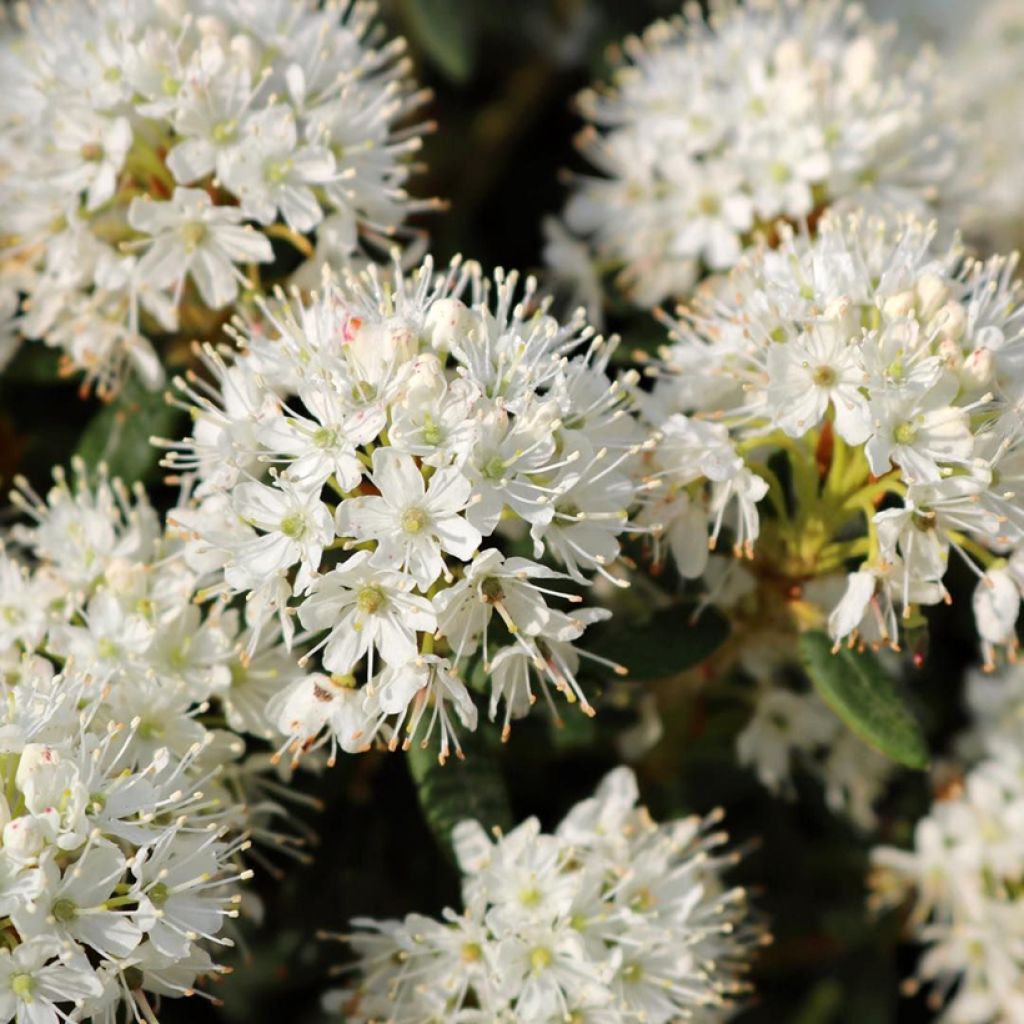
Rhododendron groenlandicum Compactum
Rhododendron groenlandicum Compactum
Ledum groenlandicum Compactum
Labrador Tea, Marsh Tea, Greenland Ledum
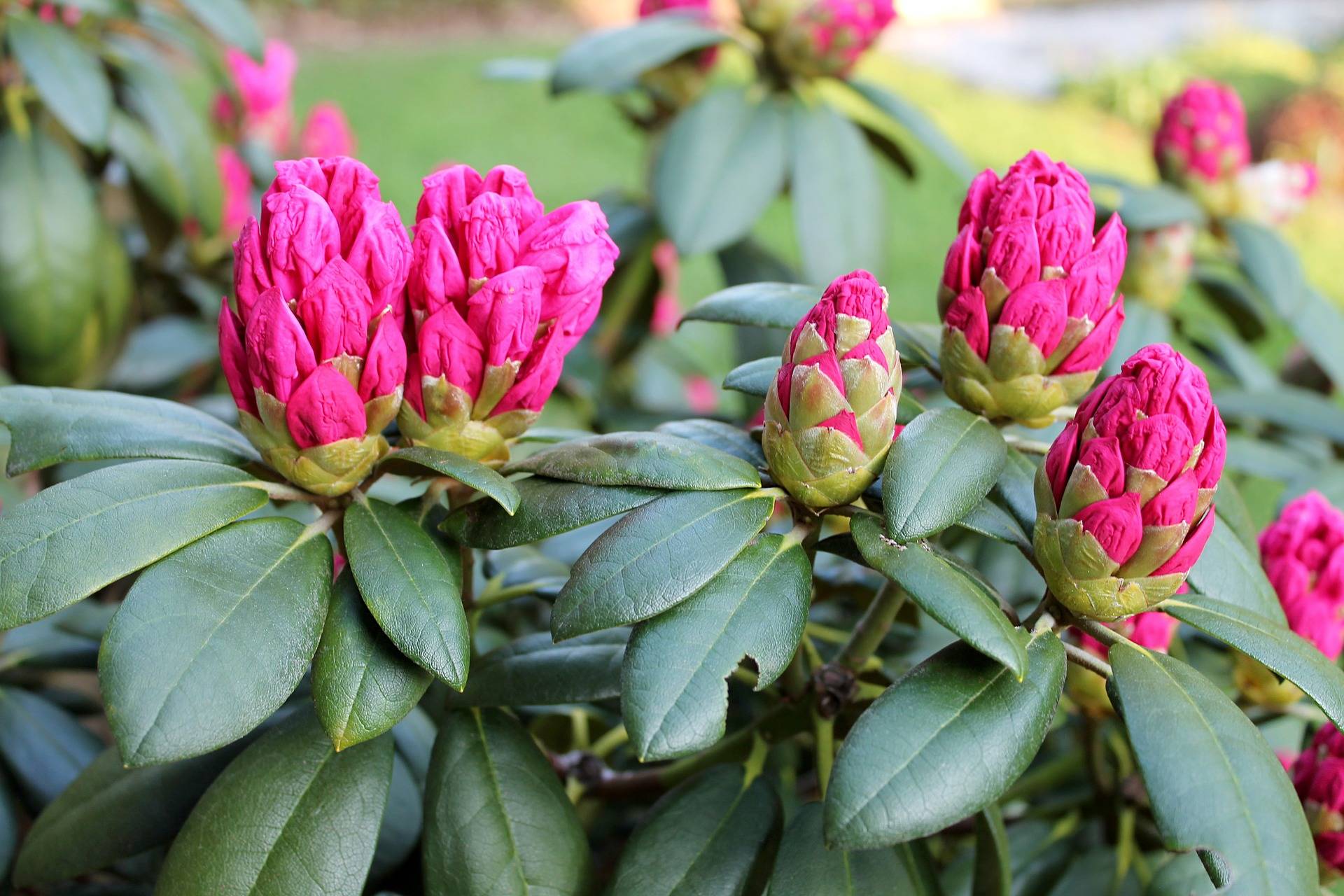
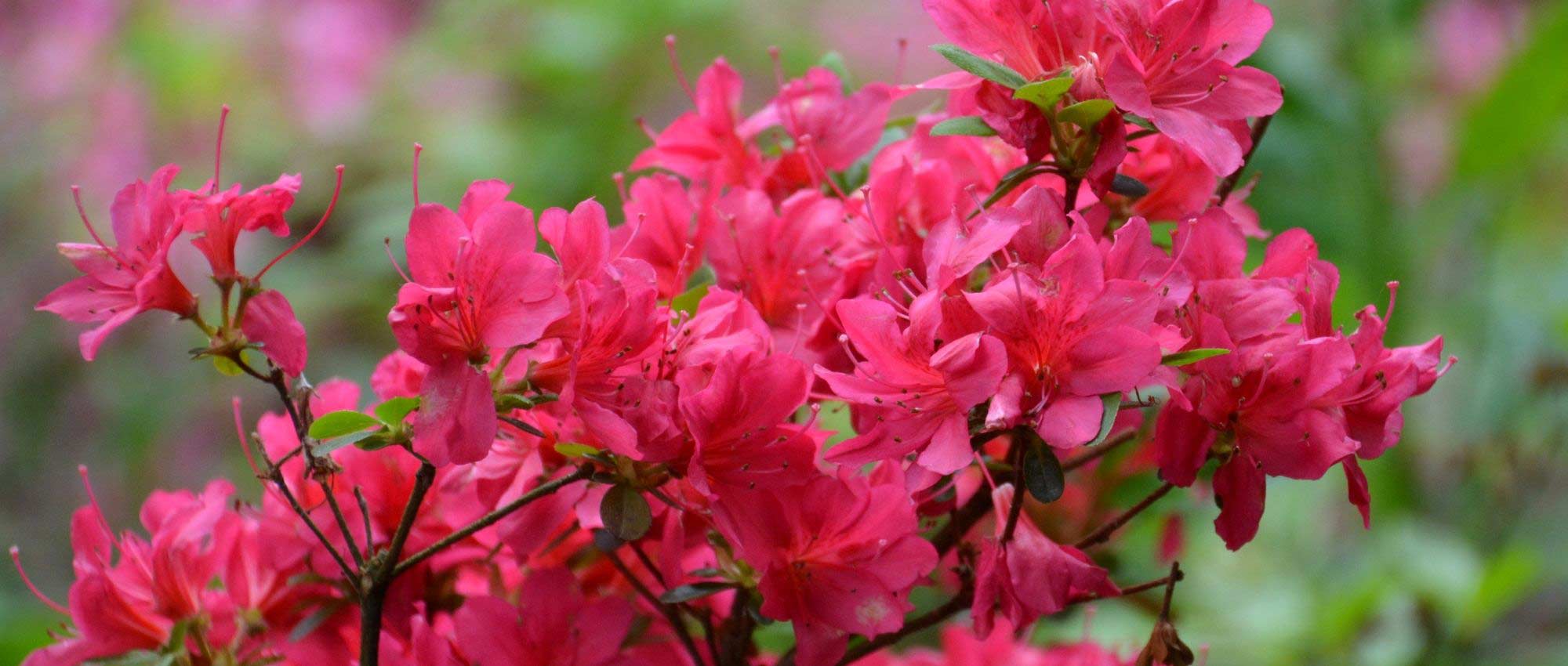
Very beautiful young plant in bud that promises good herbal teas. All that's left is to plant it in the conditions that suit it.
Emmanuel , 22/03/2025
Back-to-school special offer!
Get €10 off for every €50 you spend! And get up to €40 off on a single order.
How does it work?
1. Shop your favourites
Add your favourite plants to your basket. For every €50 you spend (excluding delivery charges, store credit and the plastic-free option), you’ll receive a €10 voucher.
€50 spent = €10 voucher
€100 spent = €20 voucher
€150 spent = €30 voucher
€200 spent = €40 voucher
2. Place your order
Once your basket reaches one of the spending thresholds, place your order. You can even choose your delivery date!
3. Receive your voucher
As soon as your order has been shipped, you’ll receive an email containing your personal voucher code and its value.
4. Use it on your next order
Your voucher is valid for 90 days from the date you receive it. It can be used once only, on a new order worth at least the value of the voucher, excluding delivery charges.
Please note: Vouchers can be combined with other offers, but cannot be split or refunded.
Why not try an alternative variety in stock?
View all →
Available in 1 sizes
Available in 1 sizes
Available in 1 sizes
Available in 1 sizes
Available in 1 sizes
Available in 1 sizes
Available in 3 sizes
Available in 1 sizes
Available in 1 sizes
Available in 1 sizes
This plant carries a 24 months recovery warranty
More information
We guarantee the quality of our plants for a full growing cycle, and will replace at our expense any plant that fails to recover under normal climatic and planting conditions.
Would this plant suit my garden?
Set up your Plantfit profile →
Description
Ledum groenlandicum Compactum is the dwarf form of the Labrador Tea, an evergreen subshrub more commonly known as a medicinal and aromatic plant than as an ornamental shrub. Yet this little aromatic bush, also known as Greenland Ledum, is not without its charms, and its Compactum form is even prettier with its large cushion-like appearance adorned with tiny woolly leaves and covered in small white bouquets in the spring. In the garden this cold climate plant requires acidic, moist to damp soil, in a partially shaded site, for example in coniferous undergrowth.
Greenland Ledum Compactum belongs to the Ericaceae family, like heathers, azaleas and blueberries. It has now been renamed Rhododendron groenlandicum. The wild species, slightly larger, originates from a vast geographical area located in the North of the American continent, from Greenland to Alaska, and it is also present over most of Canadian territory. It is a plant of acidic soils often found in the turf and humus of coniferous undergrowth, always in more or less shaded, moist to damp environments. It can also be found on shaded rocky slopes. It is a well-known medicinal plant among the indigenous peoples of North America.
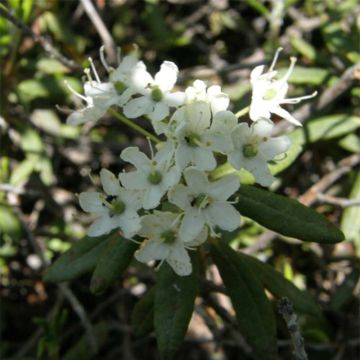
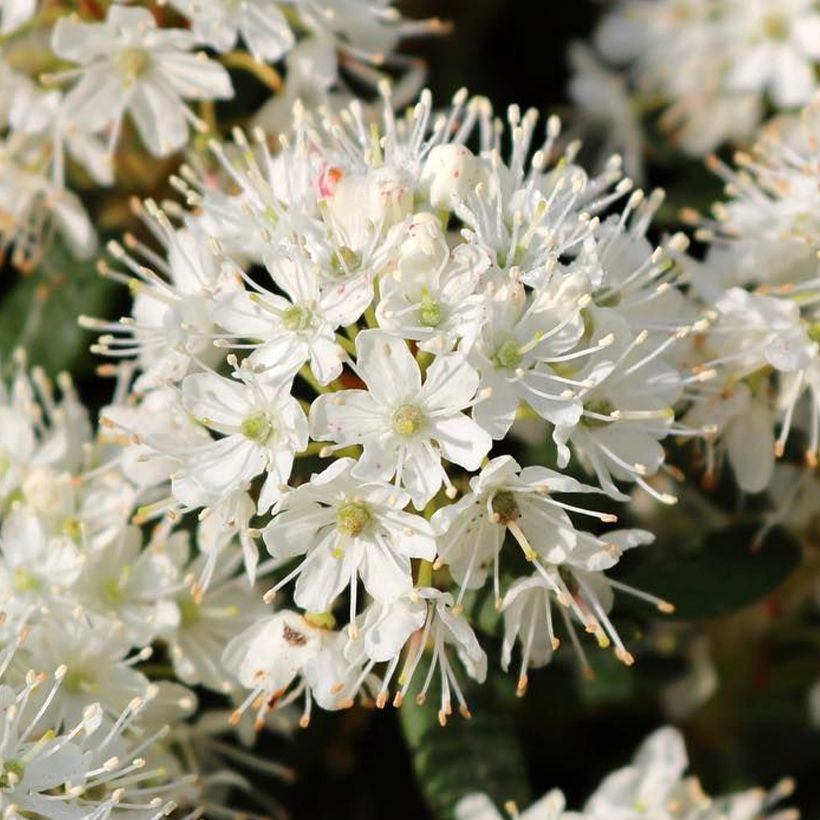
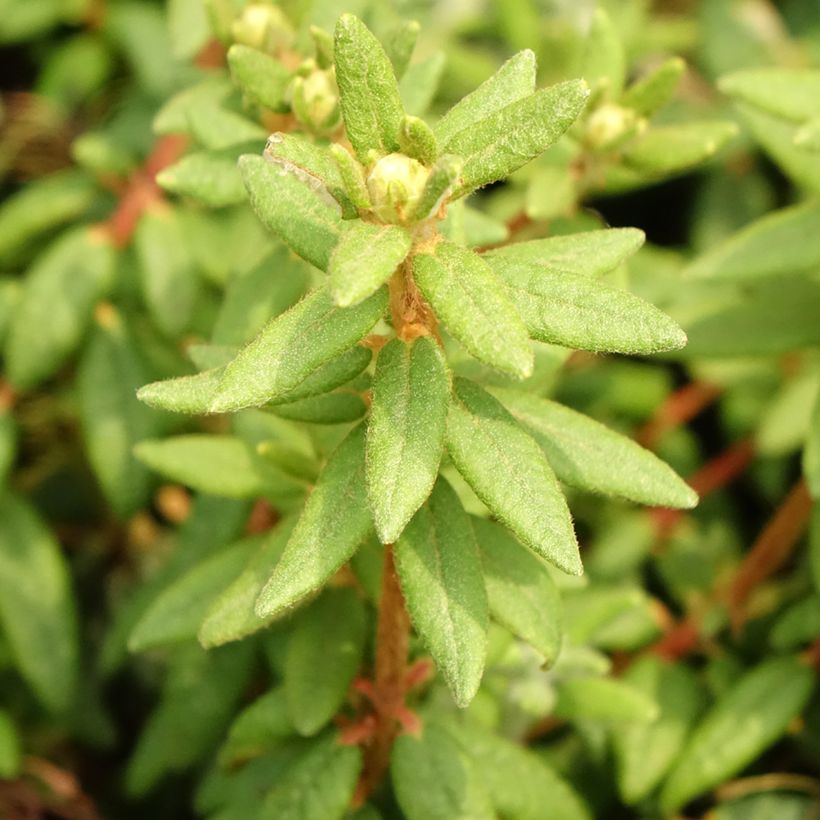
The 'Compactum' variety slowly forms a rounded bush, usually reaching 50-55 cm (20-22 in) in height and 60-70 cm (23-27 in) in spread. The foliage, evergreen in winter, consists of tiny alternate, single, elliptical to elongated, fairly tough leaves, with the edge curled under. The lamina is quite dark, shiny green on top, the underside being covered with a thick pale green down on the young leaves, becoming rust-coloured on mature leaves. These leaves, practically rot-proof, contain a precious essential oil when young, widely used in modern aromatherapy, whose virtues were already known to the first inhabitants of the northern United States. Flowering occurs in spring, usually in May, in the form of small bouquets or corymbs, almost spherical, 4 to 5 cm (1.6 to 2 in) in diameter, composed of small white flowers with slightly protruding stamens.
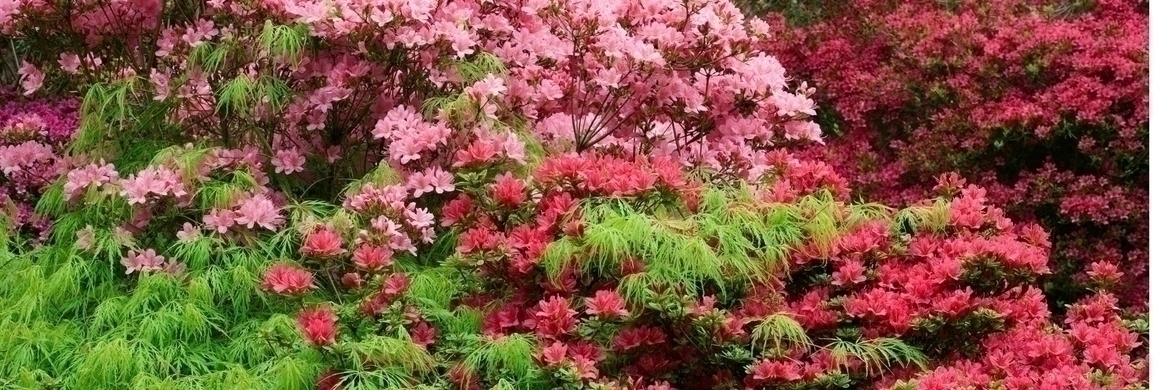
As an ornamental and aromatic plant Labrador Tea Compactum will enjoy moist and shaded ericaceous soil beds, in the company of Japanese azaleas, Leucothoe and camellias, for example. It can be planted in beds under large conifers or at the edge of a perennial grove, provided the soil is always moist. If you have a water feature with sandy and peaty banks, Rhododendron groenlandicum will thrive there without requiring much maintenance, in the company of Acorus, horsetails, carex, Iris kaempferi ensata or louisiana.
Properties :
Greenland Ledum essential oil is renowned for its antibiotic, decongestant, antiseptic, antispasmodic, anti-inflammatory, antibacterial, and analgesic properties. The indigenous peoples of North America smoked its leaves like tobacco and made a tea with its leaves, as did the first colonial settlers who used it as a tea substitute.
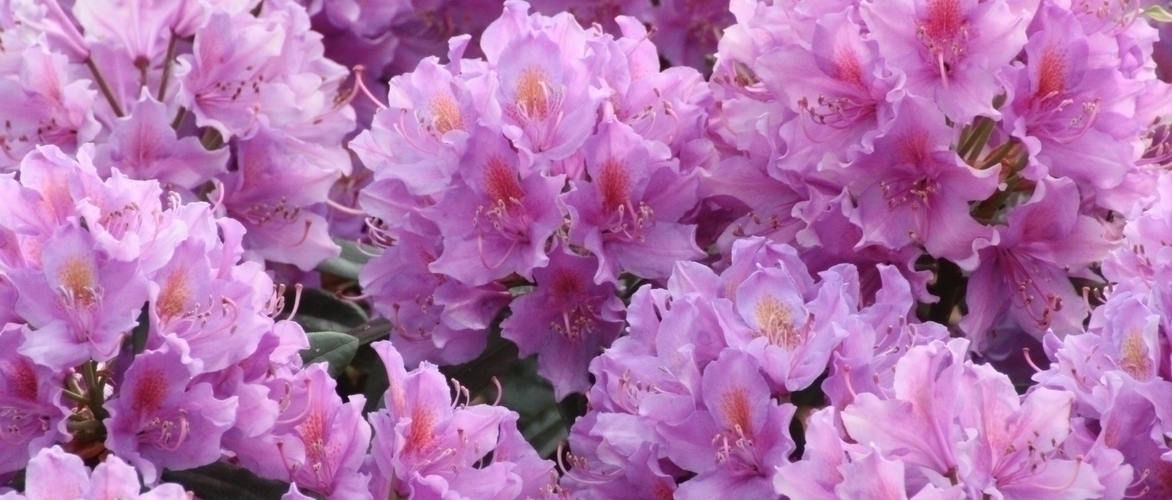
Rhododendron groenlandicum Compactum in pictures
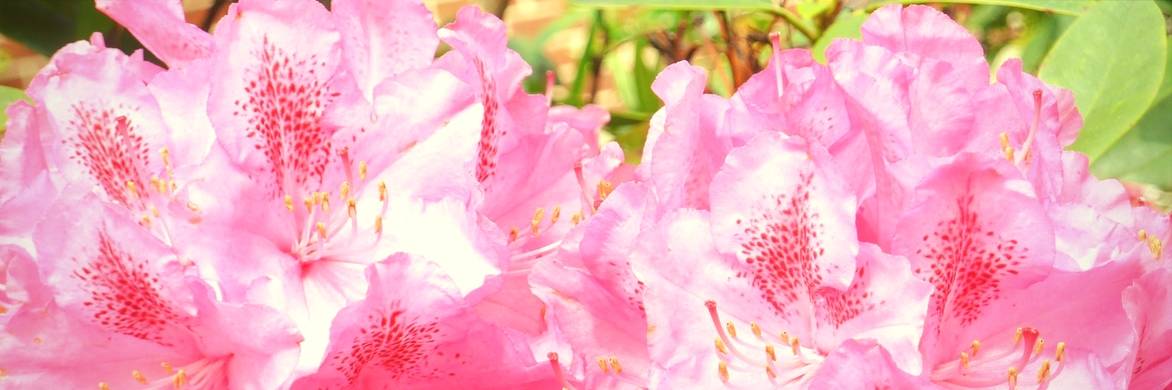
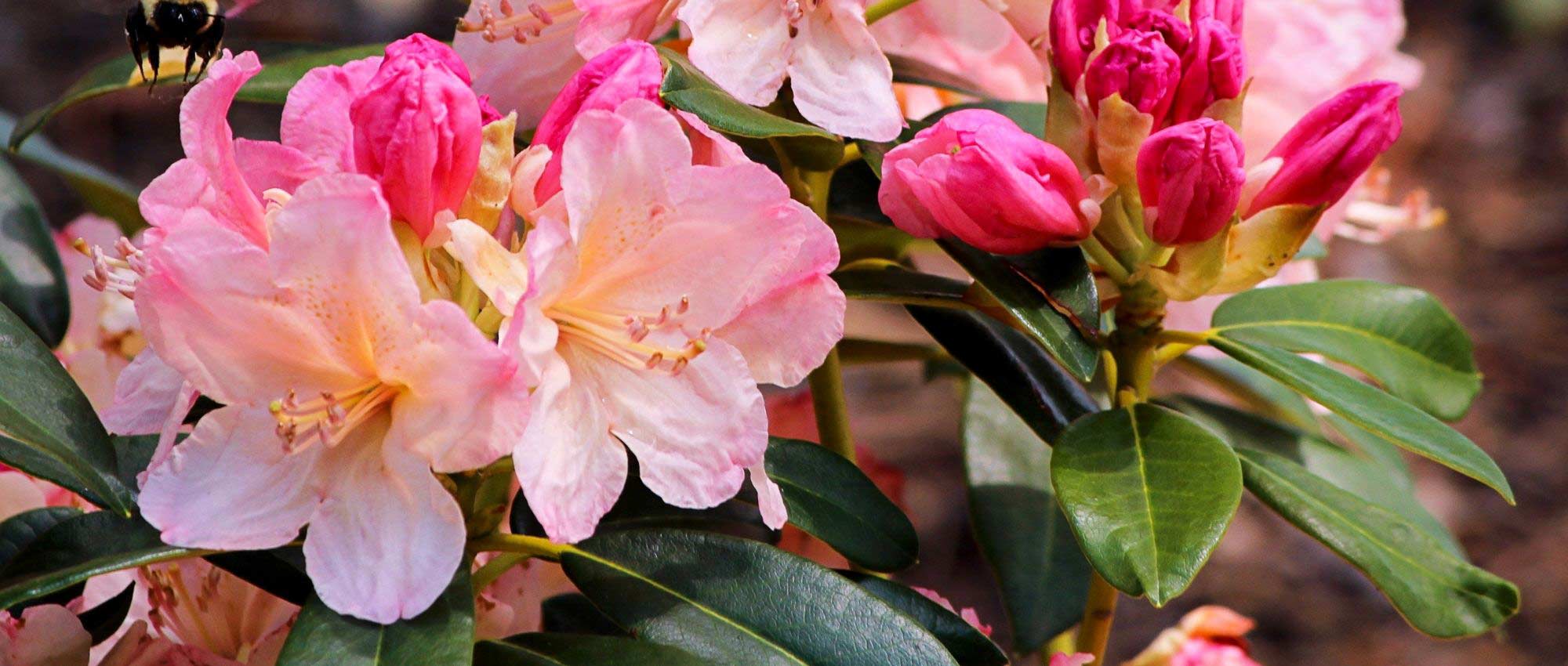
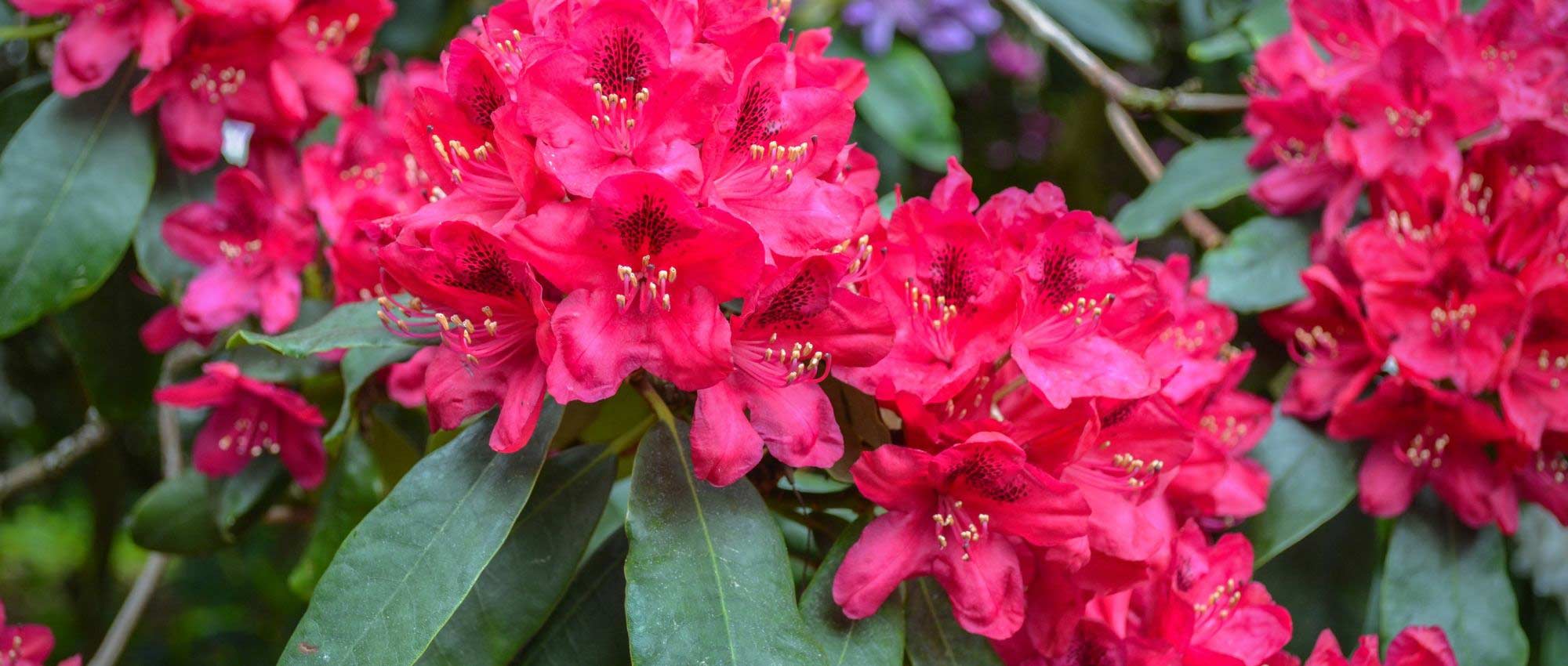
Plant habit
Flowering
Foliage
Botanical data
Ledum
groenlandicum
Compactum
Ericaceae
Labrador Tea, Marsh Tea, Greenland Ledum
Cultivar or hybrid
Planting and care
Plant Rhododendron groenlandicum 'Compactum' in a shade or partial shade, in a moist to damp, humus-rich, sandy or peaty, acidic soil, devoid of limestone. Like all ericaceous plants it does not tolerate alkaline soils, but it can withstand severe cold and wet soils in winter. This bush prefers moisture, but also adapts to well-drained soils if it is not exposed to direct sunlight. In the garden, it will often be necessary to add sphagnum peat to sandy soils, while in clay soils, it will be appropriate to bring in sand and wood fibre. Dig a hole three times larger than the pot. Soak the root ball in (non-chalky) water and plant the bush at the root collar level, in a mixture composed of leaf compost, wood fibre, gravel or coarse sand and loam. Water abundantly and keep the soil moist in summer. Rhododendrons have a limited root system. As such they do not like long periods of drought; a soil enriched in humus and kept abundantly watered during drought periods is advised. In addition, the root system is not very strong, so it is essential to lighten heavy soils with draining materials (non-limestone gravel, coarse sand, clay balls) at planting. Arrange a mulch of crushed pine bark at the base of the bush every spring to keep the soil moist while maintaining an acidic pH. Maintenance is limited to removing its faded flowers in summer and cleaning out its dead branches.
Azaleas and Rhododendrons can sometimes be attacked by vine weevils that eat the edge of the leaves and the rootlets as well as by the famous "rhododendron tiger" which does not often cause significant damage. The yellowing of the leaves (chlorosis) in the Rhododendron indicates a poor assimilation of iron in the soil and causes the premature death of the young plant. While limestone is generally the cause, poorly drained soil or a deeply planted root ball can also explain the phenomenon.
Planting period
Intended location
Care
Planting & care advice
-
-
-
-
-
-
-
-

-
, onOrder confirmed
Reply from on Promesse de fleurs
Recently viewed products
Haven't found what you were looking for?
Hardiness is the lowest winter temperature a plant can endure without suffering serious damage or even dying. However, hardiness is affected by location (a sheltered area, such as a patio), protection (winter cover) and soil type (hardiness is improved by well-drained soil).

The flowering period indicated on our website applies to countries and regions located in USDA zone 8 (France, the United Kingdom, Ireland, the Netherlands, etc.)
It will vary according to where you live:- In zones 9 to 10 (Italy, Spain, Greece, etc.), flowering will occur about 2 to 4 weeks earlier.
- In zones 6 to 7 (Germany, Poland, Slovenia, and lower mountainous regions), flowering will be delayed by 2 to 3 weeks.
- In zone 5 (Central Europe, Scandinavia), blooming will be delayed by 3 to 5 weeks.
In temperate climates, pruning of spring-flowering shrubs (forsythia, spireas, etc.) should be done just after flowering.
Pruning of summer-flowering shrubs (Indian Lilac, Perovskia, etc.) can be done in winter or spring.
In cold regions as well as with frost-sensitive plants, avoid pruning too early when severe frosts may still occur.
The planting period indicated on our website applies to countries and regions located in USDA zone 8 (France, United Kingdom, Ireland, Netherlands).
It will vary according to where you live:
- In Mediterranean zones (Marseille, Madrid, Milan, etc.), autumn and winter are the best planting periods.
- In continental zones (Strasbourg, Munich, Vienna, etc.), delay planting by 2 to 3 weeks in spring and bring it forward by 2 to 4 weeks in autumn.
- In mountainous regions (the Alps, Pyrenees, Carpathians, etc.), it is best to plant in late spring (May-June) or late summer (August-September).
The harvesting period indicated on our website applies to countries and regions in USDA zone 8 (France, England, Ireland, the Netherlands).
In colder areas (Scandinavia, Poland, Austria...) fruit and vegetable harvests are likely to be delayed by 3-4 weeks.
In warmer areas (Italy, Spain, Greece, etc.), harvesting will probably take place earlier, depending on weather conditions.
The sowing periods indicated on our website apply to countries and regions within USDA Zone 8 (France, UK, Ireland, Netherlands).
In colder areas (Scandinavia, Poland, Austria...), delay any outdoor sowing by 3-4 weeks, or sow under glass.
In warmer climes (Italy, Spain, Greece, etc.), bring outdoor sowing forward by a few weeks.
Shipping country and language
Your country of residence may be:
Your country of residence is:
For a better user experience on our website, you can select:
Your shipping country:
-
 Austria
-
 Belgium
-
 Bosnia & Herzegovina
-
 Bulgaria
-
 Croatia
-
 Cyprus
-
 Czechia
-
 Denmark
-
 Estonia
-
 Finland
-
 France
-
 Germany
-
 Greece
-
 Hungary
-
 Iceland
-
 Ireland
-
 Italy
Italy
-
 Latvia
-
 Liechtenstein
-
 Lithuania
-
 Luxembourg
-
 Malta
Malta
-
 Netherlands
-
 Poland
-
 Portugal
-
 Romania
-
 Serbia
-
 Slovakia
-
 Slovenia
-
 Spain
Spain
-
 Sweden
-
 Switzerland
Language:
-
French
-
 English
-
Spanish
-
Italian
-
German
-
Portuguese
-
Dutch
-
Finnish
My Account
Hello
My wish lists
My cart
Log in / Register
Existing customer?
This form is protected by reCAPTCHA - the Google Privacy Policy and Terms of Service apply.
New customer?
Create an account to track your orders, access our customer service and, if you wish, make the most of our upcoming offers.