
African Marigold Nosento Limegreen seeds - Tagetes erecta
African Marigold Nosento Limegreen seeds - Tagetes erecta
Tagetes erecta 'Nosento Limegreen'
African Marigold, Aztec Marigold, American Marigold
Back-to-school special offer!
Get €10 off for every €50 you spend! And get up to €40 off on a single order.
How does it work?
1. Shop your favourites
Add your favourite plants to your basket. For every €50 you spend (excluding delivery charges, store credit and the plastic-free option), you’ll receive a €10 voucher.
€50 spent = €10 voucher
€100 spent = €20 voucher
€150 spent = €30 voucher
€200 spent = €40 voucher
2. Place your order
Once your basket reaches one of the spending thresholds, place your order. You can even choose your delivery date!
3. Receive your voucher
As soon as your order has been shipped, you’ll receive an email containing your personal voucher code and its value.
4. Use it on your next order
Your voucher is valid for 90 days from the date you receive it. It can be used once only, on a new order worth at least the value of the voucher, excluding delivery charges.
Please note: Vouchers can be combined with other offers, but cannot be split or refunded.
Home or relay delivery (depending on size and destination)
Important: You may be charged customs duties by your country’s customs authorities upon delivery.
Schedule delivery date,
and select date in basket
This plant carries a 6 months recovery warranty
More information
We guarantee the quality of our plants for a full growing cycle, and will replace at our expense any plant that fails to recover under normal climatic and planting conditions.
Would this plant suit my garden?
Set up your Plantfit profile →
Description
La Rose d’Inde 'Nosento Limegreen' F1 (Tagetes erecta) charme par ses gros capitules en pompons vert lime évoluant vers le jaune clair, portés par de hautes tiges. C'est une sélection presque inodore. Elle convient aux massifs d’été, aux grandes potées et surtout aux bouquets, car sa tenue en vase est remarquable. Idéale pour ceux qui n'apprécient pas l'odeur du souci, son semis est facile et elle fleurit sans interruption de juin à octobre.
Le Tagetes erecta est une plante de la famille des Astéracées, c'est une espèce botanique originaire du Mexique, d'Amérique Centrale, et de l'ouest de l'Amérique du Sud. En théorie vivace, mais non rustique, a donné naissance à de nombreux hybrides dont le cycle de vie est généralement annuel.
'Nosento Limegreen' est un hybride F1 de T. erecta, sélectionné pour ses fleurs claires et son très faible parfum (« No-sento »). Ses inflorescences sont denses, sphériques, remplies de pétales. Cette variété est appréciée en fleur coupée : elle peut tenir jusqu'à 3 semaines en vase. Annuelle vigoureuse au port buissonnant, dressé, elle se ramifie bien après le pincement. De croissance rapide, on compte 80 à 105 jours entre le semis et la floraison. En pleine terre, la plante atteint 70 à 80 cm de hauteur pour 30-40 cm d'envergure ; cultivée en pot, 40–60 cm de hauteur selon le volume du contenant et la fertilisation. Les feuilles sont pennées, d'un vert moyen à foncé, profondément divisées ; chez Nosento, le feuillage est décrit comme faiblement odorant. Les fleurs sont de gros capitules de 5 à 7 cm de diamètre, qui passent du vert tilleul au jaune citron pâle en s’ouvrant, au centre verdâtre devenant plus clair à maturité. La floraison est abondante de juin à octobre. Les fleurs n'ont quasiment pas de parfum.
'Nosento Limegreen' F1 fait merveille dans les massifs d'été. Son coloris vert tilleul se marie particulièrement bien avec des feuillages pourprés et des floraisons pastel. Plantez cette Rose d'Inde par groupes de 3 à 5 devant des graminées légères (Pennisetum alopecuroïdes 'Hameln', Panicum virgatum 'Purple Breeze') et des vivaces sobres (gauras, népétas). Dans un grand pot, associez-la à une sauge annuelle bleu clair (Salvia farinacea 'Victoria Blue'), une amarante vert tendre (Amaranthus ‘Verte’) ou à un cosmos jaune pâle. Dans un bouquet, mélangez-la avec quelques tiges de Zinnia elegans ‘Envy Double’, Cosmos ‘Xanthos’, tabac d'ornement ‘Lime Green’ et Ammi majus.
Coupez les tiges au stade pompon bien ouvert, le matin, et plongez-les aussitôt dans l’eau fraîche.
Outre ses usages ornementaux, la Rose d’Inde est emblématique des célébrations mexicaines du Día de los Muertos ; ses pétales et leur couleur guident symboliquement les esprits. Certaines sélections sont aussi utilisées comme fleurs comestibles pour leur saveur qui rappelle l'agrume, légèrement amère.
Report an error about the product description
African Marigold Nosento Limegreen seeds - Tagetes erecta in pictures

Flowering
Foliage
Plant habit
Botanical data
Tagetes
erecta
'Nosento Limegreen'
Asteraceae
African Marigold, Aztec Marigold, American Marigold
Tagetes erecta 'Nosento Limegreen' F1
Cultivar or hybrid
Planting and care
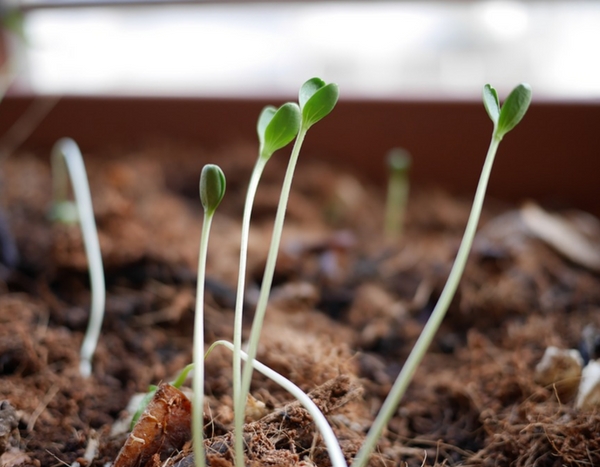
Sow Tagetes erecta 'Nosento Limegreen' from February to April.
Sow on the surface of a moist, well-draining seed compost. Cover the seeds with a very thin layer of vermiculite or compost. Place the sowings in a propagator or enclose in a polyethylene bag at a constant temperature of 20-25°C until germination, which usually takes 7 to 21 days. Do not deprive of light, as this promotes germination.
When the young plants are developed enough to handle, transplant into trays or 8cm pots. Acclimatise to cooler conditions for 10 to 15 days before planting outdoors at 15-20cm spacing, once the risk of frost has passed.
Growing:
These fast-growing plants thrive in sunny, warm positions. Plant them in fertile, well-drained, light soil. They are fairly drought-resistant. Avoid excessive watering in summer, as this encourages fungal diseases and root rot. Regularly remove faded flowers to prolong flowering. Protect plants from slugs and snails, which are particularly fond of them. Tagetes erecta does not tolerate frost.
Sowing period
Intended location
Planting & care advice
-

-
-

-

-

-

-

-

This item has not been reviewed yet - be the first to leave a review about it.
Recently viewed products
Haven't found what you were looking for?
Hardiness is the lowest winter temperature a plant can endure without suffering serious damage or even dying. However, hardiness is affected by location (a sheltered area, such as a patio), protection (winter cover) and soil type (hardiness is improved by well-drained soil).

The flowering period indicated on our website applies to countries and regions located in USDA zone 8 (France, the United Kingdom, Ireland, the Netherlands, etc.)
It will vary according to where you live:- In zones 9 to 10 (Italy, Spain, Greece, etc.), flowering will occur about 2 to 4 weeks earlier.
- In zones 6 to 7 (Germany, Poland, Slovenia, and lower mountainous regions), flowering will be delayed by 2 to 3 weeks.
- In zone 5 (Central Europe, Scandinavia), blooming will be delayed by 3 to 5 weeks.
In temperate climates, pruning of spring-flowering shrubs (forsythia, spireas, etc.) should be done just after flowering.
Pruning of summer-flowering shrubs (Indian Lilac, Perovskia, etc.) can be done in winter or spring.
In cold regions as well as with frost-sensitive plants, avoid pruning too early when severe frosts may still occur.
The planting period indicated on our website applies to countries and regions located in USDA zone 8 (France, United Kingdom, Ireland, Netherlands).
It will vary according to where you live:
- In Mediterranean zones (Marseille, Madrid, Milan, etc.), autumn and winter are the best planting periods.
- In continental zones (Strasbourg, Munich, Vienna, etc.), delay planting by 2 to 3 weeks in spring and bring it forward by 2 to 4 weeks in autumn.
- In mountainous regions (the Alps, Pyrenees, Carpathians, etc.), it is best to plant in late spring (May-June) or late summer (August-September).
The harvesting period indicated on our website applies to countries and regions in USDA zone 8 (France, England, Ireland, the Netherlands).
In colder areas (Scandinavia, Poland, Austria...) fruit and vegetable harvests are likely to be delayed by 3-4 weeks.
In warmer areas (Italy, Spain, Greece, etc.), harvesting will probably take place earlier, depending on weather conditions.
The sowing periods indicated on our website apply to countries and regions within USDA Zone 8 (France, UK, Ireland, Netherlands).
In colder areas (Scandinavia, Poland, Austria...), delay any outdoor sowing by 3-4 weeks, or sow under glass.
In warmer climes (Italy, Spain, Greece, etc.), bring outdoor sowing forward by a few weeks.
Shipping country and language
Your country of residence may be:
Your country of residence is:
For a better user experience on our website, you can select:
Your shipping country:
-
 Austria
-
 Belgium
-
 Bosnia & Herzegovina
-
 Bulgaria
-
 Croatia
-
 Cyprus
-
 Czechia
-
 Denmark
-
 Estonia
-
 Finland
-
 France
-
 Germany
-
 Greece
-
 Hungary
-
 Iceland
-
 Ireland
-
 Italy
Italy
-
 Latvia
-
 Liechtenstein
-
 Lithuania
-
 Luxembourg
-
 Malta
Malta
-
 Netherlands
-
 Poland
-
 Portugal
-
 Romania
-
 Serbia
-
 Slovakia
-
 Slovenia
-
 Spain
Spain
-
 Sweden
-
 Switzerland
Language:
-
French
-
 English
-
Spanish
-
Italian
-
German
-
Portuguese
-
Dutch
-
Finnish
My Account
Hello
My wish lists
My cart
Log in / Register
Existing customer?
This form is protected by reCAPTCHA - the Google Privacy Policy and Terms of Service apply.
New customer?
Create an account to track your orders, access our customer service and, if you wish, make the most of our upcoming offers.