Cistus albidus seeds - White-leaved rock rose
Cistus albidus seeds - White-leaved rock rose
Cistus albidus seeds - White-leaved rock rose
Cistus albidus seeds - White-leaved rock rose
Cistus albidus seeds - White-leaved rock rose
Cistus albidus seeds - White-leaved rock rose
Cistus albidus seeds - White-leaved rock rose
Cistus albidus
Grey-leaved Cistus, White-leaved Rockrose
Back-to-school special offer!
Get €10 off for every €50 you spend! And get up to €40 off on a single order.
How does it work?
1. Shop your favourites
Add your favourite plants to your basket. For every €50 you spend (excluding delivery charges, store credit and the plastic-free option), you’ll receive a €10 voucher.
€50 spent = €10 voucher
€100 spent = €20 voucher
€150 spent = €30 voucher
€200 spent = €40 voucher
2. Place your order
Once your basket reaches one of the spending thresholds, place your order. You can even choose your delivery date!
3. Receive your voucher
As soon as your order has been shipped, you’ll receive an email containing your personal voucher code and its value.
4. Use it on your next order
Your voucher is valid for 90 days from the date you receive it. It can be used once only, on a new order worth at least the value of the voucher, excluding delivery charges.
Please note: Vouchers can be combined with other offers, but cannot be split or refunded.
Home or relay delivery (depending on size and destination)
Important: You may be charged customs duties by your country’s customs authorities upon delivery.
Schedule delivery date,
and select date in basket
This plant carries a 6 months recovery warranty
More information
We guarantee the quality of our plants for a full growing cycle, and will replace at our expense any plant that fails to recover under normal climatic and planting conditions.
Would this plant suit my garden?
Set up your Plantfit profile →
Description
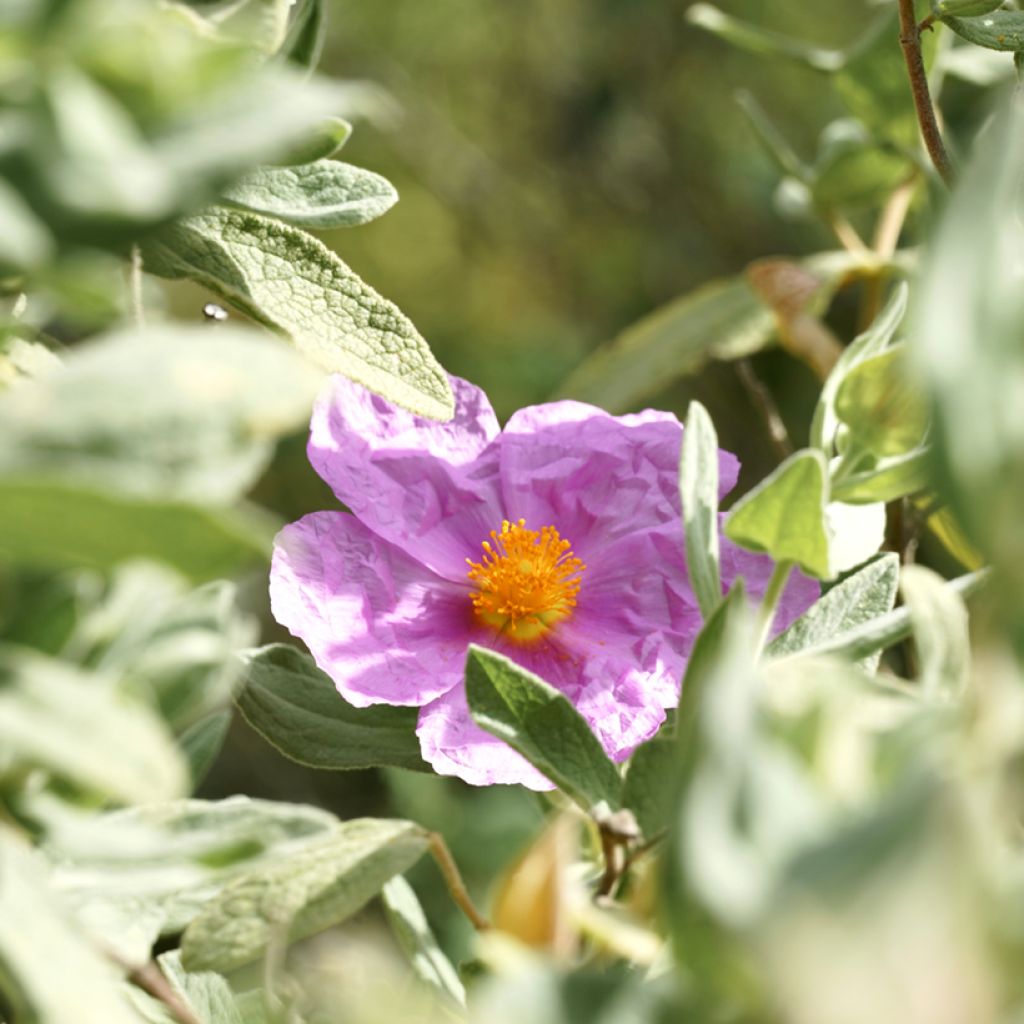
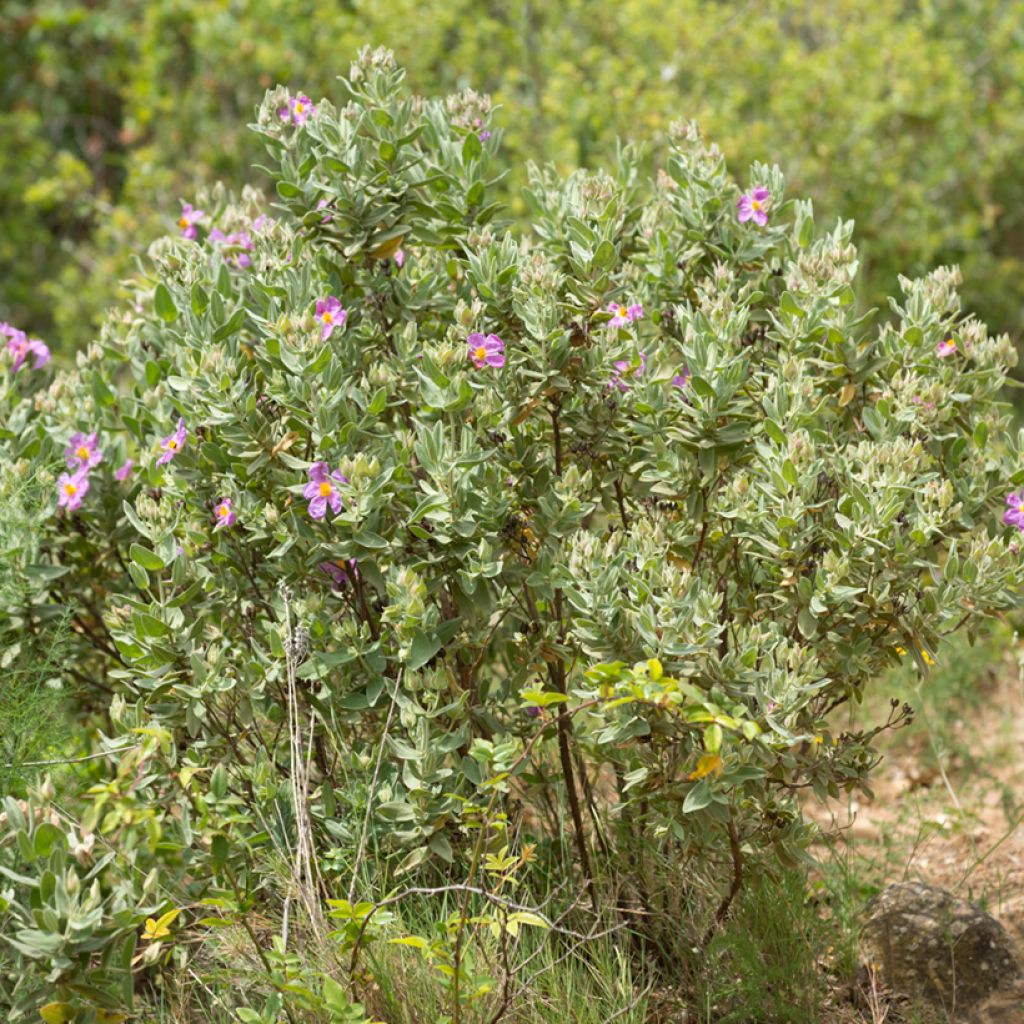
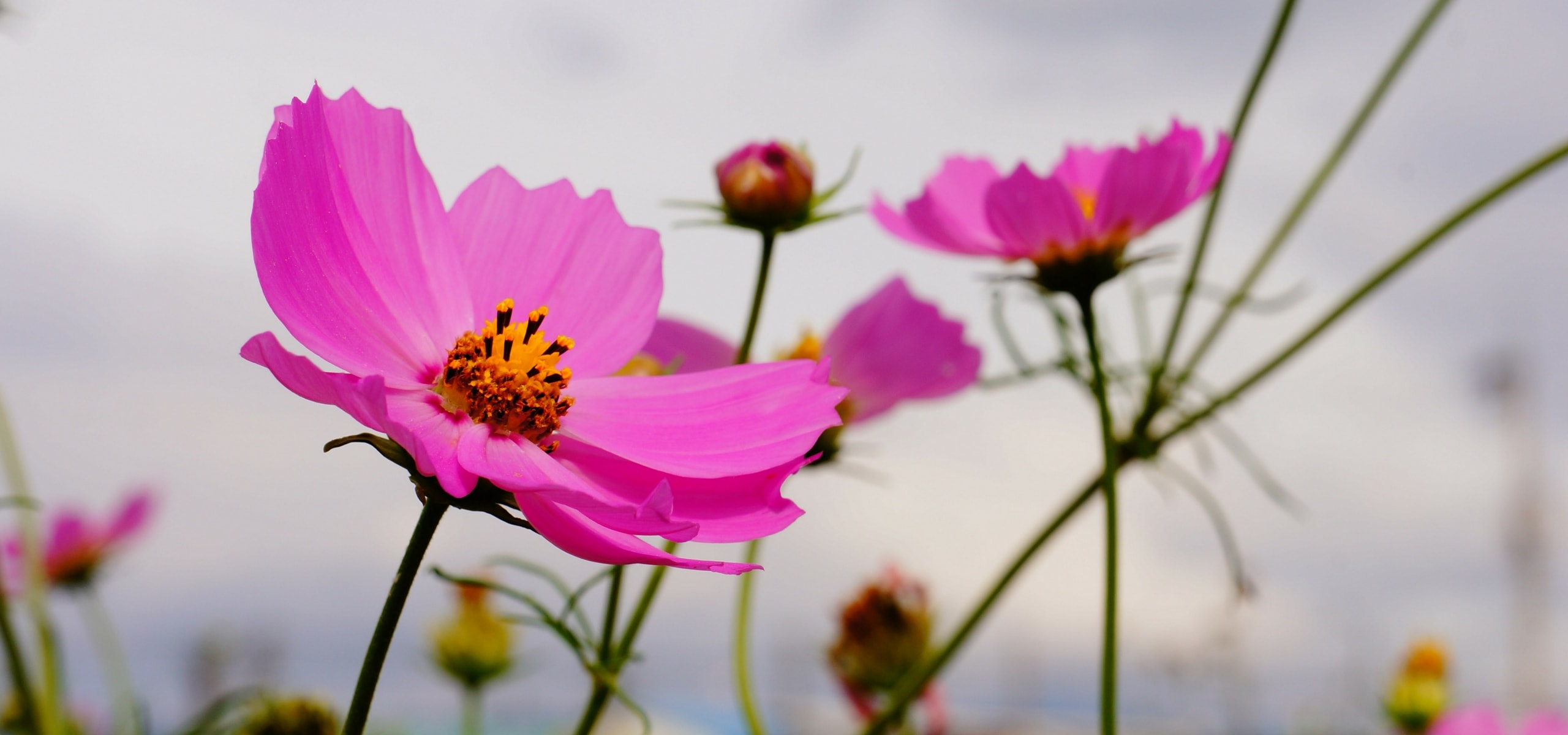
Cistus albidus, commonly known as the white-leaved rockrose or white rockrose, owes its name to its soft, silvery-grey foliage, which remains decorative even in winter. This small bush from the limestone scrublands of the Mediterranean region boasts a delicate, pink spring flowering. It thrives in rocky, sun-exposed soils, even if they become arid during summer. When given a favourable spot, the white-leaved rockrose can self-seed abundantly.
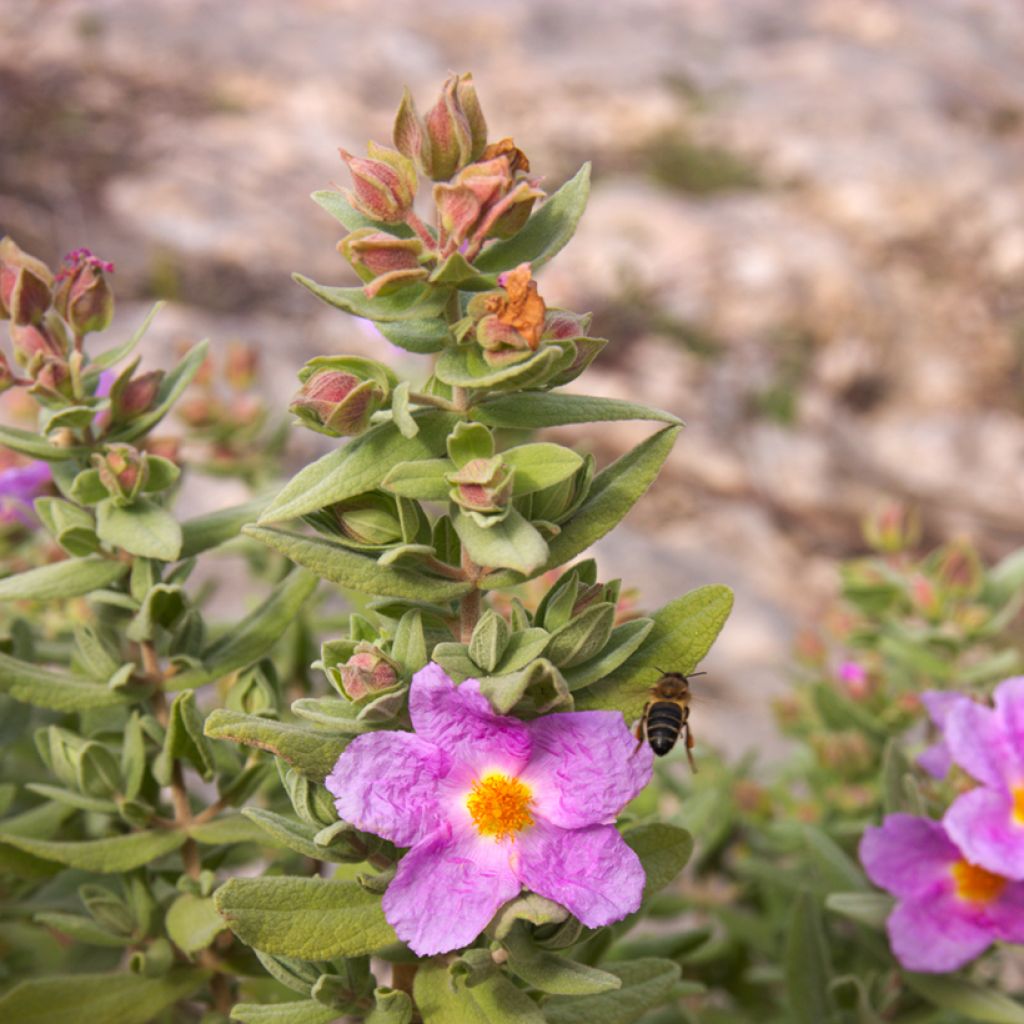
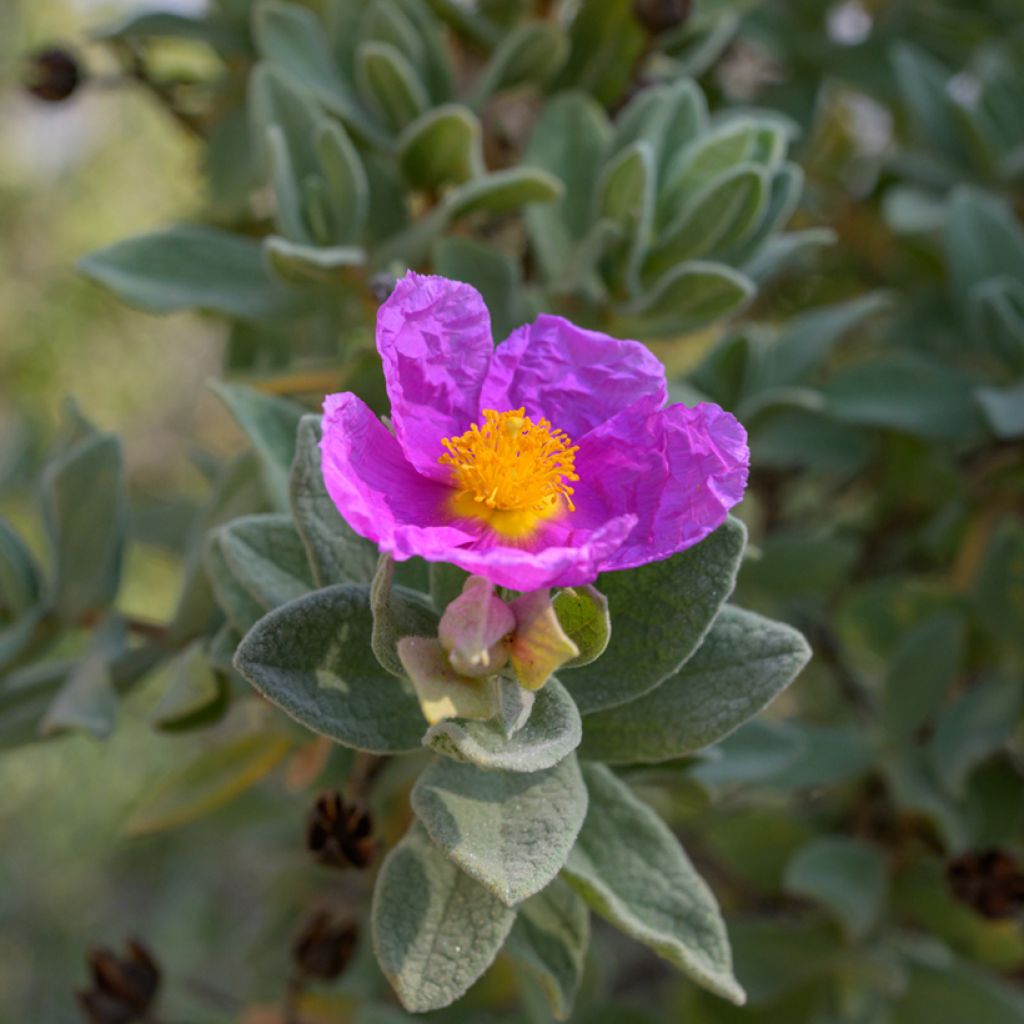
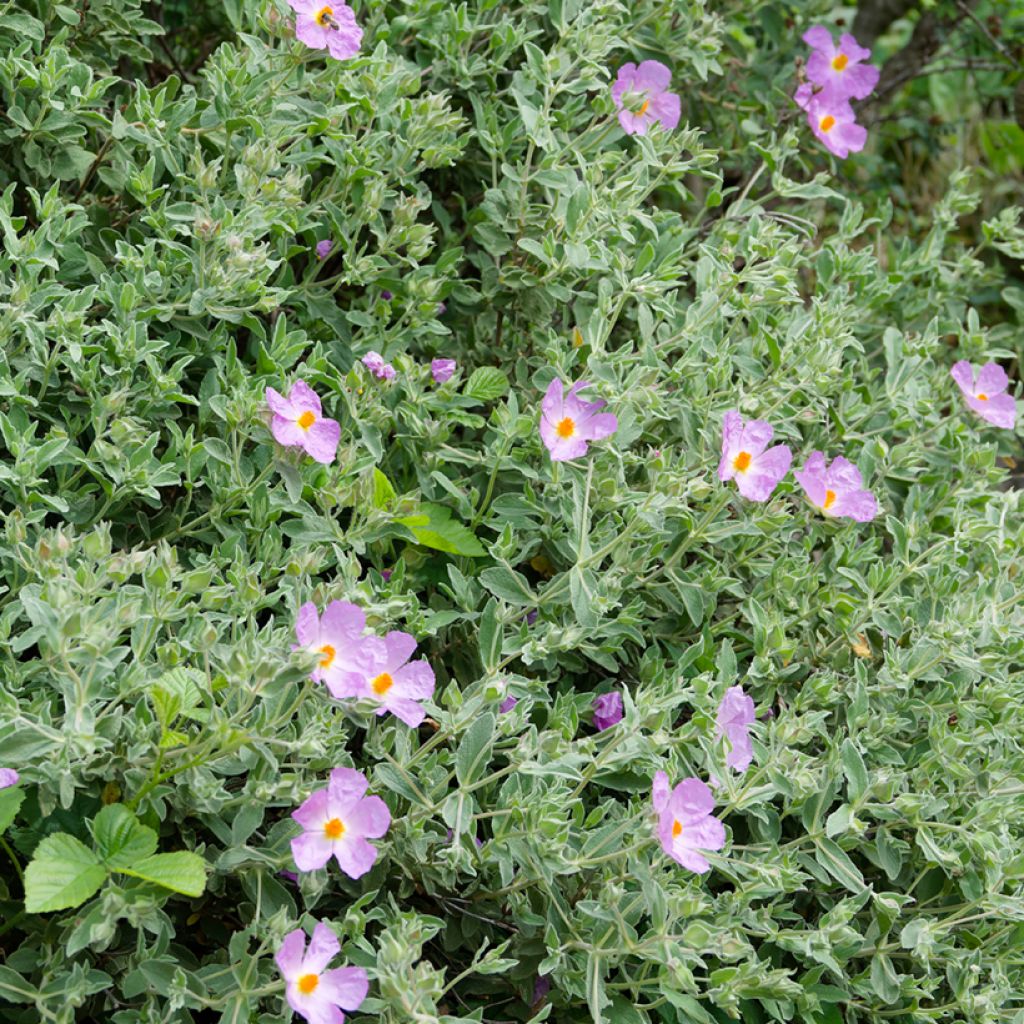
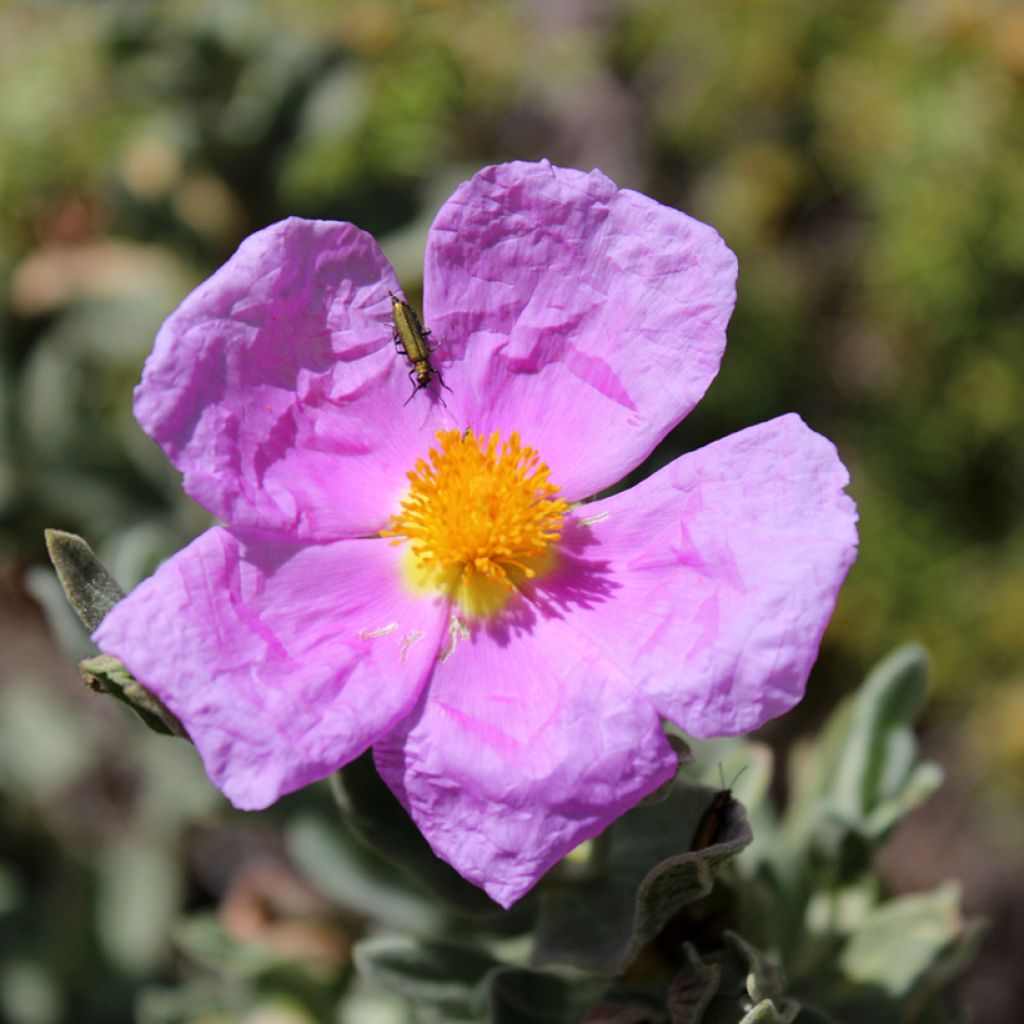
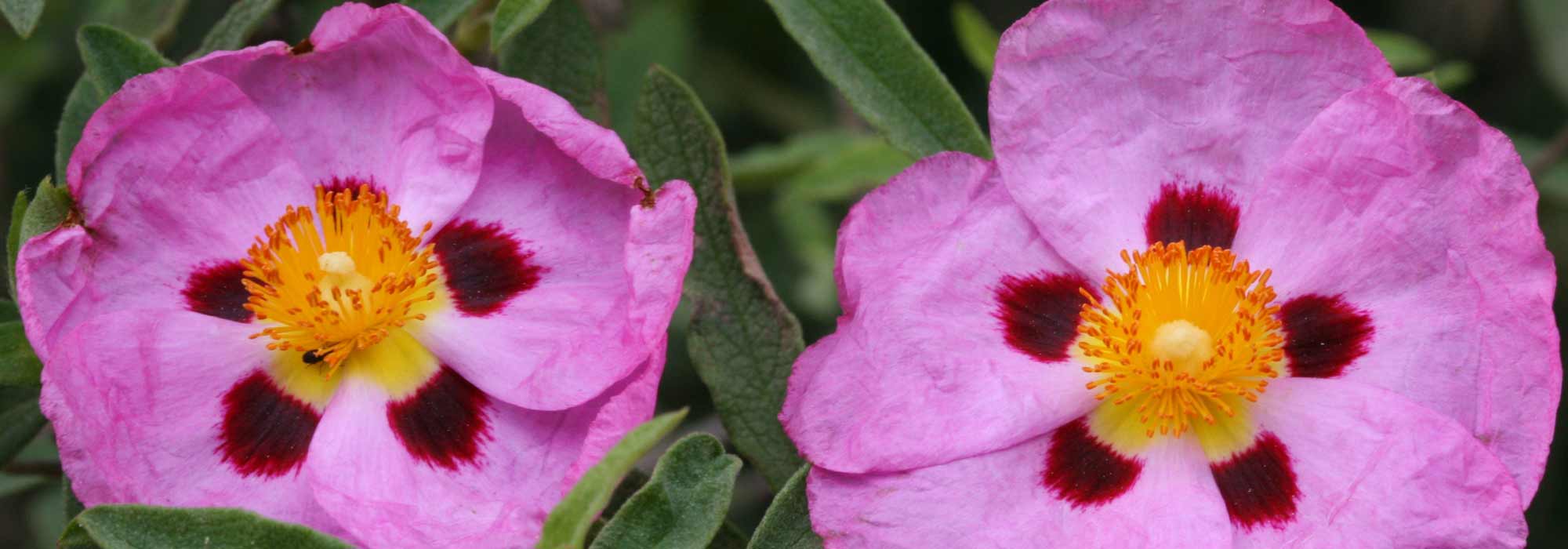
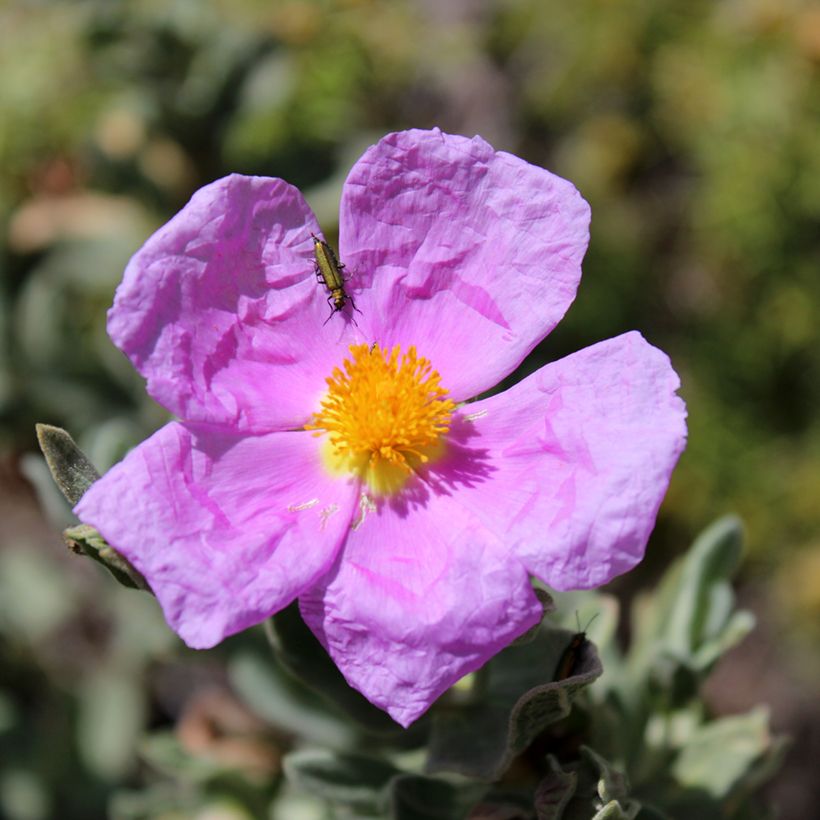
Belonging to the Cistaceae family, like other rockroses and sunroses, this botanical species originates from the western Mediterranean Basin. It grows naturally in rocky, predominantly limestone soils. This bush, with its rounded and well-branched habit, reaches a height of 80 cm to 1 m and spreads to a similar width. Its growth is relatively fast, but its lifespan does not exceed ten years. Flowering lasts from March to May, depending on the climate, and continues for three weeks to a month. The 5 cm diameter flowers feature a round, slightly crumpled corolla in a vibrant pink, with a centre filled with numerous bright yellow stamens. Each flower lasts only a day, but new ones bloom every morning, ensuring continuous flowering. The evergreen foliage consists of small, thick leaves covered in a pale grey down, almost white in summer. During intense summer droughts, some leaves may temporarily dry out.
An excellent choice for rockeries and poor soils, this white-leaved rockrose is highly drought-resistant and can withstand temperatures as low as -12, even -15°C in well-drained soil. It looks stunning on arid slopes or in sunny rockeries. To create a Mediterranean-style bed, pair it with fragrant-leaved plants like lavandins, the creeping rosemary 'Pointe du Raz' and thyme. You can also add contrast and dynamism to your arrangement by including Corsican spurges and sowing Californian poppy seeds. This rockrose is an excellent choice for coastal gardens, as it tolerates sea spray perfectly.
Cistus albidus seeds - White-leaved rock rose in pictures
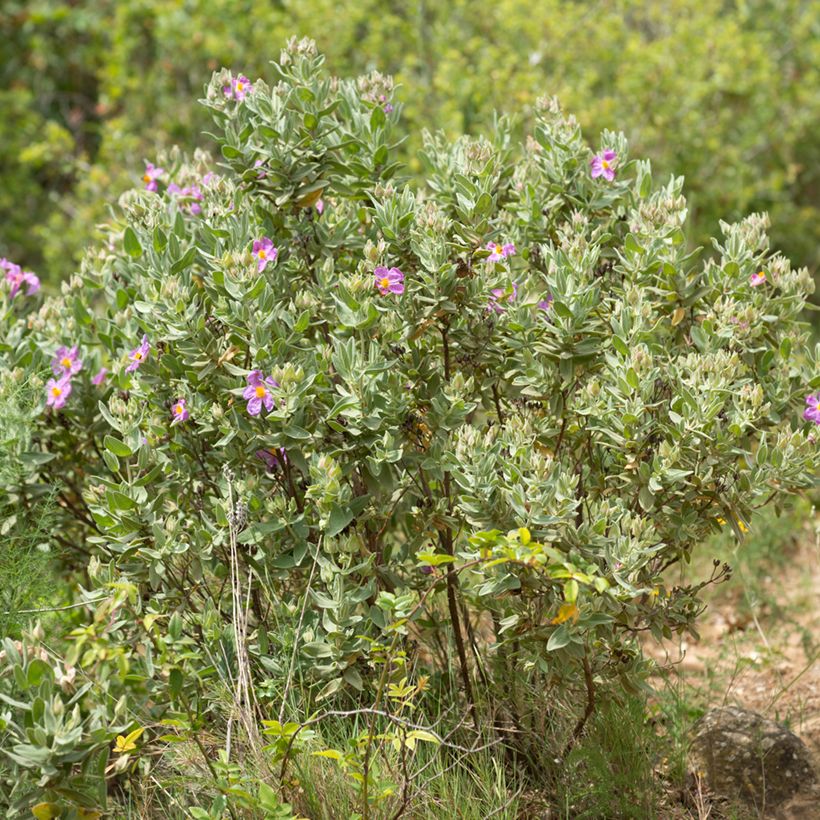
Flowering
Foliage
Plant habit
Botanical data
Cistus
albidus
Cistaceae
Grey-leaved Cistus, White-leaved Rockrose
Mediterranean
Planting and care
Growing Cistus albidus from seed requires careful preparation to break the natural dormancy of its seeds and ensure good germination.
The most reliable method involves mechanical scarification followed by soaking. To begin, it is essential to weaken the hard shell of the seeds, which prevents water absorption and delays germination. This scarification can be done by lightly rubbing the seeds with sandpaper or making a delicate incision on their coating. Once this step is completed, the seeds should be soaked in room-temperature water for 12 to 24 hours, which further softens their shell and hydrates the embryo.
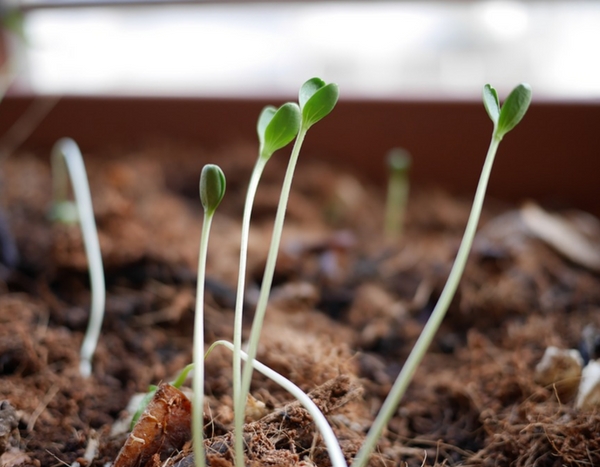
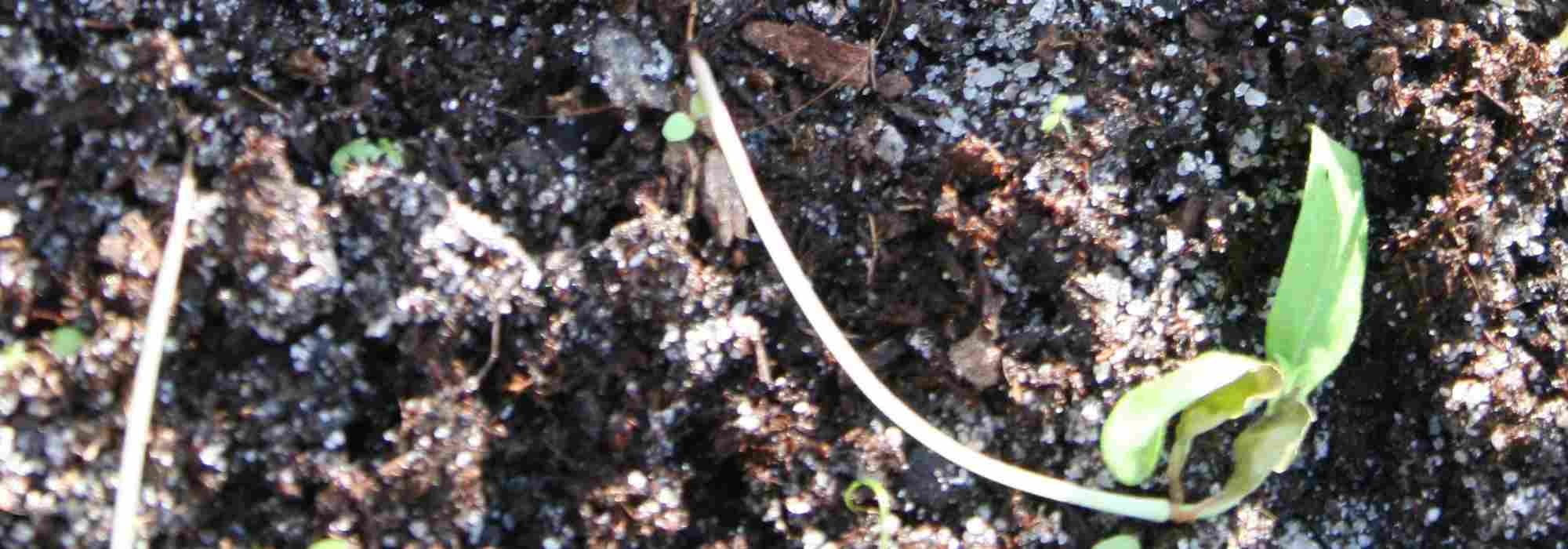
Once the seeds are prepared, sow in spring, when daytime temperatures are around 15 to 20°C. Use a well-draining substrate, composed of a mix of light compost and coarse sand, to avoid excess moisture, which is harmful to young seedlings. Place the seeds on the surface and cover them with a very thin layer of substrate, as they require some light to germinate properly. Keep the soil slightly moist but never waterlogged, and place the sowing in a warm, sunny spot. Germination may take several weeks, depending on environmental conditions.
When the young seedlings reach 3 to 5 cm in height and develop their first true leaves, they can be transplanted into individual pots to encourage root development. Continue using a well-drained substrate and avoid overwatering, as Cistus albidus is a Mediterranean plant adapted to dry soils. Once the young plants are strong enough (usually after 3 to 4 months), they can be gradually acclimatised outdoors before being planted permanently in the ground the following autumn or spring.
Since young plants are sensitive to frost, it is best to grow them in pots under shelter during their first winter, especially in regions with harsh winters. Once well-established in the ground, they will become hardy bushes, capable of withstanding temperatures as low as -12, or even -15°C in very well-drained soil.
Sowing period
Intended location
Planting & care advice
-
-
-
-
-

-
-
-
This item has not been reviewed yet - be the first to leave a review about it.
Recently viewed products
Haven't found what you were looking for?
Hardiness is the lowest winter temperature a plant can endure without suffering serious damage or even dying. However, hardiness is affected by location (a sheltered area, such as a patio), protection (winter cover) and soil type (hardiness is improved by well-drained soil).

The flowering period indicated on our website applies to countries and regions located in USDA zone 8 (France, the United Kingdom, Ireland, the Netherlands, etc.)
It will vary according to where you live:- In zones 9 to 10 (Italy, Spain, Greece, etc.), flowering will occur about 2 to 4 weeks earlier.
- In zones 6 to 7 (Germany, Poland, Slovenia, and lower mountainous regions), flowering will be delayed by 2 to 3 weeks.
- In zone 5 (Central Europe, Scandinavia), blooming will be delayed by 3 to 5 weeks.
In temperate climates, pruning of spring-flowering shrubs (forsythia, spireas, etc.) should be done just after flowering.
Pruning of summer-flowering shrubs (Indian Lilac, Perovskia, etc.) can be done in winter or spring.
In cold regions as well as with frost-sensitive plants, avoid pruning too early when severe frosts may still occur.
The planting period indicated on our website applies to countries and regions located in USDA zone 8 (France, United Kingdom, Ireland, Netherlands).
It will vary according to where you live:
- In Mediterranean zones (Marseille, Madrid, Milan, etc.), autumn and winter are the best planting periods.
- In continental zones (Strasbourg, Munich, Vienna, etc.), delay planting by 2 to 3 weeks in spring and bring it forward by 2 to 4 weeks in autumn.
- In mountainous regions (the Alps, Pyrenees, Carpathians, etc.), it is best to plant in late spring (May-June) or late summer (August-September).
The harvesting period indicated on our website applies to countries and regions in USDA zone 8 (France, England, Ireland, the Netherlands).
In colder areas (Scandinavia, Poland, Austria...) fruit and vegetable harvests are likely to be delayed by 3-4 weeks.
In warmer areas (Italy, Spain, Greece, etc.), harvesting will probably take place earlier, depending on weather conditions.
The sowing periods indicated on our website apply to countries and regions within USDA Zone 8 (France, UK, Ireland, Netherlands).
In colder areas (Scandinavia, Poland, Austria...), delay any outdoor sowing by 3-4 weeks, or sow under glass.
In warmer climes (Italy, Spain, Greece, etc.), bring outdoor sowing forward by a few weeks.
Shipping country and language
Your country of residence may be:
Your country of residence is:
For a better user experience on our website, you can select:
Your shipping country:
-
 Austria
-
 Belgium
-
 Bosnia & Herzegovina
-
 Bulgaria
-
 Croatia
-
 Cyprus
-
 Czechia
-
 Denmark
-
 Estonia
-
 Finland
-
 France
-
 Germany
-
 Greece
-
 Hungary
-
 Iceland
-
 Ireland
-
 Italy
Italy
-
 Latvia
-
 Liechtenstein
-
 Lithuania
-
 Luxembourg
-
 Malta
Malta
-
 Netherlands
-
 Poland
-
 Portugal
-
 Romania
-
 Serbia
-
 Slovakia
-
 Slovenia
-
 Spain
Spain
-
 Sweden
-
 Switzerland
Language:
-
French
-
 English
-
Spanish
-
Italian
-
German
-
Portuguese
-
Dutch
-
Finnish
My Account
Hello
My wish lists
My cart
Log in / Register
Existing customer?
This form is protected by reCAPTCHA - the Google Privacy Policy and Terms of Service apply.
New customer?
Create an account to track your orders, access our customer service and, if you wish, make the most of our upcoming offers.