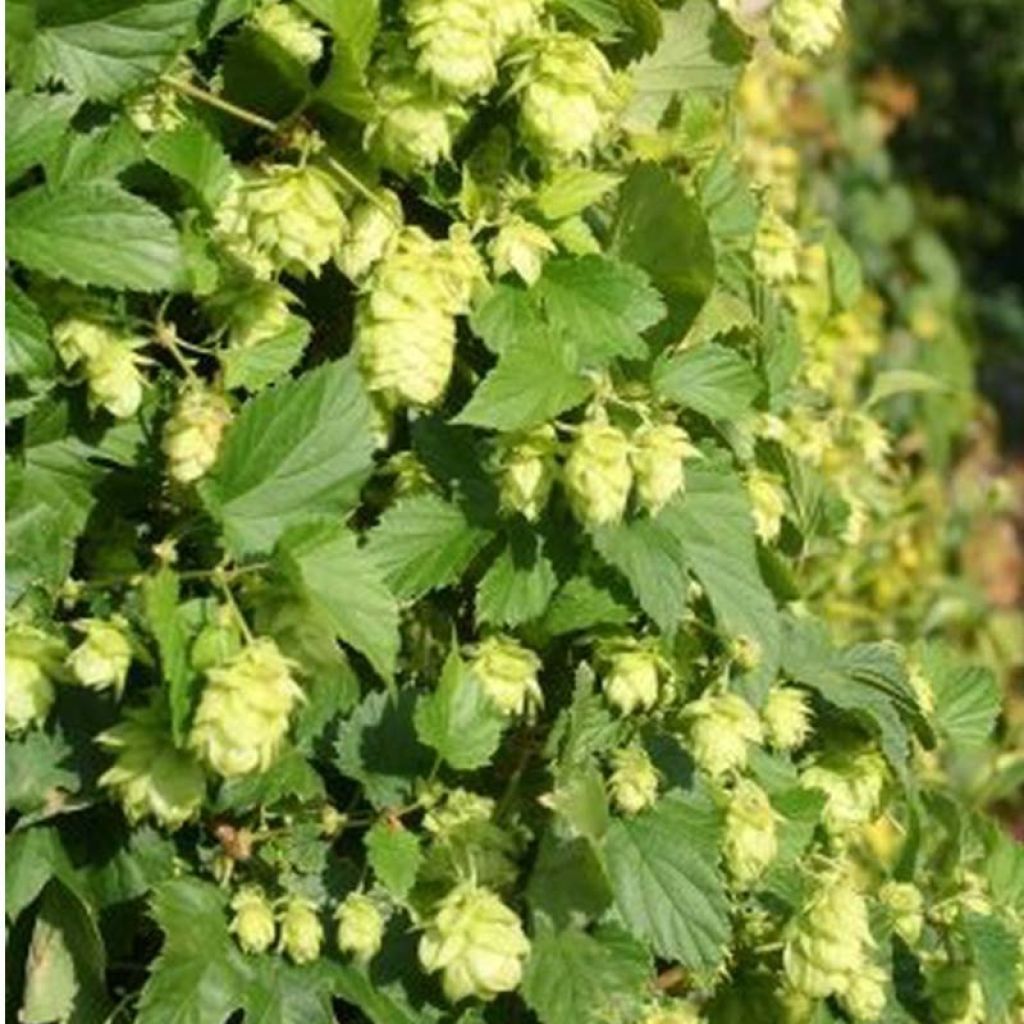
Humulus lupulus Nordbrau - Hop
Humulus lupulus Nordbrau - Hop
Humulus lupulus Nordbrau
Common Hop, Hop
The plant adapted well to its location (in a pot and in full sun) and grew about 1.5m this summer. It withstood the intense heat very well.
MJ, 29/10/2025
Back-to-school special offer!
Get €10 off for every €50 you spend! And get up to €40 off on a single order.
How does it work?
1. Shop your favourites
Add your favourite plants to your basket. For every €50 you spend (excluding delivery charges, store credit and the plastic-free option), you’ll receive a €10 voucher.
€50 spent = €10 voucher
€100 spent = €20 voucher
€150 spent = €30 voucher
€200 spent = €40 voucher
2. Place your order
Once your basket reaches one of the spending thresholds, place your order. You can even choose your delivery date!
3. Receive your voucher
As soon as your order has been shipped, you’ll receive an email containing your personal voucher code and its value.
4. Use it on your next order
Your voucher is valid for 90 days from the date you receive it. It can be used once only, on a new order worth at least the value of the voucher, excluding delivery charges.
Please note: Vouchers can be combined with other offers, but cannot be split or refunded.
Home or relay delivery (depending on size and destination)
Important: You may be charged customs duties by your country’s customs authorities upon delivery.
Schedule delivery date
and select date in basket
This plant carries a 12 months recovery warranty
More information
We guarantee the quality of our plants for a full growing cycle, and will replace at our expense any plant that fails to recover under normal climatic and planting conditions.

Would this plant suit my garden?
Set up your Plantfit profile →
Description
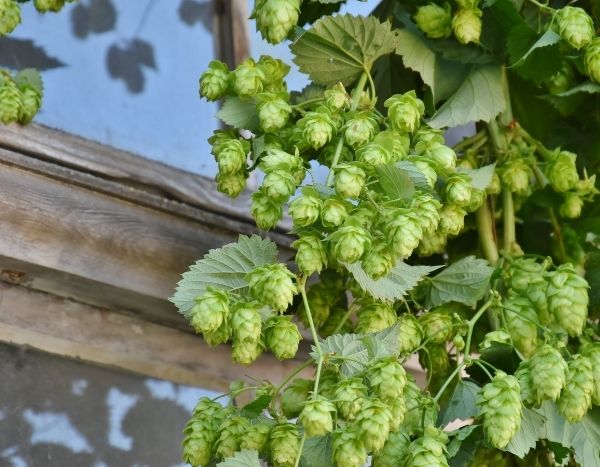
Humulus lupulus 'Nordbrau' is a variety of female hop with large aromatic fruits that can be used for brewing beer. This fast-growing vine with highly fragrant summer flowers can effectively cover a fence, an unsightly wall, or an old tree. After taking on warm brown-golden colours in autumn, the hop disappears during winter. It will appreciate a rich, moist, and well-drained soil, in full sun or partial shade.
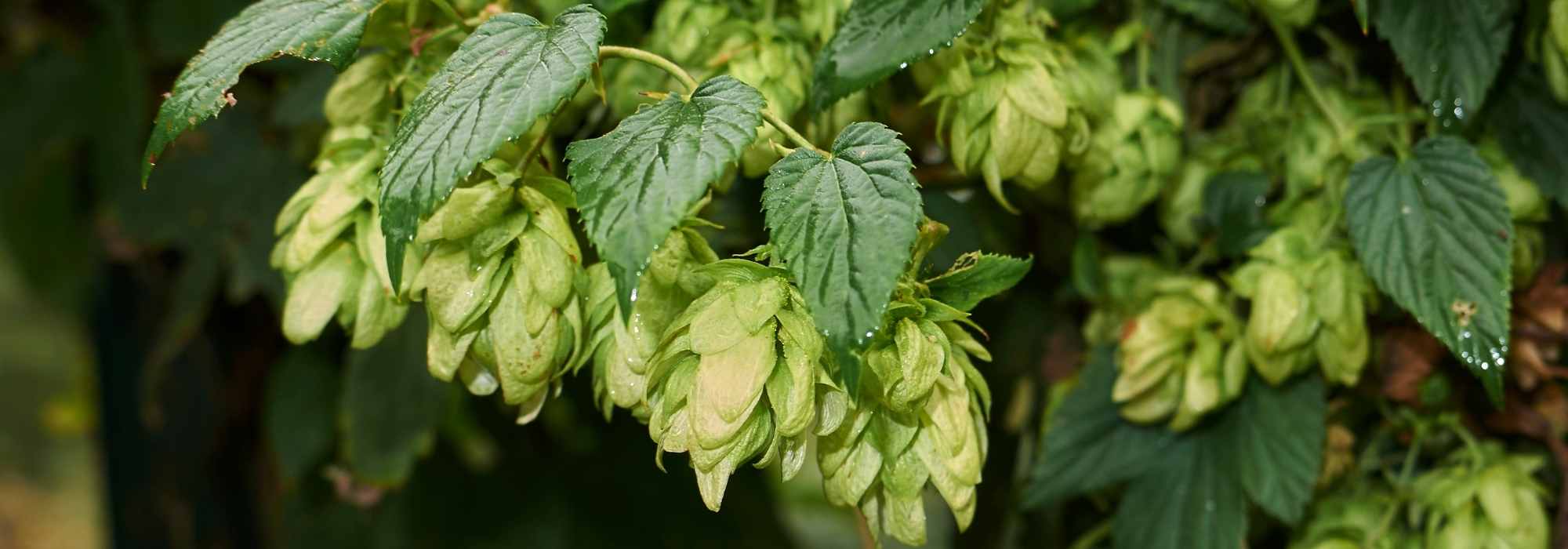
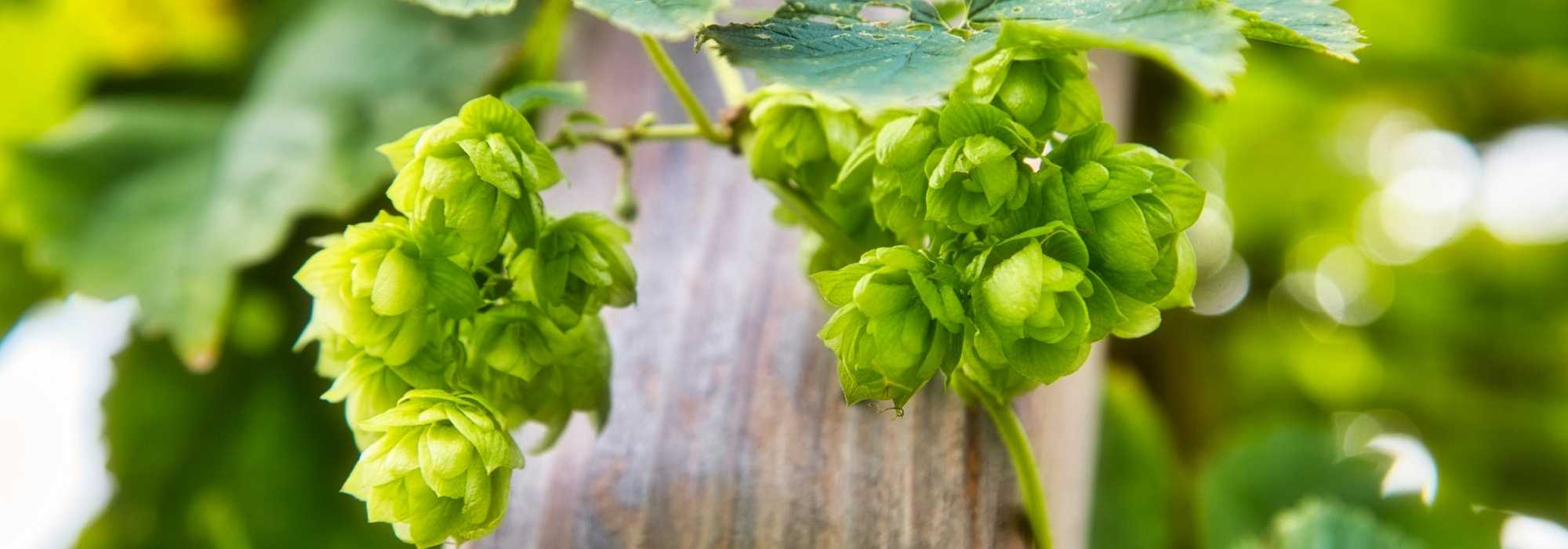
The 'Nordbrau' hop is a vine belonging to the Cannabaceae family, which also includes hackberries (Celtis) and hemp. Widely distributed and naturalised around the world, including in Europe, the origin of wild hops is not known with certainty. Indeed, this plant has been cultivated for a long time for the production of beer, to which it generally imparts numerous aromas. In Alsace, for example, it is not uncommon to come across hop fields, vast expanses covered with tall oblique stakes used to support the vine. Hops are also dioecious plants: in summer, it is the female plants that produce highly fragrant flower spikes, which then develop into typical "cones" in autumn, used for brewing beer. These decorative green, yellow-golden, and then brown cones are also beautiful in dried bouquets. The deeply lobed leaves with large teeth are also highly ornamental and turn russet-brown in autumn. The rough and voluble stems (which can be eaten when young, like asparagus) allow the plant to cling and climb easily on surrounding plants.
The 'Nordbrau' variety flowers late in summer and produces large and aromatic cones. It will delight both gardeners and beer enthusiasts! Under favourable conditions, it can reach a length of over 5m.
Very hardy, hops appreciate humus-rich and moist soils that are well-drained, not too heavy or too poor. Partial shade or not too scorching sun suits them well. This fast-growing vine can quickly cover large surfaces and occupy significant volumes. Therefore, it needs sufficient space for its development, or the opportunity to climb on nearby structures. However, its herbaceous nature and lack of climbing roots make it a safe plant for the buildings it grows on. It is excellent for quickly concealing an old wall, a decaying or uninteresting tree, or even a separating fence. It is possible to take herbaceous cuttings in March or semi-ripe cuttings in summer. Seed sowing is quite simple but rarely produces offspring that are true to the original variety. In late winter, simply prune the dry stems to 30cm above the ground.
Combine the 'Nordbrau' hop with other vigorously growing plants, such as Clematis montana 'Tetrarose', Actinidia kolomikta with its beautiful variegated leaves, Akebia quinata, honeysuckle, or Clematis vitalba (a particularly vigorous native species). With these woody, generous, and wild neighbours it will create a fantastic, ever-changing, rustic, and welcoming scene!
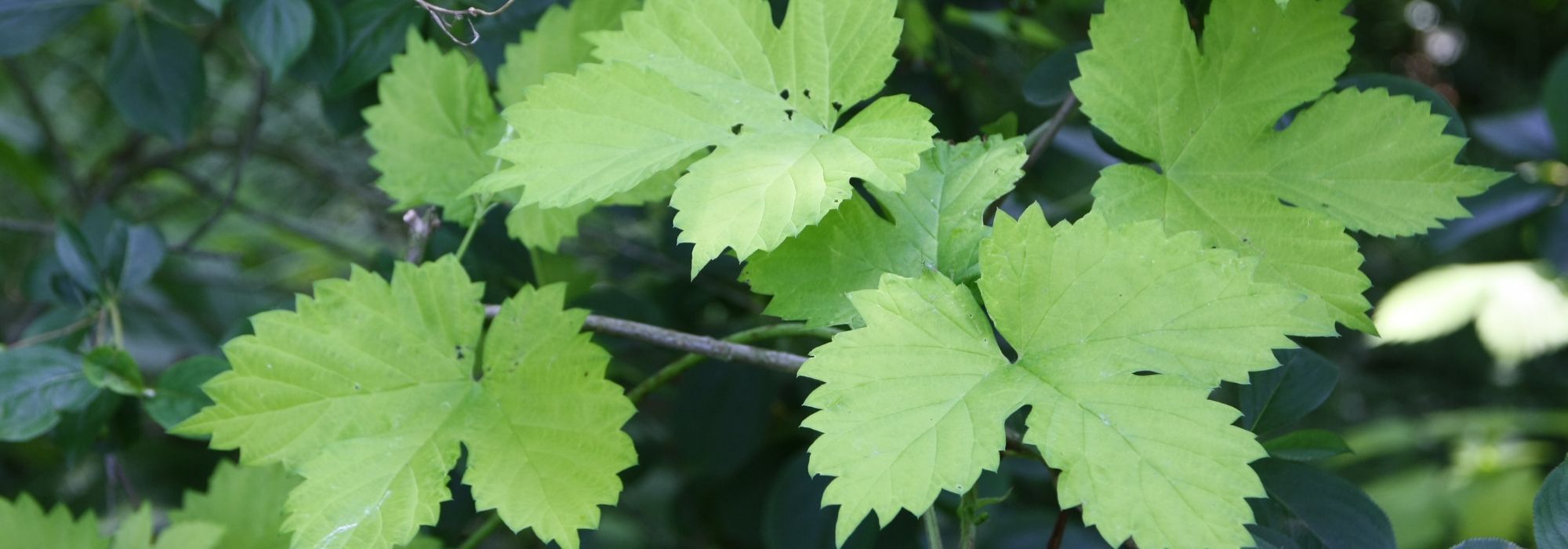
Humulus lupulus Nordbrau - Hop in pictures
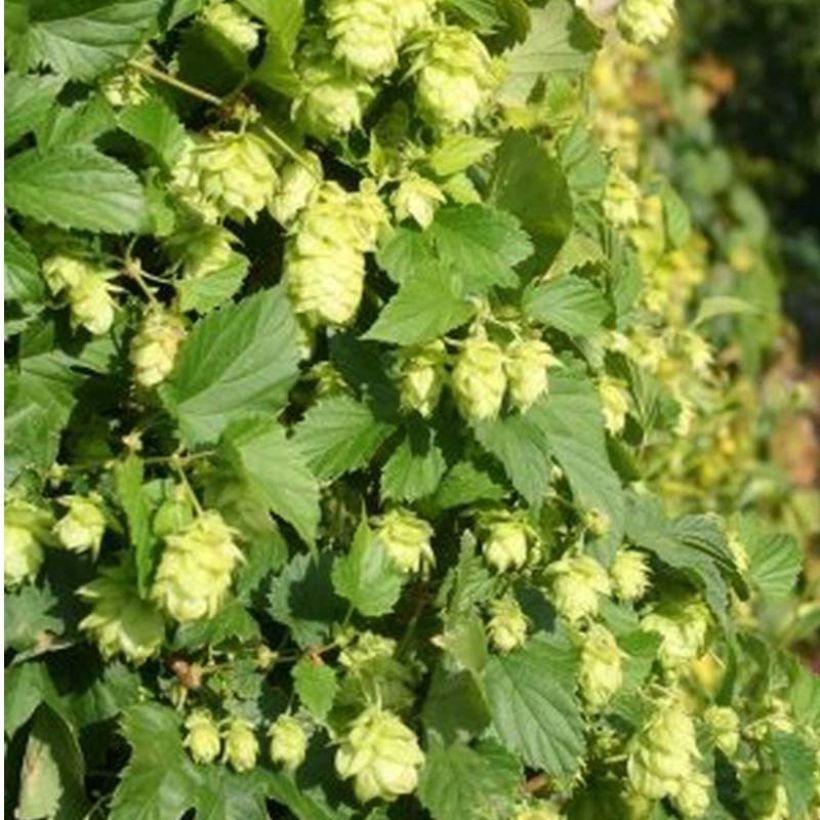
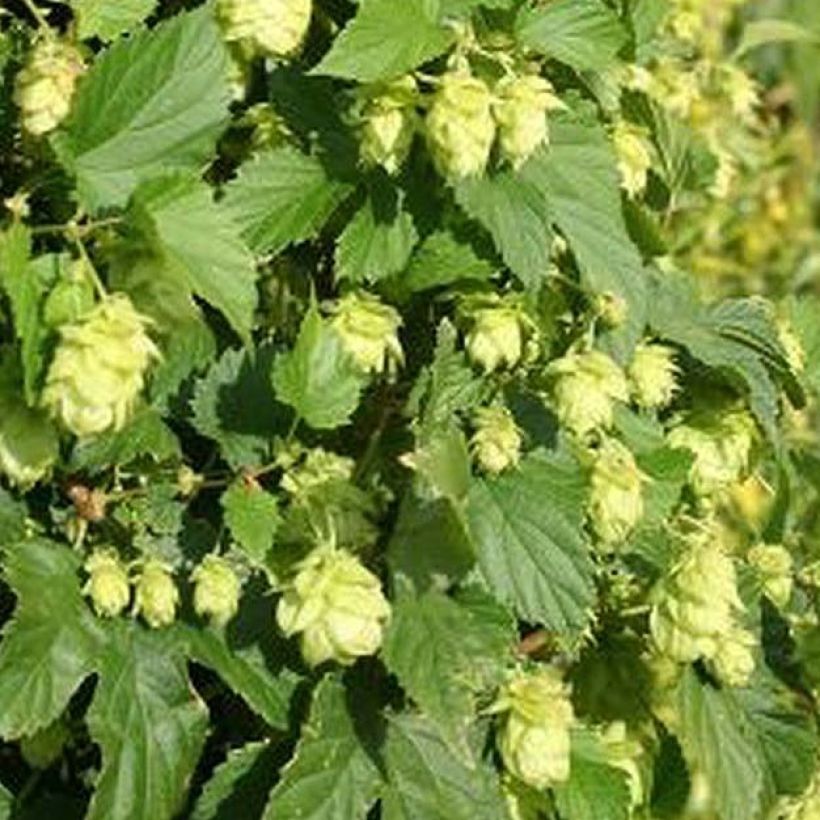
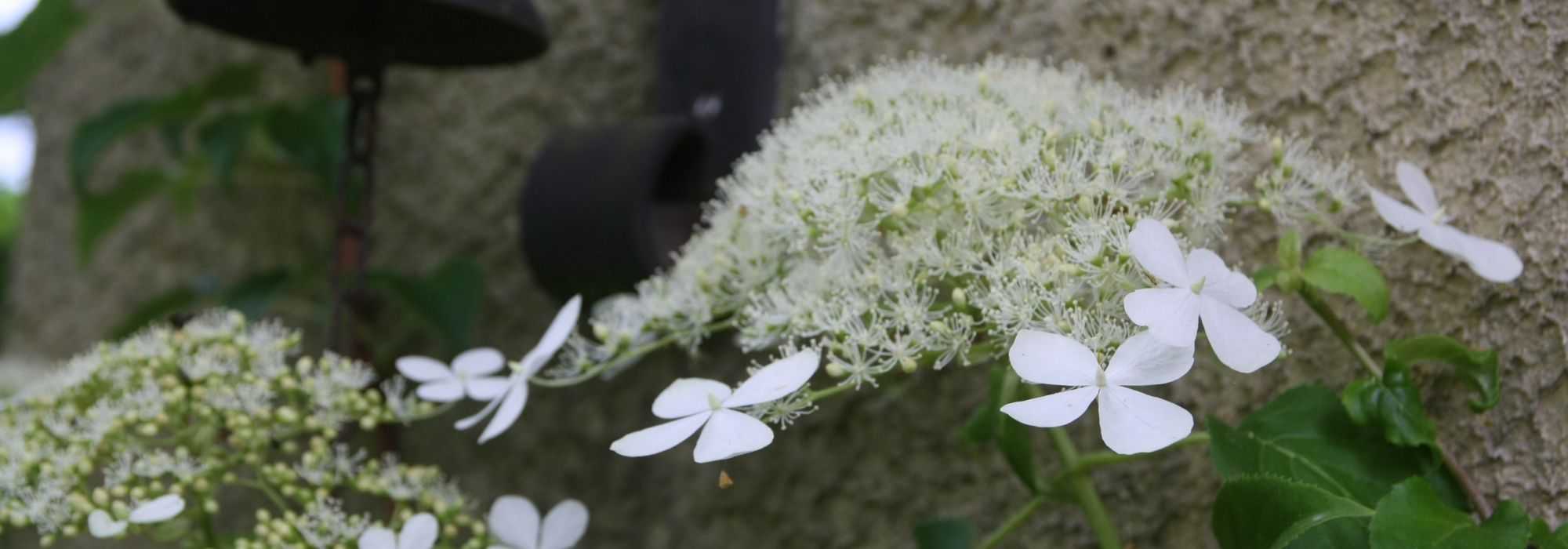
Flowering
Foliage
Plant habit
Botanical data
Humulus
lupulus
Nordbrau
Cannabaceae
Common Hop, Hop
Cultivar or hybrid
Planting and care
The 'Nordbrau' hop is easy to grow in ordinary and deep soil, and can tolerate all exposures with a preference for partial shade. This variety tolerates sunny exposures quite well, except in hotter southern climates. The plant shows a preference for clay-limestone and very fertile soils, rich in humus. Plant the Hop in a soil that remains moist. It attaches itself thanks to the small hooks present on the voluble stems. Install a trellis if you want to cover a wall, and help them at the beginning to move in all directions to evenly cover their support. The stems easily detach from their support in autumn, as they dry out and die with the first frosts. Prune your plant every year to a height of 30 cm, in February or March; remember to remove (and possibly replant) the shoots that would otherwise become invasive.
Planting period
Intended location
Care
Planting & care advice



-
, onOrder confirmed
Reply from on Promesse de fleurs
Recently viewed products
Haven't found what you were looking for?
Hardiness is the lowest winter temperature a plant can endure without suffering serious damage or even dying. However, hardiness is affected by location (a sheltered area, such as a patio), protection (winter cover) and soil type (hardiness is improved by well-drained soil).

The flowering period indicated on our website applies to countries and regions located in USDA zone 8 (France, the United Kingdom, Ireland, the Netherlands, etc.)
It will vary according to where you live:- In zones 9 to 10 (Italy, Spain, Greece, etc.), flowering will occur about 2 to 4 weeks earlier.
- In zones 6 to 7 (Germany, Poland, Slovenia, and lower mountainous regions), flowering will be delayed by 2 to 3 weeks.
- In zone 5 (Central Europe, Scandinavia), blooming will be delayed by 3 to 5 weeks.
In temperate climates, pruning of spring-flowering shrubs (forsythia, spireas, etc.) should be done just after flowering.
Pruning of summer-flowering shrubs (Indian Lilac, Perovskia, etc.) can be done in winter or spring.
In cold regions as well as with frost-sensitive plants, avoid pruning too early when severe frosts may still occur.
The planting period indicated on our website applies to countries and regions located in USDA zone 8 (France, United Kingdom, Ireland, Netherlands).
It will vary according to where you live:
- In Mediterranean zones (Marseille, Madrid, Milan, etc.), autumn and winter are the best planting periods.
- In continental zones (Strasbourg, Munich, Vienna, etc.), delay planting by 2 to 3 weeks in spring and bring it forward by 2 to 4 weeks in autumn.
- In mountainous regions (the Alps, Pyrenees, Carpathians, etc.), it is best to plant in late spring (May-June) or late summer (August-September).
The harvesting period indicated on our website applies to countries and regions in USDA zone 8 (France, England, Ireland, the Netherlands).
In colder areas (Scandinavia, Poland, Austria...) fruit and vegetable harvests are likely to be delayed by 3-4 weeks.
In warmer areas (Italy, Spain, Greece, etc.), harvesting will probably take place earlier, depending on weather conditions.
The sowing periods indicated on our website apply to countries and regions within USDA Zone 8 (France, UK, Ireland, Netherlands).
In colder areas (Scandinavia, Poland, Austria...), delay any outdoor sowing by 3-4 weeks, or sow under glass.
In warmer climes (Italy, Spain, Greece, etc.), bring outdoor sowing forward by a few weeks.
Shipping country and language
Your country of residence may be:
Your country of residence is:
For a better user experience on our website, you can select:
Your shipping country:
-
 Austria
-
 Belgium
-
 Bosnia & Herzegovina
-
 Bulgaria
-
 Croatia
-
 Cyprus
-
 Czechia
-
 Denmark
-
 Estonia
-
 Finland
-
 France
-
 Germany
-
 Greece
-
 Hungary
-
 Iceland
-
 Ireland
-
 Italy
Italy
-
 Latvia
-
 Liechtenstein
-
 Lithuania
-
 Luxembourg
-
 Malta
Malta
-
 Netherlands
-
 Poland
-
 Portugal
-
 Romania
-
 Serbia
-
 Slovakia
-
 Slovenia
-
 Spain
Spain
-
 Sweden
-
 Switzerland
Language:
-
French
-
 English
-
Spanish
-
Italian
-
German
-
Portuguese
-
Dutch
-
Finnish
My Account
Hello
My wish lists
My cart
Log in / Register
Existing customer?
This form is protected by reCAPTCHA - the Google Privacy Policy and Terms of Service apply.
New customer?
Create an account to track your orders, access our customer service and, if you wish, make the most of our upcoming offers.