Want to produce your own seeds in the vegetable patch? Radish is a good candidate! Instead of harvesting all your radishes to eat, keep a few fine specimens in the ground: they will bolt to flower and then produce siliquae, a kind of small pods containing the future seeds. When dry, usually in summer or early autumn, they can be harvested to collect the seeds. Discover when and how to harvest, dry and store your radish seeds to sow the following year or to use as sprouted seeds.
Why save your own radish seeds?
Saving your own seeds first helps save money and gradually gain autonomy in the vegetable patch. A few radishes left to seed can provide enough seeds for many sowings the following year.
It is also a way to preserve a variety you like. By selecting each year healthy radishes that match the desired shape, colour and size, you can maintain your variety and progressively favour plants that perform best in your garden conditions.
Finally, harvested seeds can be shared with other gardeners, exchanged at a seed swap or stored for future seasons.
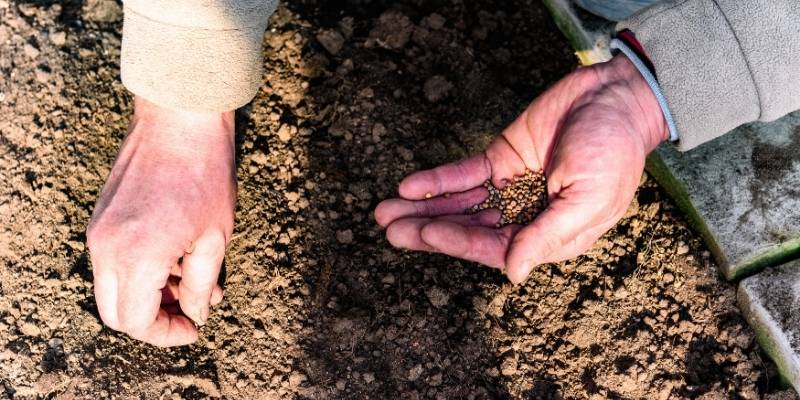
How to make and harvest your radish seeds?
1. Choose radishes to let go to seed
When harvesting your radishes, leave several of the best plants in the ground: choose healthy, well-formed radishes that match the expected shape, colour and size for the variety. If you grow, for example, the 18-day radish, select a few regular, red roots with white tips.
Discard sick, deformed radishes or those that tend to bolt too quickly.
Also check the original seed packet. If it is marked “F1” or “F1 hybrid”, the harvested seeds may germinate, but the radishes obtained the following year will not necessarily be identical to their parents.
Note: different radish varieties can cross with each other. If you want to keep the characteristics of your variety, the simplest approach in the vegetable patch is to let only one radish variety flower at a time.
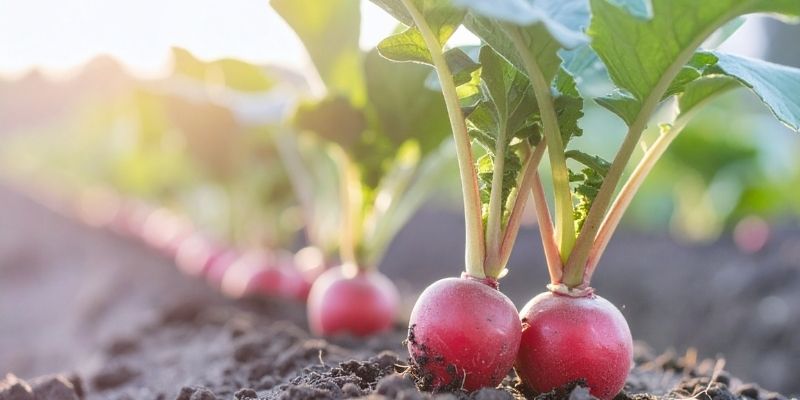
2. Let radishes flower and form their seeds
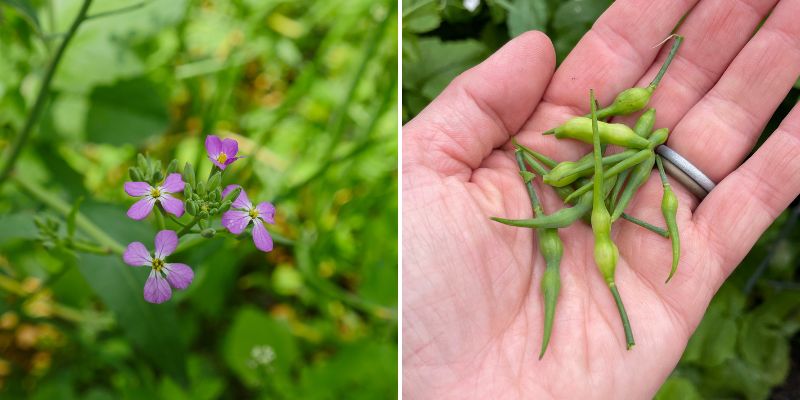
Stop harvesting the selected radishes and let them complete their cycle. They will develop tall flowering stems, then radish flowers that are white, pink or purple.
After pollination, the flowers give rise to siliquae, a kind of elongated radish pods. It is inside these fruits that the seeds develop.
Radishes sown throughout spring can generally flower and produce seeds the same year. Winter radishes are often biennial: they flower and produce seeds after overwintering.
3. Wait until seeds are ripe
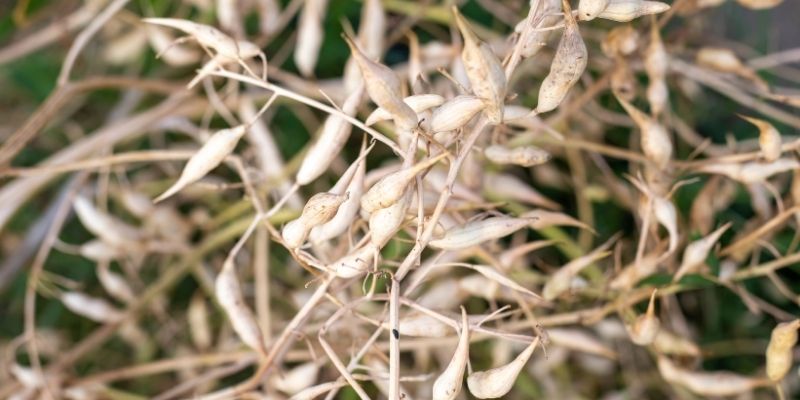
Leave the siliquae to ripen and dry on the plant. Do not harvest them while still green: the seeds would not be fully mature.
They are ready when the siliquae become beige to brown, dry and brittle and when the stems also begin to yellow and dry. Harvest usually takes place in summer or early autumn.
Choose a dry day and wait until the dew has evaporated before you intervene.
4. Cut and dry the stems
Cut the stems bearing the siliquae with pruning shears and place them in a large paper bag or a container to avoid losing seeds.
Even if they already seem dry, leave them for a few more days in a dry, airy place sheltered from rain. The siliquae will then be easier to open.
5. Extract the seeds
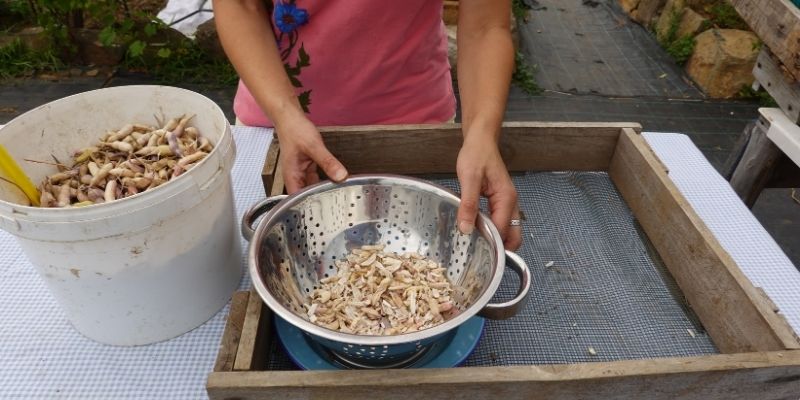
When the siliquae are completely dry, open them and crush them between your fingers over a container to release the seeds.
If you have many, put the siliquae in a sturdy bag and gently crush them to break them.
6. Clean the seeds
Remove pieces of stem and pod by hand, then optionally use a sieve to eliminate the finer debris.
Mature radish seeds are round to slightly oval and beige to light brown. Before storing, let them dry a few more days if needed: they must be completely dry to keep well.
How to store radish seeds?
To keep well, seeds must be completely dry.
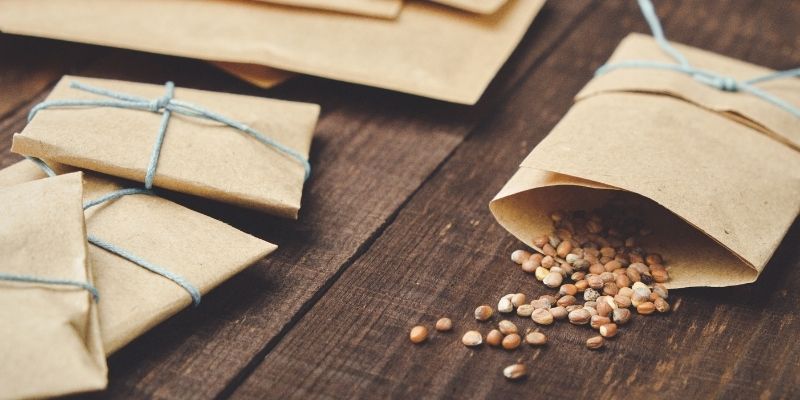
Place them in an envelope, a kraft paper bag or a small airtight jar. Remember to note the variety name and year of harvest: after a few seasons it becomes difficult to recognise different seed batches!
Store your seeds away from light, moisture and heat, ideally in a cool, dry place.
How long do radish seeds last?
Good storage conditions allow radish seeds to retain their germination capacity for several years, although it is best to renew your stock regularly.
Poor storage is often revealed by the appearance of mould: this usually indicates the seeds were stored while still too moist.
→ Feel free to read our articles on storing vegetable seeds and how to know if old seeds are still good.
A few tips
- If prolonged rain is forecast when your siliquae are almost ripe, cut the stems and finish drying them under cover, in a dry, well-ventilated place.
- Do not harvest seeds from a single radish. By keeping several seed-producing plants of the same variety, you preserve more diversity and avoid selecting only the traits of one individual.
- If you want to faithfully preserve a variety, mark your seed plants at the time of the first radish harvest, for example with a label or a small stake. This will prevent a plant intended for seed from accidentally ending up on the plate!
Good to know
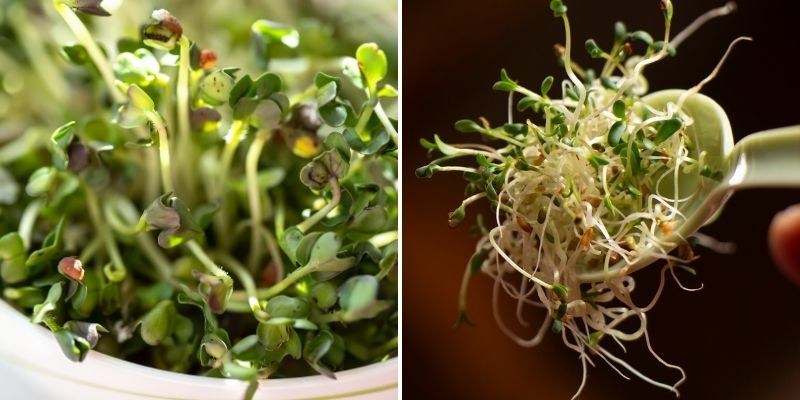
Radish siliquae are also edible when young, green and tender. Crisp and slightly peppery, they can be eaten raw, notably in salads. Radish seeds can also be used to produce sprouted seeds, provided they come from healthy, untreated plants. Simply remember to keep part of your harvest for future sowings!

































Comments