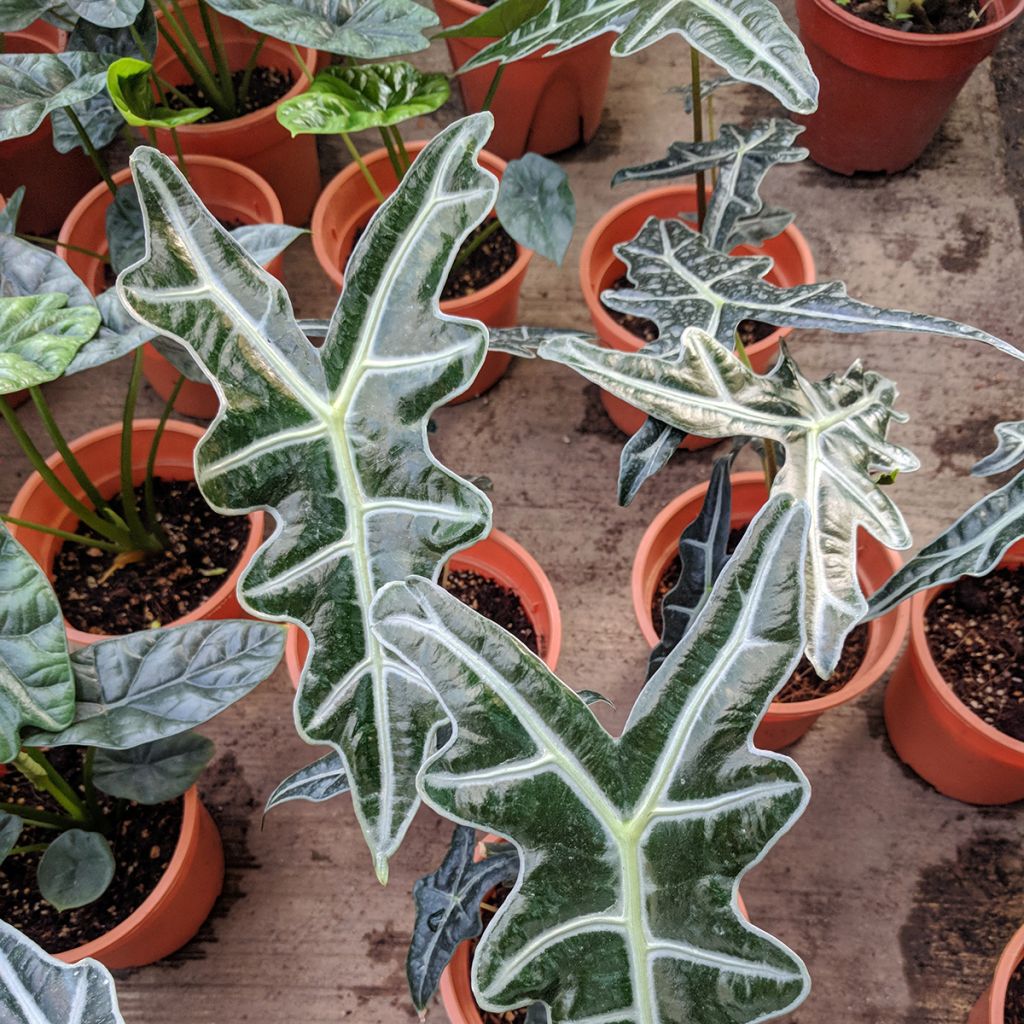
Alocasia sanderiana Nobilis - Elephant's ears plant
Alocasia sanderiana Nobilis - Elephant's ears plant
Alocasia sanderiana Nobilis
Giant taro, elephant’s ears
Back-to-school special offer!
Get €10 off for every €50 you spend! And get up to €40 off on a single order.
How does it work?
1. Shop your favourites
Add your favourite plants to your basket. For every €50 you spend (excluding delivery charges, store credit and the plastic-free option), you’ll receive a €10 voucher.
€50 spent = €10 voucher
€100 spent = €20 voucher
€150 spent = €30 voucher
€200 spent = €40 voucher
2. Place your order
Once your basket reaches one of the spending thresholds, place your order. You can even choose your delivery date!
3. Receive your voucher
As soon as your order has been shipped, you’ll receive an email containing your personal voucher code and its value.
4. Use it on your next order
Your voucher is valid for 90 days from the date you receive it. It can be used once only, on a new order worth at least the value of the voucher, excluding delivery charges.
Please note: Vouchers can be combined with other offers, but cannot be split or refunded.
Why not try an alternative variety in stock?
View all →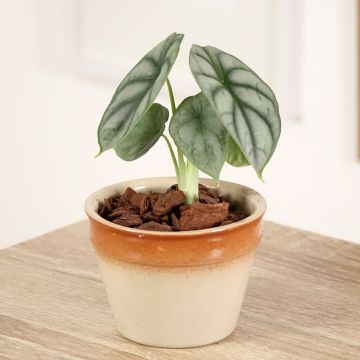
Available in 1 sizes
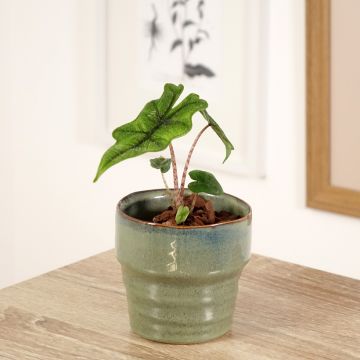
Available in 2 sizes
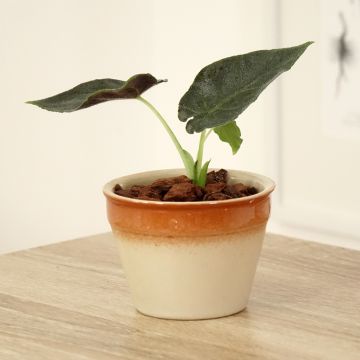
Available in 2 sizes
This plant carries a 30 days recovery warranty
More information
We guarantee the quality of our plants for a full growing cycle, and will replace at our expense any plant that fails to recover under normal climatic and planting conditions.
Description
Alocasia sanderiana 'Nobilis' is a highly ornamental tropical houseplant, appreciated for its dark green foliage with pale veins and its well-proportioned, sculptural silhouette. Grow it in a pot placed on a stand near a window or in a conservatory. Native to the humid forests of Southeast Asia, this Alocasia needs gentle warmth, filtered light and a sufficiently humid atmosphere. In return, it brings a tropical feel to a living room, bright office or heated conservatory.
This Alocasia belongs to the Araceae family , which includes many rhizomatous perennials from tropical woodland. Alocasia sanderiana is native to the north of Mindanao island in the Philippines, where it grows in warm, very humid forest ravines, in well-drained soil sheltered from direct sunlight.
The name 'Nobilis' refers to an old variety, often listed under the synonyms Alocasia sanderiana var. nobilis, Alocasia sanderi or Schizocasia sanderiana. In a pot, the plant forms a clump 60 to 80 cm high and 40 to 50 cm wide, growing from a tuberous rhizome. Long, fleshy petioles bear sagittate leaves 30 to 40 cm long, deeply lobed with wavy edges, very dark green and highlighted by a cream margin and strongly marked whitish main veins; the undersides of the leaf blades are purplish.
Flowering is rare indoors and appears as small inflorescences typical of the Araceae, with a yellowish green spathe surrounding a pale spadix, with no pronounced fragrance.
Indoors, the plant needs filtered light, humid air (humidity above 60%) and stable temperatures between 18 and 25 °C, away from cold draughts. Somewhat demanding, it is best suited to growers already somewhat familiar with tropical plants, as it quickly reacts to overwatering, excessively dry air or sudden temperature changes.
If its needs are met, it performs well in a bright living room, a cosy office or a light-filled bathroom.
Indoors, Alocasia sanderiana 'Nobilis' makes a striking centrepiece, displayed in a simple cachepot that showcases its architectural leaves. Place it on a small table or on the floor near an east-facing window. You can pair it with plants bearing foliage of different textures but with similar needs, such as Calathea rufibarba, a Philodendron gloriosum with a creeping habit and large velvety foliage, or Anthurium clarinervium with large heart-shaped leaves veined in white. In a conservatory or bright bathroom, it creates a lush display with Maranta leuconeura 'Fascinator', which also enjoys warmth, good ambient humidity and filtered light.
The whole plant contains calcium oxalate crystals: it is toxic if ingested by humans and domestic animals alike; therefore, place it out of reach of young children, cats and dogs.
Report an error about the product description
Alocasia sanderiana Nobilis - Elephant's ears plant in pictures
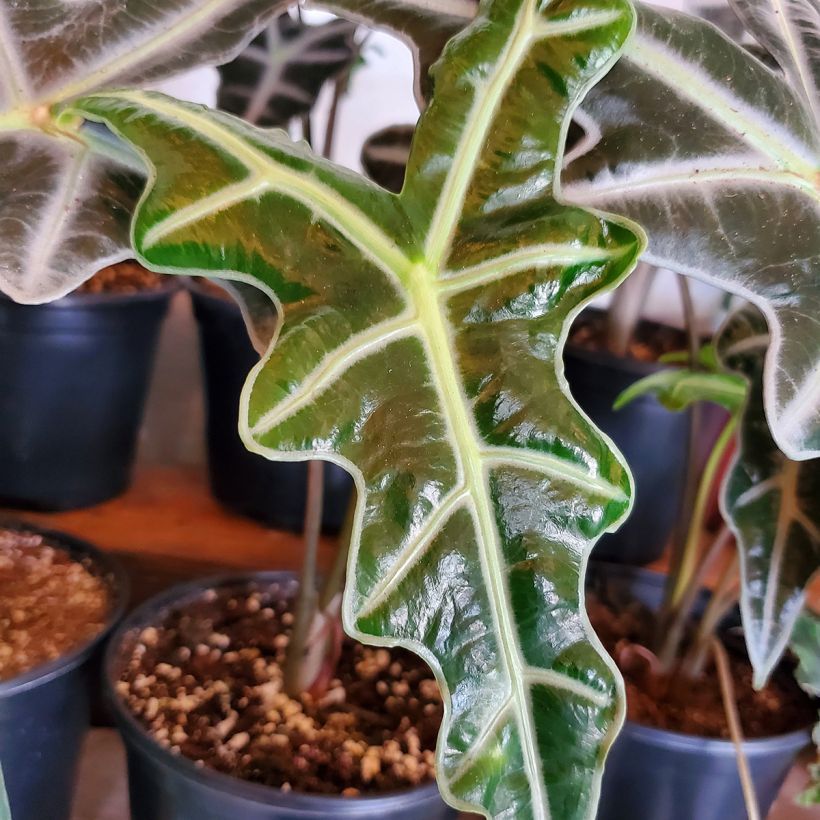
Foliage
Plant habit
Flowering
Botanical data
Alocasia
sanderiana
Nobilis
Araceae
Giant taro, elephant’s ears
Cultivar or hybrid
Safety measures
atteintescutaneomuqueuses
Cette plante peut provoquer l'apparition de réactions cutanées indésirables, une atteinte des yeux, ou des difficultés respiratoires si elle est ingérée.
Ne la plantez pas là où de jeunes enfants peuvent évoluer. Evitez tout contact avec la peau: privilégiez l'emploi de gants pour la manipuler. En cas de contact, lavez-vous soigneusement les mains et rincez abondamment à l'eau la zone concernée. Lavez les vêtements entrés en contact. En cas de réaction cutanée, contactez votre médecin ou le centre antipoison le plus proche de chez vous. En cas d'atteinte étendue ou de difficultés respiratoires, appelez immédiatement le 15 ou le 112.Pensez à conserver l'étiquette de la plante, à la photographier ou à noter son nom, afin de faciliter le travail des professionnels de santé.
Davantage d'informations sur https://plantes-risque.info
Location
Location
Maintenance & care
Watering tips
Potting advice, substrates and fertilisers
Houseplant care
Disease and pest advice
Maintenance & care
Planting & care advice
-
-
-
-
-

-
-
-
This item has not been reviewed yet - be the first to leave a review about it.
Recently viewed products
Haven't found what you were looking for?
Hardiness is the lowest winter temperature a plant can endure without suffering serious damage or even dying. However, hardiness is affected by location (a sheltered area, such as a patio), protection (winter cover) and soil type (hardiness is improved by well-drained soil).

The flowering period indicated on our website applies to countries and regions located in USDA zone 8 (France, the United Kingdom, Ireland, the Netherlands, etc.)
It will vary according to where you live:- In zones 9 to 10 (Italy, Spain, Greece, etc.), flowering will occur about 2 to 4 weeks earlier.
- In zones 6 to 7 (Germany, Poland, Slovenia, and lower mountainous regions), flowering will be delayed by 2 to 3 weeks.
- In zone 5 (Central Europe, Scandinavia), blooming will be delayed by 3 to 5 weeks.
In temperate climates, pruning of spring-flowering shrubs (forsythia, spireas, etc.) should be done just after flowering.
Pruning of summer-flowering shrubs (Indian Lilac, Perovskia, etc.) can be done in winter or spring.
In cold regions as well as with frost-sensitive plants, avoid pruning too early when severe frosts may still occur.
The planting period indicated on our website applies to countries and regions located in USDA zone 8 (France, United Kingdom, Ireland, Netherlands).
It will vary according to where you live:
- In Mediterranean zones (Marseille, Madrid, Milan, etc.), autumn and winter are the best planting periods.
- In continental zones (Strasbourg, Munich, Vienna, etc.), delay planting by 2 to 3 weeks in spring and bring it forward by 2 to 4 weeks in autumn.
- In mountainous regions (the Alps, Pyrenees, Carpathians, etc.), it is best to plant in late spring (May-June) or late summer (August-September).
The harvesting period indicated on our website applies to countries and regions in USDA zone 8 (France, England, Ireland, the Netherlands).
In colder areas (Scandinavia, Poland, Austria...) fruit and vegetable harvests are likely to be delayed by 3-4 weeks.
In warmer areas (Italy, Spain, Greece, etc.), harvesting will probably take place earlier, depending on weather conditions.
The sowing periods indicated on our website apply to countries and regions within USDA Zone 8 (France, UK, Ireland, Netherlands).
In colder areas (Scandinavia, Poland, Austria...), delay any outdoor sowing by 3-4 weeks, or sow under glass.
In warmer climes (Italy, Spain, Greece, etc.), bring outdoor sowing forward by a few weeks.
Shipping country and language
Your country of residence may be:
Your country of residence is:
For a better user experience on our website, you can select:
Your shipping country:
-
 Austria
-
 Belgium
-
 Bosnia & Herzegovina
-
 Bulgaria
-
 Croatia
-
 Cyprus
-
 Czechia
-
 Denmark
-
 Estonia
-
 Finland
-
 France
-
 Germany
-
 Greece
-
 Hungary
-
 Iceland
-
 Ireland
-
 Italy
Italy
-
 Latvia
-
 Liechtenstein
-
 Lithuania
-
 Luxembourg
-
 Malta
Malta
-
 Netherlands
-
 Poland
-
 Portugal
-
 Romania
-
 Serbia
-
 Slovakia
-
 Slovenia
-
 Spain
Spain
-
 Sweden
-
 Switzerland
Language:
-
French
-
 English
-
Spanish
-
Italian
-
German
-
Portuguese
-
Dutch
-
Finnish
My Account
Hello
My wish lists
My cart
Log in / Register
Existing customer?
This form is protected by reCAPTCHA - the Google Privacy Policy and Terms of Service apply.
New customer?
Create an account to track your orders, access our customer service and, if you wish, make the most of our upcoming offers.