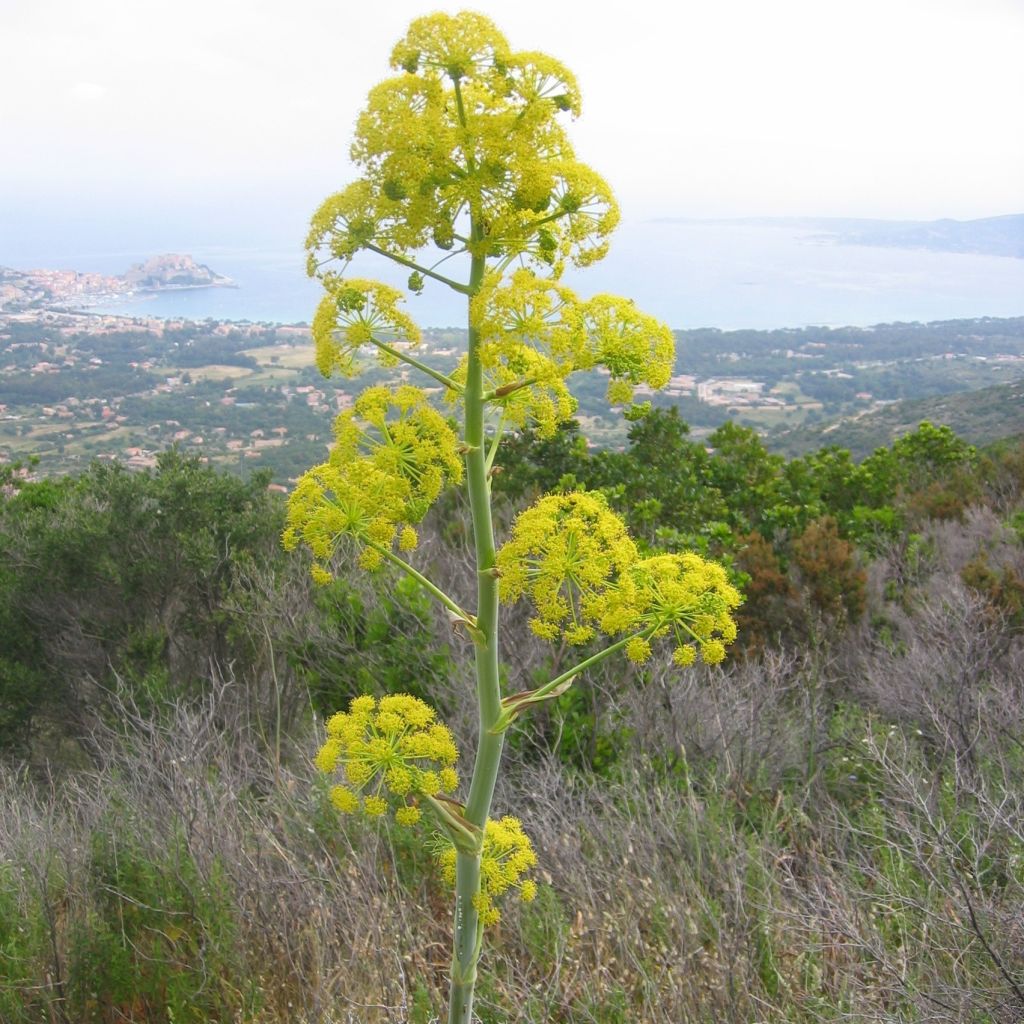
Ferula communis - Giant Fennel
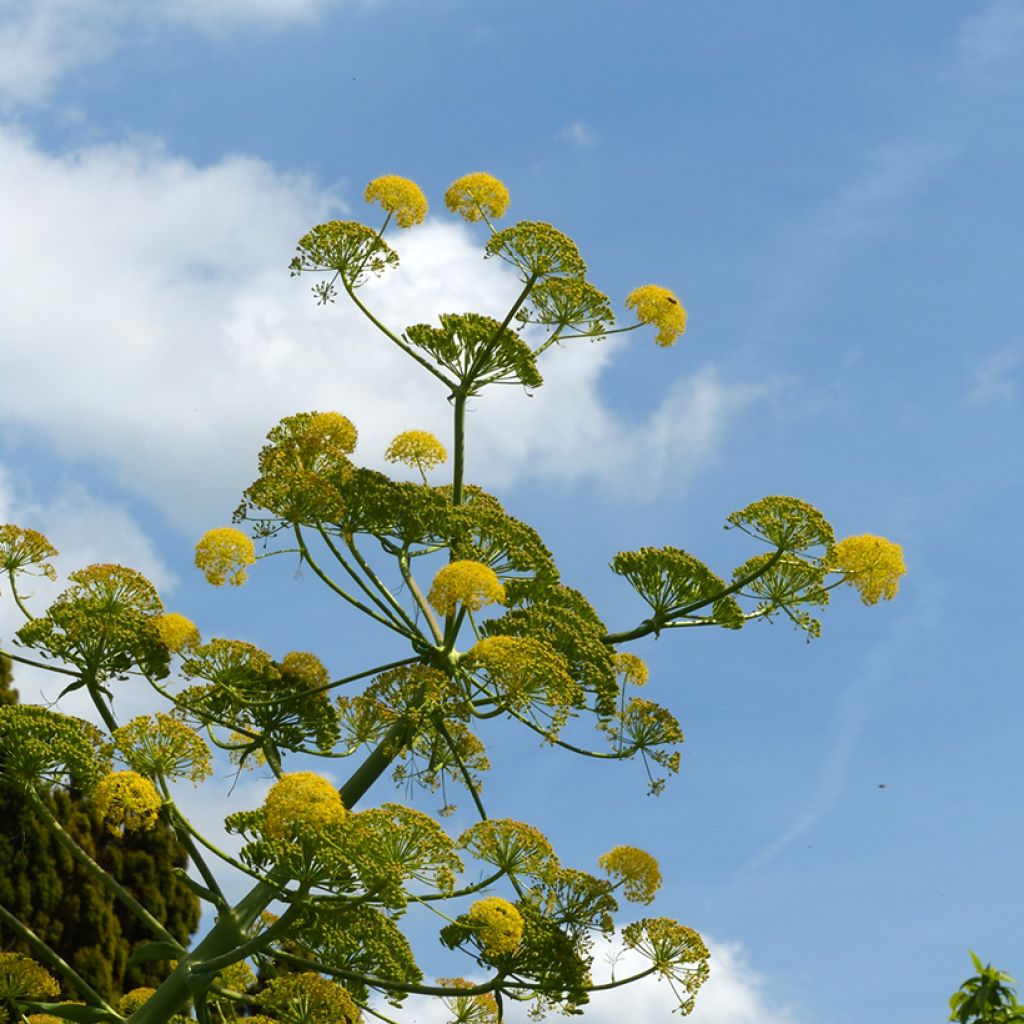
Ferula communis - Giant Fennel
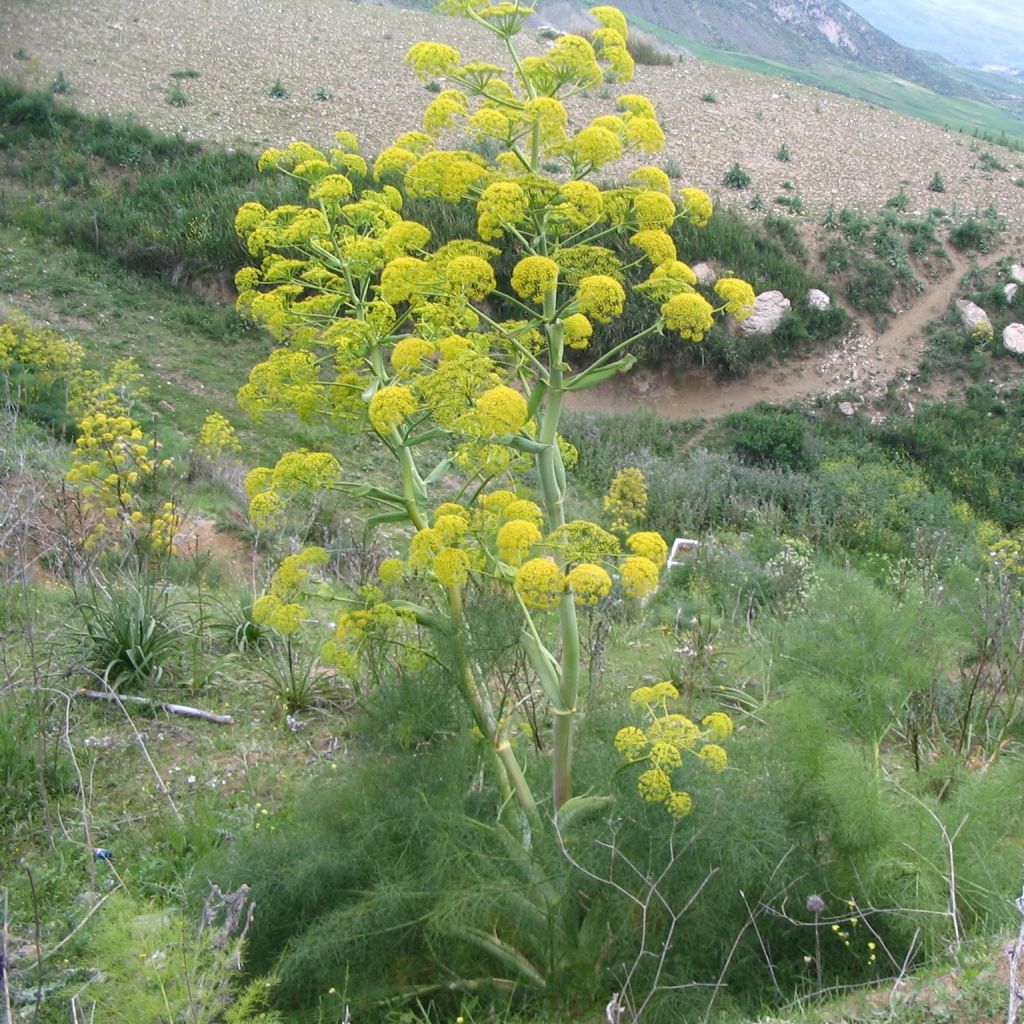
Ferula communis - Giant Fennel
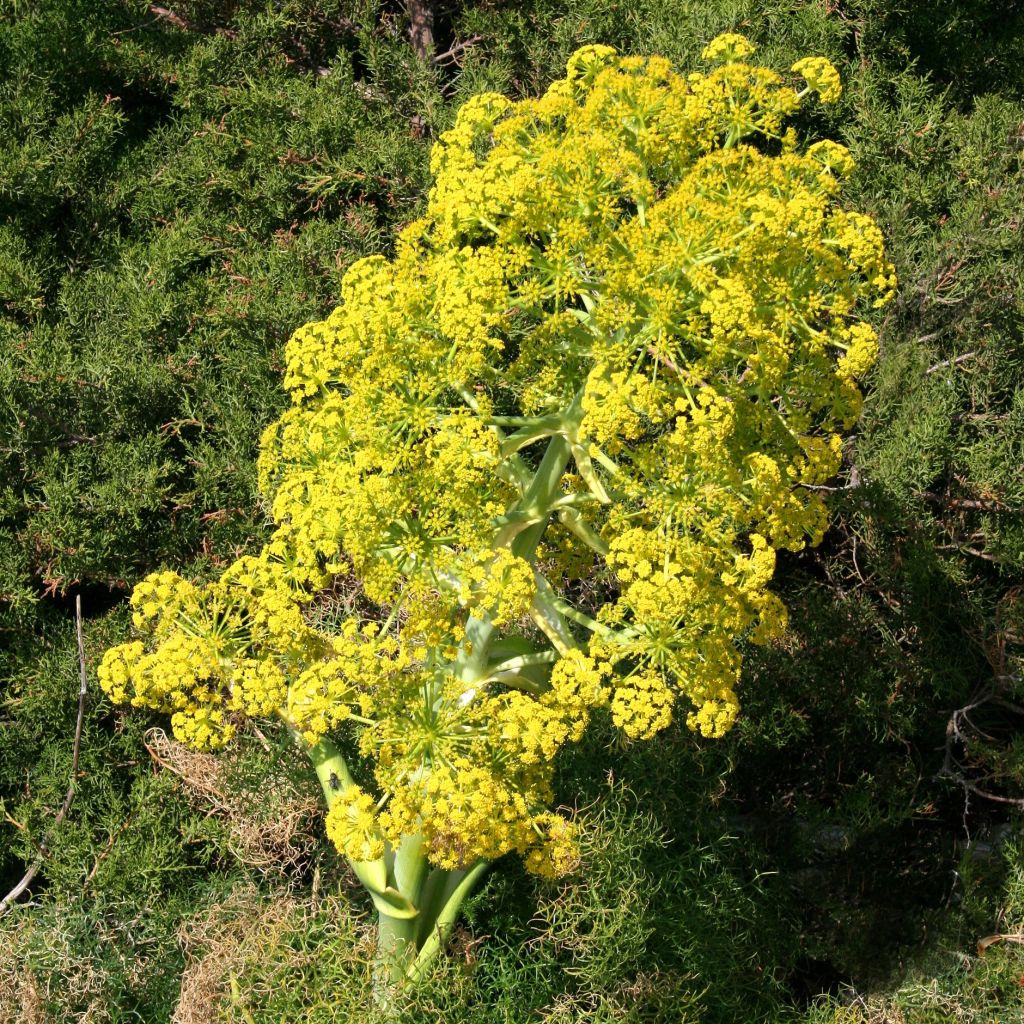
Ferula communis - Giant Fennel
Ferula communis - Giant Fennel
Ferula communis - Giant Fennel
Ferula communis - Giant Fennel
Ferula communis
Giant Fennel
Nothing to complain about, the young plant was well established and vigorous.
Robin, 14/08/2025
Back-to-school special offer!
Get €10 off for every €50 you spend! And get up to €40 off on a single order.
How does it work?
1. Shop your favourites
Add your favourite plants to your basket. For every €50 you spend (excluding delivery charges, store credit and the plastic-free option), you’ll receive a €10 voucher.
€50 spent = €10 voucher
€100 spent = €20 voucher
€150 spent = €30 voucher
€200 spent = €40 voucher
2. Place your order
Once your basket reaches one of the spending thresholds, place your order. You can even choose your delivery date!
3. Receive your voucher
As soon as your order has been shipped, you’ll receive an email containing your personal voucher code and its value.
4. Use it on your next order
Your voucher is valid for 90 days from the date you receive it. It can be used once only, on a new order worth at least the value of the voucher, excluding delivery charges.
Please note: Vouchers can be combined with other offers, but cannot be split or refunded.
Home or relay delivery (depending on size and destination)
Important: You may be charged customs duties by your country’s customs authorities upon delivery.
Schedule delivery date,
and select date in basket
This plant carries a 12 months recovery warranty
More information
We guarantee the quality of our plants for a full growing cycle, and will replace at our expense any plant that fails to recover under normal climatic and planting conditions.
Would this plant suit my garden?
Set up your Plantfit profile →
Description
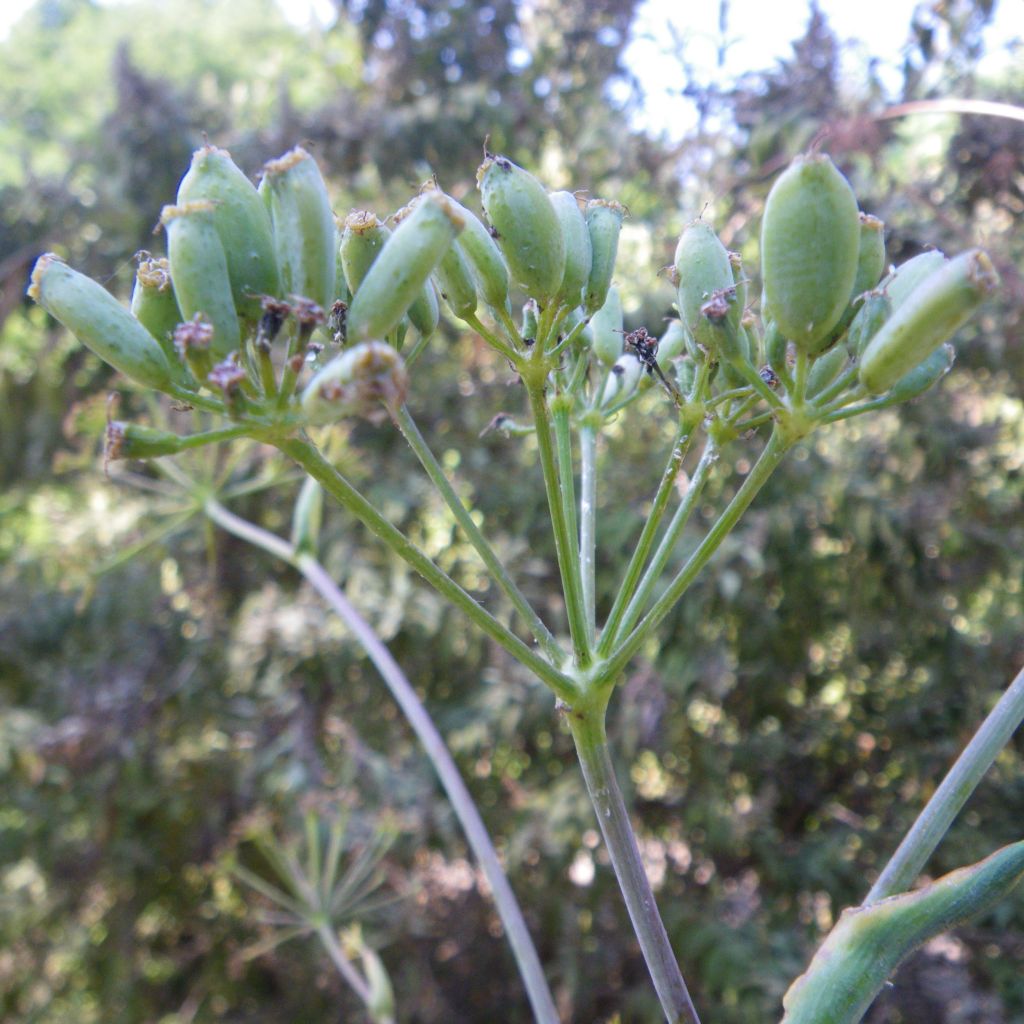
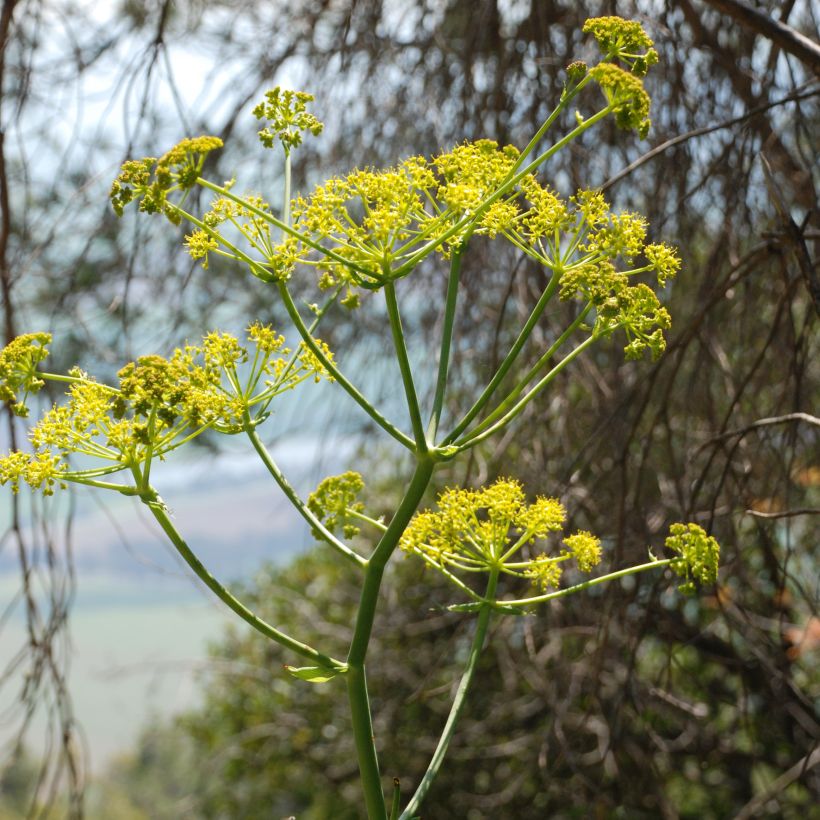
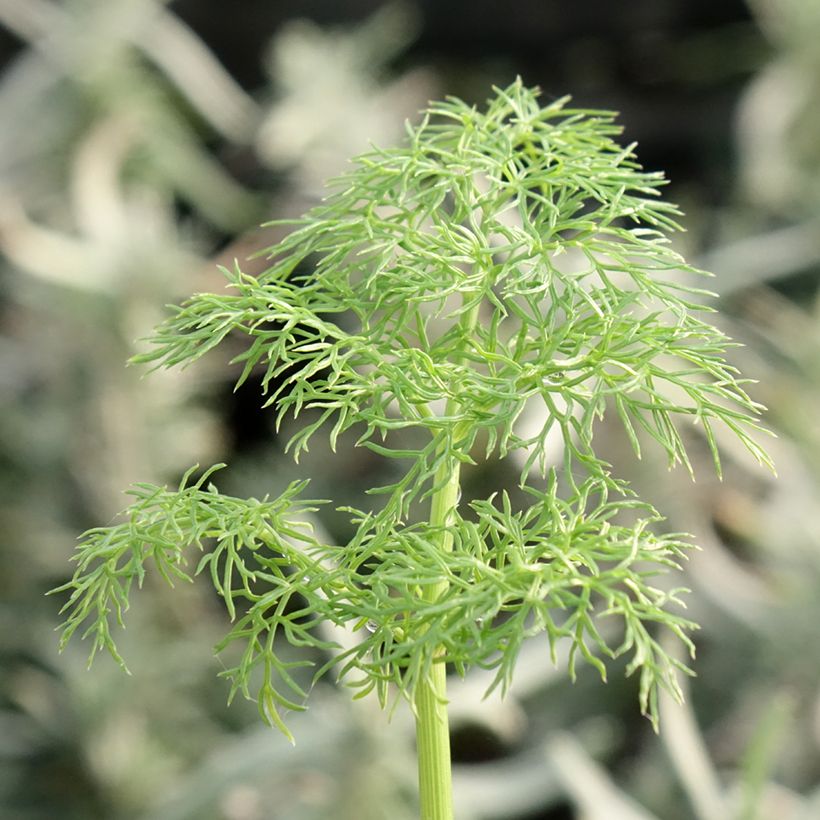
The Ferula communis, also known as Common Ferula or Grande Ferula, is an architectural plant, with rapid growth, a spectacular and very robust plant whose giant inflorescence will bring a lot of exoticism to lush flowerbeds, or on the contrary a wild touch to the too strict areas of the garden. In spring, a powerful floral stem emerges from the ground, quickly lengthening and branching out, bearing large hemispherical umbels adorned with bright yellow flowers in June. It emerges from a beautiful rosette of finely cut leaves, resembling a giant fennel. This ferula prefers sun and well-drained soils.
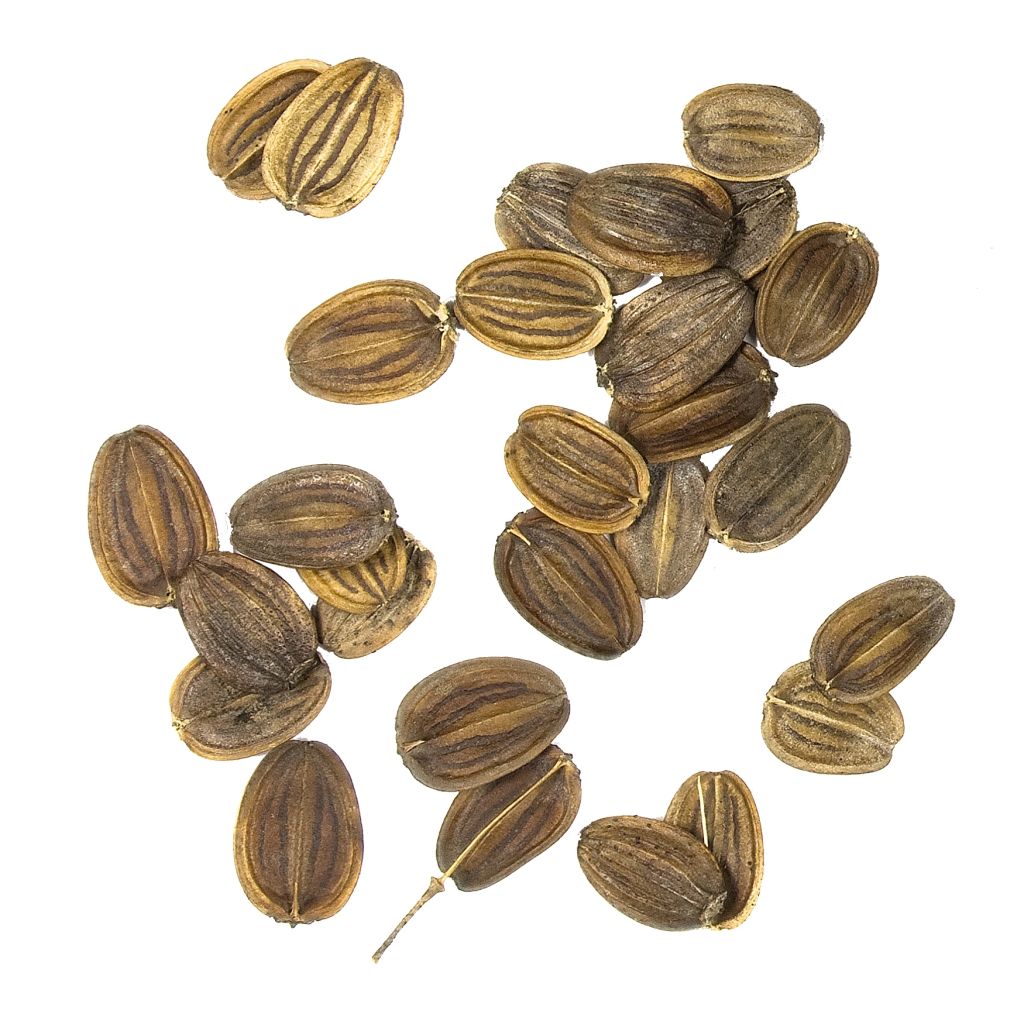
The Ferula communis is a large perennial plant with tuberous rhizomes belonging to the Apiaceae family, just like parsley, celery, and carrot. Southern Europe, Asia Minor, and North Africa are the birthplaces of this ferula, which grows spontaneously on sunny slopes in the south of France: in Provence, Languedoc, Roussillon, and Corsica. The plant will reach 60 to 80 cm (24 to 32in) in all directions for the foliage. The leaves, finely divided into linear leaflets, light in appearance, dark green in color, form a beautiful rosette that emerges from the ground in autumn, with the return of rain. Flowering occurs on mature plants, several years old. Piercing directly from the ground in spring, the sturdy and massive floral stem, brown-mauve-violet, rises up to 2m (7ft)-2.50m (8ft). In May-June, sometimes in July depending on the climate, large umbels appear along this stem, each bearing hundreds of small bright yellow flowers with protruding stamens. The foliage dries up with the arrival of heat and summer drought, and the plant goes dormant. Only the long dry stem remains, branched like a small tree, astonishing in its lightness and resistance. The hollow stem contains a fibrous pith that has the curious property of slowly burning, while the bark is fireproof. In ancient times, it was used to transport fire from one place to another. And in the past, closer to us, its whipping stems were used to "discipline" schoolchildren. Depending on the climate, it can behave like an annual, especially if allowed to bear seeds.
Be enchanted by the ferula, as it is an imposing and light perennial, relatively hardy in porous soil. This exotic-looking plant, with a false agave appearance, becomes spectacular in rich soil, well-drained but remaining moist, emerging from sunny flowerbeds alongside tall thistles like Cynara cardunculus, giant scabious (Cephalaria gigantea), dwarf abelias, creeping ceanothus, yuccas, dwarf conifers, filarias, myrtles, which will ensure the permanence of the summer decor. However, it is very well adapted to poor and rocky soils, very dry in summer, like a large slope reserved for dry soil plants (lavenders, rosemary, cistus, euphorbias, teucriums).
Although it resembles a giant fennel, the ferula is absolutely not edible, on the contrary, and its molecules with anticoagulant properties are particularly feared by shepherds, as they are highly toxic to herbivores. This anticoagulant principle is under study in human medicine. The Ferula galbaniflua, a cousin from Central Asia also known as Gum Ferula or Galbanum, secretes a fragrant resin highly appreciated in perfumery and used in aromatherapy.
Report an error about the product description
Ferula communis - Giant Fennel in pictures
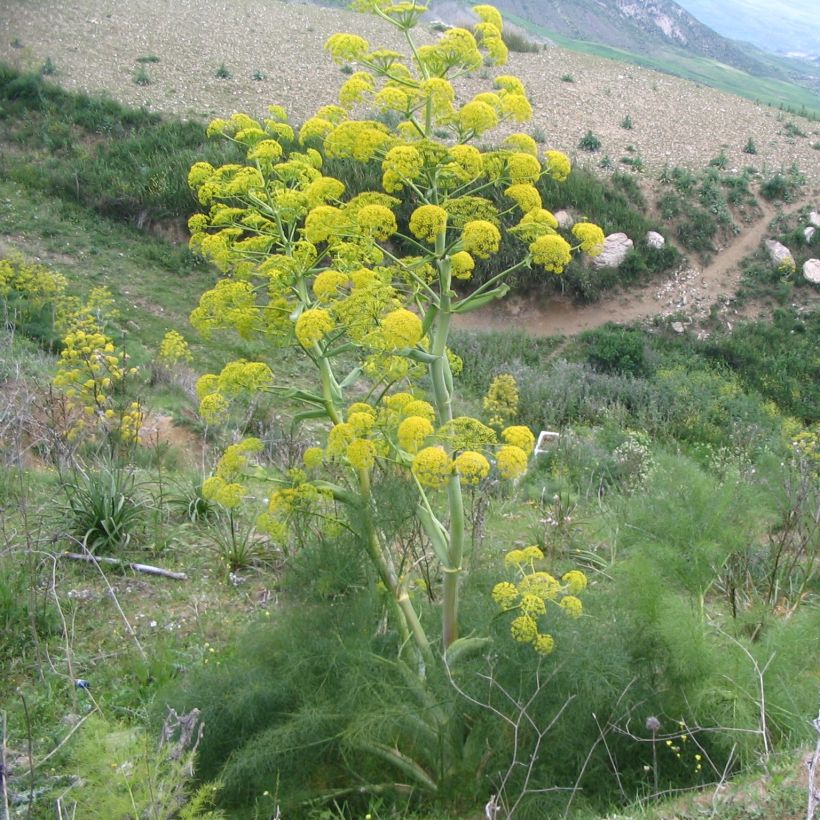
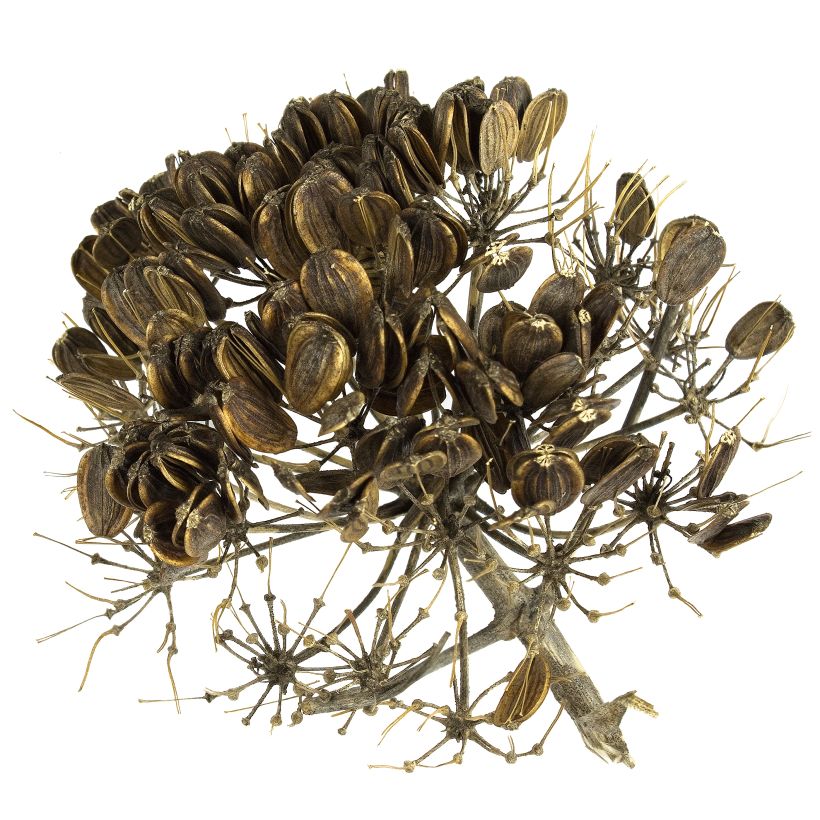
Flowering
Foliage
Plant habit
Botanical data
Ferula
communis
Apiaceae
Giant Fennel
Mediterranean
Planting and care
Plant the Ferula communis in spring or late summer, in a very well-drained, fertile, or even calcareous, rocky, sandy and poor soil. Choose a very sunny exposure for this plant of the Mediterranean. The plant will withstand -10/-12°C in these growing conditions. Its large umbel, very solid, resists windy exposures very well. It is recommended to remove faded umbels to perpetuate the plant. Spontaneous sowings are frequent in light soil, but young seedlings will take several years before flowering.
Planting period
Intended location
Care
Planting & care advice
-
-
-
-
-

-
-
-
-
, onOrder confirmed
Reply from on Promesse de fleurs
Recently viewed products
Haven't found what you were looking for?
Hardiness is the lowest winter temperature a plant can endure without suffering serious damage or even dying. However, hardiness is affected by location (a sheltered area, such as a patio), protection (winter cover) and soil type (hardiness is improved by well-drained soil).

The flowering period indicated on our website applies to countries and regions located in USDA zone 8 (France, the United Kingdom, Ireland, the Netherlands, etc.)
It will vary according to where you live:- In zones 9 to 10 (Italy, Spain, Greece, etc.), flowering will occur about 2 to 4 weeks earlier.
- In zones 6 to 7 (Germany, Poland, Slovenia, and lower mountainous regions), flowering will be delayed by 2 to 3 weeks.
- In zone 5 (Central Europe, Scandinavia), blooming will be delayed by 3 to 5 weeks.
In temperate climates, pruning of spring-flowering shrubs (forsythia, spireas, etc.) should be done just after flowering.
Pruning of summer-flowering shrubs (Indian Lilac, Perovskia, etc.) can be done in winter or spring.
In cold regions as well as with frost-sensitive plants, avoid pruning too early when severe frosts may still occur.
The planting period indicated on our website applies to countries and regions located in USDA zone 8 (France, United Kingdom, Ireland, Netherlands).
It will vary according to where you live:
- In Mediterranean zones (Marseille, Madrid, Milan, etc.), autumn and winter are the best planting periods.
- In continental zones (Strasbourg, Munich, Vienna, etc.), delay planting by 2 to 3 weeks in spring and bring it forward by 2 to 4 weeks in autumn.
- In mountainous regions (the Alps, Pyrenees, Carpathians, etc.), it is best to plant in late spring (May-June) or late summer (August-September).
The harvesting period indicated on our website applies to countries and regions in USDA zone 8 (France, England, Ireland, the Netherlands).
In colder areas (Scandinavia, Poland, Austria...) fruit and vegetable harvests are likely to be delayed by 3-4 weeks.
In warmer areas (Italy, Spain, Greece, etc.), harvesting will probably take place earlier, depending on weather conditions.
The sowing periods indicated on our website apply to countries and regions within USDA Zone 8 (France, UK, Ireland, Netherlands).
In colder areas (Scandinavia, Poland, Austria...), delay any outdoor sowing by 3-4 weeks, or sow under glass.
In warmer climes (Italy, Spain, Greece, etc.), bring outdoor sowing forward by a few weeks.
Shipping country and language
Your country of residence may be:
Your country of residence is:
For a better user experience on our website, you can select:
Your shipping country:
-
 Austria
-
 Belgium
-
 Bosnia & Herzegovina
-
 Bulgaria
-
 Croatia
-
 Cyprus
-
 Czechia
-
 Denmark
-
 Estonia
-
 Finland
-
 France
-
 Germany
-
 Greece
-
 Hungary
-
 Iceland
-
 Ireland
-
 Italy
Italy
-
 Latvia
-
 Liechtenstein
-
 Lithuania
-
 Luxembourg
-
 Malta
Malta
-
 Netherlands
-
 Poland
-
 Portugal
-
 Romania
-
 Serbia
-
 Slovakia
-
 Slovenia
-
 Spain
Spain
-
 Sweden
-
 Switzerland
Language:
-
French
-
 English
-
Spanish
-
Italian
-
German
-
Portuguese
-
Dutch
-
Finnish
My Account
Hello
My wish lists
My cart
Log in / Register
Existing customer?
This form is protected by reCAPTCHA - the Google Privacy Policy and Terms of Service apply.
New customer?
Create an account to track your orders, access our customer service and, if you wish, make the most of our upcoming offers.