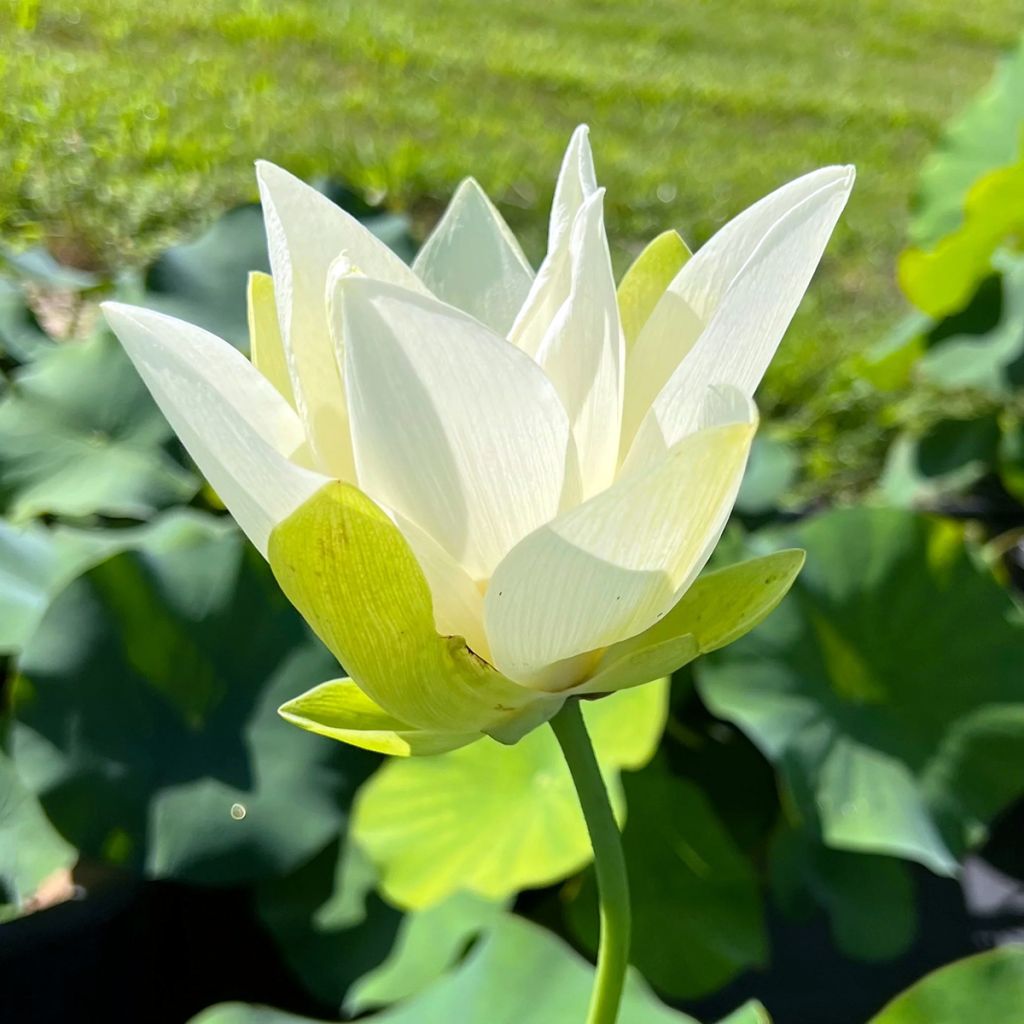
Nelumbo nucifera Tulip Lotus - Sacred lotus
Nelumbo nucifera Tulip Lotus - Sacred lotus
Nelumbo nucifera Tulip Lotus
Sacred Lotus, Indian Lotus, Lotus
Back-to-school special offer!
Get €10 off for every €50 you spend! And get up to €40 off on a single order.
How does it work?
1. Shop your favourites
Add your favourite plants to your basket. For every €50 you spend (excluding delivery charges, store credit and the plastic-free option), you’ll receive a €10 voucher.
€50 spent = €10 voucher
€100 spent = €20 voucher
€150 spent = €30 voucher
€200 spent = €40 voucher
2. Place your order
Once your basket reaches one of the spending thresholds, place your order. You can even choose your delivery date!
3. Receive your voucher
As soon as your order has been shipped, you’ll receive an email containing your personal voucher code and its value.
4. Use it on your next order
Your voucher is valid for 90 days from the date you receive it. It can be used once only, on a new order worth at least the value of the voucher, excluding delivery charges.
Please note: Vouchers can be combined with other offers, but cannot be split or refunded.
Why not try an alternative variety in stock?
View all →
Available in 1 sizes
Available in 1 sizes
Available in 1 sizes
Available in 1 sizes

Available in 1 sizes
This plant carries a 6 months recovery warranty
More information
We guarantee the quality of our plants for a full growing cycle, and will replace at our expense any plant that fails to recover under normal climatic and planting conditions.
Description
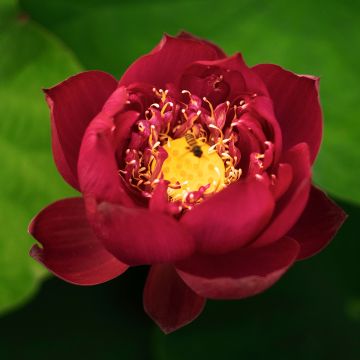
Nelumbo nucifera ‘Tulip Lotus’, also marketed as ‘Shirokunshi’, is a medium-statured white lotus, prized for its refined style. This variety exhibits good vigour and offers a generous flowering in full sun. Its narrow buds open into white cups with upright petals, like a tulip resting above ample, rounded foliage. Its presence creates a peaceful and architectural atmosphere in the water garden, between the purity of line and summer luxuriance.
The Nelumbo genus belongs to the Nelumbonaceae family, distinct from that of water lilies, even though the two plants are sometimes confused. The species Nelumbo nucifera, the sacred lotus or Indian lotus, is native to a vast area ranging from Asia to northeastern Australia; it has been cultivated for centuries as an ornamental, food, and symbolic plant.
The cultivar ‘Tulip Lotus’, of Japanese origin, is described by some specialists as a natural hybrid, and it circulates under several horticultural names, notably ‘Shirokunshi’ and, among some collectors, ‘Shirokunshihoren’. Like all lotus, it develops from a fleshy rhizome rooted in mud or in a heavy substrate. Its peltate, almost circular, green leaves, measuring 30 cm in diameter or more, depending on the plant's vigour, are borne on long petioles; their surface repels water, which beads and slides at the slightest movement. Unlike water lilies, whose flowers and leaves float or remain close to the surface, the lotus raises its leaves and flowers well above the water. 'Tulip Lotus’ reaches 60 to 100 cm in height, sometimes more under very good conditions. Flowering is one of its major assets. The elegant and narrow buds first open into a tulip-shaped cup before opening further, without losing their upright stance. The flowers have fewer than twenty petals and measure 18 to 25 cm in diameter; they are renewed throughout the summer, each flower lasting about three days. They open in the morning and close in the evening. At the centre of the corollas, the yellow then green receptacle gradually takes on the typical conical shape of the lotus, containing the seeds.
A deciduous aquatic herbaceous plant, ‘Tulip Lotus’ begins its growth when the water truly warms up in spring. It first unfurls a few floating leaves before emitting its aerial leaves and flowering stems. In autumn, the foliage yellows then disappears, while the rhizome goes dormant in the mud.
This lotus is suitable for medium or large ponds and very calm pools, but also for large watertight containers, tanks, and half-barrels placed in full light. Its development is quite adjustable depending on the container: the greater the volume offered to the rhizome, the bigger the plant grows. On a terrace or in a small garden, it can therefore become the centrepiece of a miniature water garden. Cultivation in a submerged pot is, in fact, the best way to control its vigour and simplify maintenance. In cold climates, the main thing is to avoid the rhizome freezing: in a sufficiently deep pond, the container can be lowered below the zone likely to be frozen. In an above-ground container, it is safer to overwinter it in a cool, frost-free location or under effective protection.
Beyond the garden, Nelumbo nucifera is one of the great cultural plants of Asia: its rhizomes, seeds, leaves, and flowers are traditionally used there, and the lotus is also a major symbol of purity in Hinduism and Buddhism; it is notably the national flower of India and Vietnam.
Report an error about the product description
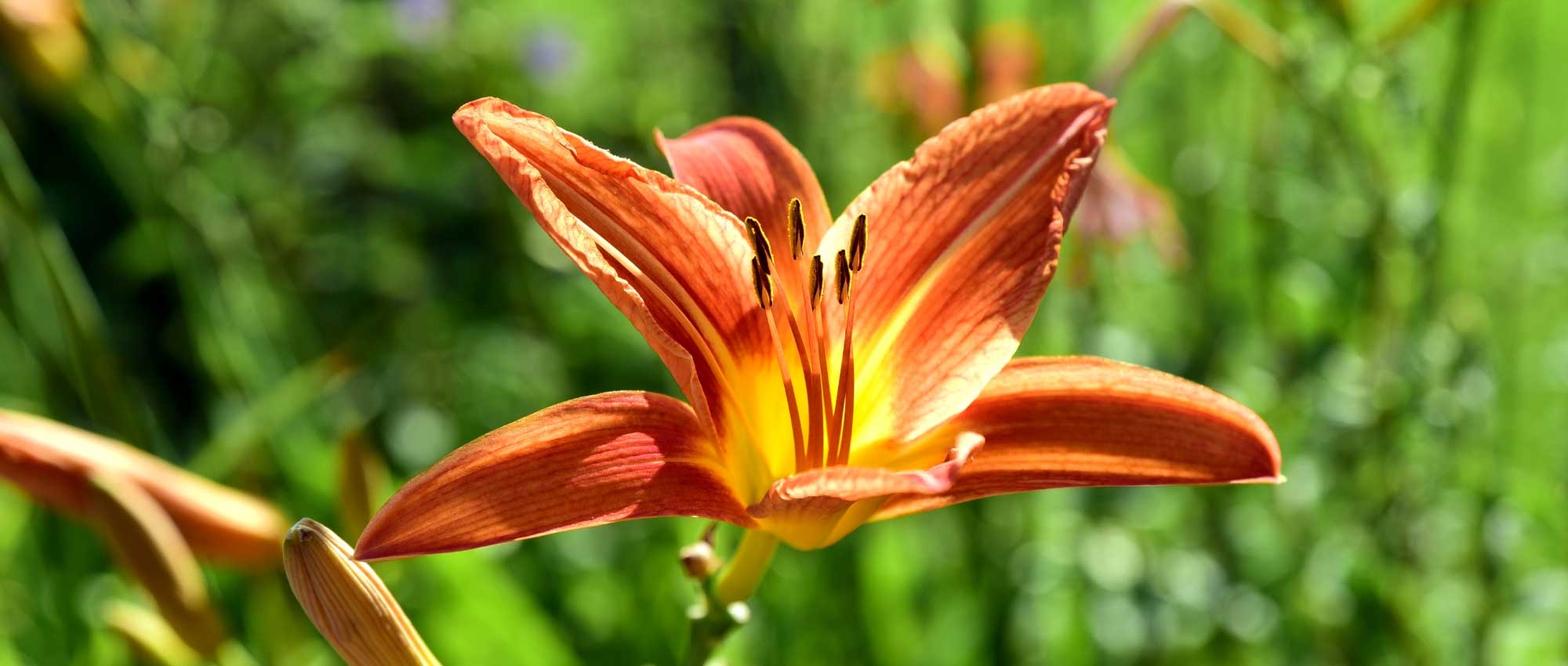
Flowering
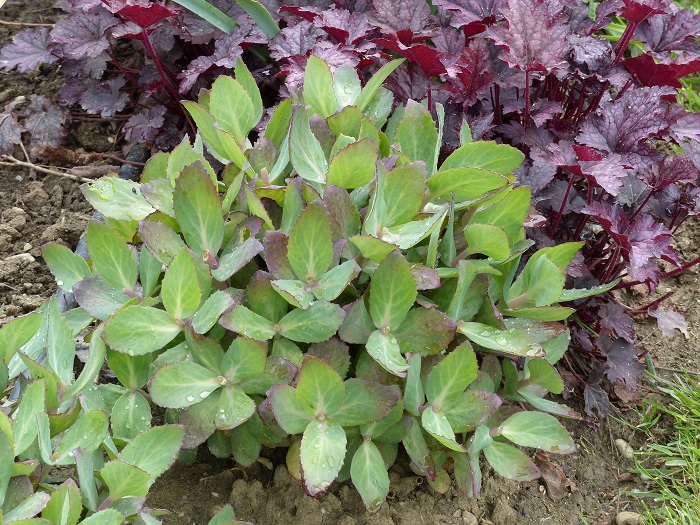
Foliage
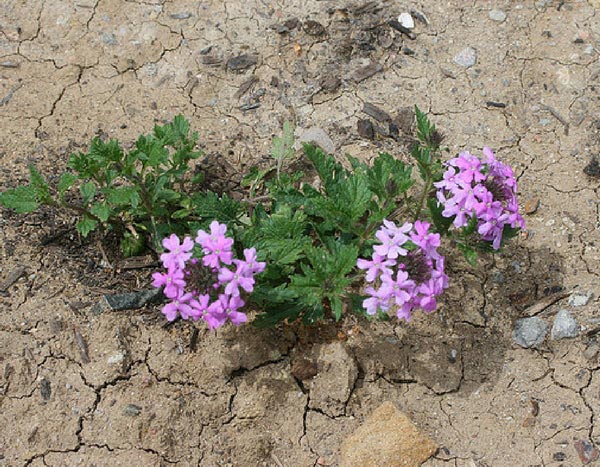
Plant habit
Botanical data
Nelumbo
nucifera
Tulip Lotus
Nelumbonaceae
Sacred Lotus, Indian Lotus, Lotus
Nelumbo nucifera ‘Shirokunshi’, Nelumbo nucifera ‘Shirokunshihoren’
Cultivar or hybrid
Planting and care
The 'Tulip Lotus' is easy to grow provided it receives warmth, sun, and calm water. Plant it in late spring, once temperatures have warmed sufficiently, in a wide, shallow container without drainage holes, with heavy, clayey or loamy soil, and definitely without potting compost. Place the rhizome almost flat, taking great care not to damage its tip, then cover it lightly with the growing medium. Initially, maintain only a few centimetres of water above the soil before gradually increasing the depth once the foliage is well established. When the plant is fully established, this variety can then be placed under approximately 30 to 45 cm of water. This lotus thrives particularly well in a large tub or submerged pot, which helps to better control its growth.
In winter, the main priority is to protect the rhizome from frost: in a pond, submerge the container deep enough so it remains frost-free; in an above-ground tub or in very cold regions, it is better to overwinter the plant in a cool, preferably bright but unheated room.
Apply fertiliser once the first leaves are well developed. During the season, remove any yellowed or damaged leaves and watch for any potential aphid presence.
Planting period
Intended location
Care
Planting & care advice
-
-
-
-
-

-
-
-
This item has not been reviewed yet - be the first to leave a review about it.
Recently viewed products
Haven't found what you were looking for?
Hardiness is the lowest winter temperature a plant can endure without suffering serious damage or even dying. However, hardiness is affected by location (a sheltered area, such as a patio), protection (winter cover) and soil type (hardiness is improved by well-drained soil).

The flowering period indicated on our website applies to countries and regions located in USDA zone 8 (France, the United Kingdom, Ireland, the Netherlands, etc.)
It will vary according to where you live:- In zones 9 to 10 (Italy, Spain, Greece, etc.), flowering will occur about 2 to 4 weeks earlier.
- In zones 6 to 7 (Germany, Poland, Slovenia, and lower mountainous regions), flowering will be delayed by 2 to 3 weeks.
- In zone 5 (Central Europe, Scandinavia), blooming will be delayed by 3 to 5 weeks.
In temperate climates, pruning of spring-flowering shrubs (forsythia, spireas, etc.) should be done just after flowering.
Pruning of summer-flowering shrubs (Indian Lilac, Perovskia, etc.) can be done in winter or spring.
In cold regions as well as with frost-sensitive plants, avoid pruning too early when severe frosts may still occur.
The planting period indicated on our website applies to countries and regions located in USDA zone 8 (France, United Kingdom, Ireland, Netherlands).
It will vary according to where you live:
- In Mediterranean zones (Marseille, Madrid, Milan, etc.), autumn and winter are the best planting periods.
- In continental zones (Strasbourg, Munich, Vienna, etc.), delay planting by 2 to 3 weeks in spring and bring it forward by 2 to 4 weeks in autumn.
- In mountainous regions (the Alps, Pyrenees, Carpathians, etc.), it is best to plant in late spring (May-June) or late summer (August-September).
The harvesting period indicated on our website applies to countries and regions in USDA zone 8 (France, England, Ireland, the Netherlands).
In colder areas (Scandinavia, Poland, Austria...) fruit and vegetable harvests are likely to be delayed by 3-4 weeks.
In warmer areas (Italy, Spain, Greece, etc.), harvesting will probably take place earlier, depending on weather conditions.
The sowing periods indicated on our website apply to countries and regions within USDA Zone 8 (France, UK, Ireland, Netherlands).
In colder areas (Scandinavia, Poland, Austria...), delay any outdoor sowing by 3-4 weeks, or sow under glass.
In warmer climes (Italy, Spain, Greece, etc.), bring outdoor sowing forward by a few weeks.
Shipping country and language
Your country of residence may be:
Your country of residence is:
For a better user experience on our website, you can select:
Your shipping country:
-
 Austria
-
 Belgium
-
 Bosnia & Herzegovina
-
 Bulgaria
-
 Croatia
-
 Cyprus
-
 Czechia
-
 Denmark
-
 Estonia
-
 Finland
-
 France
-
 Germany
-
 Greece
-
 Hungary
-
 Iceland
-
 Ireland
-
 Italy
Italy
-
 Latvia
-
 Liechtenstein
-
 Lithuania
-
 Luxembourg
-
 Malta
Malta
-
 Netherlands
-
 Poland
-
 Portugal
-
 Romania
-
 Serbia
-
 Slovakia
-
 Slovenia
-
 Spain
Spain
-
 Sweden
-
 Switzerland
Language:
-
French
-
 English
-
Spanish
-
Italian
-
German
-
Portuguese
-
Dutch
-
Finnish
My Account
Hello
My wish lists
My cart
Log in / Register
Existing customer?
This form is protected by reCAPTCHA - the Google Privacy Policy and Terms of Service apply.
New customer?
Create an account to track your orders, access our customer service and, if you wish, make the most of our upcoming offers.