Picrasma quassioides - Quassia
Picrasma quassioides - Quassia
Picrasma quassioides
Quassia
Back-to-school special offer!
Get €10 off for every €50 you spend! And get up to €40 off on a single order.
How does it work?
1. Shop your favourites
Add your favourite plants to your basket. For every €50 you spend (excluding delivery charges, store credit and the plastic-free option), you’ll receive a €10 voucher.
€50 spent = €10 voucher
€100 spent = €20 voucher
€150 spent = €30 voucher
€200 spent = €40 voucher
2. Place your order
Once your basket reaches one of the spending thresholds, place your order. You can even choose your delivery date!
3. Receive your voucher
As soon as your order has been shipped, you’ll receive an email containing your personal voucher code and its value.
4. Use it on your next order
Your voucher is valid for 90 days from the date you receive it. It can be used once only, on a new order worth at least the value of the voucher, excluding delivery charges.
Please note: Vouchers can be combined with other offers, but cannot be split or refunded.
Home or relay delivery (depending on size and destination)
Important: You may be charged customs duties by your country’s customs authorities upon delivery.
Schedule delivery date,
and select date in basket
This plant carries a 24 months recovery warranty
More information
We guarantee the quality of our plants for a full growing cycle, and will replace at our expense any plant that fails to recover under normal climatic and planting conditions.
Would this plant suit my garden?
Set up your Plantfit profile →
Description
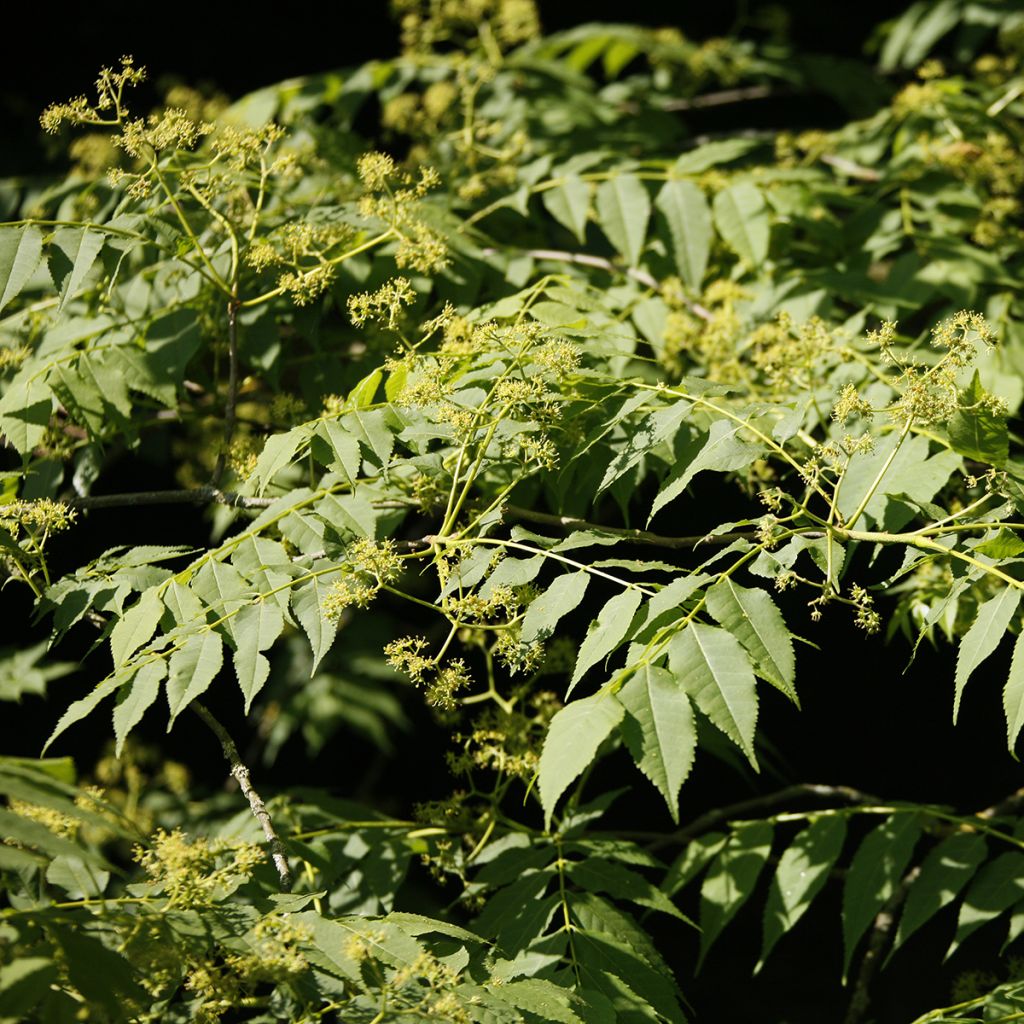
Picrasma quassioides, or Japanese quassia, is a little-known Asian tree with moderate growth, ornamental for its pinnate leaves and autumn colours. It is a very hardy species that adapts to ordinary, but deep and cool soils, in non-scorching sun or partial shade. It integrates well into urban or natural gardens, as a standalone specimen or at the edge of woodland.
Belonging to the Simaroubaceae family, Picrasma quassioides is a spontaneous botanical species in the temperate mountains of Asia, from the Himalayas (Kashmir, Nepal, Bhutan, India) eastwards to northeastern China (many provinces up to Yunnan and Shaanxi), Taiwan, Korea, and Japan. It grows mainly in mixed montane forests, most often below 3,200 metres in altitude.
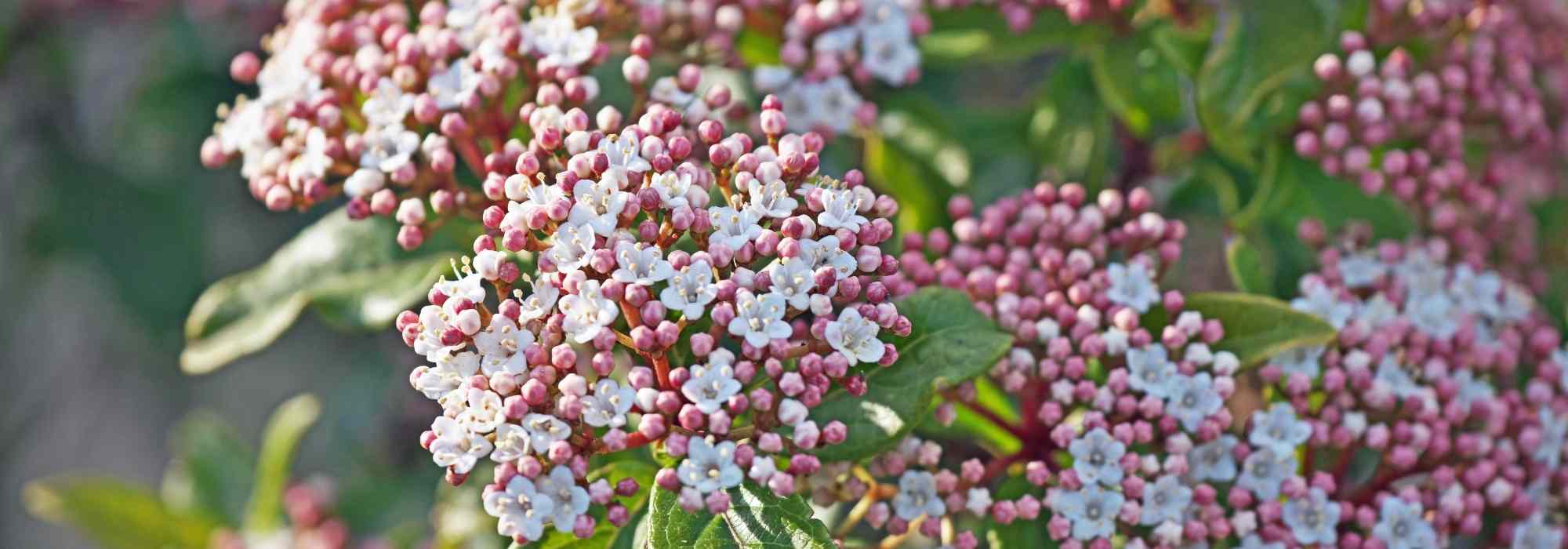
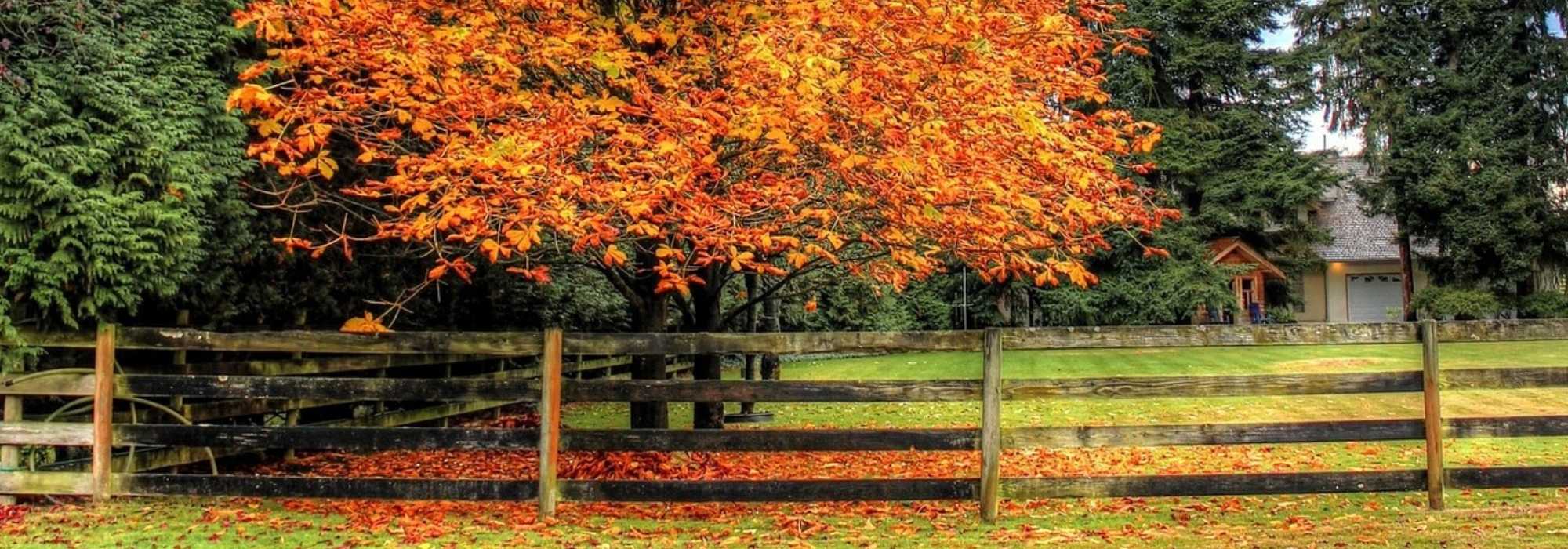
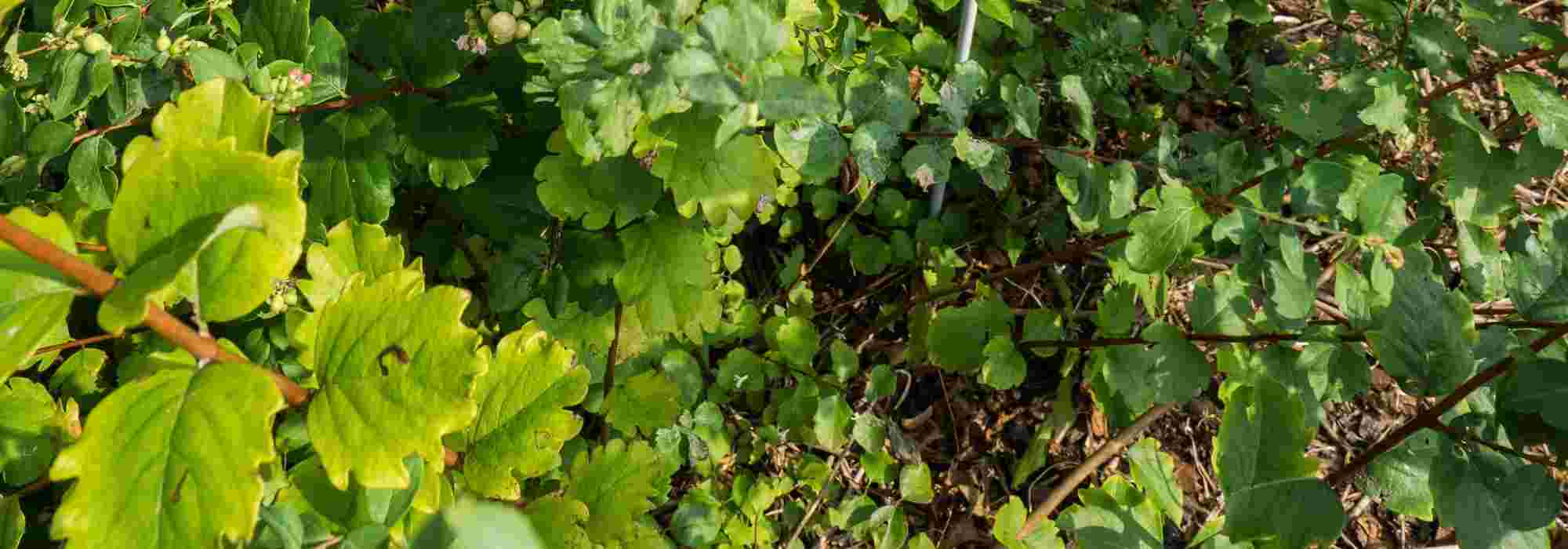
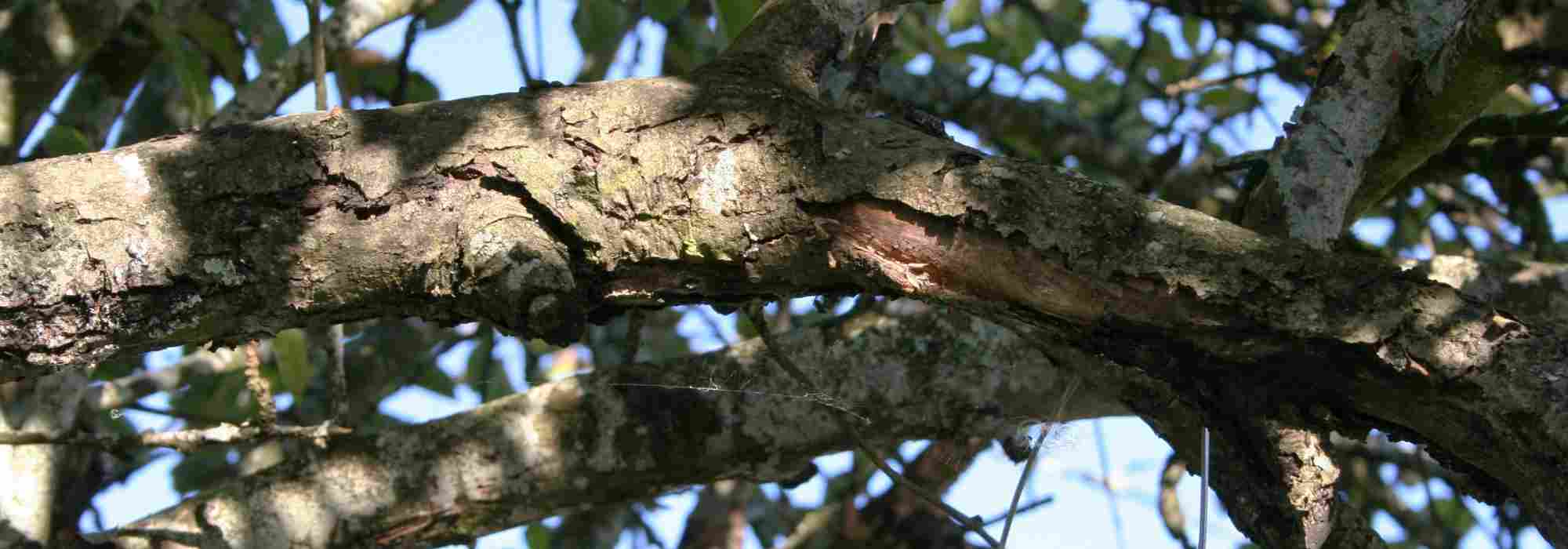
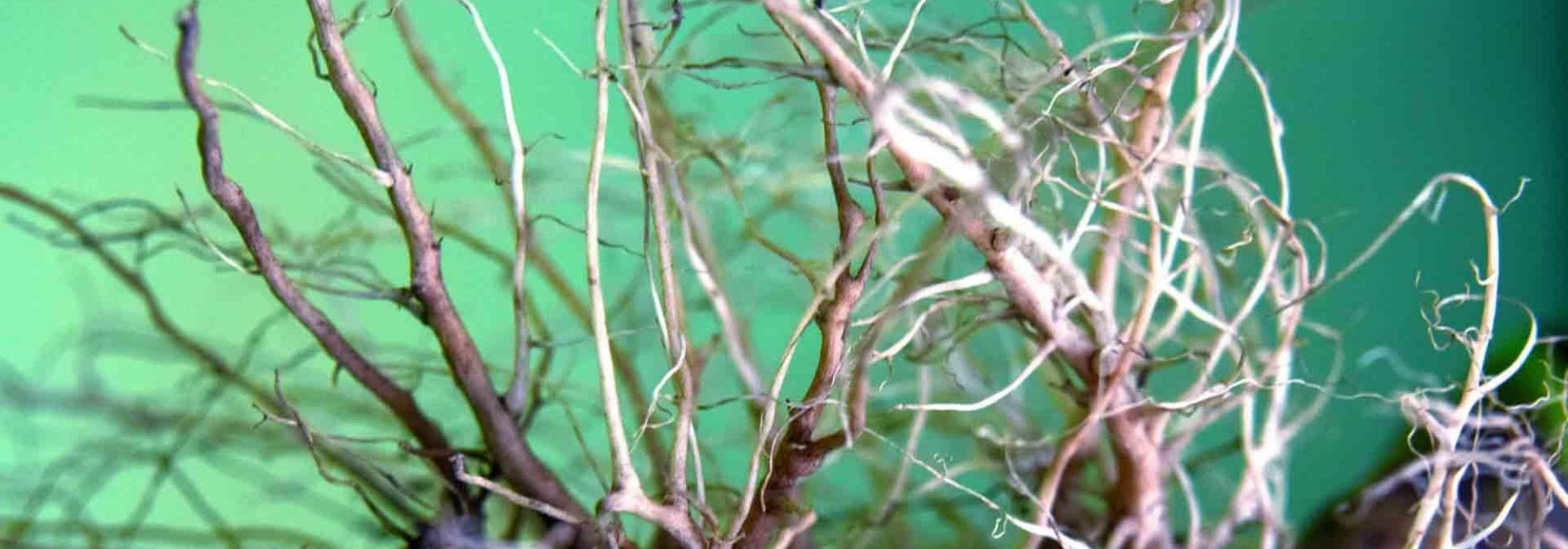
A deciduous tree, usually multi-trunked, the Japanese quassia reaches 4 to 8 metres in height with a spread of 2.50 to 4 metres, sometimes up to 10-12 metres for older specimens; expect 4 metres in height at 10 years of age under good conditions. The young shoots, brown-red to purple with distinct pale lenticels and large foliar scars, become grey and finely fissured with age; the reddish buds are densely pubescent. The alternate leaves measure 15 to 40 cm in length. They are compound with 9 to 15 leaflets 2.5 to 10 cm long, ovate to lanceolate, with a distinctly dentate margin; their main vein often reddens in season. The autumn colour of the foliage varies from yellow to scarlet depending on the soil and sunlight. Flowering occurs from April to May, or even into June in cool climates. It appears in loose cymes 15 to 20 cm long that arise in the leaf axils; the small greenish flowers, about 8 mm, bear 4 or 5 sepals and petals. This species is primarily dioecious: male and female plants are separate, although bisexual flowers are sometimes observed on the same inflorescence. The fruits on female plants are ovoid drupes 6 to 8 mm long, turning from red to blue-black at ripeness. The root system is rather spreading and fibrous; the plant does not sucker, but it can regrow from the stump after a severe cold spell.
This small tree is hardy down to -20 °C, or even a bit less in a sheltered position. In the garden, it appreciates fertile, deep, cool but well-draining soil, acidic, neutral, or calcareous, and thrives in gentle sun or partial shade; it shows some tolerance to drought once established.
Use Picrasma quassioides as a small subject for bright partial shade, plant it sheltered from dry winds, where its foliage will bring autumn colour. In cool soil, it makes a nice effect at the edge of a border, accompanied by other small trees. Pair it, for example, with Acer palmatum 'Sango-kaku', Cornus kousa 'China Girl', Styrax japonicus 'Snowfall' and Amelanchier 'Ballerina'.
The specific name quassioides means "resembling Quassia": in the 19th century, its very bitter bark was compared to that of Quassia amara, an American tree named in honour of Quassi, a healer from Suriname who popularised its uses. This bitterness comes from quassinoids studied for their antibacterial, insecticidal properties and as bittering agents, sometimes even cited as a hop substitute. In several regions of Asia, the bark and wood have been used as a bitter tonic or traditional insect repellent.
Report an error about the product description
Plant habit
Flowering
Foliage
Botanical data
Picrasma
quassioides
Simaroubaceae
Quassia
Picrasma ailanthoides, Simaba quassioides, Rhus ailanthoides
Himalayas, India, China, Southeast Asia
Planting and care
Plant the Picrasma quassioides in autumn or early spring, in gentle sun or partial shade, sheltered from dry winds. It prefers a deep, fertile, humus-bearing soil that remains cool but well-drained: garden soil improved with mature compost and dead leaves, with a neutral to slightly acidic pH, or even slightly calcareous. In heavy soil, lighten it with coarse sand and gravel, or plant it on a raised mound; in very free-draining soil, add plenty of organic matter. Dig a hole 2 to 3 times the volume of the root ball, position the collar at soil level, water generously and then mulch. Water regularly for the first two summers (10–15 L/week in dry weather), then only during prolonged dry periods.
Space the plants 3 to 4 m apart; to obtain fruit, plan for at least one male and one female plant nearby.
Planting period
Intended location
Care
Planting & care advice
-
-
-
-
-
-
-

-
This item has not been reviewed yet - be the first to leave a review about it.
Recently viewed products
Haven't found what you were looking for?
Hardiness is the lowest winter temperature a plant can endure without suffering serious damage or even dying. However, hardiness is affected by location (a sheltered area, such as a patio), protection (winter cover) and soil type (hardiness is improved by well-drained soil).

The flowering period indicated on our website applies to countries and regions located in USDA zone 8 (France, the United Kingdom, Ireland, the Netherlands, etc.)
It will vary according to where you live:- In zones 9 to 10 (Italy, Spain, Greece, etc.), flowering will occur about 2 to 4 weeks earlier.
- In zones 6 to 7 (Germany, Poland, Slovenia, and lower mountainous regions), flowering will be delayed by 2 to 3 weeks.
- In zone 5 (Central Europe, Scandinavia), blooming will be delayed by 3 to 5 weeks.
In temperate climates, pruning of spring-flowering shrubs (forsythia, spireas, etc.) should be done just after flowering.
Pruning of summer-flowering shrubs (Indian Lilac, Perovskia, etc.) can be done in winter or spring.
In cold regions as well as with frost-sensitive plants, avoid pruning too early when severe frosts may still occur.
The planting period indicated on our website applies to countries and regions located in USDA zone 8 (France, United Kingdom, Ireland, Netherlands).
It will vary according to where you live:
- In Mediterranean zones (Marseille, Madrid, Milan, etc.), autumn and winter are the best planting periods.
- In continental zones (Strasbourg, Munich, Vienna, etc.), delay planting by 2 to 3 weeks in spring and bring it forward by 2 to 4 weeks in autumn.
- In mountainous regions (the Alps, Pyrenees, Carpathians, etc.), it is best to plant in late spring (May-June) or late summer (August-September).
The harvesting period indicated on our website applies to countries and regions in USDA zone 8 (France, England, Ireland, the Netherlands).
In colder areas (Scandinavia, Poland, Austria...) fruit and vegetable harvests are likely to be delayed by 3-4 weeks.
In warmer areas (Italy, Spain, Greece, etc.), harvesting will probably take place earlier, depending on weather conditions.
The sowing periods indicated on our website apply to countries and regions within USDA Zone 8 (France, UK, Ireland, Netherlands).
In colder areas (Scandinavia, Poland, Austria...), delay any outdoor sowing by 3-4 weeks, or sow under glass.
In warmer climes (Italy, Spain, Greece, etc.), bring outdoor sowing forward by a few weeks.
Shipping country and language
Your country of residence may be:
Your country of residence is:
For a better user experience on our website, you can select:
Your shipping country:
-
 Austria
-
 Belgium
-
 Bosnia & Herzegovina
-
 Bulgaria
-
 Croatia
-
 Cyprus
-
 Czechia
-
 Denmark
-
 Estonia
-
 Finland
-
 France
-
 Germany
-
 Greece
-
 Hungary
-
 Iceland
-
 Ireland
-
 Italy
Italy
-
 Latvia
-
 Liechtenstein
-
 Lithuania
-
 Luxembourg
-
 Malta
Malta
-
 Netherlands
-
 Poland
-
 Portugal
-
 Romania
-
 Serbia
-
 Slovakia
-
 Slovenia
-
 Spain
Spain
-
 Sweden
-
 Switzerland
Language:
-
French
-
 English
-
Spanish
-
Italian
-
German
-
Portuguese
-
Dutch
-
Finnish
My Account
Hello
My wish lists
My cart
Log in / Register
Existing customer?
This form is protected by reCAPTCHA - the Google Privacy Policy and Terms of Service apply.
New customer?
Create an account to track your orders, access our customer service and, if you wish, make the most of our upcoming offers.