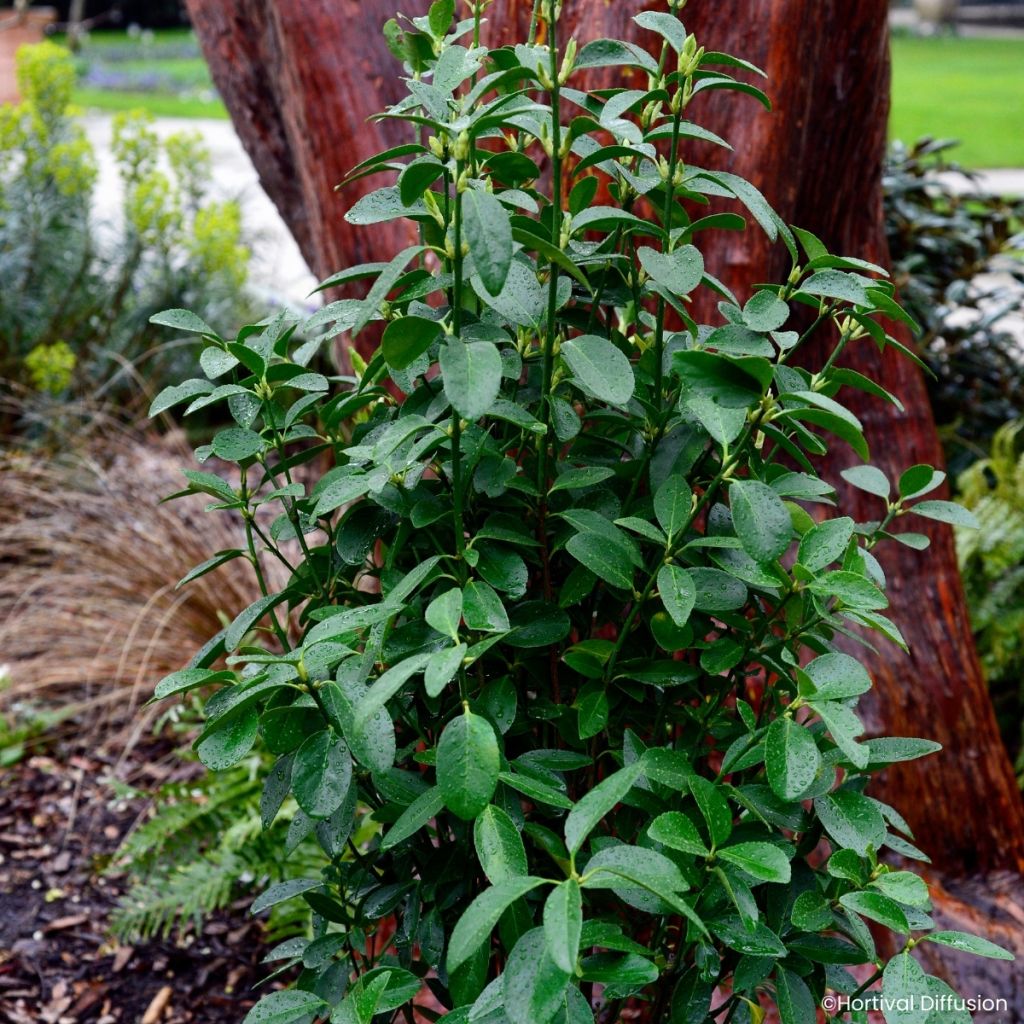
Euonymus japonicus Green Milennium - Japanese spindle
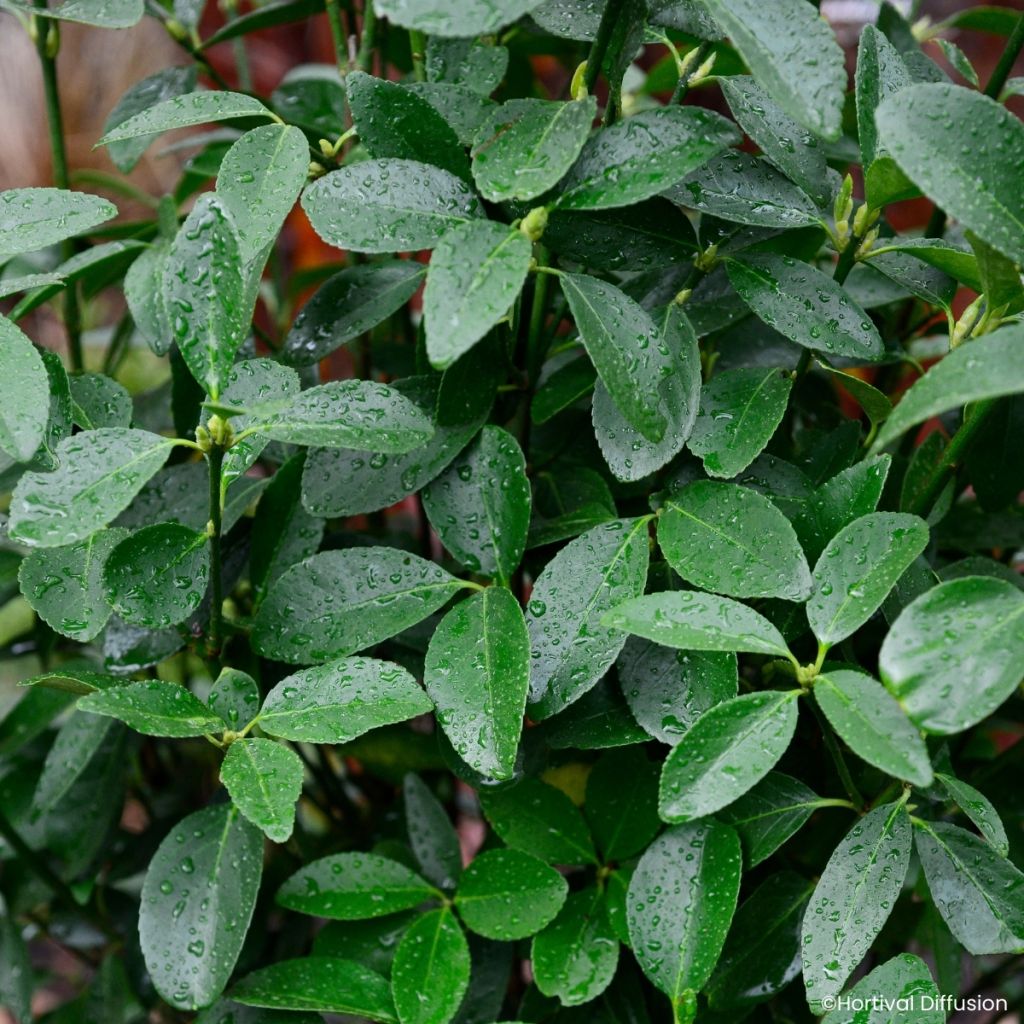
Euonymus japonicus Green Milennium - Japanese spindle
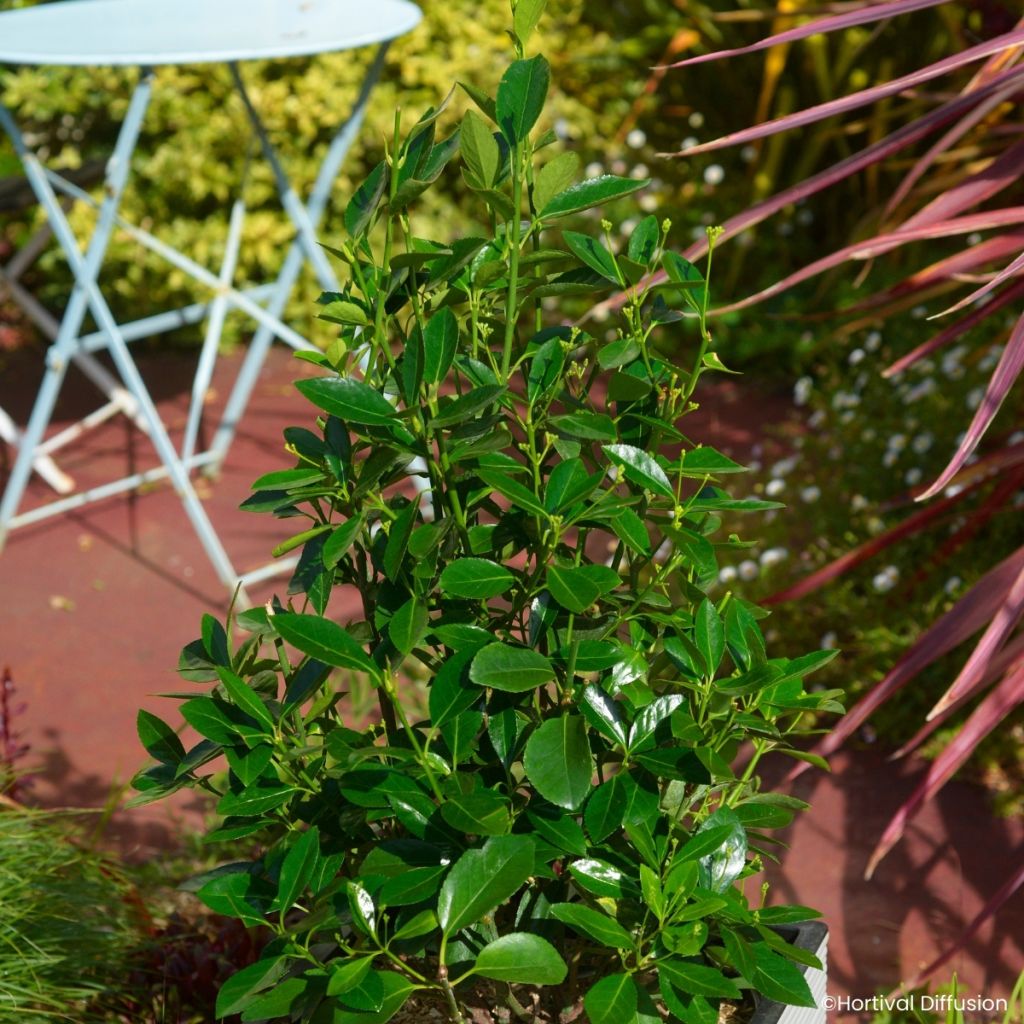
Euonymus japonicus Green Milennium - Japanese spindle
Euonymus japonicus Green Milennium - Japanese spindle
Euonymus japonicus 'Minmil' GREEN MILENNIUM®
Japanese Spindle, Evergreen Spindle
Back-to-school special offer!
Get €10 off for every €50 you spend! And get up to €40 off on a single order.
How does it work?
1. Shop your favourites
Add your favourite plants to your basket. For every €50 you spend (excluding delivery charges, store credit and the plastic-free option), you’ll receive a €10 voucher.
€50 spent = €10 voucher
€100 spent = €20 voucher
€150 spent = €30 voucher
€200 spent = €40 voucher
2. Place your order
Once your basket reaches one of the spending thresholds, place your order. You can even choose your delivery date!
3. Receive your voucher
As soon as your order has been shipped, you’ll receive an email containing your personal voucher code and its value.
4. Use it on your next order
Your voucher is valid for 90 days from the date you receive it. It can be used once only, on a new order worth at least the value of the voucher, excluding delivery charges.
Please note: Vouchers can be combined with other offers, but cannot be split or refunded.
Home or relay delivery (depending on size and destination)
Important: You may be charged customs duties by your country’s customs authorities upon delivery.
Schedule delivery date,
and select date in basket
This plant carries a 24 months recovery warranty
More information
We guarantee the quality of our plants for a full growing cycle, and will replace at our expense any plant that fails to recover under normal climatic and planting conditions.
Would this plant suit my garden?
Set up your Plantfit profile →
Description
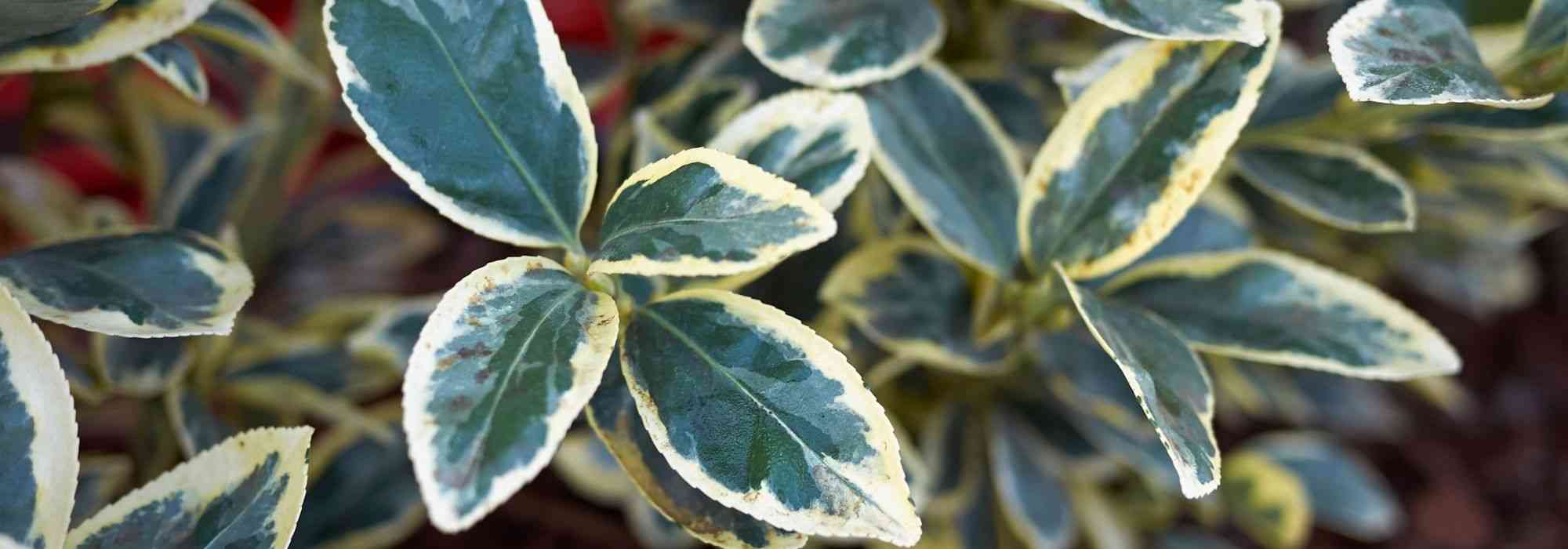
Euonymus japonicus 'Green Millenium' is a variety of Japanese spindle highly prized for its superb evergreen, glossy dark green foliage. This compact shrub rarely exceeds 1.50m in height, and as it is tolerant of pruning, it is well-suited to container growing as well as small gardens. Perfectly at home in a contemporary setting, its simplicity is also useful in a mixed border to highlight lighter foliage or flowers. It can also be incorporated into a varied low hedge, where it will play the same role. Thriving equally well in sun or partial shade, and tolerating coastal climates, it will grow in many soil types as long as they are moist and well-drained.
Spindle belongs to the Celastraceae family, which includes 850 species of trees, shrubs, and climbers, distributed from temperate to tropical climates. Despite this abundance, it is not well represented in our gardens, except Celastrus (staff vine) from which it takes its name. On the other hand, the Spindle (Euonymus) of which more than 170 species are known is widespread, both in deciduous forms (Euonymus alatus, with its blazing autumn colours, E. europaeus, which is part of the French flora...) and evergreens (E. fortunei and its many cultivars...). Euonymus japonicus, the Japanese spindle, is also native to China and Korea, where it often grows near the coast, in thickets and woods. In those regions, it forms a shrub or small tree that can reach 8 m in height. Imported into Europe as early as 1804, it was extensively planted there, notably because it tolerates the polluted atmosphere of cities.
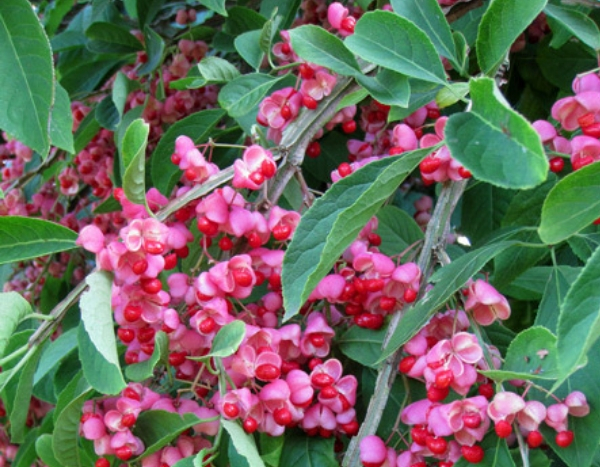
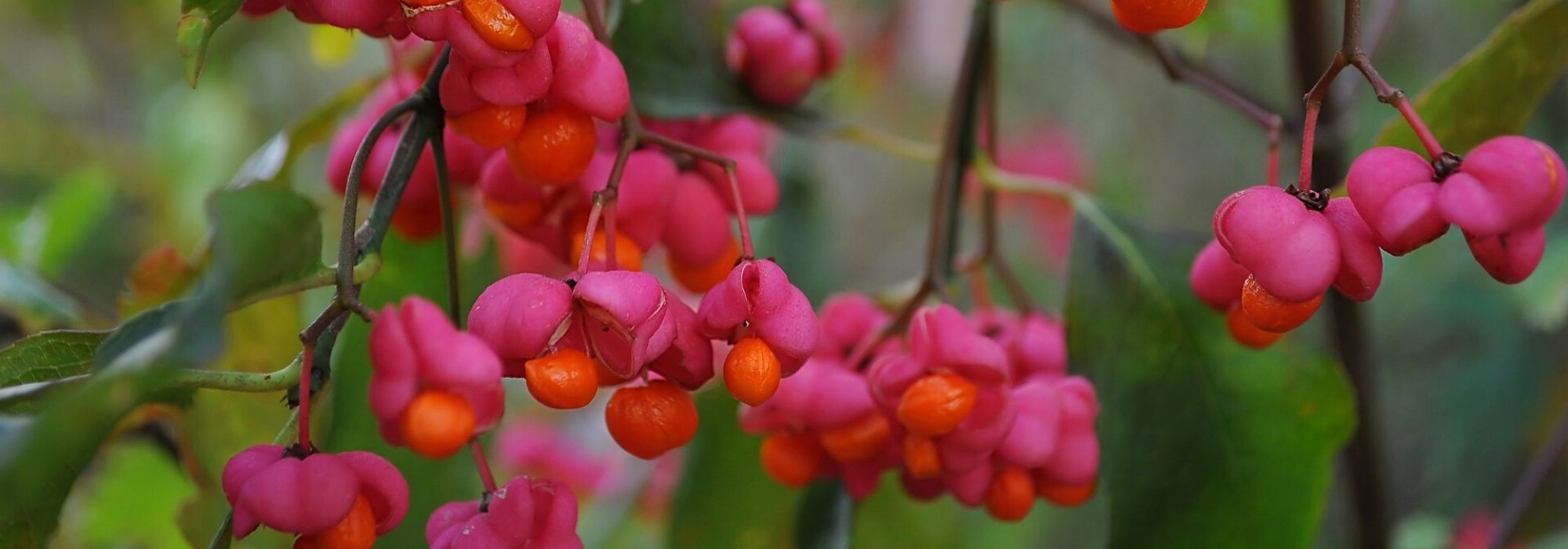
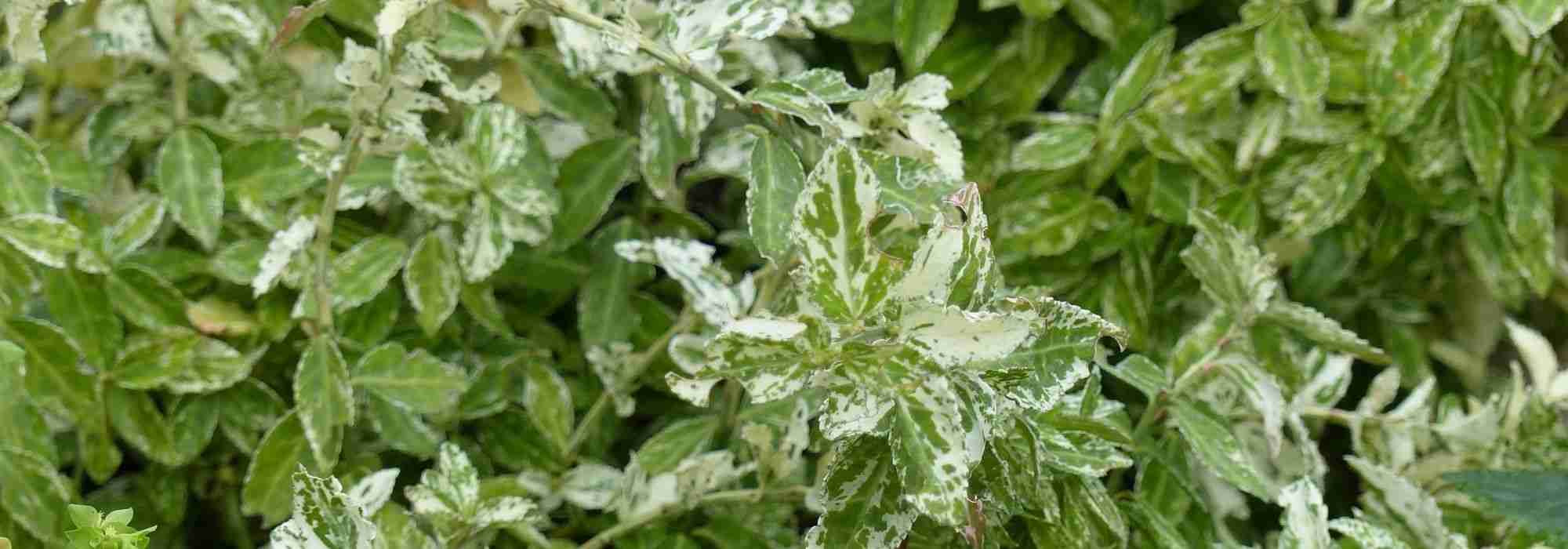
'Green Millenium' is a cultivar dating from 2009 from the Minier nurseries, the largest in France. This small shrub develops a rounded to conical, even pyramidal shape, which can be accentuated by pruning, which it tolerates well. After 10 years of cultivation, it reaches approximately 1.50m in height and 1m in spread, forming a dense clump. The fine dark green twigs bear foliage of the same colour, with a glossy surface. Measuring 3 to 7cm in length, the lanceolate leaves, with a very finely serrated margin, are borne on short petioles. Opposed in pairs, they are more or less decussate, meaning each pair is rotated a quarter turn relative to the previous one. The evergreen foliage is ornamental in every season, creating tonal contrasts in borders. The late spring flowering is rather insignificant, the only interest being the production of small reddish-orange fruits that are relatively decorative but toxic.
Easy to grow in ordinary soil that is not too dry, tolerant of chalk, resistant to sea spray and with good hardiness, Spindle 'Minmil' GREEN MILENNIUM® grows in sun or partial shade, and only dislikes severe frost or drought. You can shape a low multi-coloured evergreen hedge by integrating it alongside Photinia serratifolia 'Pink Crispy', with variegated green and cream foliage and superb bright pink shoots in spring. Choisya ternata 'Goldfinger' will bring you a touch of brightness, ranging from chartreuse green to golden yellow, along with a pleasant, fragrant white flowering. In mild climates, such as by the seaside, Ceanothus 'Tuxedo' will add a bit of height, and astonishing dark purple foliage, highlighted by blue flowers in May. In the same conditions, you can also add a note of grey with the very pretty Ozothamnus rosmarinifolius 'Silver Jubilée', with its fine foliage reminiscent of rosemary and covered at the end of spring with clusters of small pink flowers.
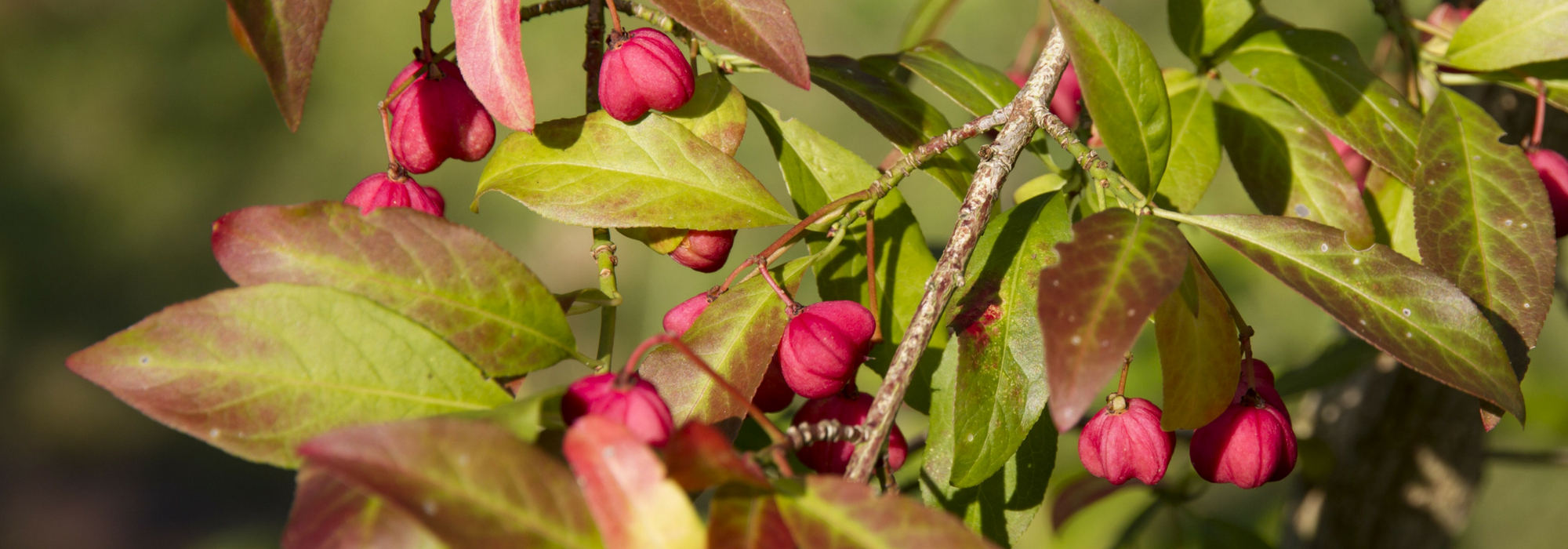
Euonymus japonicus Green Milennium - Japanese spindle in pictures
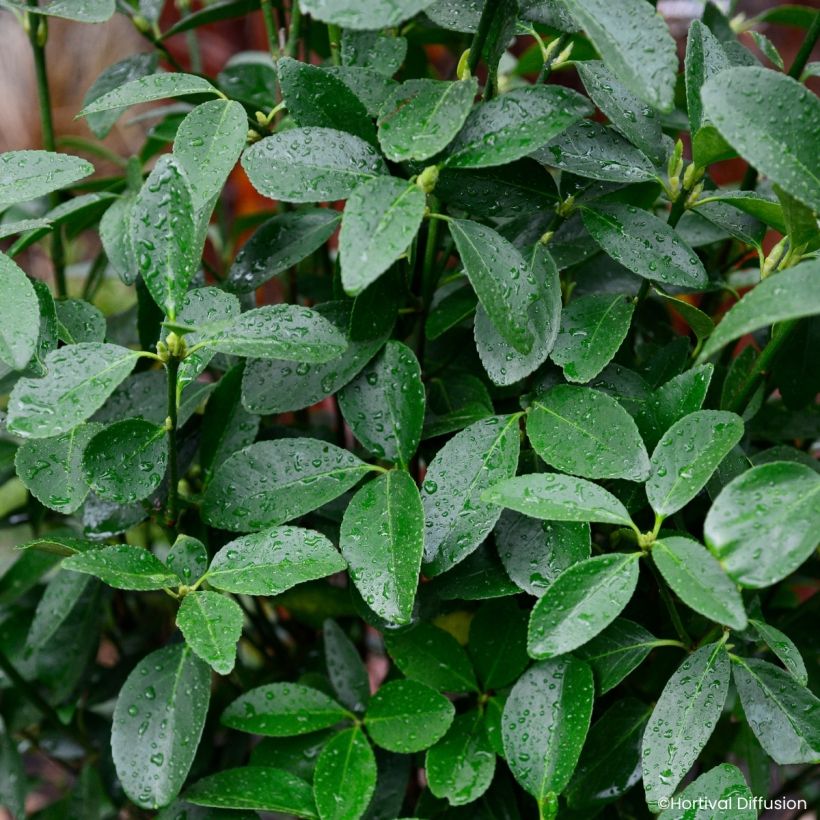
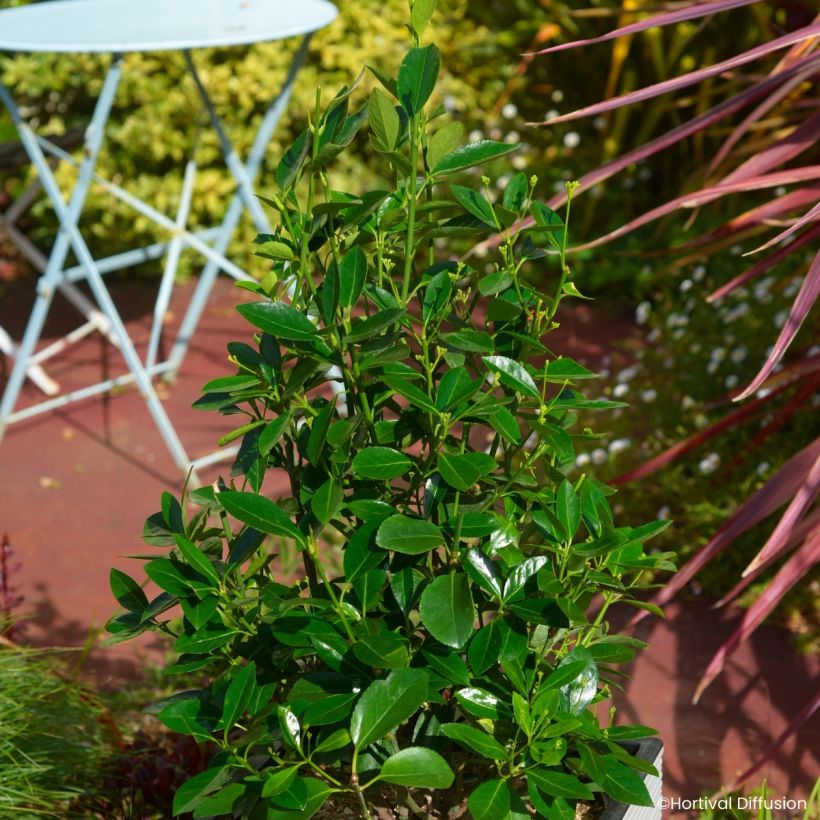
Plant habit
Flowering
Foliage
Safety measures
Botanical data
Euonymus
japonicus
'Minmil' GREEN MILENNIUM®
Celastraceae
Japanese Spindle, Evergreen Spindle
Euonymus japonicus 'Minmil', Euonymus japonicus 'Green Millenium'
Cultivar or hybrid
ingestion
Cette plante est toxique si elle est ingérée volontairement ou involontairement.
Ne la plantez pas là où de jeunes enfants peuvent évoluer, et lavez-vous les mains après l'avoir manipulée.
Pensez à conserver l'étiquette de la plante, à la photographier ou à noter son nom, afin de faciliter le travail des professionnels de santé.
Davantage d'informations sur https://plantes-risque.info
Planting and care
Euonymus japonicus 'Green Millenium' is best planted in spring in any well-drained soil, in a lightly sunny position or light shade. It prefers deep, humus-rich soils that stay moist, and tolerates lime in the soil quite well (pH range 6 to 7.5). It dislikes severe frosts and is hardy down to about -15°C. The hot, dry climates of the south are not very suitable for this evergreen spindle, risking an infestation of mealybugs and sooty mould. It tolerates pruning well, which should be carried out between April and May. Caution: pruning too early in spring can harm the young, tender shoots if late frosts occur. Similarly, pruning too frequently can lead to the development of sooty mould, especially in very dry soil. Apply fertiliser twice a year, in early spring and early autumn. In case of drought, water to keep the foliage looking good. If the plant is grown in a pot, change the growing medium once a year in spring. Protect your container if severe frosts are forecast (< -5°C).
Planting period
Intended location
Care
Planting & care advice
-
-
-

-

-
-
-
-

This item has not been reviewed yet - be the first to leave a review about it.
Recently viewed products
Haven't found what you were looking for?
Hardiness is the lowest winter temperature a plant can endure without suffering serious damage or even dying. However, hardiness is affected by location (a sheltered area, such as a patio), protection (winter cover) and soil type (hardiness is improved by well-drained soil).

The flowering period indicated on our website applies to countries and regions located in USDA zone 8 (France, the United Kingdom, Ireland, the Netherlands, etc.)
It will vary according to where you live:- In zones 9 to 10 (Italy, Spain, Greece, etc.), flowering will occur about 2 to 4 weeks earlier.
- In zones 6 to 7 (Germany, Poland, Slovenia, and lower mountainous regions), flowering will be delayed by 2 to 3 weeks.
- In zone 5 (Central Europe, Scandinavia), blooming will be delayed by 3 to 5 weeks.
In temperate climates, pruning of spring-flowering shrubs (forsythia, spireas, etc.) should be done just after flowering.
Pruning of summer-flowering shrubs (Indian Lilac, Perovskia, etc.) can be done in winter or spring.
In cold regions as well as with frost-sensitive plants, avoid pruning too early when severe frosts may still occur.
The planting period indicated on our website applies to countries and regions located in USDA zone 8 (France, United Kingdom, Ireland, Netherlands).
It will vary according to where you live:
- In Mediterranean zones (Marseille, Madrid, Milan, etc.), autumn and winter are the best planting periods.
- In continental zones (Strasbourg, Munich, Vienna, etc.), delay planting by 2 to 3 weeks in spring and bring it forward by 2 to 4 weeks in autumn.
- In mountainous regions (the Alps, Pyrenees, Carpathians, etc.), it is best to plant in late spring (May-June) or late summer (August-September).
The harvesting period indicated on our website applies to countries and regions in USDA zone 8 (France, England, Ireland, the Netherlands).
In colder areas (Scandinavia, Poland, Austria...) fruit and vegetable harvests are likely to be delayed by 3-4 weeks.
In warmer areas (Italy, Spain, Greece, etc.), harvesting will probably take place earlier, depending on weather conditions.
The sowing periods indicated on our website apply to countries and regions within USDA Zone 8 (France, UK, Ireland, Netherlands).
In colder areas (Scandinavia, Poland, Austria...), delay any outdoor sowing by 3-4 weeks, or sow under glass.
In warmer climes (Italy, Spain, Greece, etc.), bring outdoor sowing forward by a few weeks.
Shipping country and language
Your country of residence may be:
Your country of residence is:
For a better user experience on our website, you can select:
Your shipping country:
-
 Austria
-
 Belgium
-
 Bosnia & Herzegovina
-
 Bulgaria
-
 Croatia
-
 Cyprus
-
 Czechia
-
 Denmark
-
 Estonia
-
 Finland
-
 France
-
 Germany
-
 Greece
-
 Hungary
-
 Iceland
-
 Ireland
-
 Italy
Italy
-
 Latvia
-
 Liechtenstein
-
 Lithuania
-
 Luxembourg
-
 Malta
Malta
-
 Netherlands
-
 Poland
-
 Portugal
-
 Romania
-
 Serbia
-
 Slovakia
-
 Slovenia
-
 Spain
Spain
-
 Sweden
-
 Switzerland
Language:
-
French
-
 English
-
Spanish
-
Italian
-
German
-
Portuguese
-
Dutch
-
Finnish
My Account
Hello
My wish lists
My cart
Log in / Register
Existing customer?
This form is protected by reCAPTCHA - the Google Privacy Policy and Terms of Service apply.
New customer?
Create an account to track your orders, access our customer service and, if you wish, make the most of our upcoming offers.