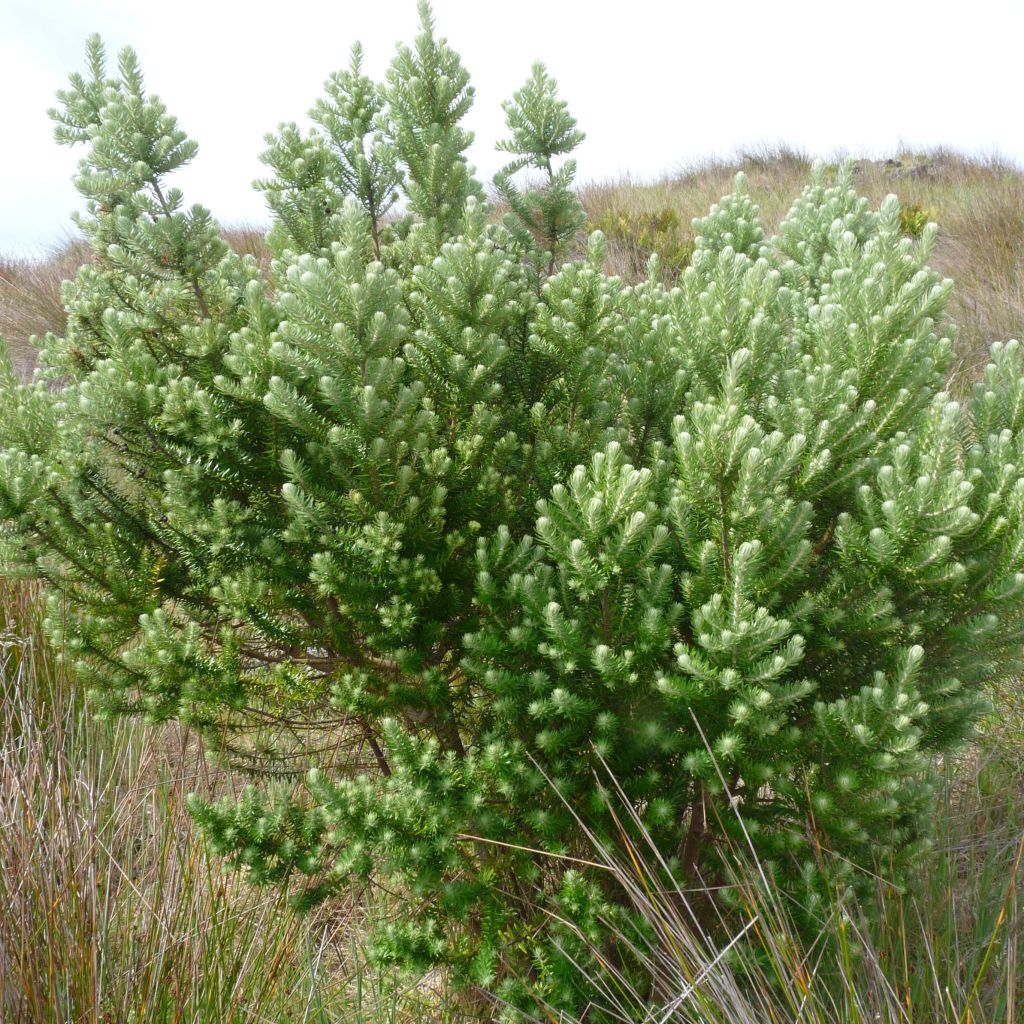
Phylica arborea
Phylica arborea
Phylica arborea
Back-to-school special offer!
Get €10 off for every €50 you spend! And get up to €40 off on a single order.
How does it work?
1. Shop your favourites
Add your favourite plants to your basket. For every €50 you spend (excluding delivery charges, store credit and the plastic-free option), you’ll receive a €10 voucher.
€50 spent = €10 voucher
€100 spent = €20 voucher
€150 spent = €30 voucher
€200 spent = €40 voucher
2. Place your order
Once your basket reaches one of the spending thresholds, place your order. You can even choose your delivery date!
3. Receive your voucher
As soon as your order has been shipped, you’ll receive an email containing your personal voucher code and its value.
4. Use it on your next order
Your voucher is valid for 90 days from the date you receive it. It can be used once only, on a new order worth at least the value of the voucher, excluding delivery charges.
Please note: Vouchers can be combined with other offers, but cannot be split or refunded.
Why not try an alternative variety in stock?
View all →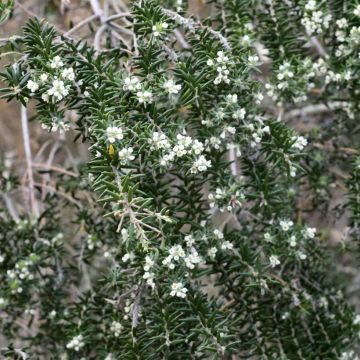
Available in 1 sizes
This plant carries a 24 months recovery warranty
More information
We guarantee the quality of our plants for a full growing cycle, and will replace at our expense any plant that fails to recover under normal climatic and planting conditions.
Would this plant suit my garden?
Set up your Plantfit profile →
Description
The Phylica bush is a rare shrubby plant in its native island of Amsterdam, belonging to the extreme territories of the French Southern and Antarctic Lands. A compact bush, accustomed to the slap of sea winds, it covers its stems with small tightly packed leaves, silver-green in color, draped in bristles to protect itself from the bite of salt, a voluptuous mantle that makes it infinitely soft to the eye and touch. It offers a timid flowering in spring, at the end of branches, made up of tiny flowers hidden under creamy white bracts that emit a sweet honey scent in calm weather. Almost a ghost, this endearing plant may find refuge in your garden if you are fortunate enough to have one along the Atlantic coast of our country. The cool and humid climate, mild in winter, and the often acidic soils in these regions are indeed highly preferred by it.
The Phylica bush belongs to the Rhamnaceae family, just like the Ceanothus and the jujube tree. It is the only endemic tree plant of Amsterdam Island, located far offshore and south of the coasts of South Africa, in the Indian Ocean. To approach as closely as possible the growing conditions that suit it, it is useful to examine those it encounters in its natural environment. These lost islands, also known as the Desolation Islands, experience a subtropical climate dominated by significant humidity and mild temperatures all year round, with small temperature variations between winter and summer. The soils that accommodate the Phylica bush are peaty, acidic, humus-rich, cool, and deep, or alternatively rocky.
In its natural environment, the Phylica bush slowly forms a small tree, 3m (10ft) tall and 2m (7ft) wide, with a somewhat twisted silhouette that sometimes resembles that of an olive tree, especially as the trunk gradually becomes bare from its base, leaving only the crown green and leafy. In cultivation, in our climates, it will not exceed 1.50m (5ft) in height and m (3ft) in width, and will display a bushy, dense, and rather upright habit. Stems, leaves, and floral bracts are covered in fine silver hairs that conceal the light brown color of the bark and the dark green of the leaves. The flexible branches bear small, densely arranged, overlapping evergreen leaves on their bark. They are entire, narrow, very silky, and pointed at their tips. Flowering occurs in May, at the end of each branch. The inflorescences are composed of tiny yellow flowers enveloped in cream-coloured bracts. They have a pleasant fragrance and attract pollinating insects. After pollination, they give rise to the formation of fruits, which are small capsules called elaiosomes, containing smooth spherical seeds dispersed by albatrosses in their original territory.
The Phylica bush is a marvel of nature. It is one of those plants in peril in its habitat, like Cupressus dupreziana, or the Tassili Cypress. For this reason, but also for its unique beauty, curious gardeners may want to adopt it among acidic soil bushes: tree heathers, pieris, Clethra barbinervis, Leucothoe, and many plants from Oceania such as Grevillea, Leptospermum, Lagunaria patersonii, Melaleuca, and Sollya heterophylla, for example.
Report an error about the product description
Phylica arborea in pictures
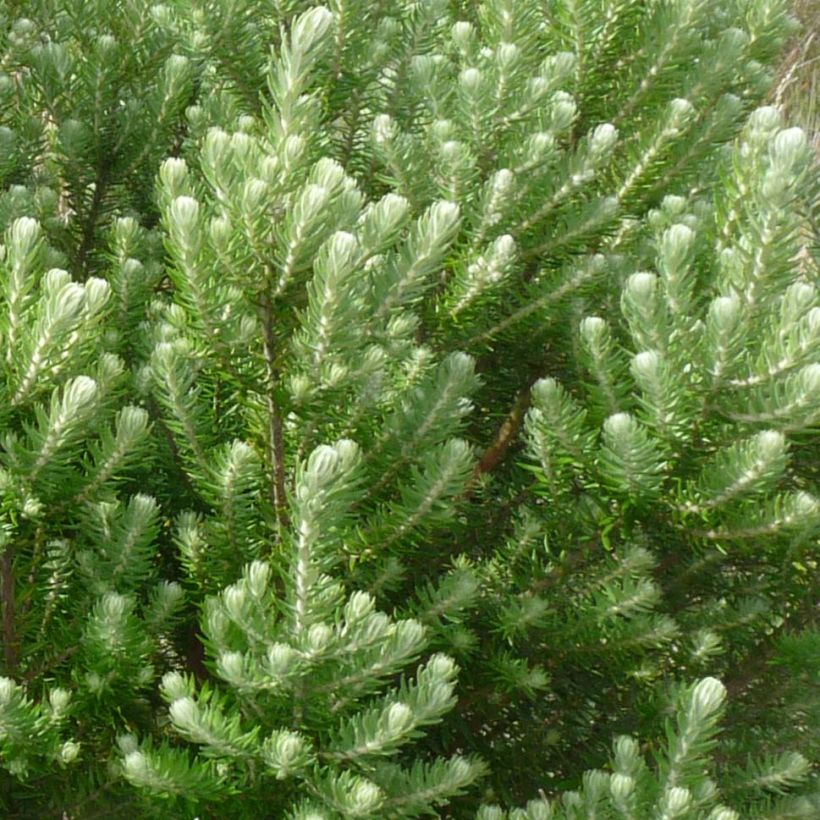
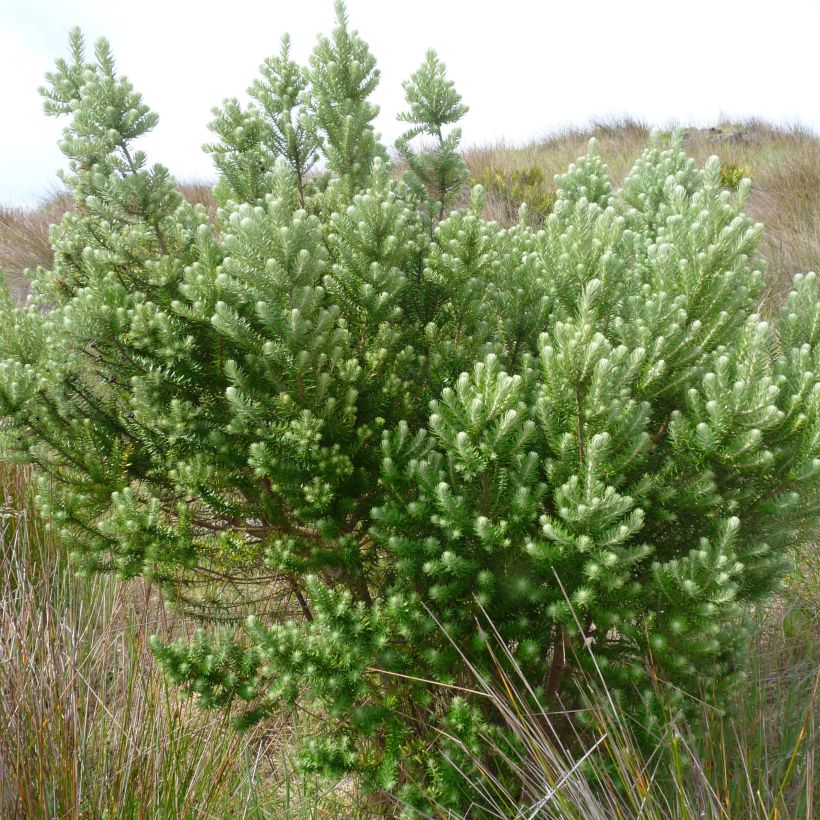
Plant habit
Flowering
Foliage
Planting and care
Place your Phylica arborea in a sunny but not scorching or partially shaded position in a warm climate (which the plant does not appreciate). This bush prefers cool climates in summer, mild winters, and cool, non-limestone soils. It does not withstand strong frost, below -12°C (10.4°F). Plant it in a deep, humus-rich, fertile, and cool soil, even though it can adapt to a stony or rocky soil, which must be acidic and well-drained. Beware of cold draughts that the bush does not like, as well as prolonged rains that tend to tangle the bristles of the foliage and cause rot in hot weather. It can be placed near a wall. Plant it throughout the year, frost-free, by mixing your garden soil (if it is not limestone) with compost, heather earth, coarse sand, perlite, or any material that does not retain moisture. Water generously once or twice a week to promote growth. Water only twice a month from the third year onwards, more in case of drought. It is a plant that requires very little maintenance and grows easily as long as the conditions are met. In France, regions located in the northern half of the Atlantic coast seem to best meet its cultivation requirements. Avoid severe pruning.
Pot cultivation: to be tried in cold regions.
Use a light substrate, a mixture of peat, coarse sand, and compost, enriched with compost, of course. Ensure good drainage at the bottom of the pot by placing a layer of clay balls or volcanic ash. In summer, the plant should not lack water or sunlight. It can be stored in a cool and bright place, which is slightly or not heated, protected from severe frost. Apply a slow-release fertilizer in spring and autumn.
Planting period
Intended location
Care
Planting & care advice
-

-
-
-
-
-
-

-
This item has not been reviewed yet - be the first to leave a review about it.
Recently viewed products
Haven't found what you were looking for?
Hardiness is the lowest winter temperature a plant can endure without suffering serious damage or even dying. However, hardiness is affected by location (a sheltered area, such as a patio), protection (winter cover) and soil type (hardiness is improved by well-drained soil).

The flowering period indicated on our website applies to countries and regions located in USDA zone 8 (France, the United Kingdom, Ireland, the Netherlands, etc.)
It will vary according to where you live:- In zones 9 to 10 (Italy, Spain, Greece, etc.), flowering will occur about 2 to 4 weeks earlier.
- In zones 6 to 7 (Germany, Poland, Slovenia, and lower mountainous regions), flowering will be delayed by 2 to 3 weeks.
- In zone 5 (Central Europe, Scandinavia), blooming will be delayed by 3 to 5 weeks.
In temperate climates, pruning of spring-flowering shrubs (forsythia, spireas, etc.) should be done just after flowering.
Pruning of summer-flowering shrubs (Indian Lilac, Perovskia, etc.) can be done in winter or spring.
In cold regions as well as with frost-sensitive plants, avoid pruning too early when severe frosts may still occur.
The planting period indicated on our website applies to countries and regions located in USDA zone 8 (France, United Kingdom, Ireland, Netherlands).
It will vary according to where you live:
- In Mediterranean zones (Marseille, Madrid, Milan, etc.), autumn and winter are the best planting periods.
- In continental zones (Strasbourg, Munich, Vienna, etc.), delay planting by 2 to 3 weeks in spring and bring it forward by 2 to 4 weeks in autumn.
- In mountainous regions (the Alps, Pyrenees, Carpathians, etc.), it is best to plant in late spring (May-June) or late summer (August-September).
The harvesting period indicated on our website applies to countries and regions in USDA zone 8 (France, England, Ireland, the Netherlands).
In colder areas (Scandinavia, Poland, Austria...) fruit and vegetable harvests are likely to be delayed by 3-4 weeks.
In warmer areas (Italy, Spain, Greece, etc.), harvesting will probably take place earlier, depending on weather conditions.
The sowing periods indicated on our website apply to countries and regions within USDA Zone 8 (France, UK, Ireland, Netherlands).
In colder areas (Scandinavia, Poland, Austria...), delay any outdoor sowing by 3-4 weeks, or sow under glass.
In warmer climes (Italy, Spain, Greece, etc.), bring outdoor sowing forward by a few weeks.
Shipping country and language
Your country of residence may be:
Your country of residence is:
For a better user experience on our website, you can select:
Your shipping country:
-
 Austria
-
 Belgium
-
 Bosnia & Herzegovina
-
 Bulgaria
-
 Croatia
-
 Cyprus
-
 Czechia
-
 Denmark
-
 Estonia
-
 Finland
-
 France
-
 Germany
-
 Greece
-
 Hungary
-
 Iceland
-
 Ireland
-
 Italy
Italy
-
 Latvia
-
 Liechtenstein
-
 Lithuania
-
 Luxembourg
-
 Malta
Malta
-
 Netherlands
-
 Poland
-
 Portugal
-
 Romania
-
 Serbia
-
 Slovakia
-
 Slovenia
-
 Spain
Spain
-
 Sweden
-
 Switzerland
Language:
-
French
-
 English
-
Spanish
-
Italian
-
German
-
Portuguese
-
Dutch
-
Finnish
My Account
Hello
My wish lists
My cart
Log in / Register
Existing customer?
This form is protected by reCAPTCHA - the Google Privacy Policy and Terms of Service apply.
New customer?
Create an account to track your orders, access our customer service and, if you wish, make the most of our upcoming offers.