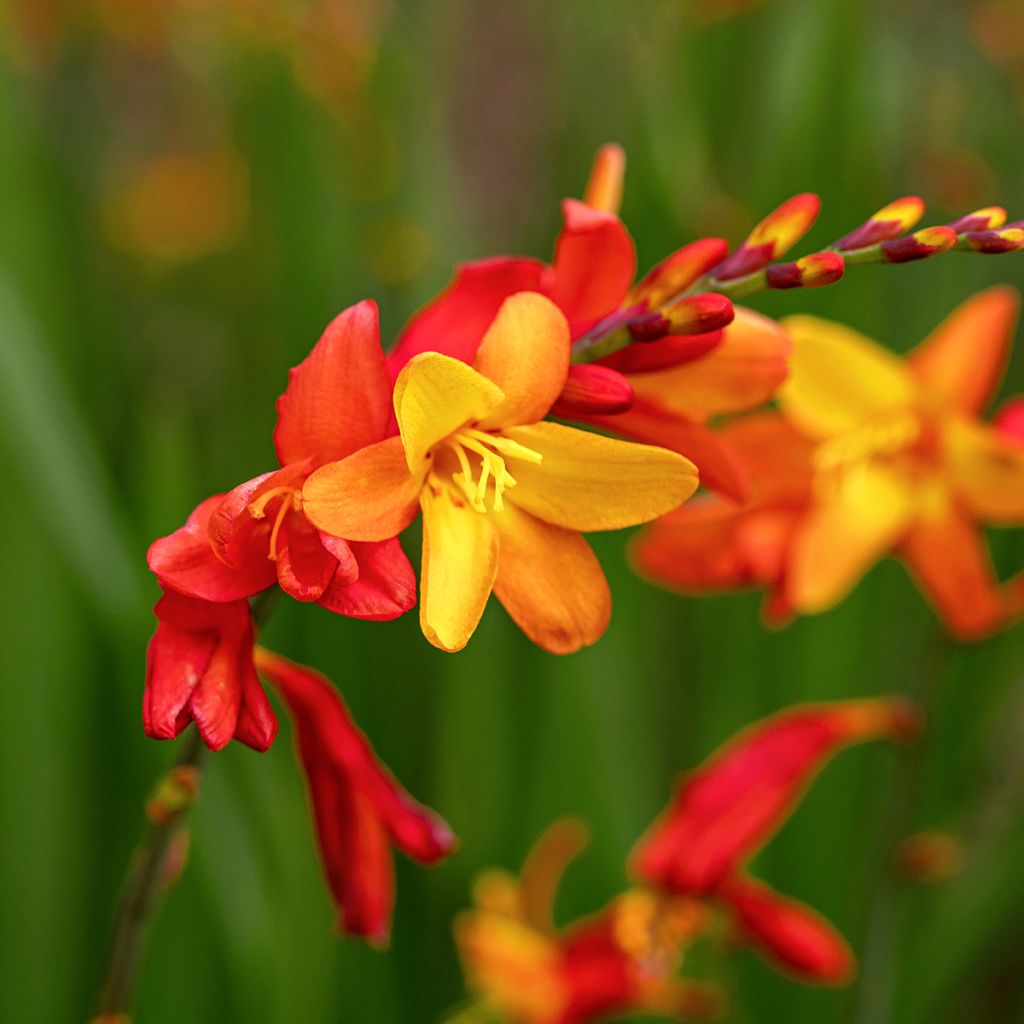
Crocosmia Harlequin - Montbretia
Crocosmia Harlequin - Montbretia
Crocosmia crocosmiiflora Harlequin
Montbretia
Back-to-school special offer!
Get €10 off for every €50 you spend! And get up to €40 off on a single order.
How does it work?
1. Shop your favourites
Add your favourite plants to your basket. For every €50 you spend (excluding delivery charges, store credit and the plastic-free option), you’ll receive a €10 voucher.
€50 spent = €10 voucher
€100 spent = €20 voucher
€150 spent = €30 voucher
€200 spent = €40 voucher
2. Place your order
Once your basket reaches one of the spending thresholds, place your order. You can even choose your delivery date!
3. Receive your voucher
As soon as your order has been shipped, you’ll receive an email containing your personal voucher code and its value.
4. Use it on your next order
Your voucher is valid for 90 days from the date you receive it. It can be used once only, on a new order worth at least the value of the voucher, excluding delivery charges.
Please note: Vouchers can be combined with other offers, but cannot be split or refunded.
Why not try an alternative variety in stock?
View all →
Available in 3 sizes
Available in 3 sizes
Available in 2 sizes
Available in 2 sizes
Available in 2 sizes
Available in 2 sizes
Available in 2 sizes
Available in 2 sizes
Available in 3 sizes
Available in 1 sizes
This plant carries a 6 months recovery warranty
More information
We guarantee the quality of our plants for a full growing cycle, and will replace at our expense any plant that fails to recover under normal climatic and planting conditions.
Would this plant suit my garden?
Set up your Plantfit profile →
Description
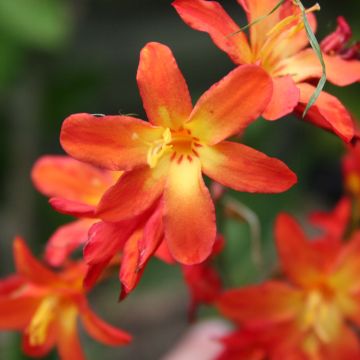
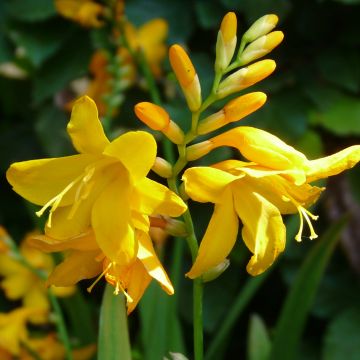
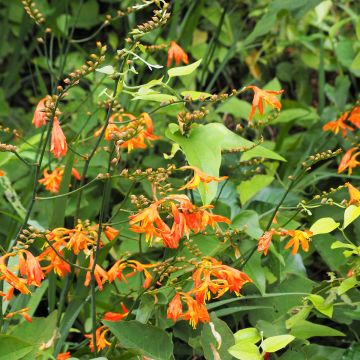
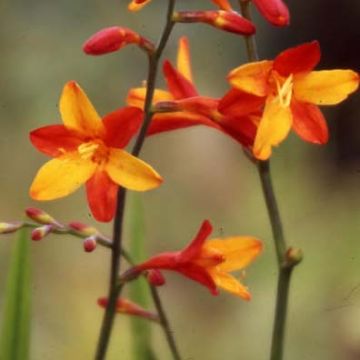
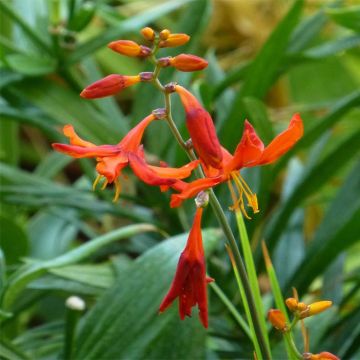
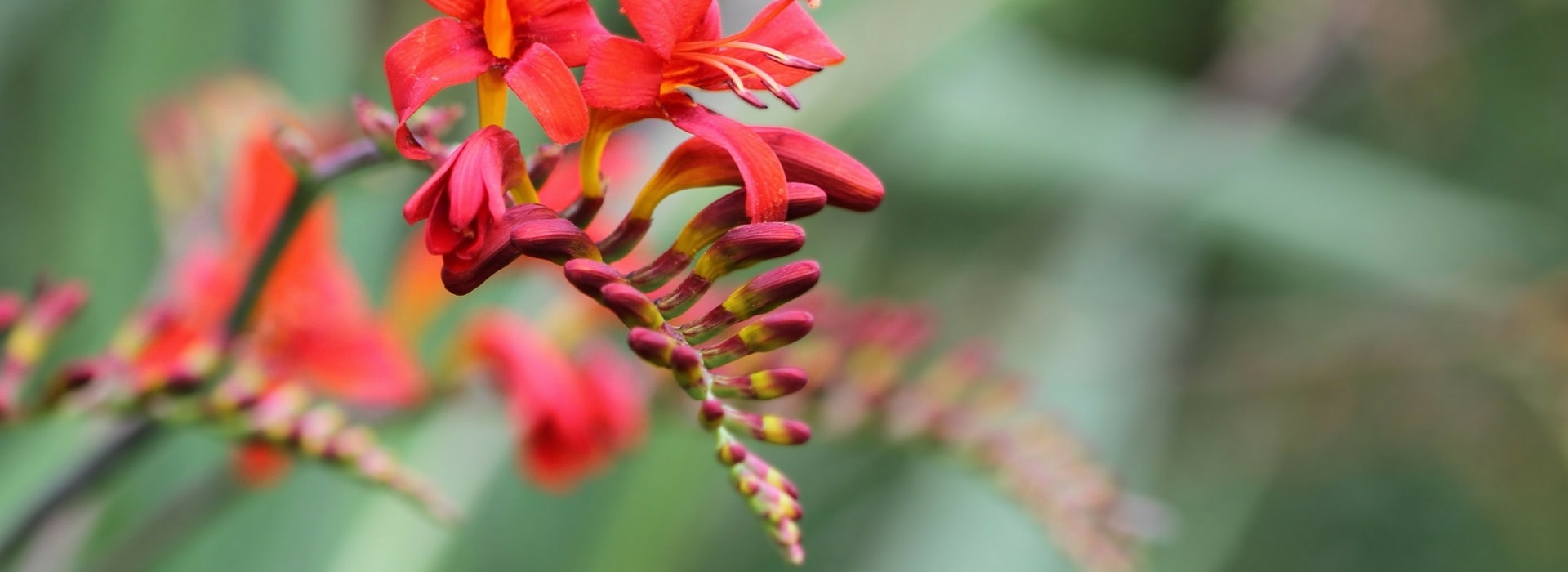
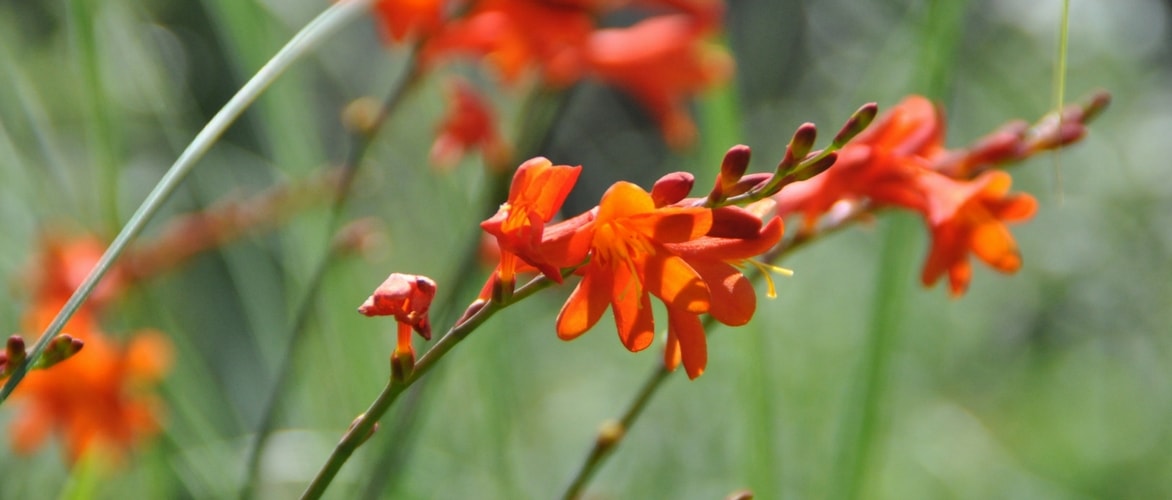
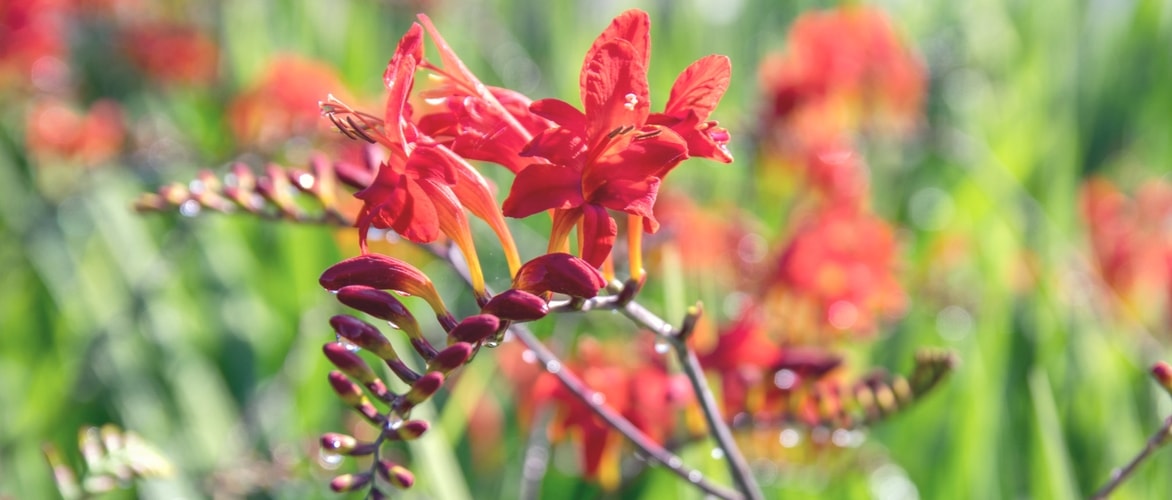
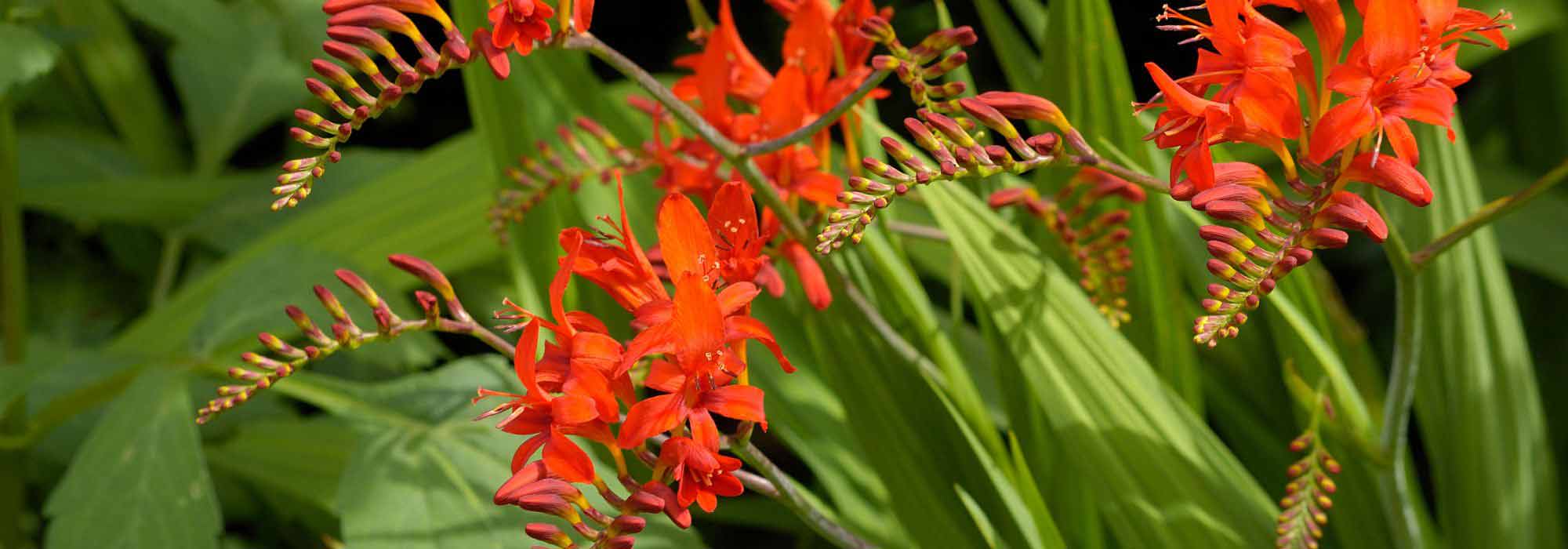
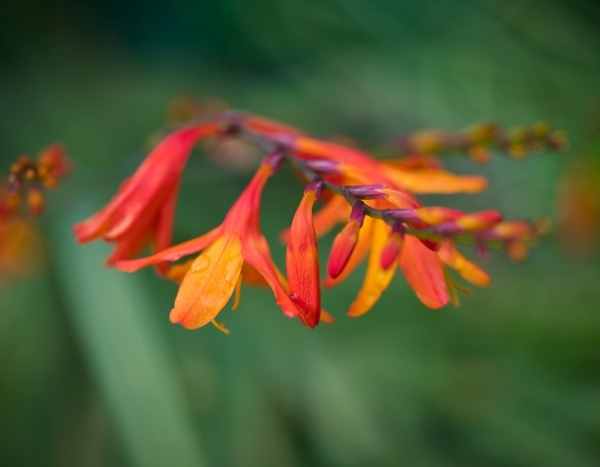
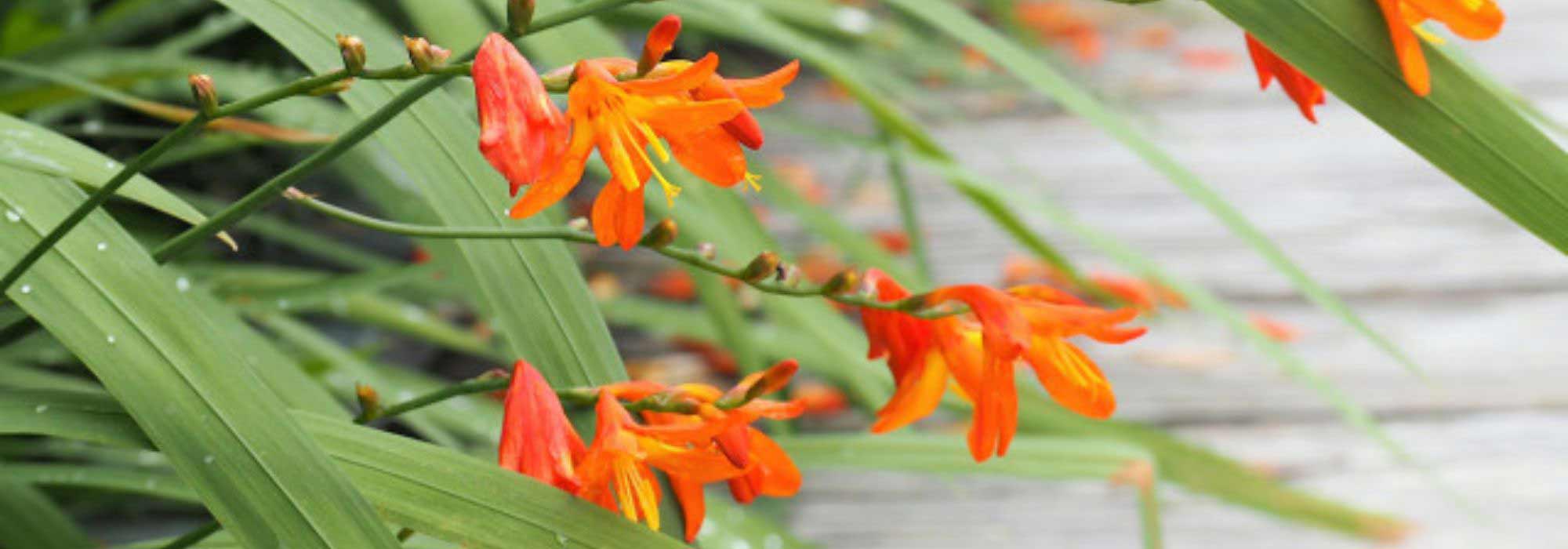
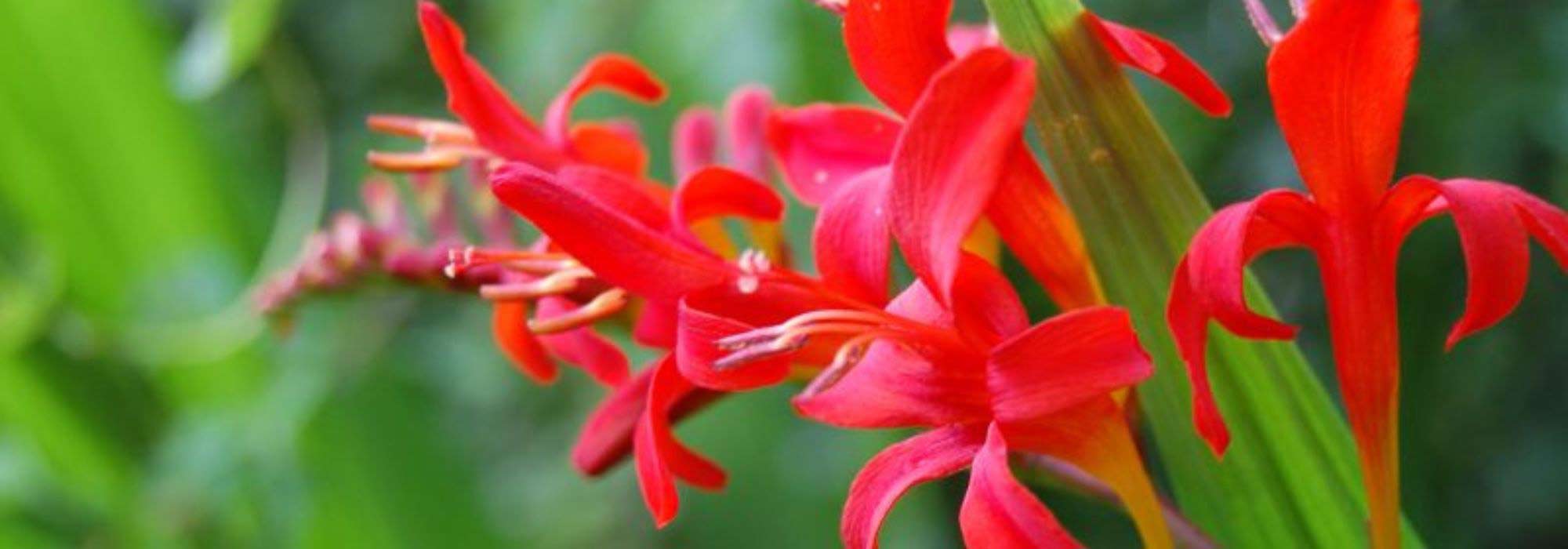
The Crocosmia ‘Harlequin’ is a bicolour montbretia prized for its light flower spikes laden with golden-yellow flowers, washed with orange and red on the reverse of the petals. This graphic bulbous plant forms a beautiful, colourful clump that enlivens borders in the heart of summer. Compact and floriferous, this crocosmia provides excellent cut flowers for the home. As it returns each year, this variety brings colour and movement to the garden or large containers without requiring much care.
The group Crocosmia × crocosmiiflora brings together many corm hybrids from the Iridaceae family native to the prairies of southern Africa. The Crocosmia ‘Harlequin’ is a "bulbous" perennial with deciduous growth: the aerial part disappears in winter, the corms or bulbs remain dormant in the soil and re-emerge the following spring. The plant adopts a tightly clumping habit, composed of narrow, lanceolate, sword-shaped leaves, of medium to dark green, measuring 40 to 60 cm long. The flowering stems, tinged with purple or reddish-brown, are well ramified, sturdy without being stiff, and bear arched inflorescences reminiscent of mini freesias. Each spike is adorned with numerous starry, tubular flowers, 3 to 4 cm in diameter, with a luminous golden-yellow centre and outer petals alternating shades of orange and scarlet red, sometimes highlighted with burgundy reflections. The flowering occurs from July to September, even into October depending on the climate, on stems 60 to 80 cm tall. This crocosmia is generally announced as fully hardy in temperate climates, at least down to –10 °C in well-drained soil, especially with a protective mulch in cold climates.
‘Harlequin’ was selected by the British grower Philippa Browne (Overseas Farm Nursery, Herefordshire) and was introduced to the horticultural trade in the early 2010s. Like all crocosmias, its corms multiply in the form of small, overlapping chains and naturalise over time.
In the garden, the Crocosmia ‘Harlequin’ is perfect for creating a border with warm colours. Plant it in small, repeated clumps among perennials or annuals. You can pair it with the coppery flowering of Helenium ‘Moerheim Beauty’, the flexible stems of Pennisetum macrourum and the pink spikes of Veronicastrum virginicum ‘Red Arrows’. In a more sophisticated scene, combine it with the large cream umbels of Ammi visnaga ‘Green Mist White’ and the dark heads of Dahlia ‘Sam Hopkins’. In a vase, its arched stems combine with the orange-red spikes of Crocosmia ‘Hellfire’ or the long spires of a Persicaria amplexicaulis ‘Orange Field’.
The name Crocosmia comes from the Greek krokos (saffron) and osme (scent), because the dried flowers release a saffron scent when immersed in hot water. They were once used to flavour infusions.
Plant habit
Flowering
Foliage
Botanical data
Crocosmia
crocosmiiflora
Harlequin
Iridaceae
Montbretia
Cultivar or hybrid
Planting and care
Plant the Crocosmia Harlequin corms in full sun, preferably in spring. They require an aerated and well-drained soil, which does not retain too much water in winter when they remain in the ground. Conversely, they demand a cool soil in summer. Work the soil well at planting time and, if necessary, incorporate sand. They should be covered with at least 5 to 8 cm of soil (the deeper they are buried, the better they withstand frost) and spaced about 15 cm apart. They appreciate rich soils. Apply a fertiliser at planting time, which you should renew each spring. While they prefer a well-draining soil for winter, crocosmias need plenty of water during their growing season and cannot tolerate any drought in summer.
In regions with harsh winters, it is safer to lift the corms once the foliage has dried and store them in a frost-free location. Another option is to cover the bed with a thick insulating carpet at the onset of winter, removing it in March.
Crocosmia Harlequin can withstand short frosts of around -10/-12°C in perfectly drained soil: consider planting it on a nice mound of light soil where water will not stagnate. Protect the stump with a thick mulch that will insulate it from both cold and excessive moisture.
Crocosmias thrive in the climates of our country's oceanic coastline, which suit them particularly well. Contrary to what is sometimes read, these are not plants adapted to the Mediterranean climate, which is far too dry in summer for a garden that does not benefit from regular watering.
Planting period
Intended location
Care
Planting & care advice
-
-
-
-
-
-
-
-

This item has not been reviewed yet - be the first to leave a review about it.
Recently viewed products
Haven't found what you were looking for?
Hardiness is the lowest winter temperature a plant can endure without suffering serious damage or even dying. However, hardiness is affected by location (a sheltered area, such as a patio), protection (winter cover) and soil type (hardiness is improved by well-drained soil).

The flowering period indicated on our website applies to countries and regions located in USDA zone 8 (France, the United Kingdom, Ireland, the Netherlands, etc.)
It will vary according to where you live:- In zones 9 to 10 (Italy, Spain, Greece, etc.), flowering will occur about 2 to 4 weeks earlier.
- In zones 6 to 7 (Germany, Poland, Slovenia, and lower mountainous regions), flowering will be delayed by 2 to 3 weeks.
- In zone 5 (Central Europe, Scandinavia), blooming will be delayed by 3 to 5 weeks.
In temperate climates, pruning of spring-flowering shrubs (forsythia, spireas, etc.) should be done just after flowering.
Pruning of summer-flowering shrubs (Indian Lilac, Perovskia, etc.) can be done in winter or spring.
In cold regions as well as with frost-sensitive plants, avoid pruning too early when severe frosts may still occur.
The planting period indicated on our website applies to countries and regions located in USDA zone 8 (France, United Kingdom, Ireland, Netherlands).
It will vary according to where you live:
- In Mediterranean zones (Marseille, Madrid, Milan, etc.), autumn and winter are the best planting periods.
- In continental zones (Strasbourg, Munich, Vienna, etc.), delay planting by 2 to 3 weeks in spring and bring it forward by 2 to 4 weeks in autumn.
- In mountainous regions (the Alps, Pyrenees, Carpathians, etc.), it is best to plant in late spring (May-June) or late summer (August-September).
The harvesting period indicated on our website applies to countries and regions in USDA zone 8 (France, England, Ireland, the Netherlands).
In colder areas (Scandinavia, Poland, Austria...) fruit and vegetable harvests are likely to be delayed by 3-4 weeks.
In warmer areas (Italy, Spain, Greece, etc.), harvesting will probably take place earlier, depending on weather conditions.
The sowing periods indicated on our website apply to countries and regions within USDA Zone 8 (France, UK, Ireland, Netherlands).
In colder areas (Scandinavia, Poland, Austria...), delay any outdoor sowing by 3-4 weeks, or sow under glass.
In warmer climes (Italy, Spain, Greece, etc.), bring outdoor sowing forward by a few weeks.
Shipping country and language
Your country of residence may be:
Your country of residence is:
For a better user experience on our website, you can select:
Your shipping country:
-
 Austria
-
 Belgium
-
 Bosnia & Herzegovina
-
 Bulgaria
-
 Croatia
-
 Cyprus
-
 Czechia
-
 Denmark
-
 Estonia
-
 Finland
-
 France
-
 Germany
-
 Greece
-
 Hungary
-
 Iceland
-
 Ireland
-
 Italy
Italy
-
 Latvia
-
 Liechtenstein
-
 Lithuania
-
 Luxembourg
-
 Malta
Malta
-
 Netherlands
-
 Poland
-
 Portugal
-
 Romania
-
 Serbia
-
 Slovakia
-
 Slovenia
-
 Spain
Spain
-
 Sweden
-
 Switzerland
Language:
-
French
-
 English
-
Spanish
-
Italian
-
German
-
Portuguese
-
Dutch
-
Finnish
My Account
Hello
My wish lists
My cart
Log in / Register
Existing customer?
This form is protected by reCAPTCHA - the Google Privacy Policy and Terms of Service apply.
New customer?
Create an account to track your orders, access our customer service and, if you wish, make the most of our upcoming offers.