Trillium recurvatum (bulbs)
Trillium recurvatum (bulbs)
Trillium recurvatum
Prairie Trillium, Bloody Butcher, Bloody Noses, Beefsteak
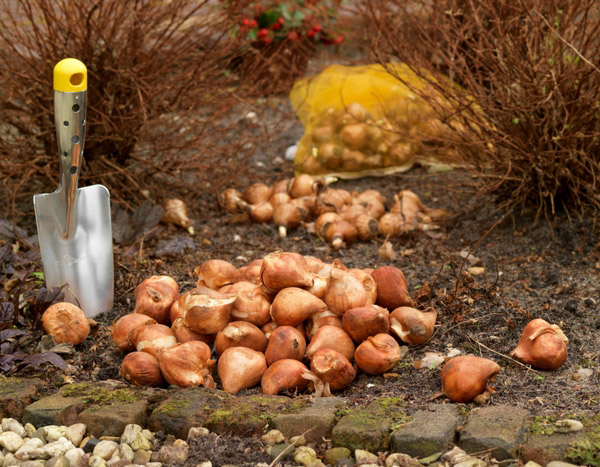
The bulbs are small and dried out. The chances of recovery seem more than compromised. I am very disappointed.
philippe, 11/03/2024
Back-to-school special offer!
Get €10 off for every €50 you spend! And get up to €40 off on a single order.
How does it work?
1. Shop your favourites
Add your favourite plants to your basket. For every €50 you spend (excluding delivery charges, store credit and the plastic-free option), you’ll receive a €10 voucher.
€50 spent = €10 voucher
€100 spent = €20 voucher
€150 spent = €30 voucher
€200 spent = €40 voucher
2. Place your order
Once your basket reaches one of the spending thresholds, place your order. You can even choose your delivery date!
3. Receive your voucher
As soon as your order has been shipped, you’ll receive an email containing your personal voucher code and its value.
4. Use it on your next order
Your voucher is valid for 90 days from the date you receive it. It can be used once only, on a new order worth at least the value of the voucher, excluding delivery charges.
Please note: Vouchers can be combined with other offers, but cannot be split or refunded.
This plant carries a 6 months recovery warranty
More information
We guarantee the quality of our plants for a full growing cycle, and will replace at our expense any plant that fails to recover under normal climatic and planting conditions.

Would this plant suit my garden?
Set up your Plantfit profile →
Description
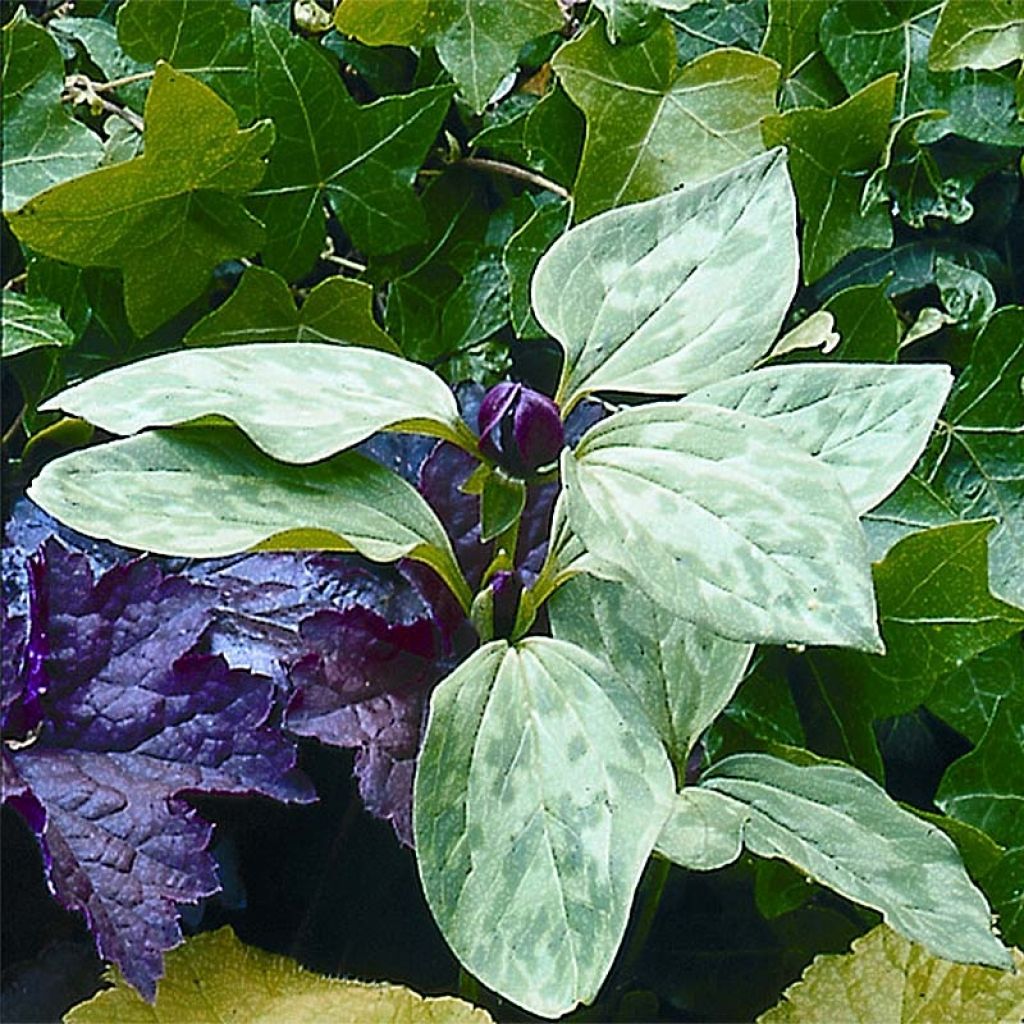
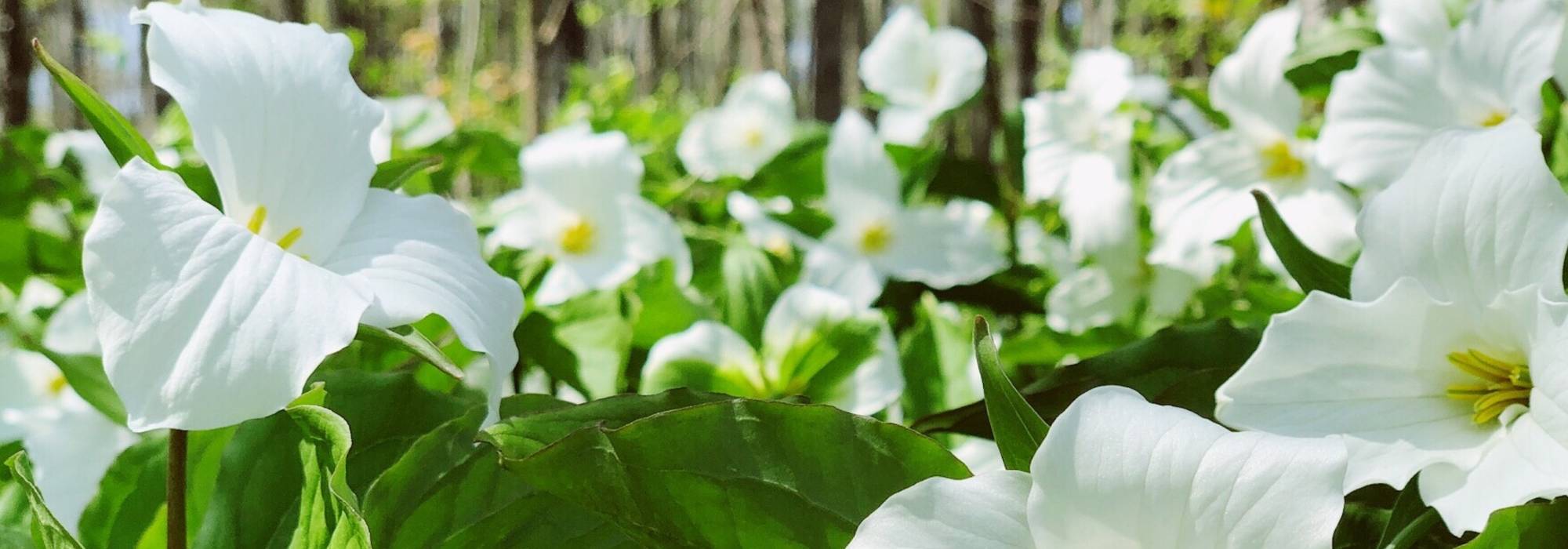
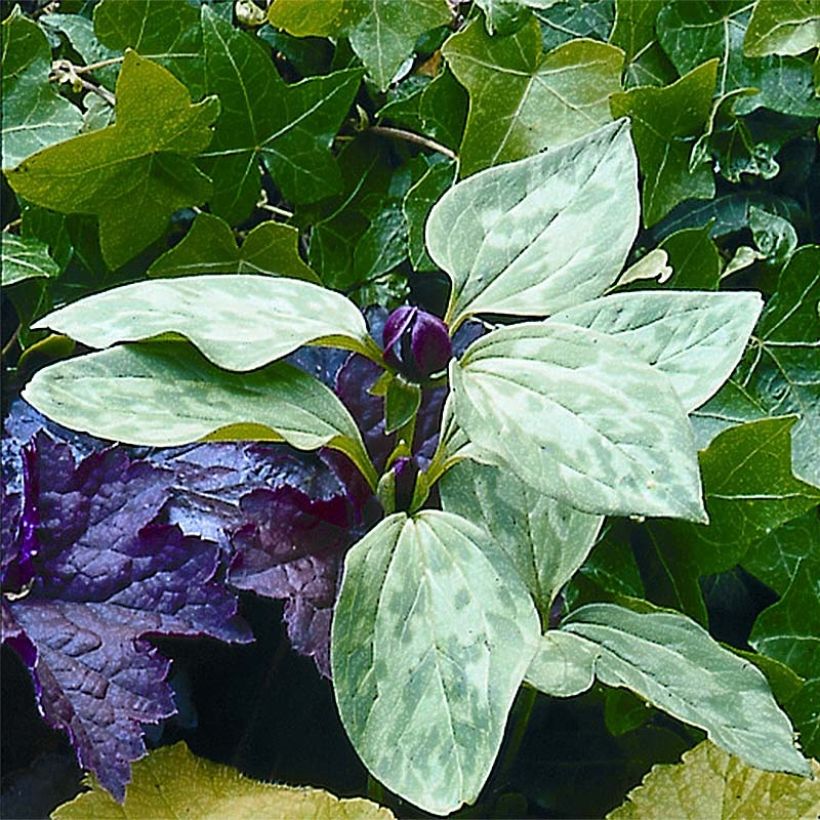
Trillium recurvatum is a perennial plant with rhizomes, native to Missouri and Mississippi where it decorates the undergrowth and banks of rivers in a rather unique way in springtime. This Trillium gets its species name, recurvatum, from the recurved sepals that support its upright reddish-brown flower. Underneath the flowering, there are 3 often maculated light green leaves, very decorative when the plant spreads in colonies. American trilliums, quite rare in cultivation, definitely deserve to be tried in shaded and cool areas of our gardens. They are a little slow to establish but they withstand our winters perfectly and eventually form unusual spring carpets in a wooded garden.
Trillium recurvatum, formerly classified in the Liliaceae family, now belongs to the Melanthiaceae family. It is a distant North American cousin of the fragrant Solomon's Seal that populates our European undergrowth. It is native to the southeastern United States, where it blooms in spring in the humus of deciduous undergrowth as well as along rivers, on generally limestone, cool but well-drained soil.
Trilliums are very unique plants that do not develop true stems or true leaves. The vegetation that emerges in spring is actually just a flowering, composed of an upright petiole, an extension of the rhizome, bearing a coloured flower that surmounts bracts resembling leaves. The true leaves, tiny and scale-like, are found on the flower petiole.
As a herbaceous and perennial plant, Trillium recurvatum develops in spring from a fleshy and thick underground rhizome that does not like to be disturbed. It goes into dormancy as soon as the soil dries out, during the summer or in autumn due to the cold. The plant produces short and slender leafy stems, standing at 30-40cm (12-16in) above the ground. Thanks to its rhizomes, this Trillium will slowly form small colonies occupying at least 30cm (12in) of ground. Each stem bears only 3 beautiful leaves inserted at the same level on the stem and arranged in a collar, horizontally. The leaves are narrowly ovate to elliptical in shape, with a beautiful bright green colour randomly marbled with grey and light green, especially when young. They measure about 8cm (3in) long and 5cm (2in) wide. The flowering takes place in April, lasting 2 to 3 weeks, more or less early depending on the climate, in the center of the trio of leaves. The flower, upright and narrow, 4 to 4.5cm (2in) tall, is composed of 3 narrow reddish-brown petals arched above the six black stamens that bend over the pistil. The flower, without stalks, is surmounted by 3 narrow green sepals, recurved downwards and arranged in a staggered pattern. This flowering is pollinated by beetles and flies. This species is very difficult to multiply by sowing. In Trilliums, the seeds are dispersed by ants. Plants from seeds may take several years before flowering.
A little slow to establish, this Trillium recurvatum is however faithful, lives long (25 years), and requires little care where it likes to grow. It should be planted in groups of 3 specimens in wooded areas or dappled sunlight (introduce several plants in a small area), in soil rich in humus or leaf compost that remains moist for as long as possible. It pairs well with other small perennials that thrive in similar conditions, such as Mertensia virginica with its beautiful blue spring flowers. Plants with staggered flowering or interesting foliage will fill the ground in summer while the trillium rests underground: consider, for example, Ophiopogons, saxifrages, small ferns, Asarums, hostas, etc. It can be grown in pots, but watering should be monitored. Whether in the ground or in pots, its association with Begonia grandis subsp. evansiana, which takes over after its flowering, is always successful.
The Latin name Trillium derives from the fact that the different parts of these plants are ternary: from the unique cluster of three leaves on each stem, to the construction of the flower, composed of 3 green sepals, 3 coloured petals, six stamens, and 3 fused carpels.
Trillium recurvatum (bulbs) in pictures
Plant habit
Flowering
Foliage
Botanical data
Trillium
recurvatum
Liliaceae (Melanthiaceae)
Prairie Trillium, Bloody Butcher, Bloody Noses, Beefsteak
North America
Planting and care
Trillium recurvatum appreciates moist to wet soils during its growth and flowering period. It tolerates limestone substrates but prefers shallow, humus-rich, loose soils with leaf compost (understorey soil). Plant it in partial shade or not too dense shade. The sunnier the exposure and the hotter the climate, the more the plant will benefit from moist to wet soil. Plant it so that its rhizome is located 5 or 7cm (2 or 3in) below the surface of the soil. Dig a large hole and add leaf compost and well-decomposed compost at planting. Make sure the soil never dries out in summer, otherwise the trillium may enter dormancy too quickly, which sometimes happens in nature and doesn't really harm the plant's health. Trillium recurvatum can withstand cold winters, even below -15°C (5°F), even without ground mulching. Divide the clumps in spring, after at least 5 to 6 years of cultivation.
This Trillium requires time to establish itself, it is not uncommon to wait 2 years after planting before seeing it bloom for the first time.
Gastropods can attack young shoots in spring: make sure to protect them.
Planting period
Intended location
Care
Planting & care advice
-
-
-
-
-
-
-
-

-
, onOrder confirmed
Reply from on Promesse de fleurs
Recently viewed products
Haven't found what you were looking for?
Hardiness is the lowest winter temperature a plant can endure without suffering serious damage or even dying. However, hardiness is affected by location (a sheltered area, such as a patio), protection (winter cover) and soil type (hardiness is improved by well-drained soil).

The flowering period indicated on our website applies to countries and regions located in USDA zone 8 (France, the United Kingdom, Ireland, the Netherlands, etc.)
It will vary according to where you live:- In zones 9 to 10 (Italy, Spain, Greece, etc.), flowering will occur about 2 to 4 weeks earlier.
- In zones 6 to 7 (Germany, Poland, Slovenia, and lower mountainous regions), flowering will be delayed by 2 to 3 weeks.
- In zone 5 (Central Europe, Scandinavia), blooming will be delayed by 3 to 5 weeks.
In temperate climates, pruning of spring-flowering shrubs (forsythia, spireas, etc.) should be done just after flowering.
Pruning of summer-flowering shrubs (Indian Lilac, Perovskia, etc.) can be done in winter or spring.
In cold regions as well as with frost-sensitive plants, avoid pruning too early when severe frosts may still occur.
The planting period indicated on our website applies to countries and regions located in USDA zone 8 (France, United Kingdom, Ireland, Netherlands).
It will vary according to where you live:
- In Mediterranean zones (Marseille, Madrid, Milan, etc.), autumn and winter are the best planting periods.
- In continental zones (Strasbourg, Munich, Vienna, etc.), delay planting by 2 to 3 weeks in spring and bring it forward by 2 to 4 weeks in autumn.
- In mountainous regions (the Alps, Pyrenees, Carpathians, etc.), it is best to plant in late spring (May-June) or late summer (August-September).
The harvesting period indicated on our website applies to countries and regions in USDA zone 8 (France, England, Ireland, the Netherlands).
In colder areas (Scandinavia, Poland, Austria...) fruit and vegetable harvests are likely to be delayed by 3-4 weeks.
In warmer areas (Italy, Spain, Greece, etc.), harvesting will probably take place earlier, depending on weather conditions.
The sowing periods indicated on our website apply to countries and regions within USDA Zone 8 (France, UK, Ireland, Netherlands).
In colder areas (Scandinavia, Poland, Austria...), delay any outdoor sowing by 3-4 weeks, or sow under glass.
In warmer climes (Italy, Spain, Greece, etc.), bring outdoor sowing forward by a few weeks.
Shipping country and language
Your country of residence may be:
Your country of residence is:
For a better user experience on our website, you can select:
Your shipping country:
-
 Austria
-
 Belgium
-
 Bosnia & Herzegovina
-
 Bulgaria
-
 Croatia
-
 Cyprus
-
 Czechia
-
 Denmark
-
 Estonia
-
 Finland
-
 France
-
 Germany
-
 Greece
-
 Hungary
-
 Iceland
-
 Ireland
-
 Italy
Italy
-
 Latvia
-
 Liechtenstein
-
 Lithuania
-
 Luxembourg
-
 Malta
Malta
-
 Netherlands
-
 Poland
-
 Portugal
-
 Romania
-
 Serbia
-
 Slovakia
-
 Slovenia
-
 Spain
Spain
-
 Sweden
-
 Switzerland
Language:
-
French
-
 English
-
Spanish
-
Italian
-
German
-
Portuguese
-
Dutch
-
Finnish
My Account
Hello
My wish lists
My cart
Log in / Register
Existing customer?
This form is protected by reCAPTCHA - the Google Privacy Policy and Terms of Service apply.
New customer?
Create an account to track your orders, access our customer service and, if you wish, make the most of our upcoming offers.