Aubergine Little Fingers - Ferme de Sainte Marthe seeds

Aubergine Little Fingers - Ferme de Sainte Marthe seeds
Aubergine Little Fingers - Ferme de Sainte Marthe seeds
Solanum melongena Little Fingers AB
Eggplant
A young plant is producing absolutely non-conforming aubergines! They are wider and remain green with the side facing the soil, striped with a darker shade of green!
Danielle C., 15/08/2018
Back-to-school special offer!
Get €10 off for every €50 you spend! And get up to €40 off on a single order.
How does it work?
1. Shop your favourites
Add your favourite plants to your basket. For every €50 you spend (excluding delivery charges, store credit and the plastic-free option), you’ll receive a €10 voucher.
€50 spent = €10 voucher
€100 spent = €20 voucher
€150 spent = €30 voucher
€200 spent = €40 voucher
2. Place your order
Once your basket reaches one of the spending thresholds, place your order. You can even choose your delivery date!
3. Receive your voucher
As soon as your order has been shipped, you’ll receive an email containing your personal voucher code and its value.
4. Use it on your next order
Your voucher is valid for 90 days from the date you receive it. It can be used once only, on a new order worth at least the value of the voucher, excluding delivery charges.
Please note: Vouchers can be combined with other offers, but cannot be split or refunded.
Home or relay delivery (depending on size and destination)
Important: You may be charged customs duties by your country’s customs authorities upon delivery.
Schedule delivery date,
and select date in basket
This plant carries a 6 months recovery warranty
More information
We guarantee the quality of our plants for a full growing cycle, and will replace at our expense any plant that fails to recover under normal climatic and planting conditions.
Description
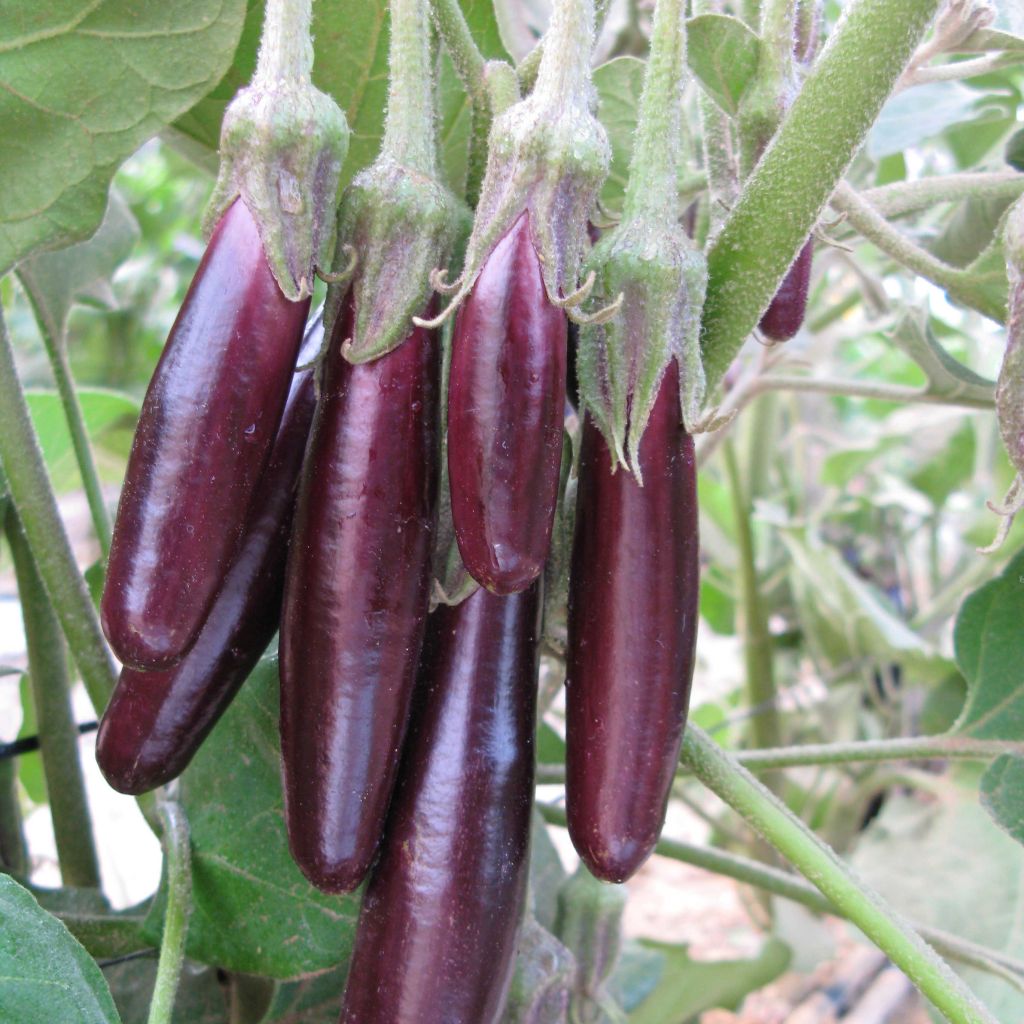
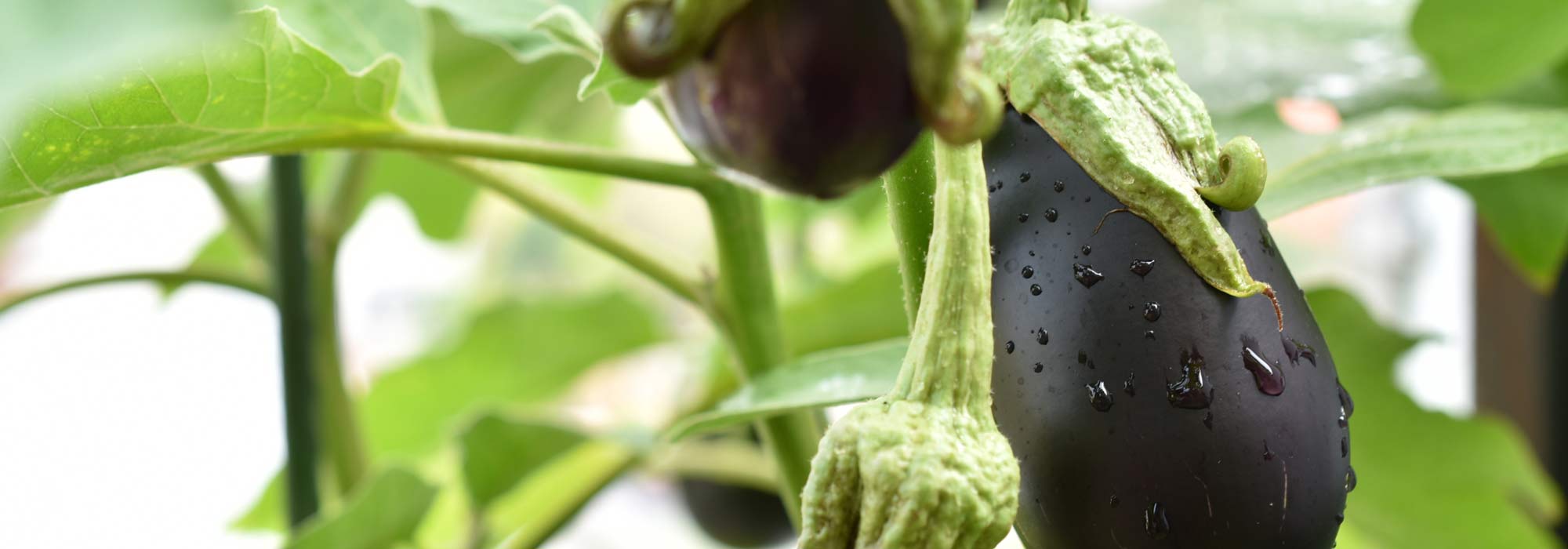
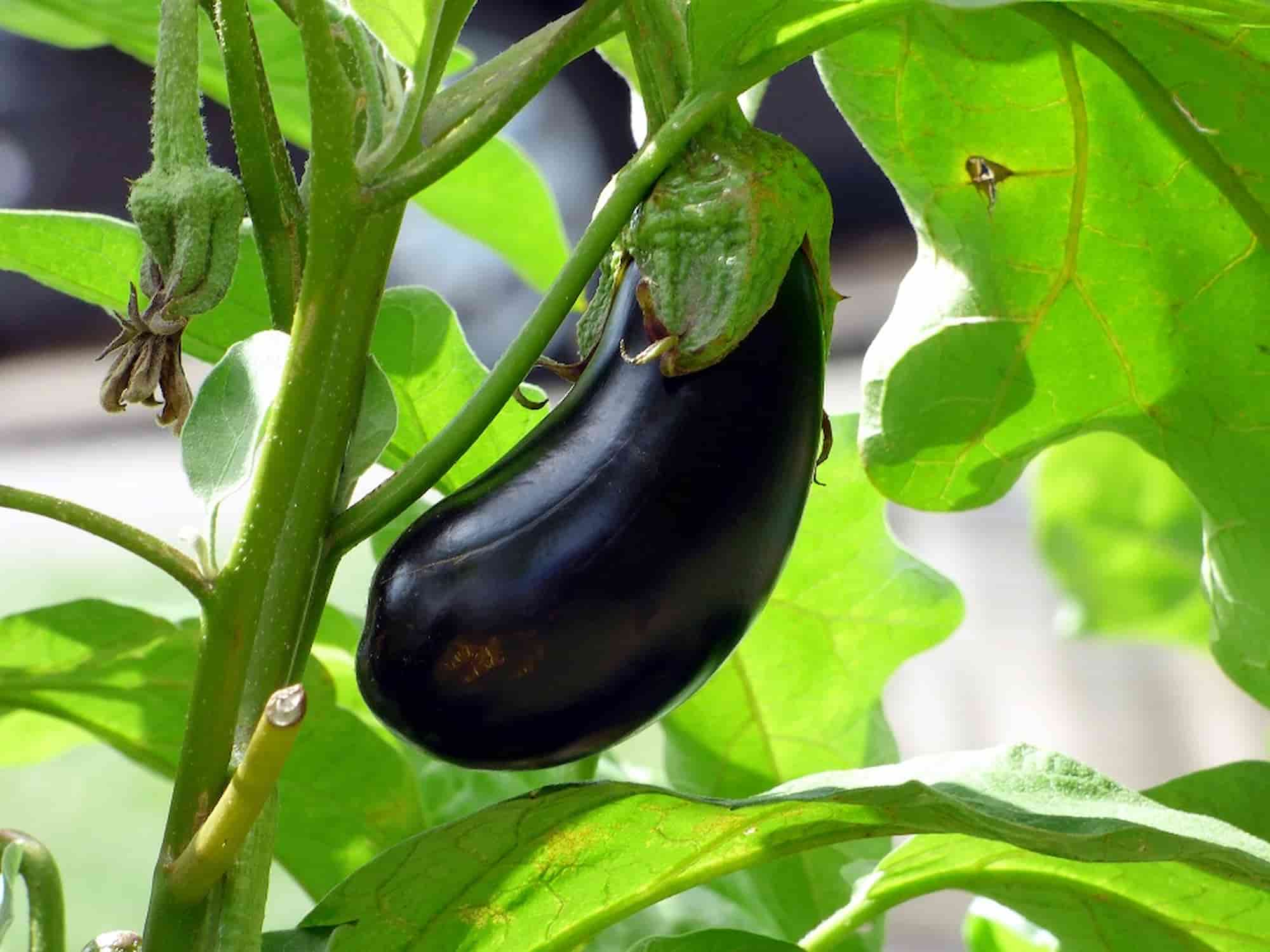
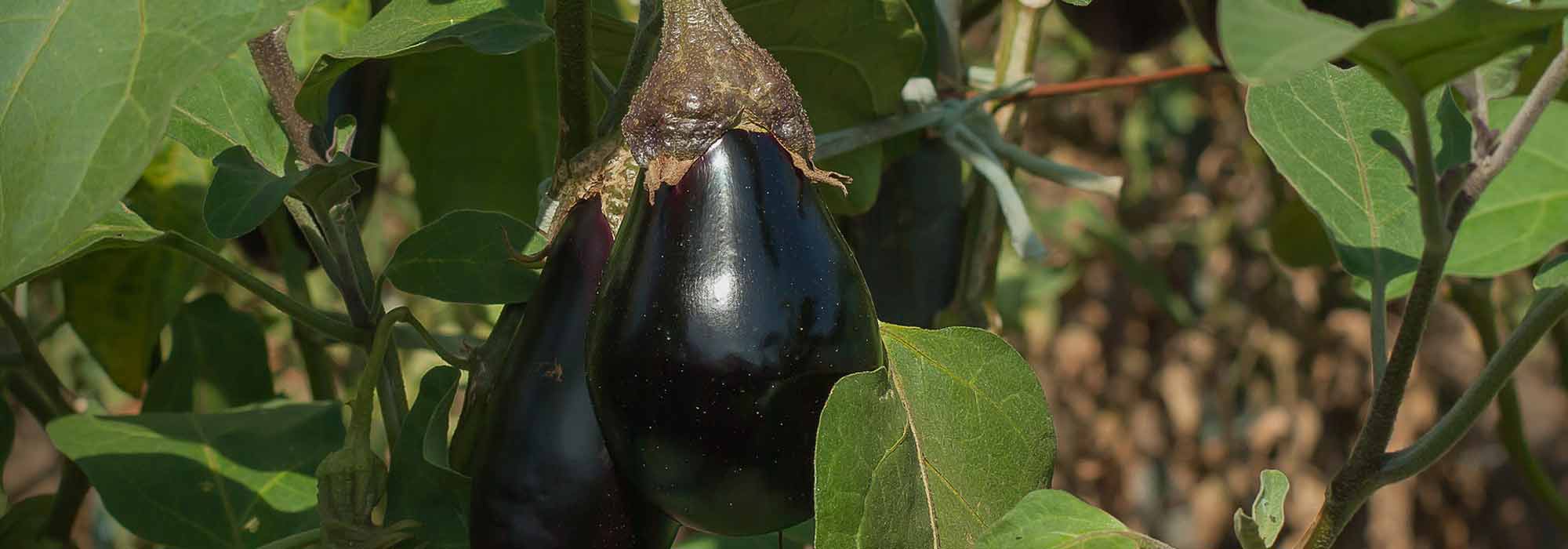
'Little Fingers' is a hardy, early season, productive variety that displays clusters of 3-4 elongated, fleshy aubergines with smooth skin and a beautiful bluish black colour. The 50 cm high plants are sturdy and compact. Sow from February to April for a harvest 3 months later. Certified organic seeds.
Aubergine first appeared in Europe during the 14th century but has been cultivated in India and China since ancient times. Also known as Eggplant in American English, it is generally served cooked, stuffed, grilled on the barbecue or incorporated into gratin or ratatouille. Aubergine has calming, diuretic properties and contains vitamins A, B1, B2, B3, B5, and C as well as iron and calcium.
Harvesting: Pick the mature fruit when required from July to October.
Storage: Aubergines will keep up for up to a week in the refrigerator. Once steamed, they can be stored in the freezer for 6 to 8 months.
Good to know: Weed and hoe regularly. For bigger fruits, pinch out the terminal growing points.
NB. Organic seeds (in French "AB" for "Agriculture Biologique") are produced from plants that aren't treated with phytosanitary products (insecticides, weed killers). The seeds do not undergo post-harvest treatment. They carry the AB label and are approved by Ecocert, an independent structure.
Harvest
Plant habit
Foliage
Botanical data
Solanum
melongena
Little Fingers AB
Solanaceae
Eggplant
Caucasus
Annual
Planting and care
Sowing:
Aubergine requires a supply of well-rotted compost (3 kg/m²) in late autumn or early spring before sowing. Sow in pots filled with fine, light soil. In February-March, keep the seedlings in a warm, bright place such as on a window sill. From April onwards, aubergines can be sown outdoors, in their final location. Make sure to keep the soil moist. To encourage germination, place the seeds in the refrigerator (4 to 5°C) for a few days before sowing.
Care:
When the plants have reached the 5-6 leaves stage, transplant them into larger pots or straight out in the garden, in a warm, sunny spot. For a bushier plant, remove side shoots and pinch out tips when the plant has formed 2-3 flower clusters. Keep the plant from wasting its energy unnecessarily by removing suckers that sprout from its base and in the crook of two stems. Mulching will help keep the soil moist whilst limiting weed growth.
Seedlings
Care
Intended location
Planting & care advice
-
-
-
-
-
-
-
-

-
, onOrder confirmed
Reply from on Promesse de fleurs
Recently viewed products
Haven't found what you were looking for?
Hardiness is the lowest winter temperature a plant can endure without suffering serious damage or even dying. However, hardiness is affected by location (a sheltered area, such as a patio), protection (winter cover) and soil type (hardiness is improved by well-drained soil).

The flowering period indicated on our website applies to countries and regions located in USDA zone 8 (France, the United Kingdom, Ireland, the Netherlands, etc.)
It will vary according to where you live:- In zones 9 to 10 (Italy, Spain, Greece, etc.), flowering will occur about 2 to 4 weeks earlier.
- In zones 6 to 7 (Germany, Poland, Slovenia, and lower mountainous regions), flowering will be delayed by 2 to 3 weeks.
- In zone 5 (Central Europe, Scandinavia), blooming will be delayed by 3 to 5 weeks.
In temperate climates, pruning of spring-flowering shrubs (forsythia, spireas, etc.) should be done just after flowering.
Pruning of summer-flowering shrubs (Indian Lilac, Perovskia, etc.) can be done in winter or spring.
In cold regions as well as with frost-sensitive plants, avoid pruning too early when severe frosts may still occur.
The planting period indicated on our website applies to countries and regions located in USDA zone 8 (France, United Kingdom, Ireland, Netherlands).
It will vary according to where you live:
- In Mediterranean zones (Marseille, Madrid, Milan, etc.), autumn and winter are the best planting periods.
- In continental zones (Strasbourg, Munich, Vienna, etc.), delay planting by 2 to 3 weeks in spring and bring it forward by 2 to 4 weeks in autumn.
- In mountainous regions (the Alps, Pyrenees, Carpathians, etc.), it is best to plant in late spring (May-June) or late summer (August-September).
The harvesting period indicated on our website applies to countries and regions in USDA zone 8 (France, England, Ireland, the Netherlands).
In colder areas (Scandinavia, Poland, Austria...) fruit and vegetable harvests are likely to be delayed by 3-4 weeks.
In warmer areas (Italy, Spain, Greece, etc.), harvesting will probably take place earlier, depending on weather conditions.
The sowing periods indicated on our website apply to countries and regions within USDA Zone 8 (France, UK, Ireland, Netherlands).
In colder areas (Scandinavia, Poland, Austria...), delay any outdoor sowing by 3-4 weeks, or sow under glass.
In warmer climes (Italy, Spain, Greece, etc.), bring outdoor sowing forward by a few weeks.
Shipping country and language
Your country of residence may be:
Your country of residence is:
For a better user experience on our website, you can select:
Your shipping country:
-
 Austria
-
 Belgium
-
 Bosnia & Herzegovina
-
 Bulgaria
-
 Croatia
-
 Cyprus
-
 Czechia
-
 Denmark
-
 Estonia
-
 Finland
-
 France
-
 Germany
-
 Greece
-
 Hungary
-
 Iceland
-
 Ireland
-
 Italy
Italy
-
 Latvia
-
 Liechtenstein
-
 Lithuania
-
 Luxembourg
-
 Malta
Malta
-
 Netherlands
-
 Poland
-
 Portugal
-
 Romania
-
 Serbia
-
 Slovakia
-
 Slovenia
-
 Spain
Spain
-
 Sweden
-
 Switzerland
Language:
-
French
-
 English
-
Spanish
-
Italian
-
German
-
Portuguese
-
Dutch
-
Finnish
My Account
Hello
My wish lists
My cart
Log in / Register
Existing customer?
This form is protected by reCAPTCHA - the Google Privacy Policy and Terms of Service apply.
New customer?
Create an account to track your orders, access our customer service and, if you wish, make the most of our upcoming offers.