Iris germanica Happenstance - Tall Bearded Iris
Iris germanica Happenstance - Tall Bearded Iris
Iris germanica Happenstance
Bearded Iris
Back-to-school special offer!
Get €10 off for every €50 you spend! And get up to €40 off on a single order.
How does it work?
1. Shop your favourites
Add your favourite plants to your basket. For every €50 you spend (excluding delivery charges, store credit and the plastic-free option), you’ll receive a €10 voucher.
€50 spent = €10 voucher
€100 spent = €20 voucher
€150 spent = €30 voucher
€200 spent = €40 voucher
2. Place your order
Once your basket reaches one of the spending thresholds, place your order. You can even choose your delivery date!
3. Receive your voucher
As soon as your order has been shipped, you’ll receive an email containing your personal voucher code and its value.
4. Use it on your next order
Your voucher is valid for 90 days from the date you receive it. It can be used once only, on a new order worth at least the value of the voucher, excluding delivery charges.
Please note: Vouchers can be combined with other offers, but cannot be split or refunded.
Why not try an alternative variety in stock?
View all →
Available in 2 sizes
Available in 2 sizes
Available in 2 sizes
Available in 2 sizes
Available in 2 sizes
Available in 2 sizes
Available in 2 sizes
Available in 1 sizes
Available in 2 sizes
Available in 2 sizes
This plant carries a 12 months recovery warranty
More information
We guarantee the quality of our plants for a full growing cycle, and will replace at our expense any plant that fails to recover under normal climatic and planting conditions.
Would this plant suit my garden?
Set up your Plantfit profile →
Description
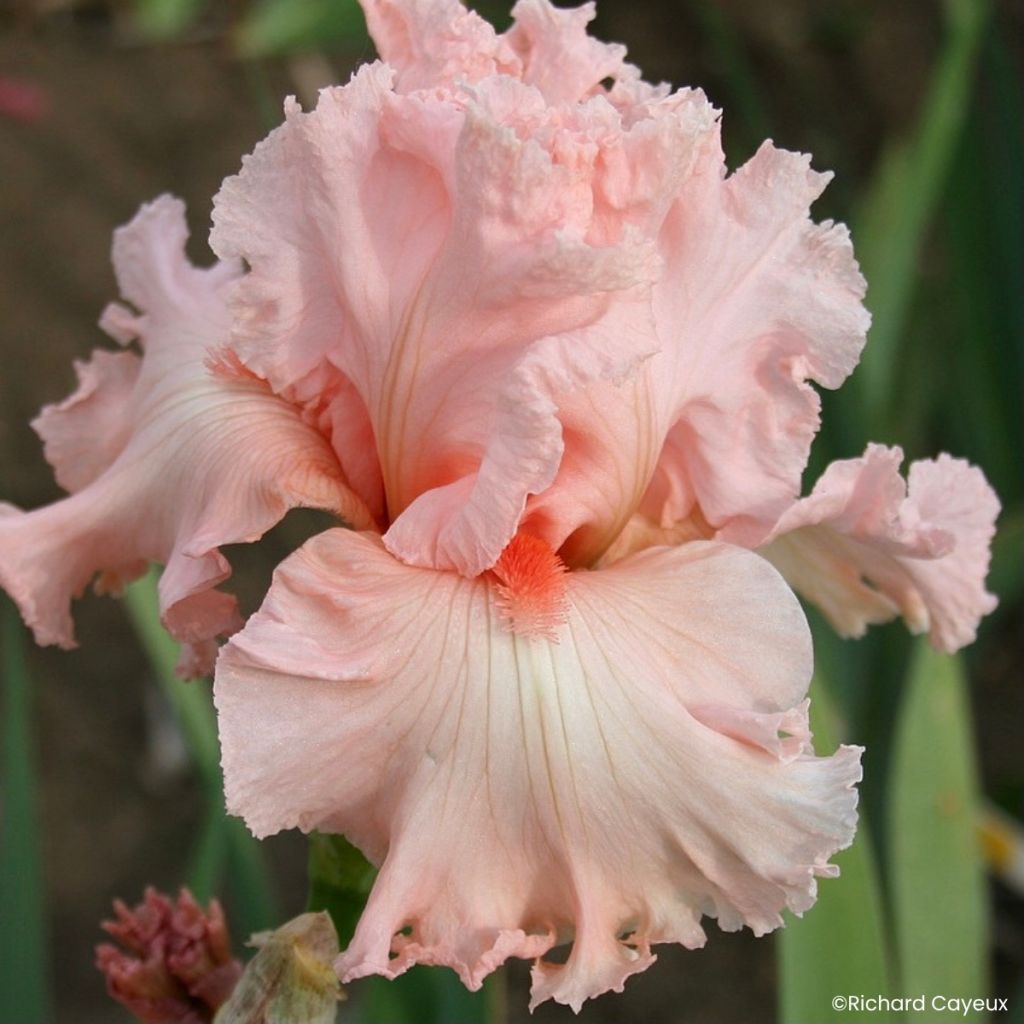
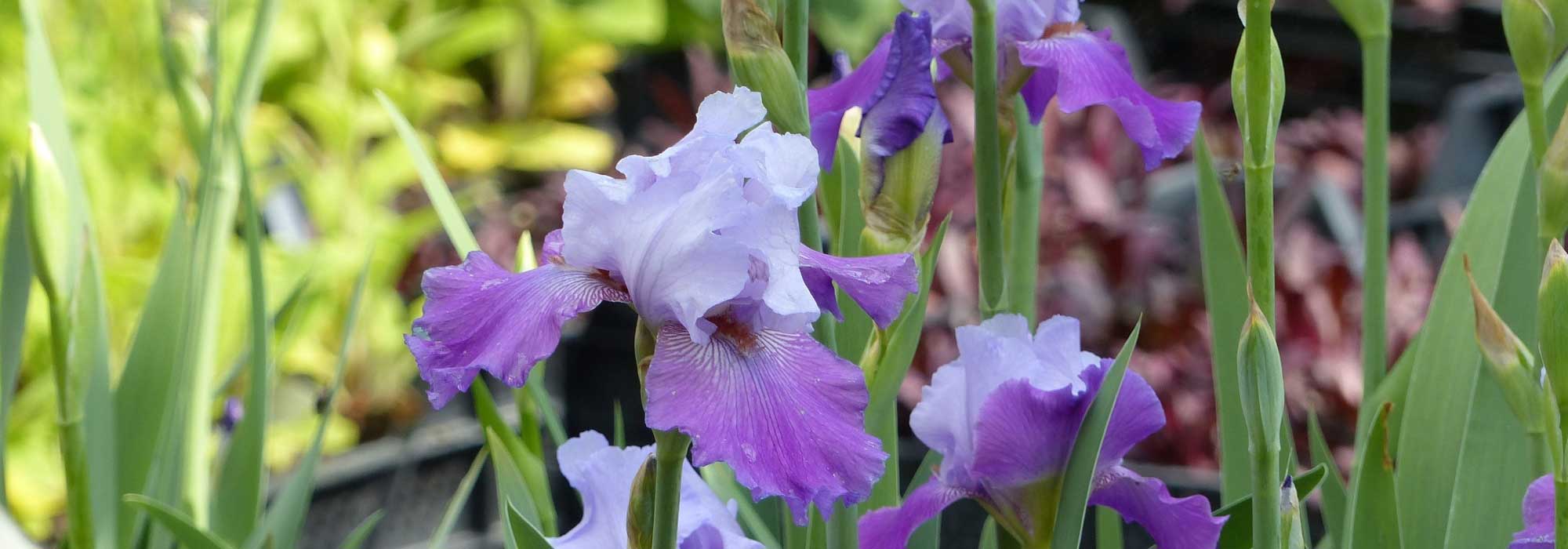
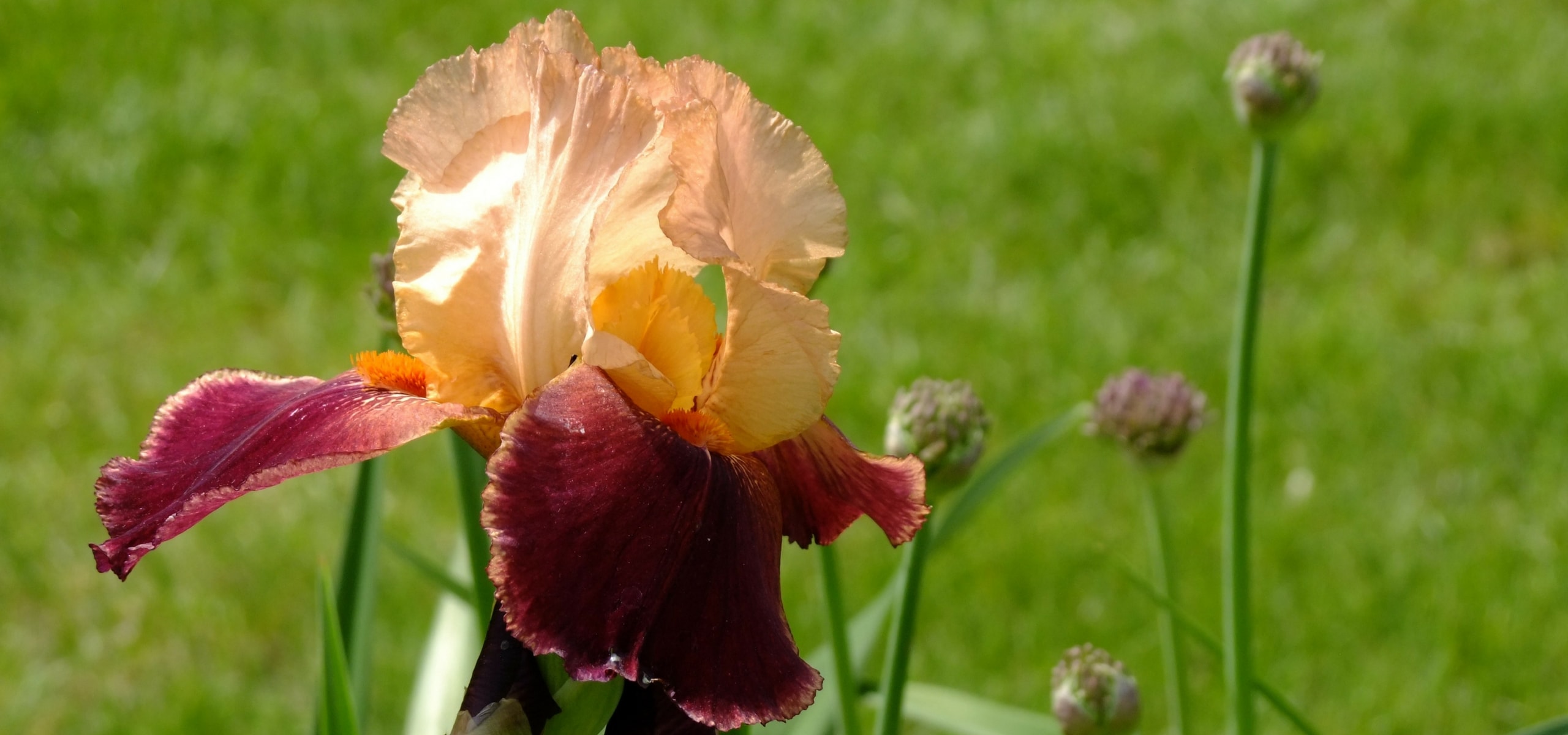
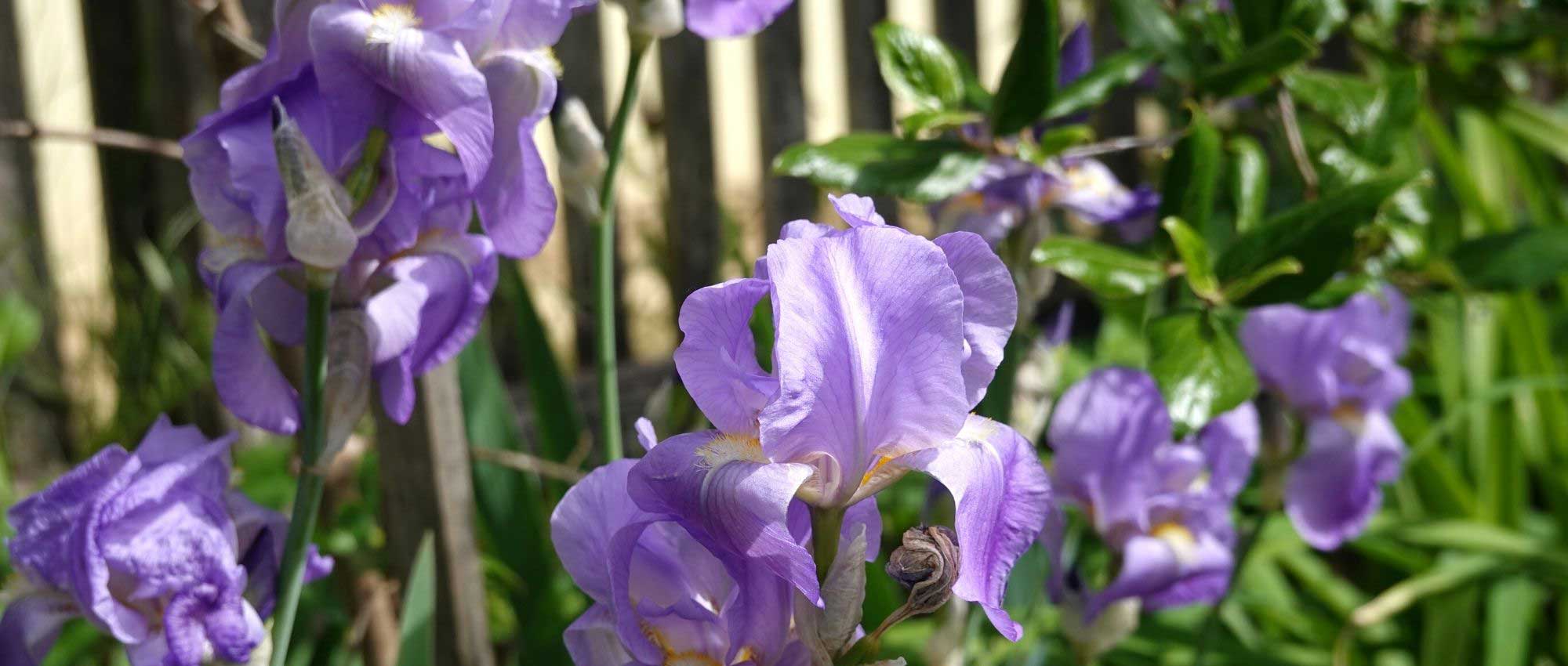
The Iris ‘Happenstance’ is a Tall Bearded Iris in light coral pink, interesting for its warm colour, its large well-formed flower and its vigour. Qualities that have earned it a fine track record. It is a pink iris with no mauve undertone, soft enough to accompany pastel perennials, but colourful enough to be clearly visible in the garden in full bloom. It is planted in a very sunny border, in well-drained soil, even chalky soil.
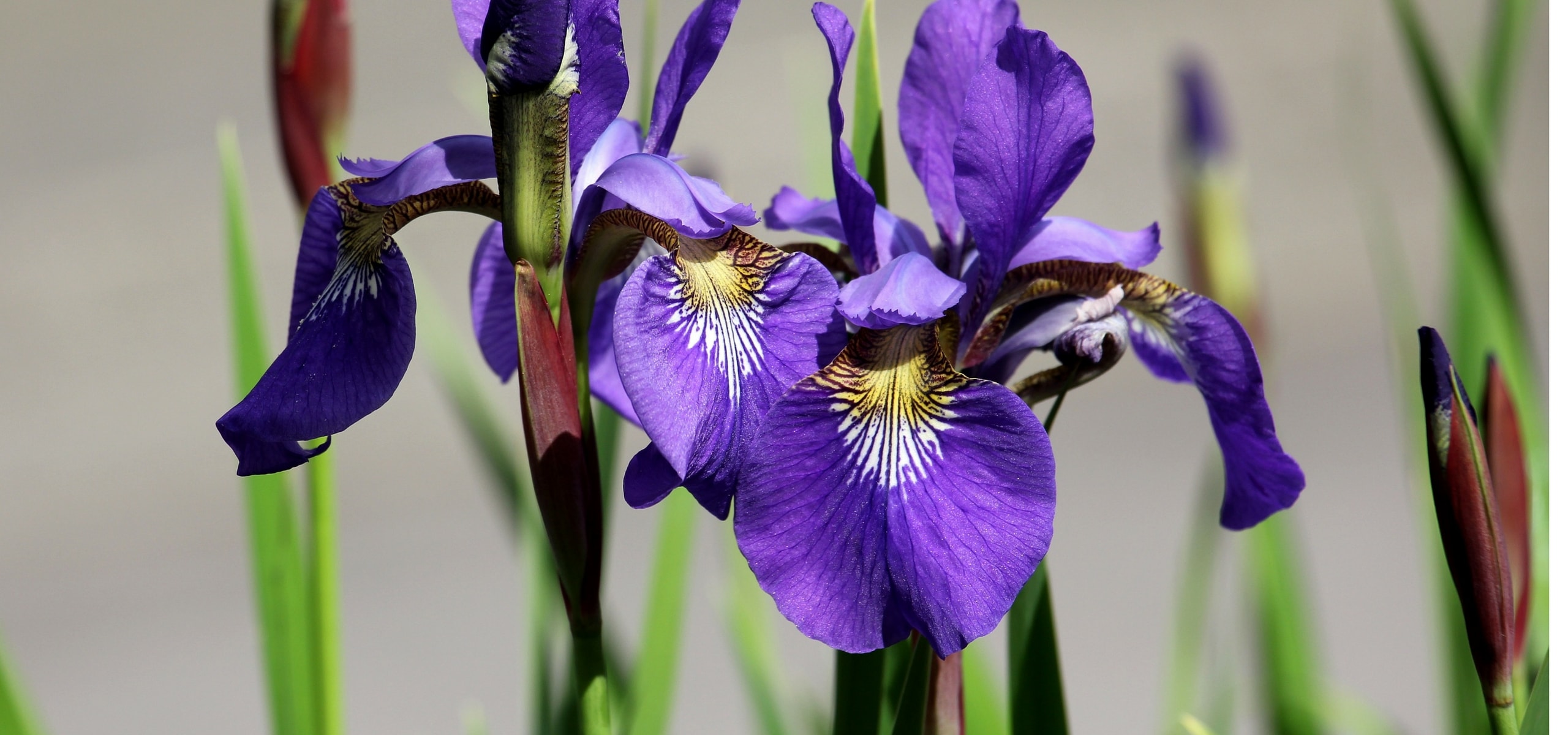
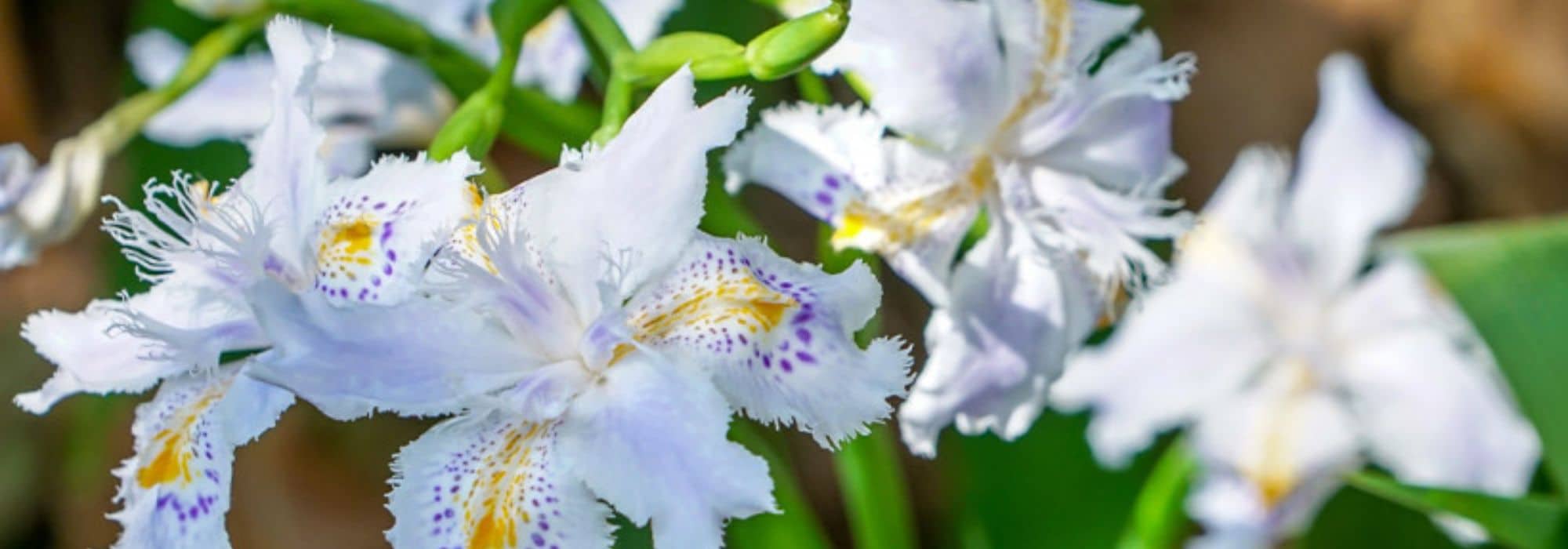
The plant reaches about 94 cm in height when in flower. Its clump gradually widens through rhizomes and forms, after a few years, an upright tuft 40 to 50 cm across. The leaves, narrow, stiff and glaucous green, are arranged in fans. The flowers are composed of 3 upright petals of a warm pink, surmounting 3 trailing sepals. These are paler in the centre, adorned at the base with coral red beards. Petals and sepals are undulate and strongly frilled at the edge. The branched flower stems bear several buds that open successively from top to bottom. It is a mid-season to late variety, flowering in May-June depending on the region.
'Happenstance' was raised in the USA by Keith Keppel and registered in 2000 under seedling number 93-139C. Its parentage combines the cultivars ‘Femme Fatale’, ‘Nefertiti’, ‘Playgirl’ and ‘Presence’, as well as ‘Social Event’. This variety received an Honourable Mention in 2002, the Award of Merit in 2004 and the Wister Medal in 2006. The latter is the main medal awarded by the American Iris Society to tall bearded irises.
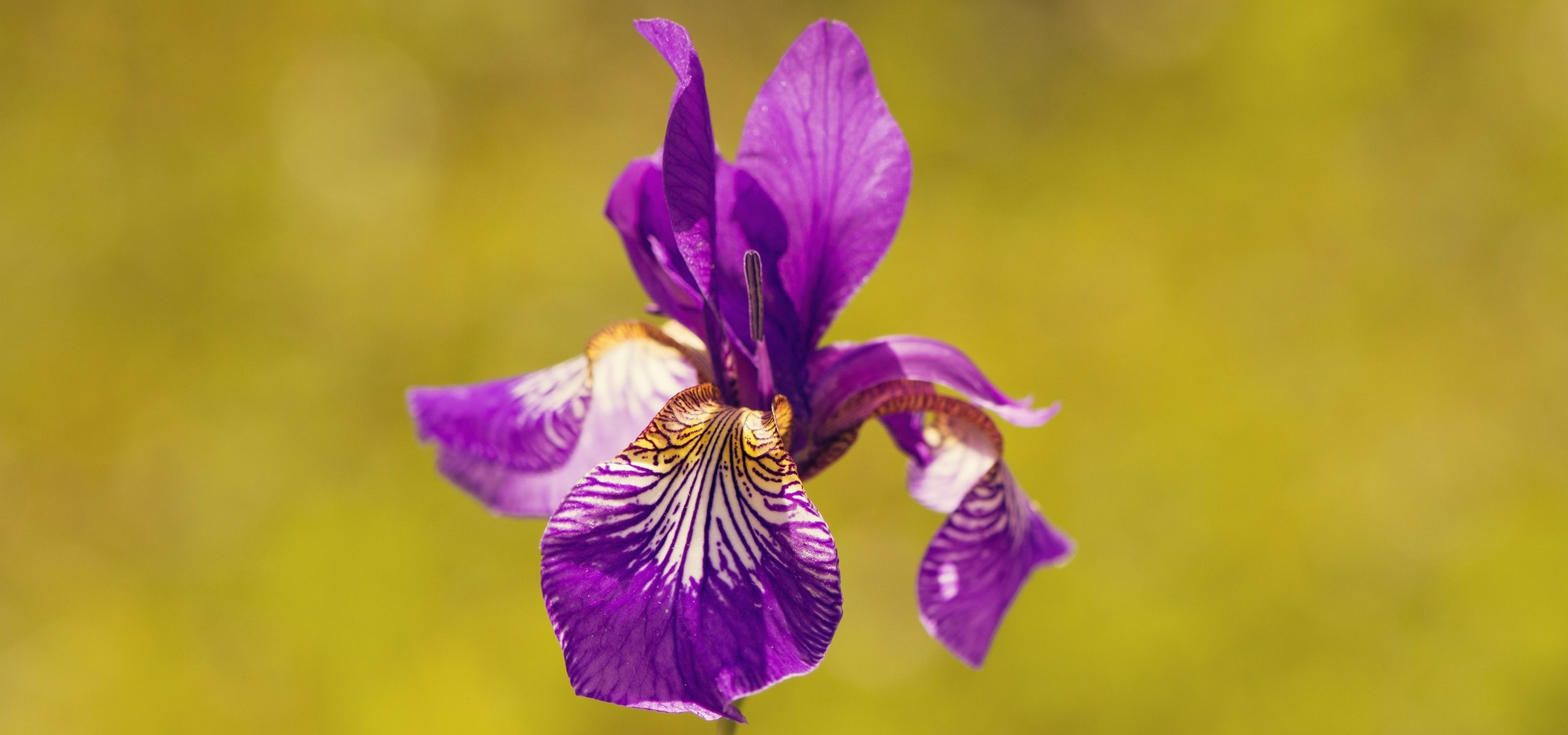
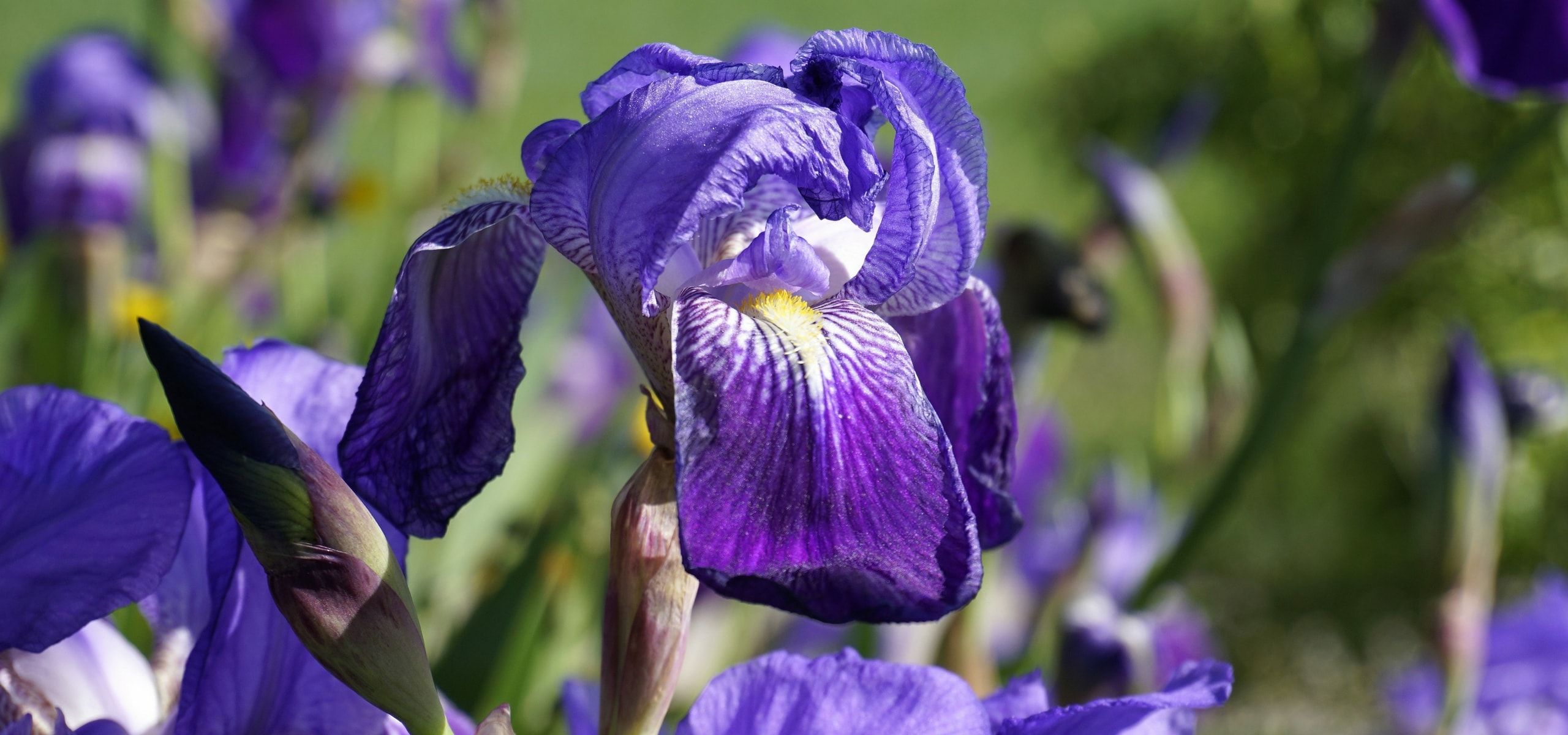
From a botanical point of view, the tall bearded iris cultivars belong to the large horticultural group Iris × germanica, an old European hybrid derived from Iris pallida and I. variegata. These are very hardy perennials in well-drained soil, able to withstand cold and summer drought once well established. The clump of leaves expands through the elongation of rhizomes at the periphery. When the centre becomes less floriferous, it should be divided after flowering or at the end of summer.
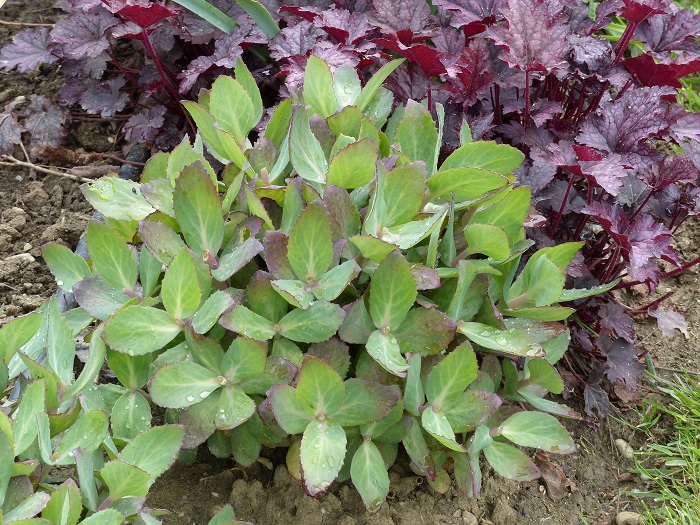
Plant the iris ‘Happenstance’ in groups of three rhizomes, spaced 35 to 40 cm apart. Slip a few bulbs of Allium aflatunense ‘Purple Sensation’ between the iris clumps, at a distance from the rhizomes, which will offer in May-June purple-violet balls above the foliage. Salvia nemorosa ‘Amethyst’ can be planted in small clumps on the sides of the border or in the gaps left free. At the back of your border, you can install Sedum ‘Matrona’ which flowers at the end of summer on purplish stems.
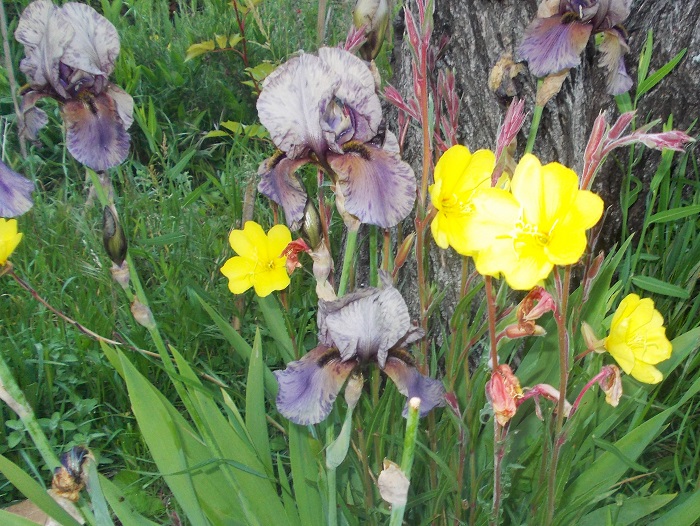
The vegetable garden can accommodate a few clumps of iris, along with other cut flowers, notably gladioli and hybrid lilies.
Flowering
Foliage
Plant habit
Botanical data
Iris
germanica
Happenstance
Iridaceae
Bearded Iris
Cultivar or hybrid
Planting and care
Plant the iris ‘Happenstance’ from July to October. Choose a very sunny position, with at least six hours of direct sunlight per day, as shade significantly reduces flowering. Install it in fertile, neutral to lime-rich soil, especially well-drained; in clay soil, loosen widely and add gravel or coarse sand to avoid stagnant water around the rootstock. Place the rootstock almost at the surface, with the upper side visible to the sun, and bury only the roots. Space plants 30 to 40 cm apart. Water at planting, then only in case of prolonged drought in the first year. Remove faded flowers, cut back flower stalks at the base, and remove dry leaves at the end of winter.
Divide the rootstocks every three or four years, in summer, when the centre of the clump flowers less.
Planting period
Intended location
Care
Planting & care advice
-
-
-
-
-
-
-
-
This item has not been reviewed yet - be the first to leave a review about it.
Recently viewed products
Haven't found what you were looking for?
Hardiness is the lowest winter temperature a plant can endure without suffering serious damage or even dying. However, hardiness is affected by location (a sheltered area, such as a patio), protection (winter cover) and soil type (hardiness is improved by well-drained soil).

The flowering period indicated on our website applies to countries and regions located in USDA zone 8 (France, the United Kingdom, Ireland, the Netherlands, etc.)
It will vary according to where you live:- In zones 9 to 10 (Italy, Spain, Greece, etc.), flowering will occur about 2 to 4 weeks earlier.
- In zones 6 to 7 (Germany, Poland, Slovenia, and lower mountainous regions), flowering will be delayed by 2 to 3 weeks.
- In zone 5 (Central Europe, Scandinavia), blooming will be delayed by 3 to 5 weeks.
In temperate climates, pruning of spring-flowering shrubs (forsythia, spireas, etc.) should be done just after flowering.
Pruning of summer-flowering shrubs (Indian Lilac, Perovskia, etc.) can be done in winter or spring.
In cold regions as well as with frost-sensitive plants, avoid pruning too early when severe frosts may still occur.
The planting period indicated on our website applies to countries and regions located in USDA zone 8 (France, United Kingdom, Ireland, Netherlands).
It will vary according to where you live:
- In Mediterranean zones (Marseille, Madrid, Milan, etc.), autumn and winter are the best planting periods.
- In continental zones (Strasbourg, Munich, Vienna, etc.), delay planting by 2 to 3 weeks in spring and bring it forward by 2 to 4 weeks in autumn.
- In mountainous regions (the Alps, Pyrenees, Carpathians, etc.), it is best to plant in late spring (May-June) or late summer (August-September).
The harvesting period indicated on our website applies to countries and regions in USDA zone 8 (France, England, Ireland, the Netherlands).
In colder areas (Scandinavia, Poland, Austria...) fruit and vegetable harvests are likely to be delayed by 3-4 weeks.
In warmer areas (Italy, Spain, Greece, etc.), harvesting will probably take place earlier, depending on weather conditions.
The sowing periods indicated on our website apply to countries and regions within USDA Zone 8 (France, UK, Ireland, Netherlands).
In colder areas (Scandinavia, Poland, Austria...), delay any outdoor sowing by 3-4 weeks, or sow under glass.
In warmer climes (Italy, Spain, Greece, etc.), bring outdoor sowing forward by a few weeks.
Shipping country and language
Your country of residence may be:
Your country of residence is:
For a better user experience on our website, you can select:
Your shipping country:
-
 Austria
-
 Belgium
-
 Bosnia & Herzegovina
-
 Bulgaria
-
 Croatia
-
 Cyprus
-
 Czechia
-
 Denmark
-
 Estonia
-
 Finland
-
 France
-
 Germany
-
 Greece
-
 Hungary
-
 Iceland
-
 Ireland
-
 Italy
Italy
-
 Latvia
-
 Liechtenstein
-
 Lithuania
-
 Luxembourg
-
 Malta
Malta
-
 Netherlands
-
 Poland
-
 Portugal
-
 Romania
-
 Serbia
-
 Slovakia
-
 Slovenia
-
 Spain
Spain
-
 Sweden
-
 Switzerland
Language:
-
French
-
 English
-
Spanish
-
Italian
-
German
-
Portuguese
-
Dutch
-
Finnish
My Account
Hello
My wish lists
My cart
Log in / Register
Existing customer?
This form is protected by reCAPTCHA - the Google Privacy Policy and Terms of Service apply.
New customer?
Create an account to track your orders, access our customer service and, if you wish, make the most of our upcoming offers.