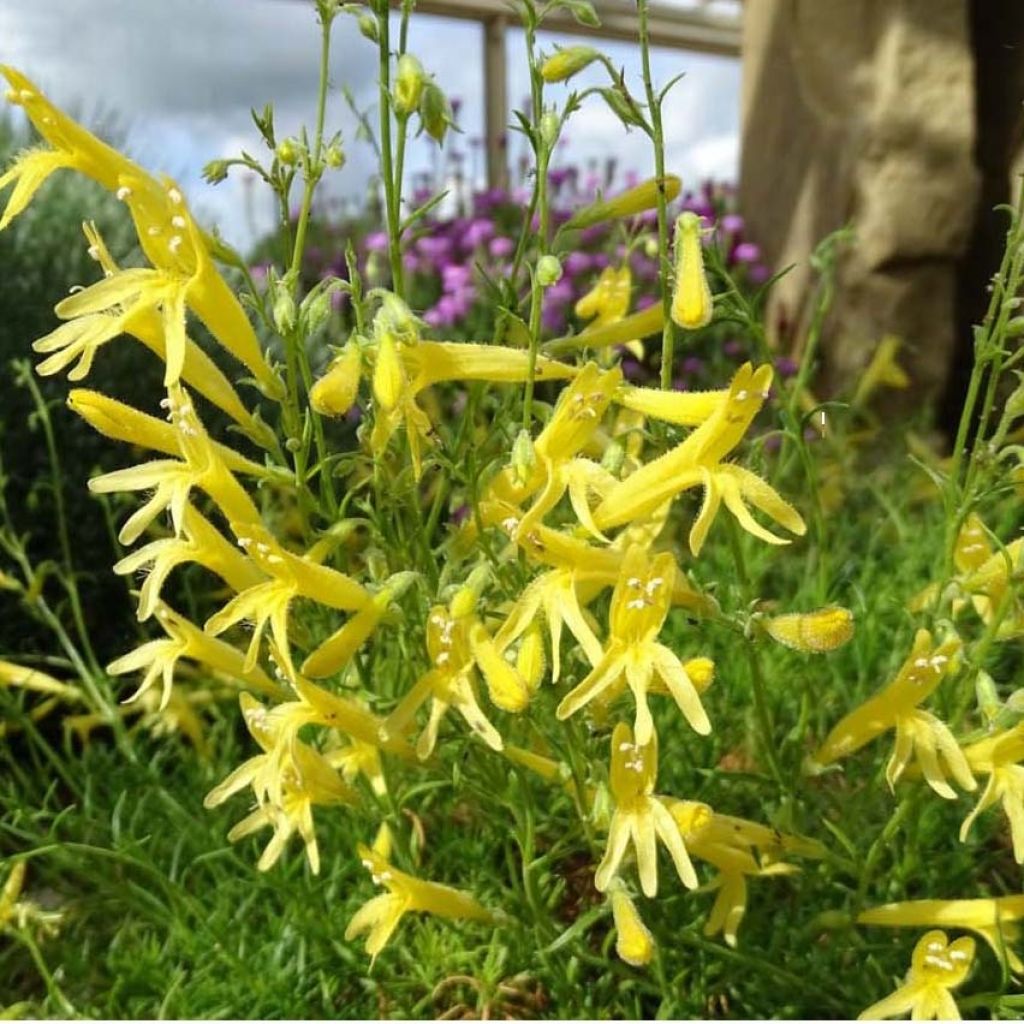
Penstemon pinifolius Mersea Yellow - Beardtongue
Penstemon pinifolius Mersea Yellow - Beardtongue
Penstemon pinifolius Mersea Yellow
Pine-leaved Penstemon
Back-to-school special offer!
Get €10 off for every €50 you spend! And get up to €40 off on a single order.
How does it work?
1. Shop your favourites
Add your favourite plants to your basket. For every €50 you spend (excluding delivery charges, store credit and the plastic-free option), you’ll receive a €10 voucher.
€50 spent = €10 voucher
€100 spent = €20 voucher
€150 spent = €30 voucher
€200 spent = €40 voucher
2. Place your order
Once your basket reaches one of the spending thresholds, place your order. You can even choose your delivery date!
3. Receive your voucher
As soon as your order has been shipped, you’ll receive an email containing your personal voucher code and its value.
4. Use it on your next order
Your voucher is valid for 90 days from the date you receive it. It can be used once only, on a new order worth at least the value of the voucher, excluding delivery charges.
Please note: Vouchers can be combined with other offers, but cannot be split or refunded.
Home or relay delivery (depending on size and destination)
Important: You may be charged customs duties by your country’s customs authorities upon delivery.
Schedule delivery date,
and select date in basket
This plant carries a 12 months recovery warranty
More information
We guarantee the quality of our plants for a full growing cycle, and will replace at our expense any plant that fails to recover under normal climatic and planting conditions.
Would this plant suit my garden?
Set up your Plantfit profile →
Description
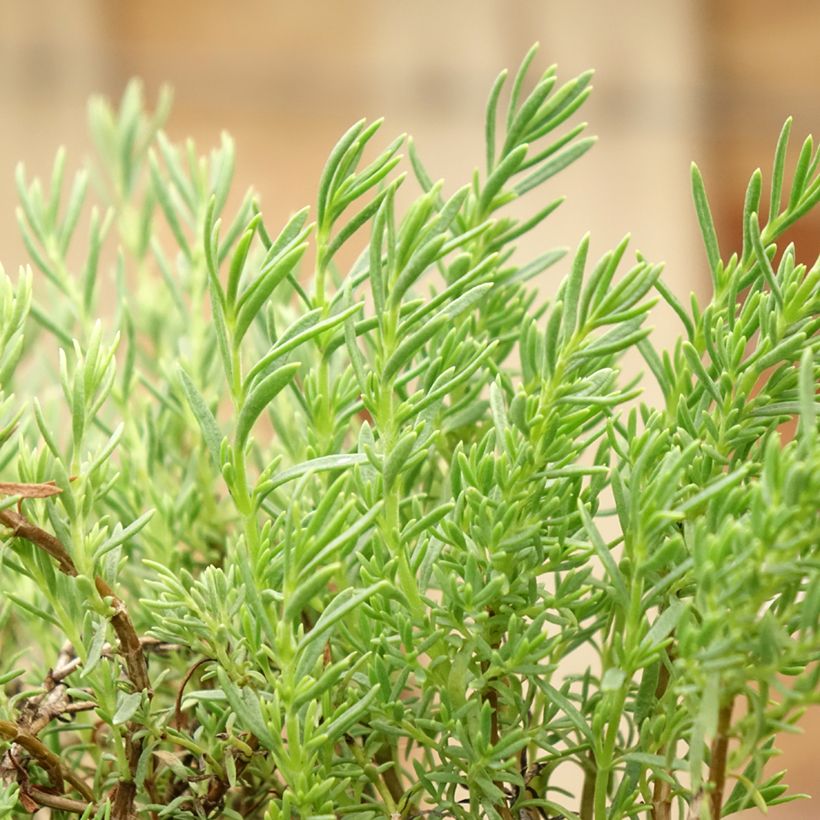
The Penstemon pinifolius 'Mersea Yellow' is a beautiful yellow variety of the Pineleaf Beardtongue, an evergreen undershrub with green needle-like foliage. Less common in our gardens than its hybrid cousins, this pretty little beardtongue is perfect for adding touches of light and cheerfulness to the garden. Its light abundance of delicate bright yellow flowers is welcome in late summer. They appear just above a tuft of fine, evergreen, light green foliage. This penstemon is perfect for border planting or in a sunny rockery, where it will eventually form charming spreading cushions. It is planted in light, well-drained soil. Drought-resistant, it remains frost-sensitive, and its outdoor cultivation is reserved for mild climate regions. Elsewhere, it should be protected at the first signs of cold or reserved for pot cultivation that will be stored away for the winter.
The Penstemon pinifolius is an evergreen undershrub belonging to the family Scrophulariaceae. It originates from the Southwestern United States, particularly New Mexico and Arizona. Its needle-like foliage recognizes it, hence the name Pineleaf Beardtongue. It forms a low, spreading cushion, measuring about 30 cm (12in) in height and 60 cm (24in) in width. The variety 'Mersea Yellow' has retained many of the characteristics of this plant. Depending on the climate, it forms a dense, persistent to semi-persistent tuft consisting of fine, linear, light green foliage, from which floral stems emerge in the second half of summer. The flowers in long tubular bells are individually distributed along the stem. They display a bright yellow hue, both soft and vibrant. A multitude of seeds are dispersed after flowering.
The Penstemon pinifolius is still relatively underused in gardens. Yet it would be such a shame to miss out on this charming species! The Mersea Yellow cultivar is wonderful in a border of well-drained beds, in front of shrubby salvias, linear plants, and grasses like Stipa tenuifolia or Muhlenbergia capillaris. This cheerful, wild-looking plant can accompany annual poppies, blue aster flowers, and damask nigellas. As a rockery and well-drained soil plant, it integrates perfectly into mineral atmospheres, gravel gardens, on either side of a stone staircase or gently cascading from a granite trough. Not very hardy, it will need protection in winter or be reserved for gardens in mild climates.
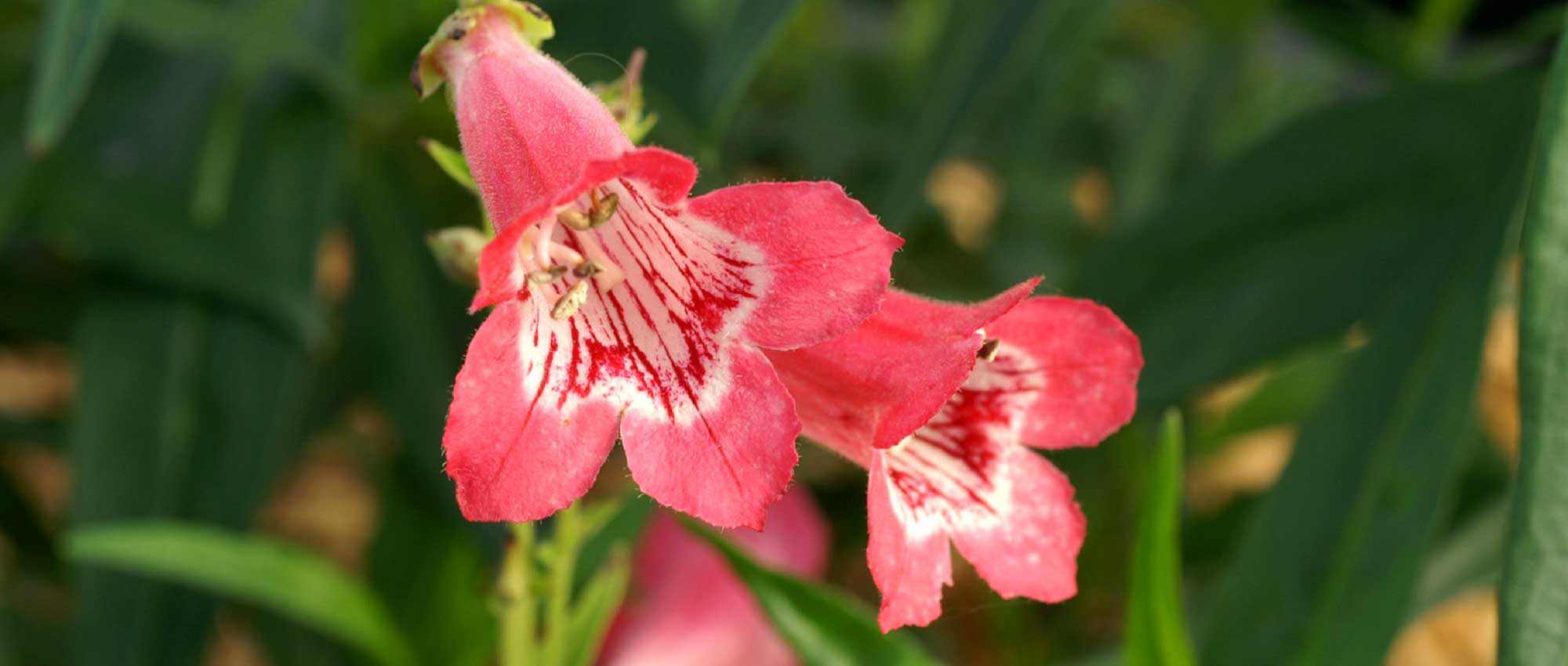
Penstemon pinifolius Mersea Yellow - Beardtongue in pictures
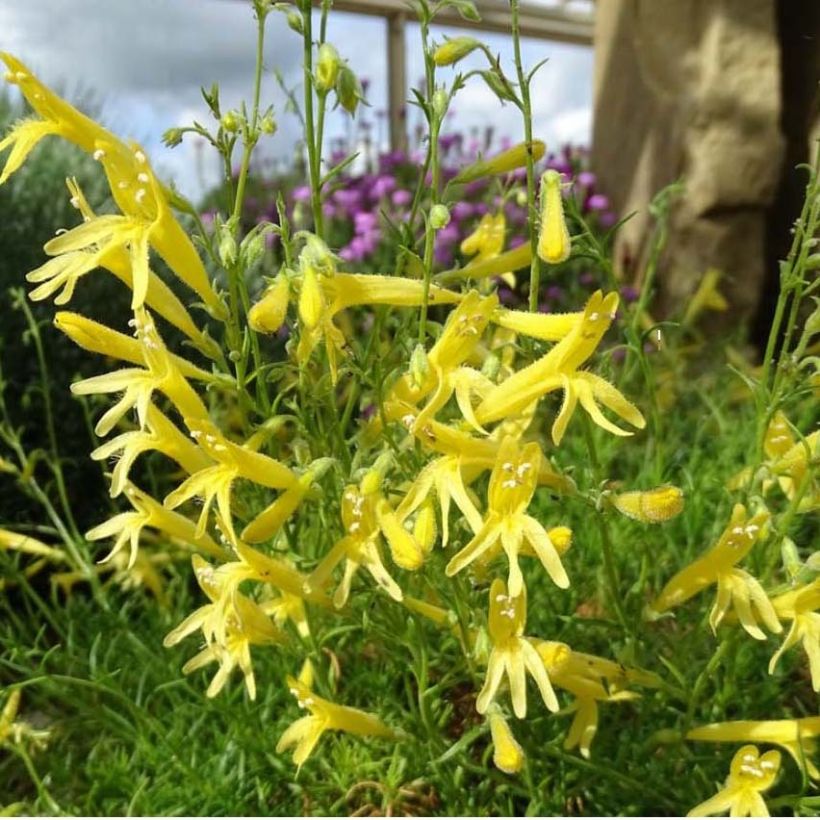
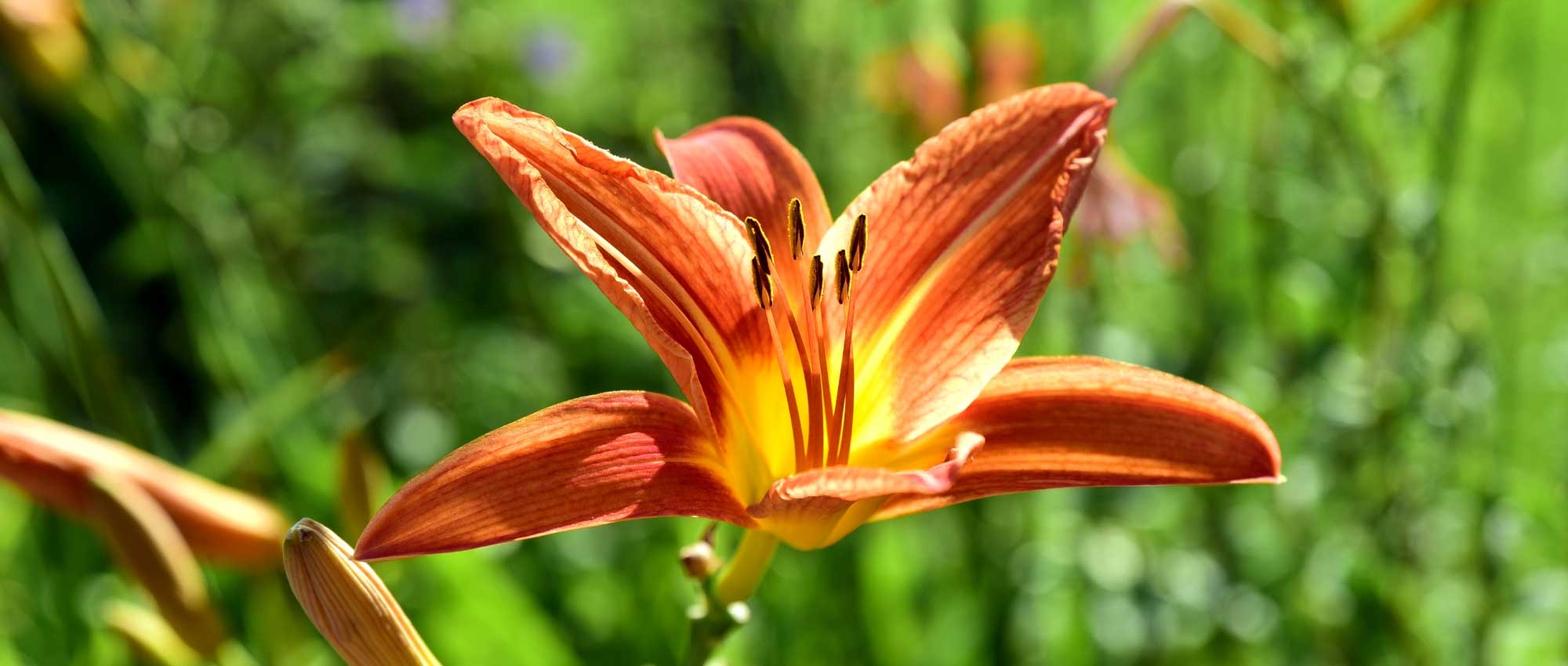
Flowering
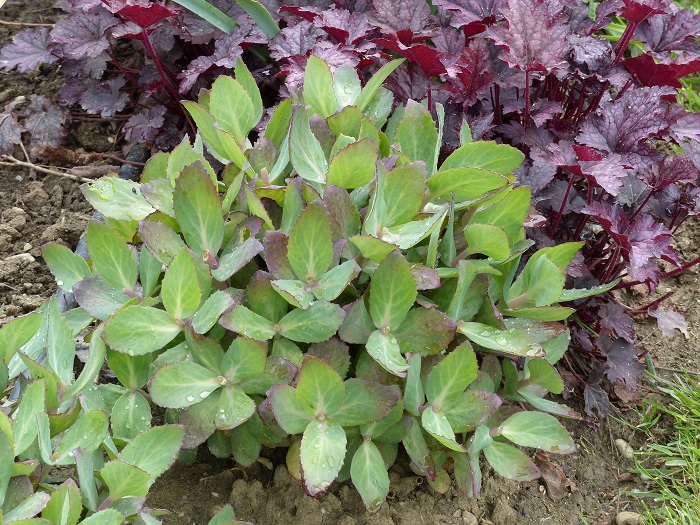
Foliage
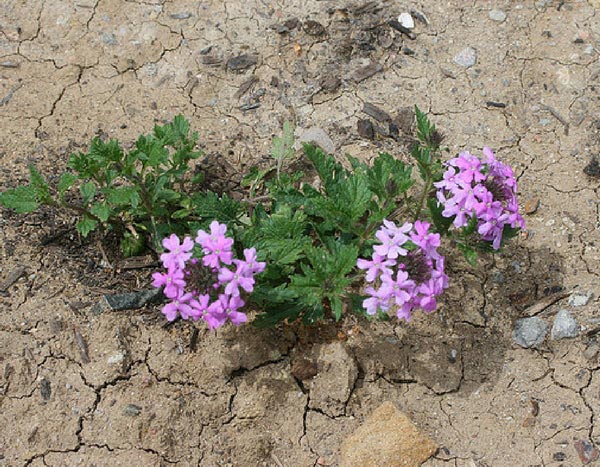
Plant habit
Botanical data
Penstemon
pinifolius
Mersea Yellow
Scrophulariaceae (Plantaginaceae)
Pine-leaved Penstemon
North America
Planting and care
Penstemon pinifolius is a plant that requires specific growing conditions. It does not tolerate long, wet and cold winters, so it is best planted in well-drained soil that is exposed to the sun and slightly cool. If the soil is heavy, it is recommended to mix it with coarse river sand or gravel and loosen it to a depth of 50 cm (20in).
For successful cultivation of botanical penstemons, the soil and climate are important. Well-drained soil is crucial, especially in winter, to avoid rotting in excessively moist soils. In addition, these plants do not live long in overly rich-soils. For cool climates, it is best to place the plants in warm and sunny locations that are protected from cold winds, preferably with a south or west exposure. For hot climates, it is better to choose a rather cool and semi-shaded exposure.
Penstemons require minimal maintenance and are not prone to specific diseases. In autumn, faded flowers should be removed by slightly shortening the flowerless stems without cutting them to the ground, especially in regions with humid winters, where the foliage plays an important role in moisture regulation. Wait until March or April to shorten branches whose foliage has been damaged by the cold. Water regularly during dry summers to support flowering.
In the coldest regions, it is recommended to cover the basewith a glass or a frame to protect it from severe cold or opt for pot cultivation to store it for the winter. To rejuvenate the plant, divide your penstemons every three or four years, but wait until spring to perform this operation.
Planting period
Intended location
Care
Planting & care advice
-
-
-
-
-

-
-
-
This item has not been reviewed yet - be the first to leave a review about it.
Recently viewed products
Haven't found what you were looking for?
Hardiness is the lowest winter temperature a plant can endure without suffering serious damage or even dying. However, hardiness is affected by location (a sheltered area, such as a patio), protection (winter cover) and soil type (hardiness is improved by well-drained soil).

The flowering period indicated on our website applies to countries and regions located in USDA zone 8 (France, the United Kingdom, Ireland, the Netherlands, etc.)
It will vary according to where you live:- In zones 9 to 10 (Italy, Spain, Greece, etc.), flowering will occur about 2 to 4 weeks earlier.
- In zones 6 to 7 (Germany, Poland, Slovenia, and lower mountainous regions), flowering will be delayed by 2 to 3 weeks.
- In zone 5 (Central Europe, Scandinavia), blooming will be delayed by 3 to 5 weeks.
In temperate climates, pruning of spring-flowering shrubs (forsythia, spireas, etc.) should be done just after flowering.
Pruning of summer-flowering shrubs (Indian Lilac, Perovskia, etc.) can be done in winter or spring.
In cold regions as well as with frost-sensitive plants, avoid pruning too early when severe frosts may still occur.
The planting period indicated on our website applies to countries and regions located in USDA zone 8 (France, United Kingdom, Ireland, Netherlands).
It will vary according to where you live:
- In Mediterranean zones (Marseille, Madrid, Milan, etc.), autumn and winter are the best planting periods.
- In continental zones (Strasbourg, Munich, Vienna, etc.), delay planting by 2 to 3 weeks in spring and bring it forward by 2 to 4 weeks in autumn.
- In mountainous regions (the Alps, Pyrenees, Carpathians, etc.), it is best to plant in late spring (May-June) or late summer (August-September).
The harvesting period indicated on our website applies to countries and regions in USDA zone 8 (France, England, Ireland, the Netherlands).
In colder areas (Scandinavia, Poland, Austria...) fruit and vegetable harvests are likely to be delayed by 3-4 weeks.
In warmer areas (Italy, Spain, Greece, etc.), harvesting will probably take place earlier, depending on weather conditions.
The sowing periods indicated on our website apply to countries and regions within USDA Zone 8 (France, UK, Ireland, Netherlands).
In colder areas (Scandinavia, Poland, Austria...), delay any outdoor sowing by 3-4 weeks, or sow under glass.
In warmer climes (Italy, Spain, Greece, etc.), bring outdoor sowing forward by a few weeks.
Shipping country and language
Your country of residence may be:
Your country of residence is:
For a better user experience on our website, you can select:
Your shipping country:
-
 Austria
-
 Belgium
-
 Bosnia & Herzegovina
-
 Bulgaria
-
 Croatia
-
 Cyprus
-
 Czechia
-
 Denmark
-
 Estonia
-
 Finland
-
 France
-
 Germany
-
 Greece
-
 Hungary
-
 Iceland
-
 Ireland
-
 Italy
Italy
-
 Latvia
-
 Liechtenstein
-
 Lithuania
-
 Luxembourg
-
 Malta
Malta
-
 Netherlands
-
 Poland
-
 Portugal
-
 Romania
-
 Serbia
-
 Slovakia
-
 Slovenia
-
 Spain
Spain
-
 Sweden
-
 Switzerland
Language:
-
French
-
 English
-
Spanish
-
Italian
-
German
-
Portuguese
-
Dutch
-
Finnish
My Account
Hello
My wish lists
My cart
Log in / Register
Existing customer?
This form is protected by reCAPTCHA - the Google Privacy Policy and Terms of Service apply.
New customer?
Create an account to track your orders, access our customer service and, if you wish, make the most of our upcoming offers.