Eremophila maculata - Spotted emu bush
Eremophila maculata - Spotted emu bush
Eremophila maculata - Spotted emu bush
Eremophila maculata - Spotted emu bush
Eremophila maculata - Spotted emu bush
Eremophila maculata - Spotted emu bush
Eremophila maculata
Spotted emu bush, Spotted fuchsia-bush,
Back-to-school special offer!
Get €10 off for every €50 you spend! And get up to €40 off on a single order.
How does it work?
1. Shop your favourites
Add your favourite plants to your basket. For every €50 you spend (excluding delivery charges, store credit and the plastic-free option), you’ll receive a €10 voucher.
€50 spent = €10 voucher
€100 spent = €20 voucher
€150 spent = €30 voucher
€200 spent = €40 voucher
2. Place your order
Once your basket reaches one of the spending thresholds, place your order. You can even choose your delivery date!
3. Receive your voucher
As soon as your order has been shipped, you’ll receive an email containing your personal voucher code and its value.
4. Use it on your next order
Your voucher is valid for 90 days from the date you receive it. It can be used once only, on a new order worth at least the value of the voucher, excluding delivery charges.
Please note: Vouchers can be combined with other offers, but cannot be split or refunded.
Why not try an alternative variety in stock?
View all →
Available in 1 sizes
This plant carries a 24 months recovery warranty
More information
We guarantee the quality of our plants for a full growing cycle, and will replace at our expense any plant that fails to recover under normal climatic and planting conditions.
Would this plant suit my garden?
Set up your Plantfit profile →
Description
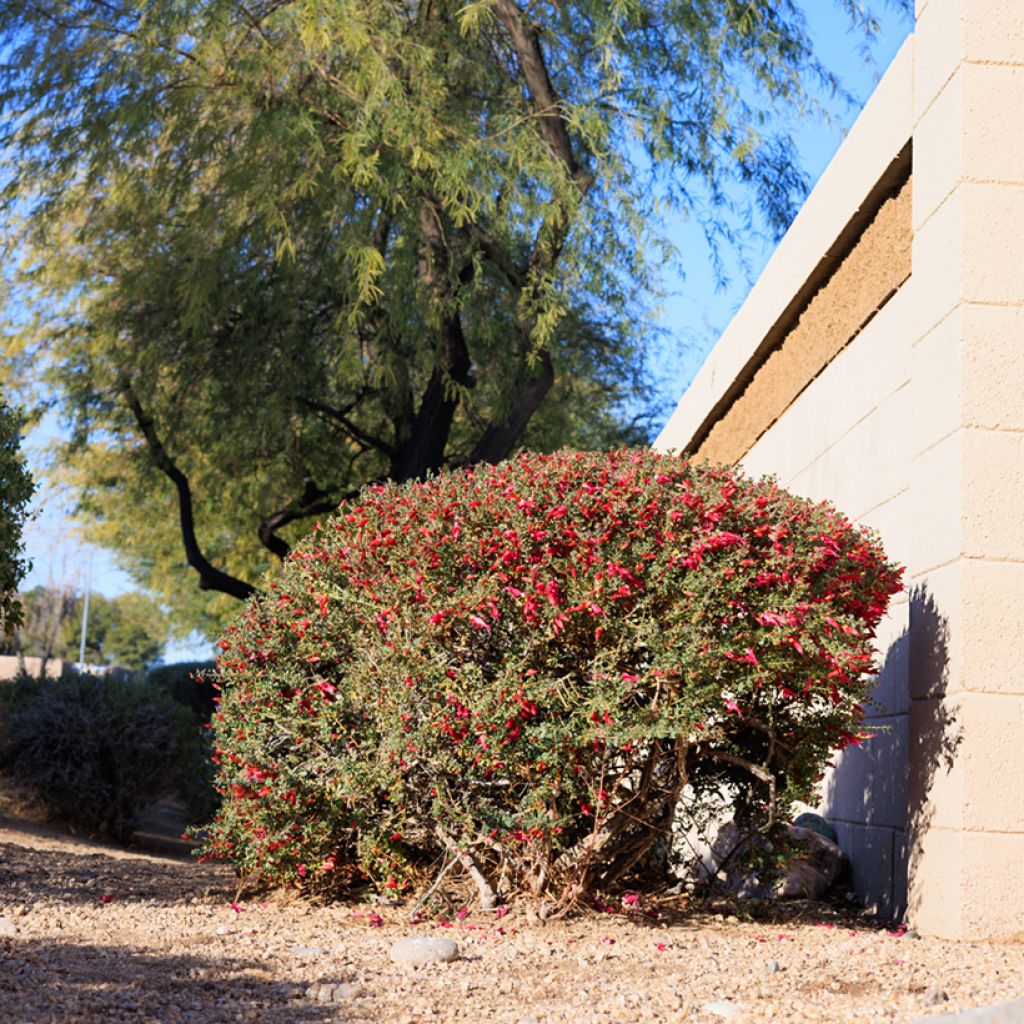
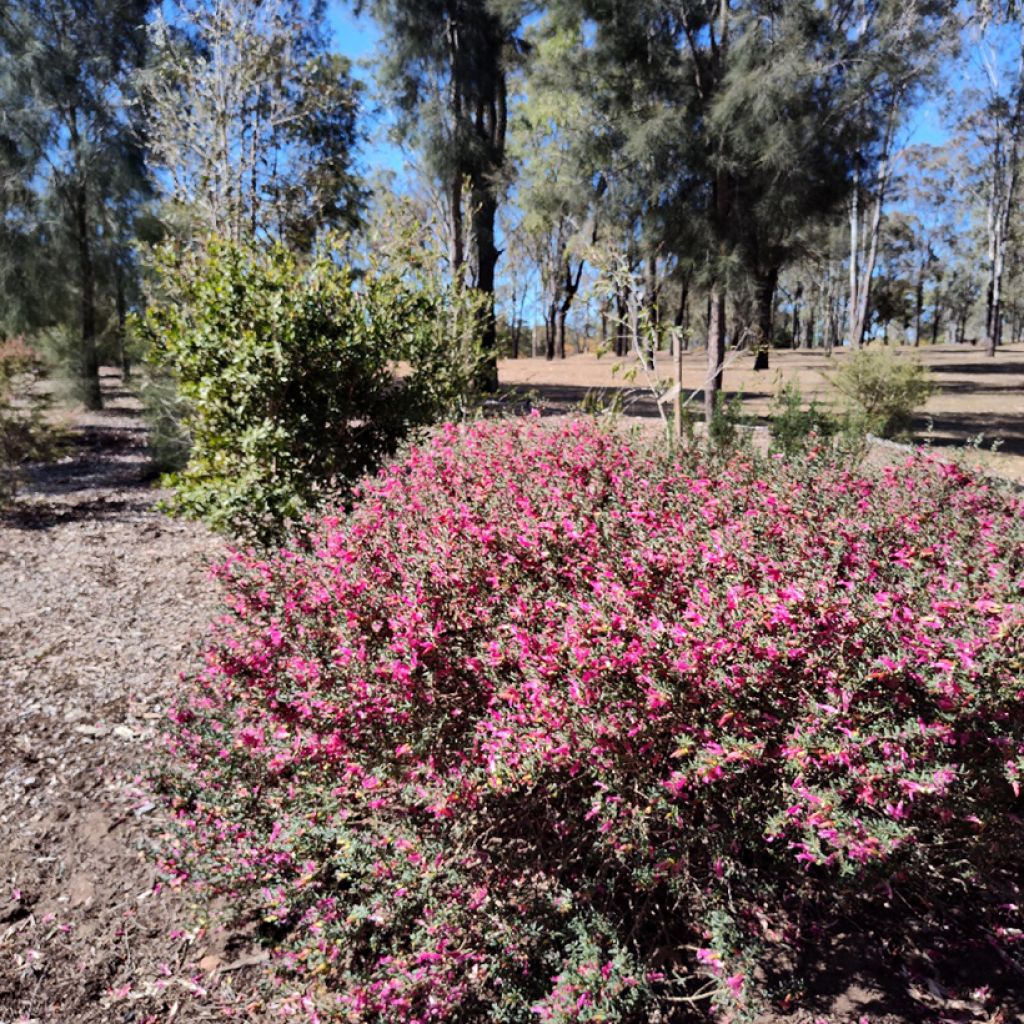
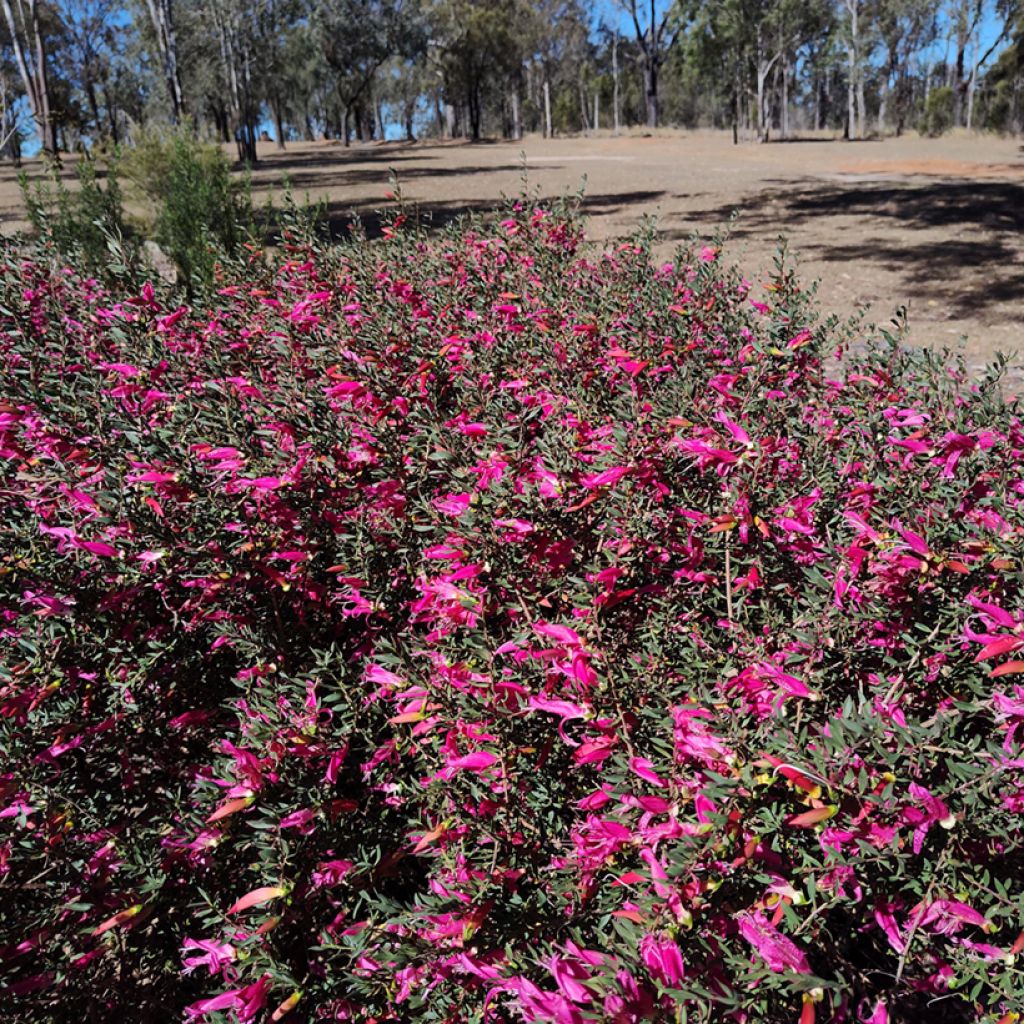
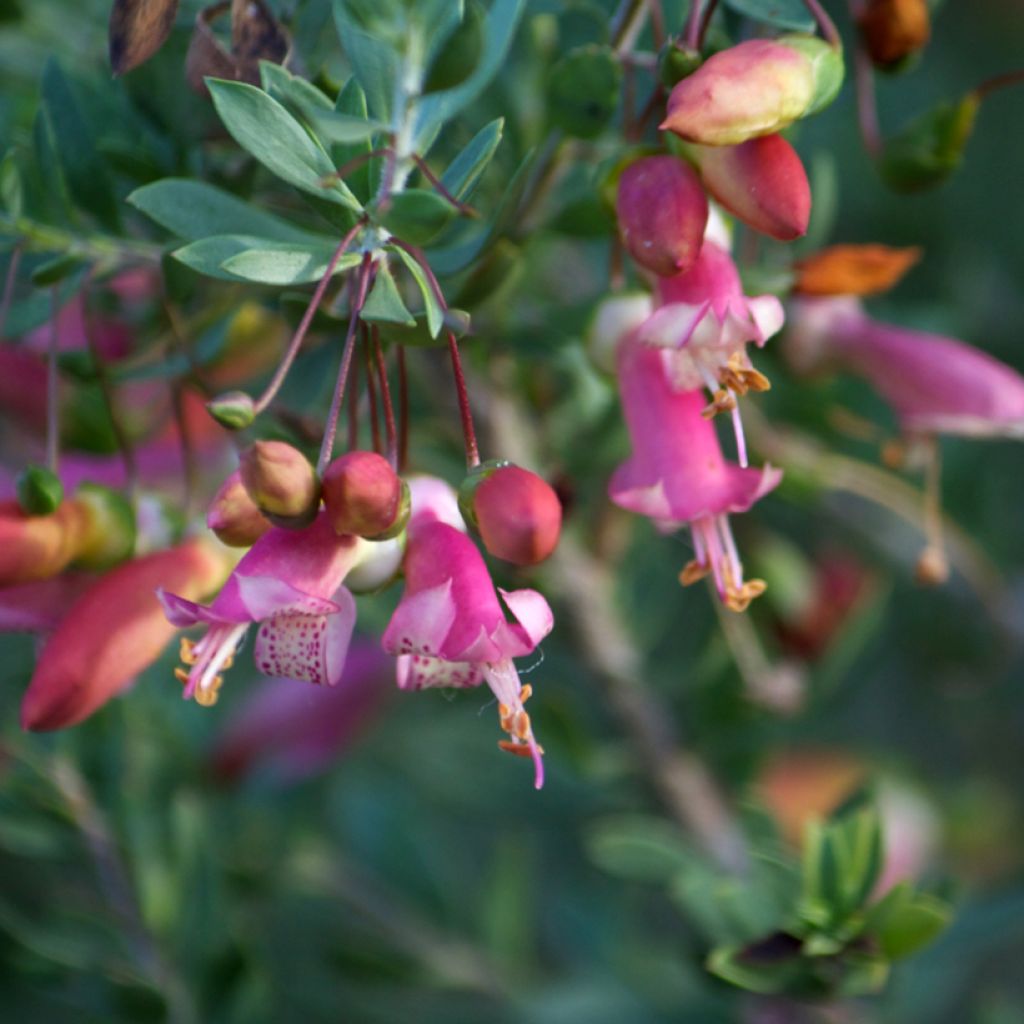
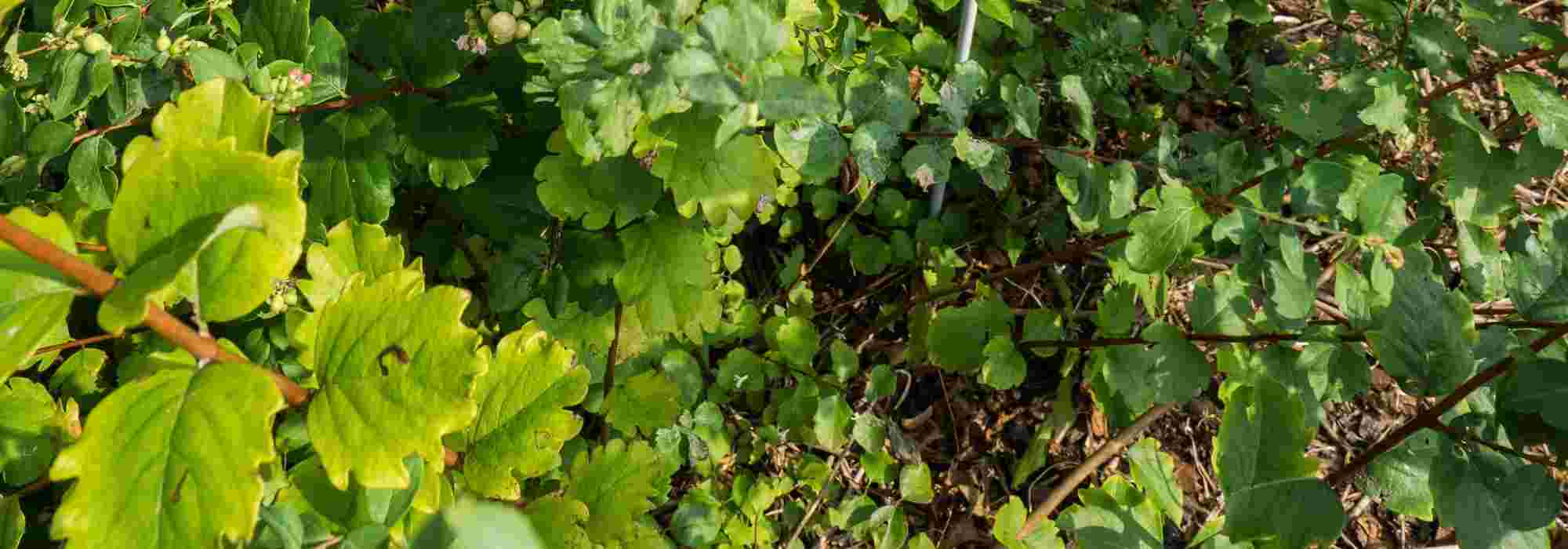
The Eremophila maculata is part of a group of small evergreen Australian shrubs curiously called Emu Bushes, very drought-resistant but frost-sensitive. It forms a wide and dense ball and has fine light green foliage. In spring, sometimes also in summer, delicate and pretty flowers with spots bloom among the foliage. Most often pink, they can be cherry, orange, or mauve depending on the plants. It is a very good plant for coastal gardens, especially those on the Mediterranean coast, which it enjoys the bright sun. It can also be grown in large pots, which allows the plant to be protected in winter.
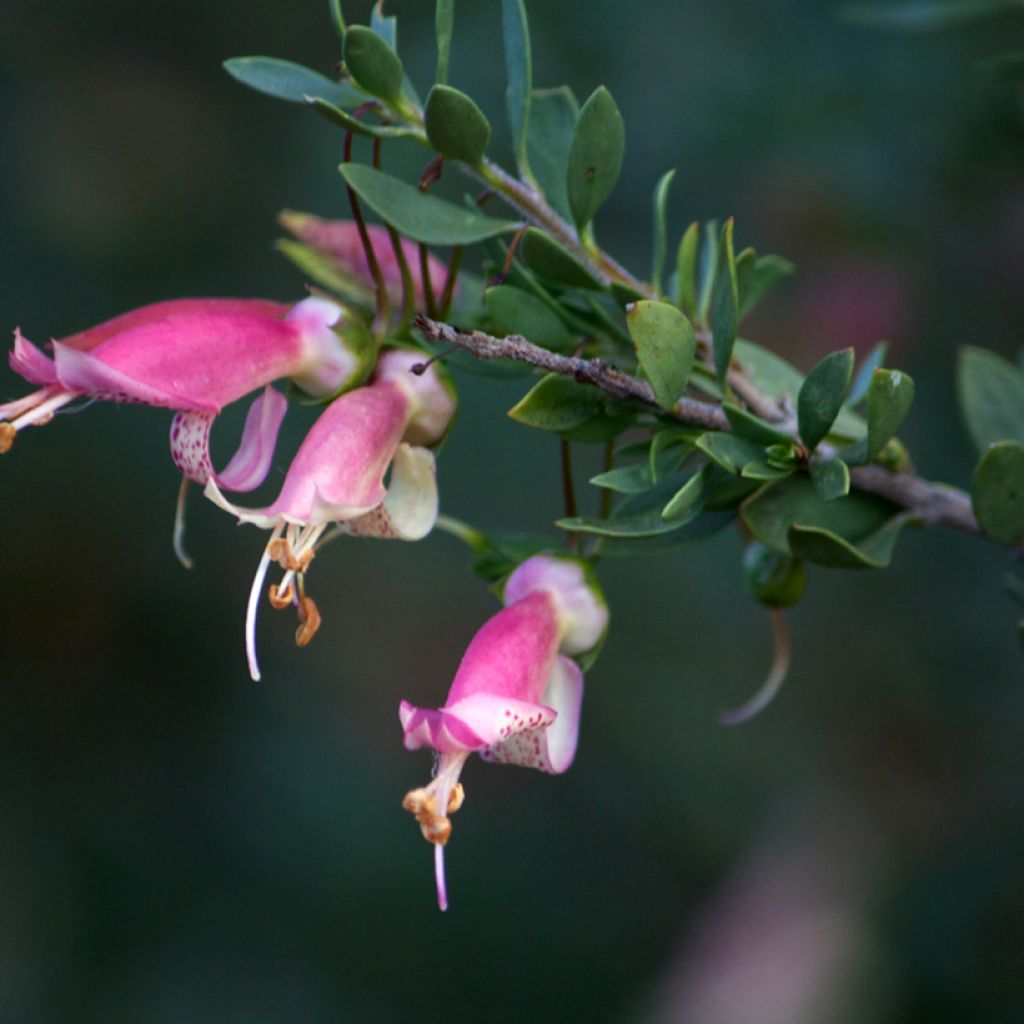
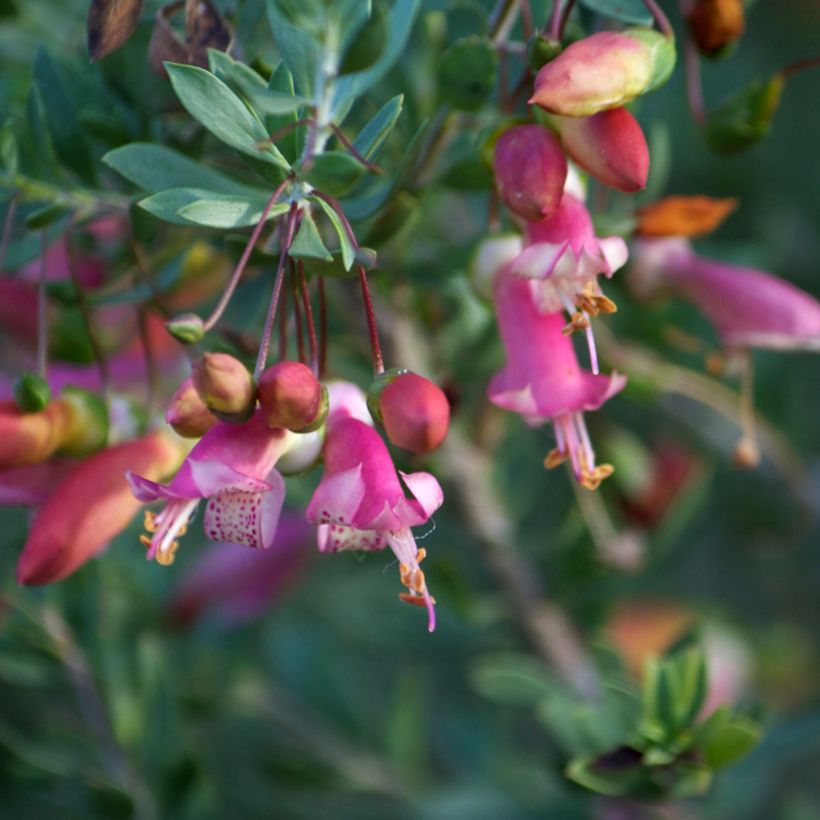
The Eremophila maculata is a shrub of the Scrophulariaceae or Myoporaceae family, depending on the classification. Eremophiles are bushes native to Australian regions with mild winters but hot and arid summers. This species, E. maculata, is the most widespread in nature and one of the most cultivated in gardens. It is found in Western and Southern Australia, the Northern Territory and Queensland, New South Wales, and Victoria. It is a spreading shrub, wider than it is tall, densely branched, which rarely exceeds 1m in height and 1.30m in width in our climates. The leaves of this shrub can have a variable shape (almost thread-like to almost circular), and the flowers can have different colours. The inside of the corolla is often spotted. The stems are upright, brittle, adorned with narrow, smooth, light green leaves. They are close together and arranged alternately on the branches. The spotted eremophila foliage persists in winter. The main flowering occurs in April-May, and sometimes again in summer. Solitary, tubular flowers, 4-5cm long, with 5 unequal lobes appear at the leaf axils. Each is carried by an S-shaped petiole. The inside of the corolla is hairy, and it releases 4 long stamens. After pollination, small dry, woody fruits with a beak form, which are difficult to spot in the vegetation. Eremophila seeds are very difficult to germinate because their dormancy requires specific conditions.
The Eremophila maculata should thrive in all gardens. It has a great effect in beds, rockeries, on slopes, but also as a low hedge to border a pathway, for example. Create a persistent, staggered flowering bed by combining the foliage and scents of lavenders (blue, white, pink), rosemary (creeping or upright), Atriplex, Teucrium fruticans Azureum, Leucophyllum frutescens, rockroses, catmints, santolines, and shrubby wormwoods. Its association with Polygala myrtifolia and creeping evergreen ceanothus is also very successful.
The genus name Eremophila comes from the Greek eremos (desert) and phileo (to love). It defines this group of shrubs that are mainly found in desert regions.
Report an error about the product description
Eremophila maculata - Spotted emu bush in pictures
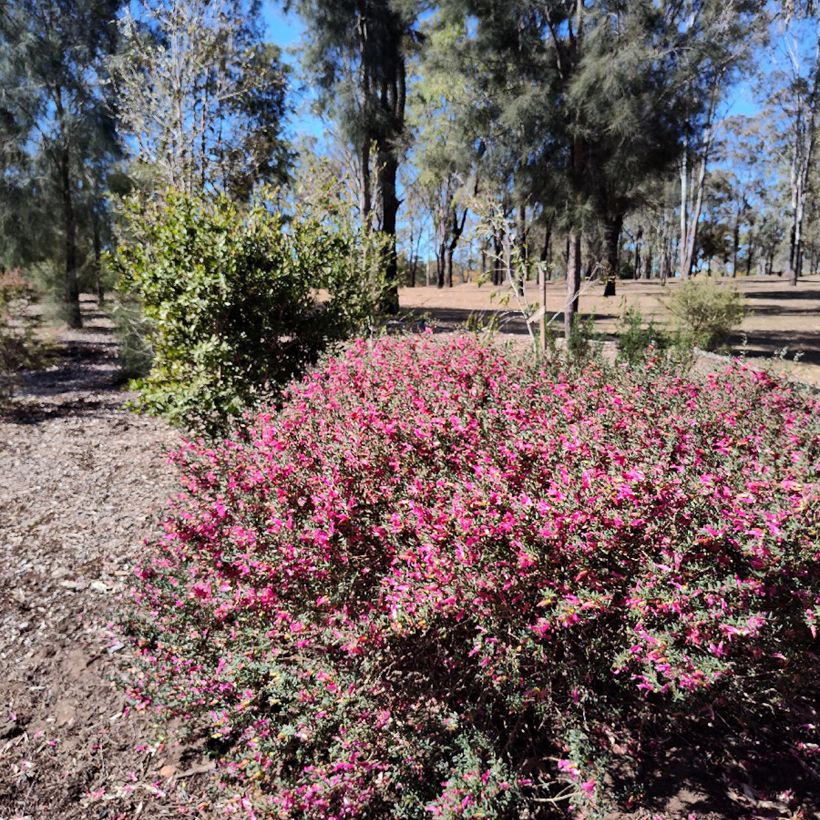
Plant habit
Flowering
Foliage
Botanical data
Eremophila
maculata
Scrophulariaceae (Myoporaceae)
Spotted emu bush, Spotted fuchsia-bush,
Australia
Planting and care
The Eremophila maculata is planted in the garden in spring or in September-October. It appreciates a sunny and sheltered position. This bush requires a well-drained soil, ideally sandy-loamy. It tolerates limestone well. Planting on slopes, in rockeries, or in gravel beds is necessary in climates that are more humid than the Mediterranean coast. This shrub can withstand sea spray and is hardy down to -4 or -5°C in extreme temperatures, after 2 or 3 years of cultivation and provided that the soil is sufficiently dry. It is a plant that thrives in a semi-arid climate and does not tolerate heavy frost, especially if the soil is heavy and moist. Otherwise, this Eremophila has the same cultivation requirements as cistus and lavender. Once well established, it has excellent drought resistance. You can apply a low-phosphorus fertiliser in autumn. Prune lightly after flowering to maintain a compact habit. Be careful, it does not tolerate severe pruning!
Beware of attacks from Australian scale insects in gardens where this pest is well established.
Pot cultivation: in a well-drained substrate, a mixture of potting soil, gravel, sand, and garden soil. Use a large container with drainage holes at the bottom and create a drainage layer composed of gravel, broken pottery shards, or clay pellets. Apply a low-phosphorus fertiliser in autumn. A plant grown in a pot should be regularly and deeply watered, but with enough time in between waterings to allow the soil to dry out a bit. Protect your potted plant from frost in winter, in a bright but unheated location.
Planting period
Intended location
Care
Planting & care advice
-

-
-

-

-
-
-

-

This item has not been reviewed yet - be the first to leave a review about it.
Recently viewed products
Haven't found what you were looking for?
Hardiness is the lowest winter temperature a plant can endure without suffering serious damage or even dying. However, hardiness is affected by location (a sheltered area, such as a patio), protection (winter cover) and soil type (hardiness is improved by well-drained soil).

The flowering period indicated on our website applies to countries and regions located in USDA zone 8 (France, the United Kingdom, Ireland, the Netherlands, etc.)
It will vary according to where you live:- In zones 9 to 10 (Italy, Spain, Greece, etc.), flowering will occur about 2 to 4 weeks earlier.
- In zones 6 to 7 (Germany, Poland, Slovenia, and lower mountainous regions), flowering will be delayed by 2 to 3 weeks.
- In zone 5 (Central Europe, Scandinavia), blooming will be delayed by 3 to 5 weeks.
In temperate climates, pruning of spring-flowering shrubs (forsythia, spireas, etc.) should be done just after flowering.
Pruning of summer-flowering shrubs (Indian Lilac, Perovskia, etc.) can be done in winter or spring.
In cold regions as well as with frost-sensitive plants, avoid pruning too early when severe frosts may still occur.
The planting period indicated on our website applies to countries and regions located in USDA zone 8 (France, United Kingdom, Ireland, Netherlands).
It will vary according to where you live:
- In Mediterranean zones (Marseille, Madrid, Milan, etc.), autumn and winter are the best planting periods.
- In continental zones (Strasbourg, Munich, Vienna, etc.), delay planting by 2 to 3 weeks in spring and bring it forward by 2 to 4 weeks in autumn.
- In mountainous regions (the Alps, Pyrenees, Carpathians, etc.), it is best to plant in late spring (May-June) or late summer (August-September).
The harvesting period indicated on our website applies to countries and regions in USDA zone 8 (France, England, Ireland, the Netherlands).
In colder areas (Scandinavia, Poland, Austria...) fruit and vegetable harvests are likely to be delayed by 3-4 weeks.
In warmer areas (Italy, Spain, Greece, etc.), harvesting will probably take place earlier, depending on weather conditions.
The sowing periods indicated on our website apply to countries and regions within USDA Zone 8 (France, UK, Ireland, Netherlands).
In colder areas (Scandinavia, Poland, Austria...), delay any outdoor sowing by 3-4 weeks, or sow under glass.
In warmer climes (Italy, Spain, Greece, etc.), bring outdoor sowing forward by a few weeks.
Shipping country and language
Your country of residence may be:
Your country of residence is:
For a better user experience on our website, you can select:
Your shipping country:
-
 Austria
-
 Belgium
-
 Bosnia & Herzegovina
-
 Bulgaria
-
 Croatia
-
 Cyprus
-
 Czechia
-
 Denmark
-
 Estonia
-
 Finland
-
 France
-
 Germany
-
 Greece
-
 Hungary
-
 Iceland
-
 Ireland
-
 Italy
Italy
-
 Latvia
-
 Liechtenstein
-
 Lithuania
-
 Luxembourg
-
 Malta
Malta
-
 Netherlands
-
 Poland
-
 Portugal
-
 Romania
-
 Serbia
-
 Slovakia
-
 Slovenia
-
 Spain
Spain
-
 Sweden
-
 Switzerland
Language:
-
French
-
 English
-
Spanish
-
Italian
-
German
-
Portuguese
-
Dutch
-
Finnish
My Account
Hello
My wish lists
My cart
Log in / Register
Existing customer?
This form is protected by reCAPTCHA - the Google Privacy Policy and Terms of Service apply.
New customer?
Create an account to track your orders, access our customer service and, if you wish, make the most of our upcoming offers.