Lilium Peppard Gold - Martagon Lily
Lilium Peppard Gold - Martagon Lily
Lilium Peppard Gold - Martagon Lily
Lilium Peppard Gold - Martagon Lily
Lilium Peppard Gold - Martagon Lily
Lilium Peppard Gold - Martagon Lily
Lilium Peppard Gold - Martagon Lily
Lilium x martagon Peppard Gold
Martagon Lily, Turk's Cap Lily
Thanks to the individuals (Anne Flore for order preparation and ? from the shipping department), the bulb I received appears to be healthy. Planted near the 'Lady Of Shalott' rose, I am now patiently waiting for it to take root... (or not?).
Thierry, 24/03/2023
Back-to-school special offer!
Get €10 off for every €50 you spend! And get up to €40 off on a single order.
How does it work?
1. Shop your favourites
Add your favourite plants to your basket. For every €50 you spend (excluding delivery charges, store credit and the plastic-free option), you’ll receive a €10 voucher.
€50 spent = €10 voucher
€100 spent = €20 voucher
€150 spent = €30 voucher
€200 spent = €40 voucher
2. Place your order
Once your basket reaches one of the spending thresholds, place your order. You can even choose your delivery date!
3. Receive your voucher
As soon as your order has been shipped, you’ll receive an email containing your personal voucher code and its value.
4. Use it on your next order
Your voucher is valid for 90 days from the date you receive it. It can be used once only, on a new order worth at least the value of the voucher, excluding delivery charges.
Please note: Vouchers can be combined with other offers, but cannot be split or refunded.
Why not try an alternative variety in stock?
View all →
Available in 1 sizes
This plant carries a 6 months recovery warranty
More information
We guarantee the quality of our plants for a full growing cycle, and will replace at our expense any plant that fails to recover under normal climatic and planting conditions.
Would this plant suit my garden?
Set up your Plantfit profile →
Description
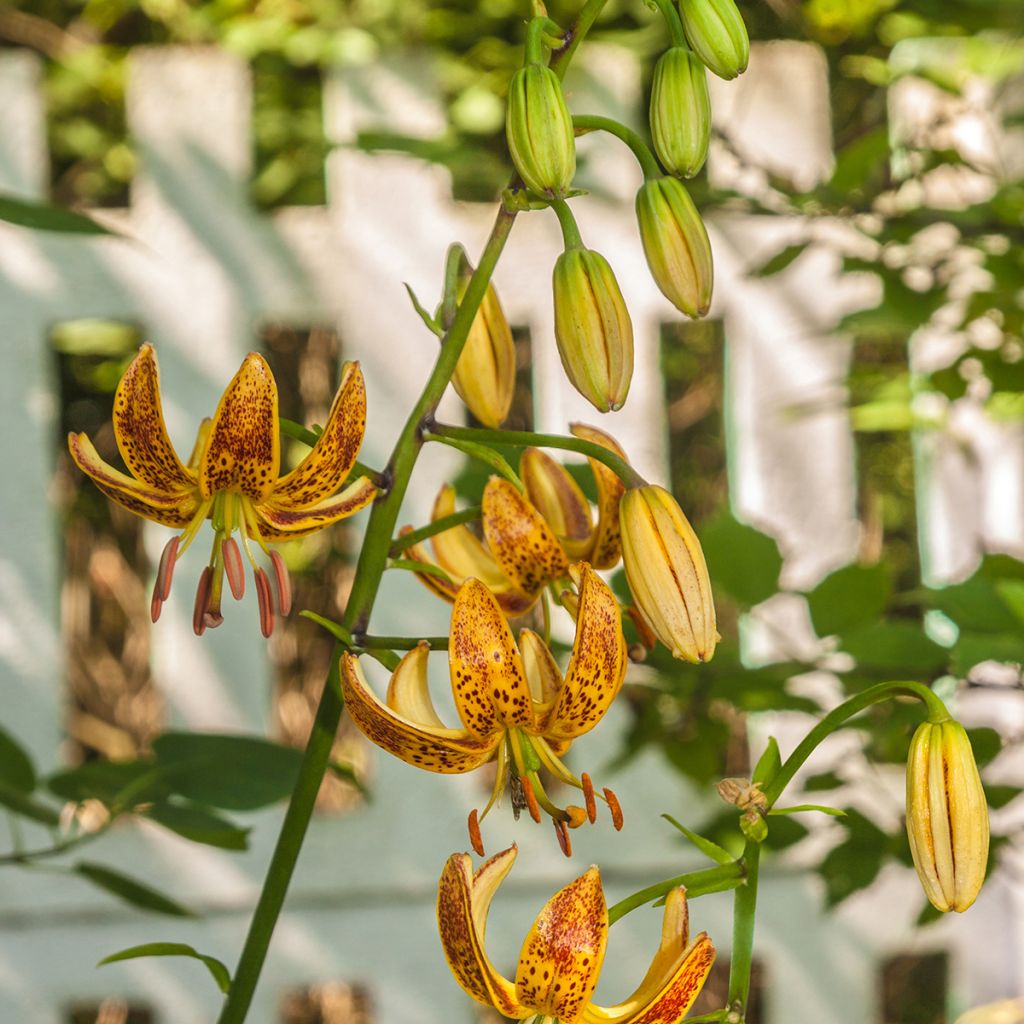
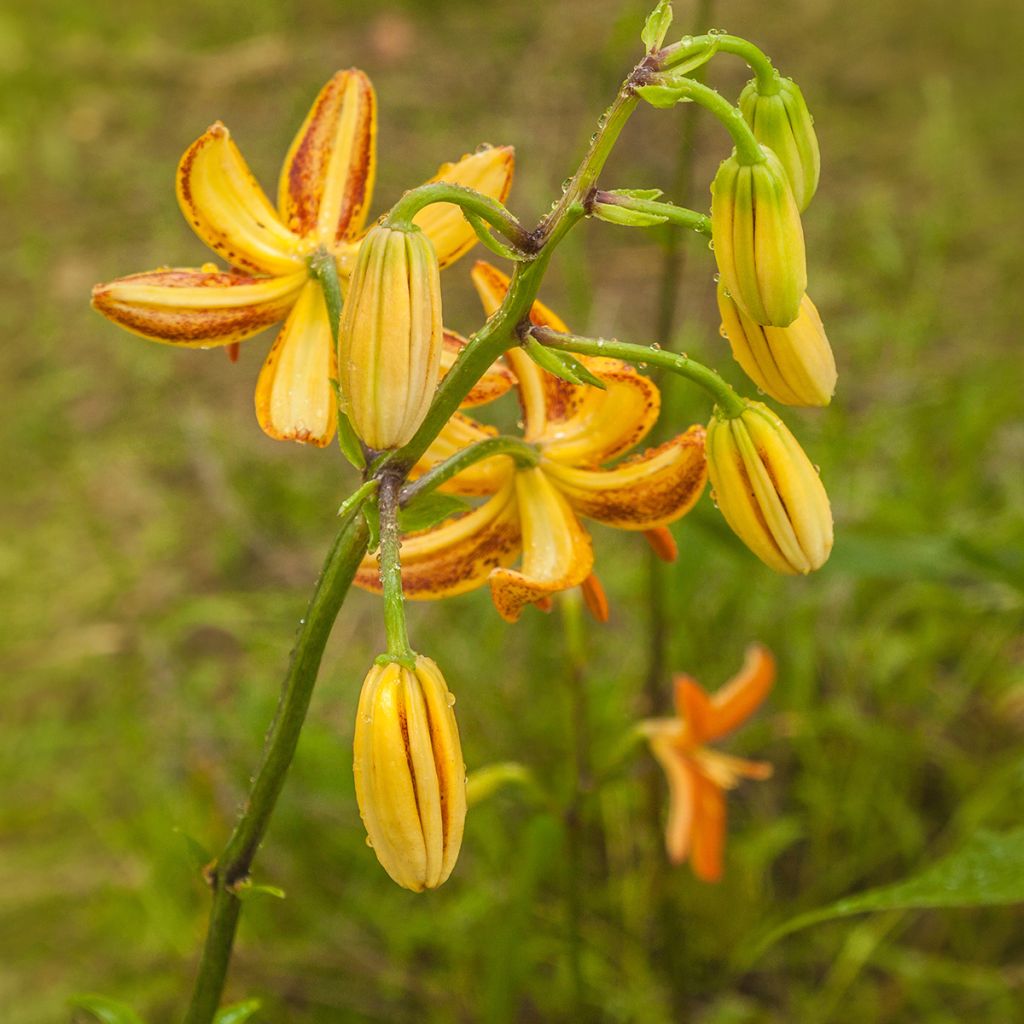
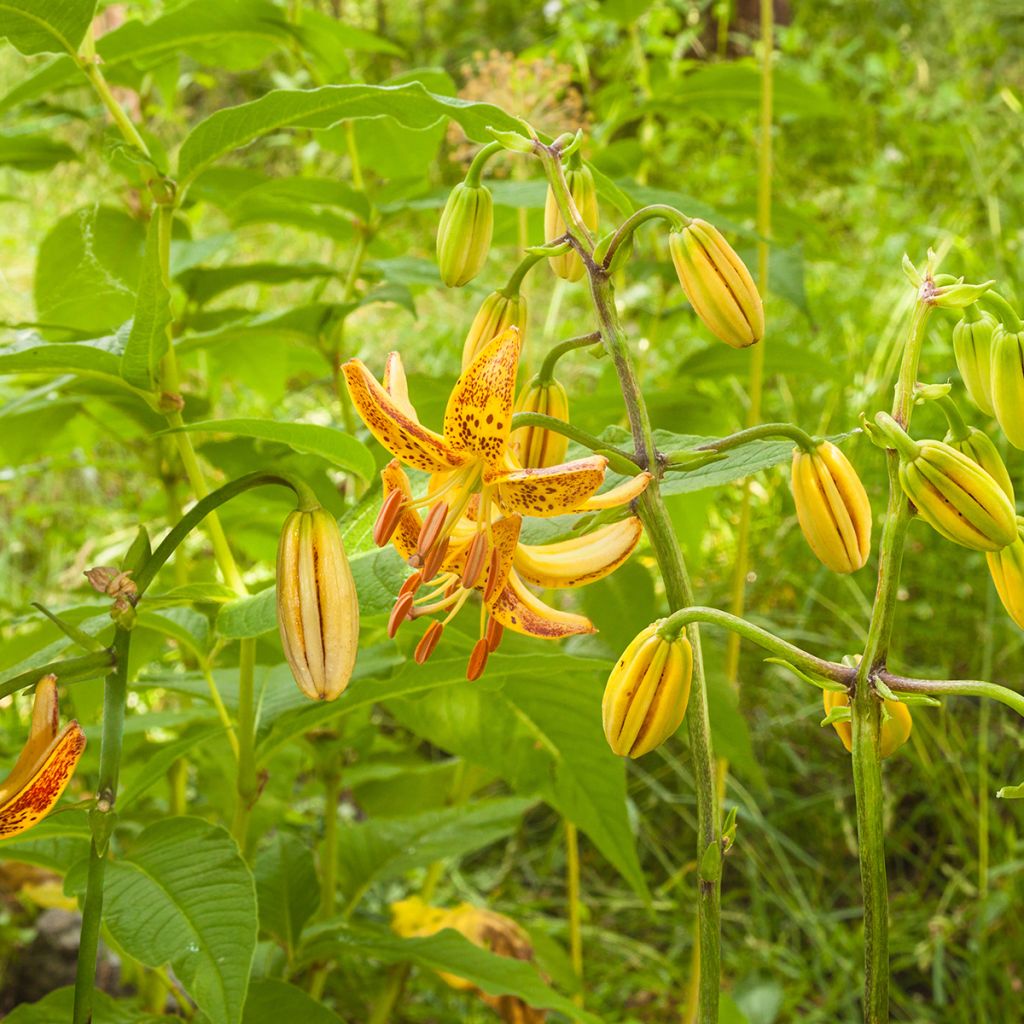
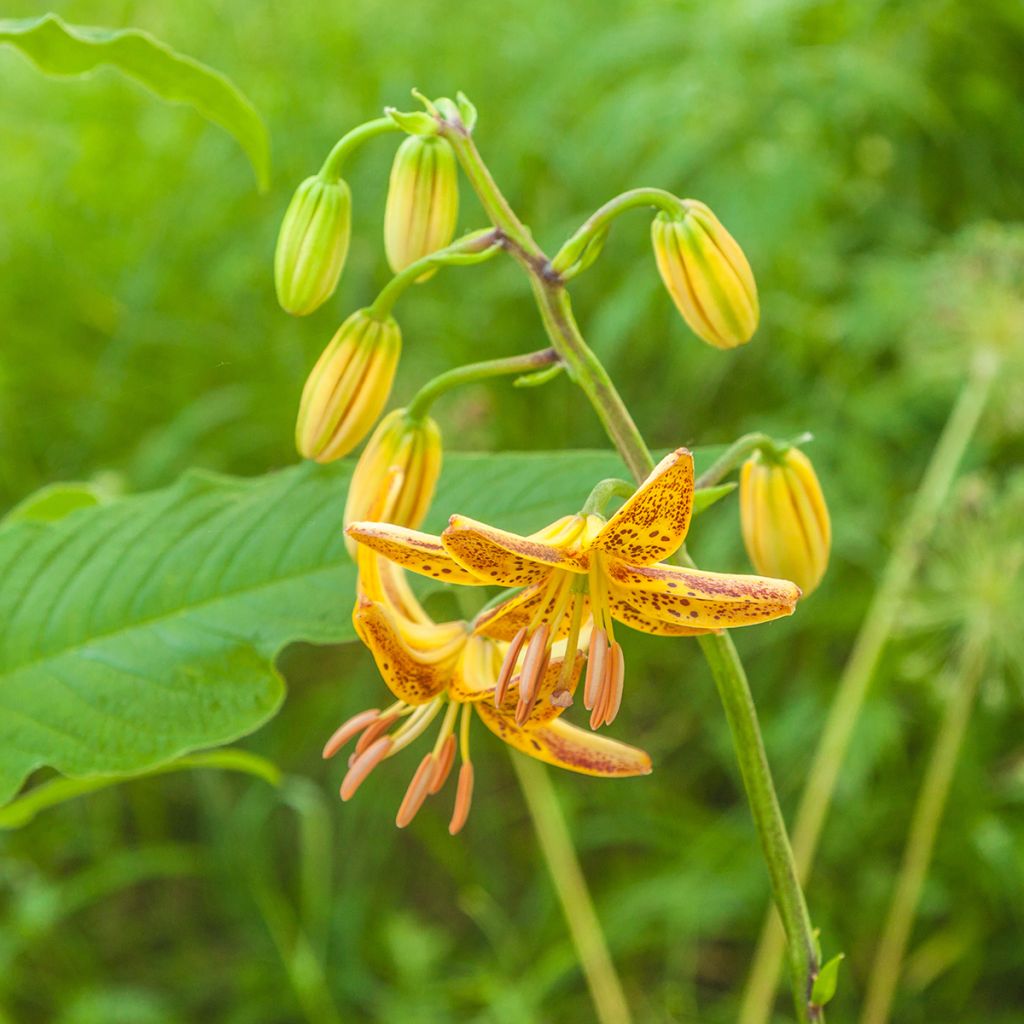
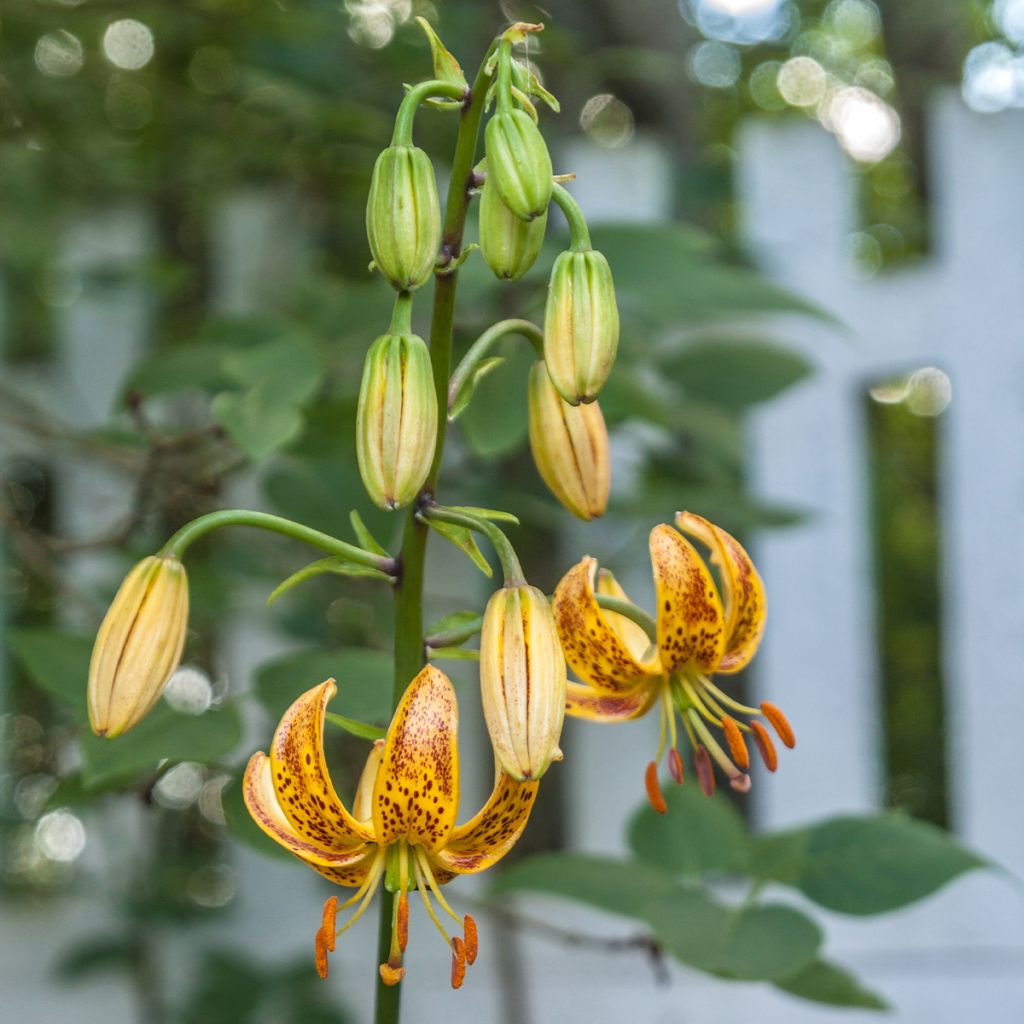
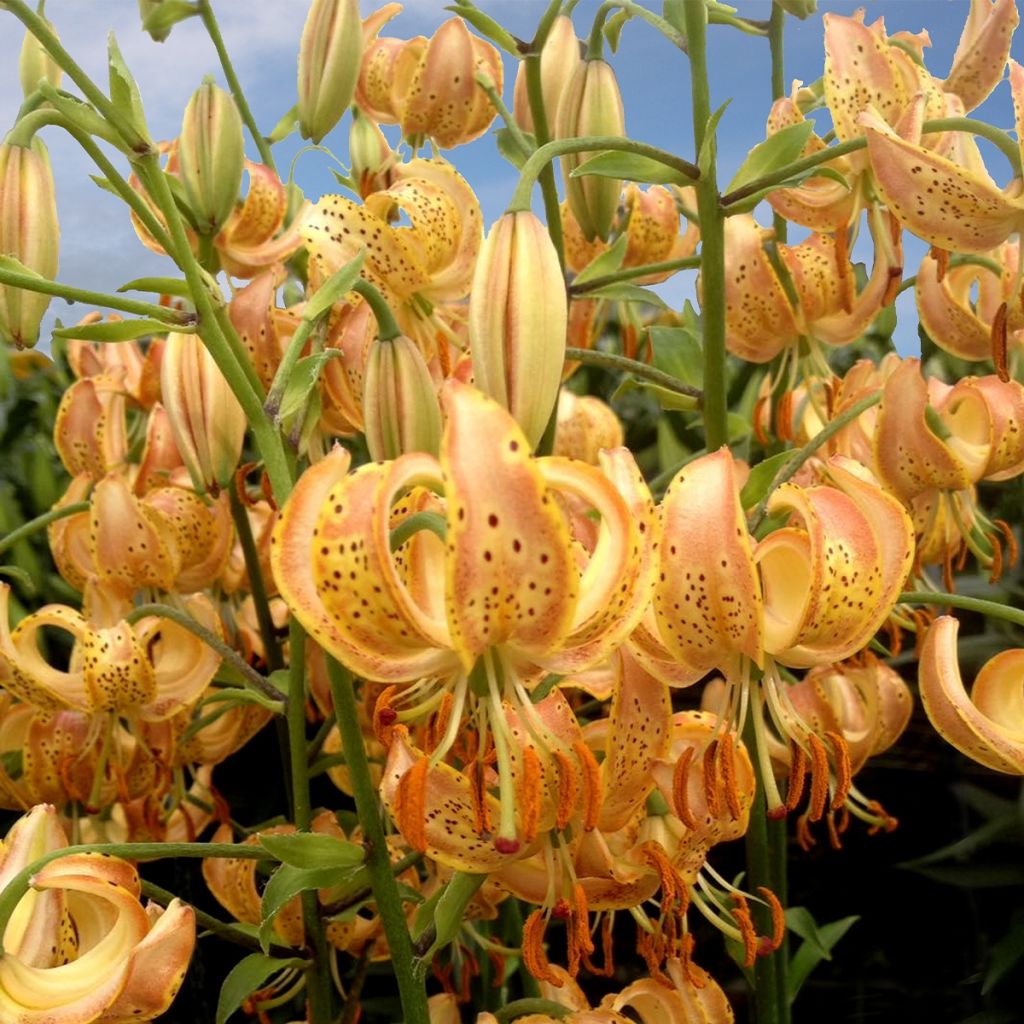
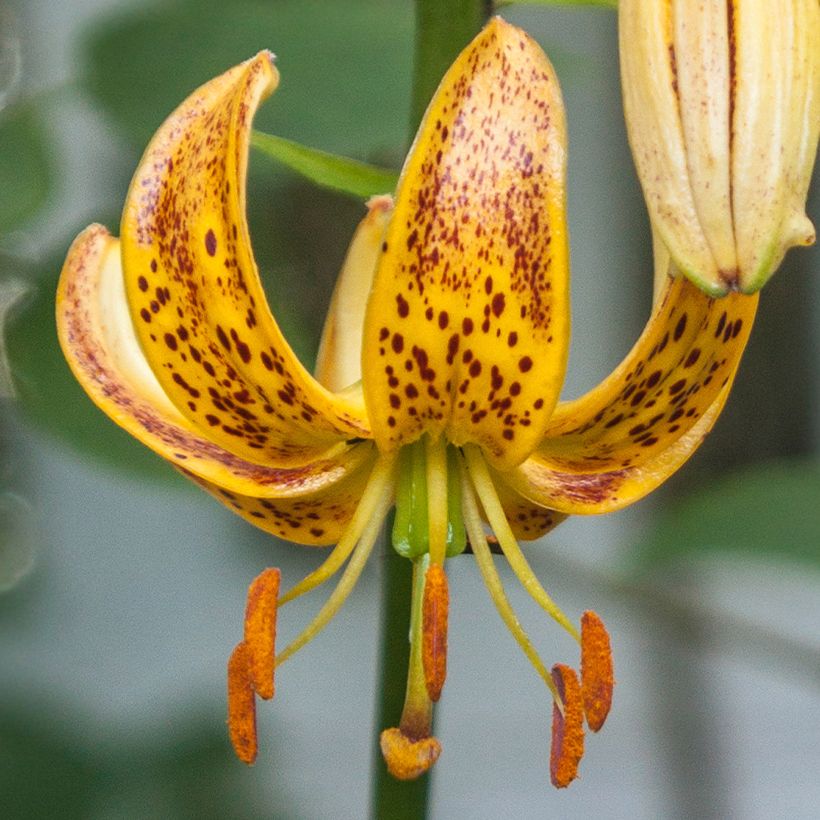
The 'Peppard Gold' hybrid martagon lily is a reliable, easy-to-grow variety with a rather unusual colour. Each bulb forms a floral stem adorned with many small flowers, with well-curved petals, in a range of yellow and orange tones, speckled with cinnamon brown spots. It should be placed in the morning sun or at the edge of a grove where its colours will be highlighted. It is a bit slow to establish but then it will faithfully bloom each year and multiply by producing bulblets.
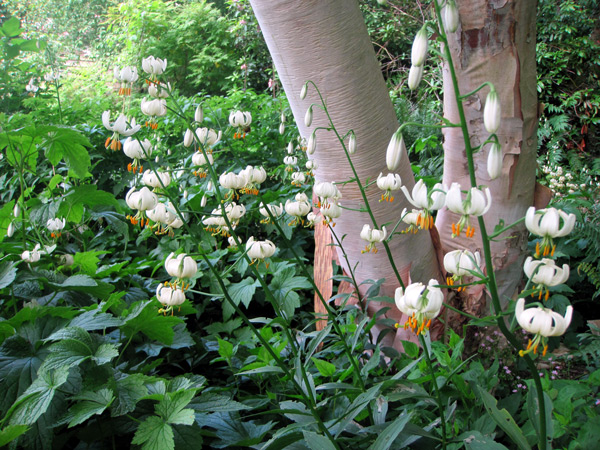
Lilium 'Peppard Gold' belongs to the Liliaceae family. It is a hybrid that possesses the genes of Lilium martagon, a botanic species with somewhat delicate cultivation, and L. hansonii, a vigorous and undemanding plant native to East Asia. 'Peppard Gold' is a deciduous bulb with a narrow and upright habit from spring. This variety will reach a height of between 80 cm (32in) and 1 m (3ft) when in bloom. Its growth will spread without a theoretical limit over time, with the bulbs producing bulbils through vegetative multiplication. Its abundant and fragrant flowering takes place in June-July. On a mature plant, each floral stem bears between 20 and 30, 5 cm (2in) diameter flowers, hanging towards the ground. Their thick and slightly shiny-textured petals curl up when mature. The base colour is a golden to orange yellow, with each petal tinged with apricot and orange and speckled with brown. A range of colours that blends beautifully with the prominent orange stamens. The fragrance of the flowers attracts a large number of pollinating insects. The leaves of this lily are dark green and lanceolate in shape. This hybrid is a very long-lived plant that naturalises over time. The above-ground vegetation completely dries out in winter.
You can grow the Peppard Gold lily with perennial plants in your garden, as lilies appreciate having shade at their roots, or grow it in a pot to bring it closer to your terrace or window borders, so you can fully enjoy its exceptional flowers. The warm colours of this lily harmonise with whites and the entire range of yellow to red or purple tones. To play with colour contrast, combine it with the blue flowers of salvias or catmints, for example.
Lilium Peppard Gold - Martagon Lily in pictures
Plant habit
Flowering
Foliage
Botanical data
Lilium
x martagon
Peppard Gold
Liliaceae
Martagon Lily, Turk's Cap Lily
Cultivar or hybrid
Planting and care
The 'Peppard Gold' hybrid martagon lily establishes a bit more slowly than Asiatic, trumpet or Oriental lilies. It may take an additional season before flowering, and planting conditions must be right. "Martagon" lilies sulk when moved and need time to settle. Perfect drainage is essential, a rocky soil is very suitable, where the bulbs are not in an overly moist substrate during their dormancy period after flowering. It is strongly advised not to use classic potting soil for the martagon lily or its hybrids, but a supply of well-rotted compost or leaf soil in autumn is desirable.
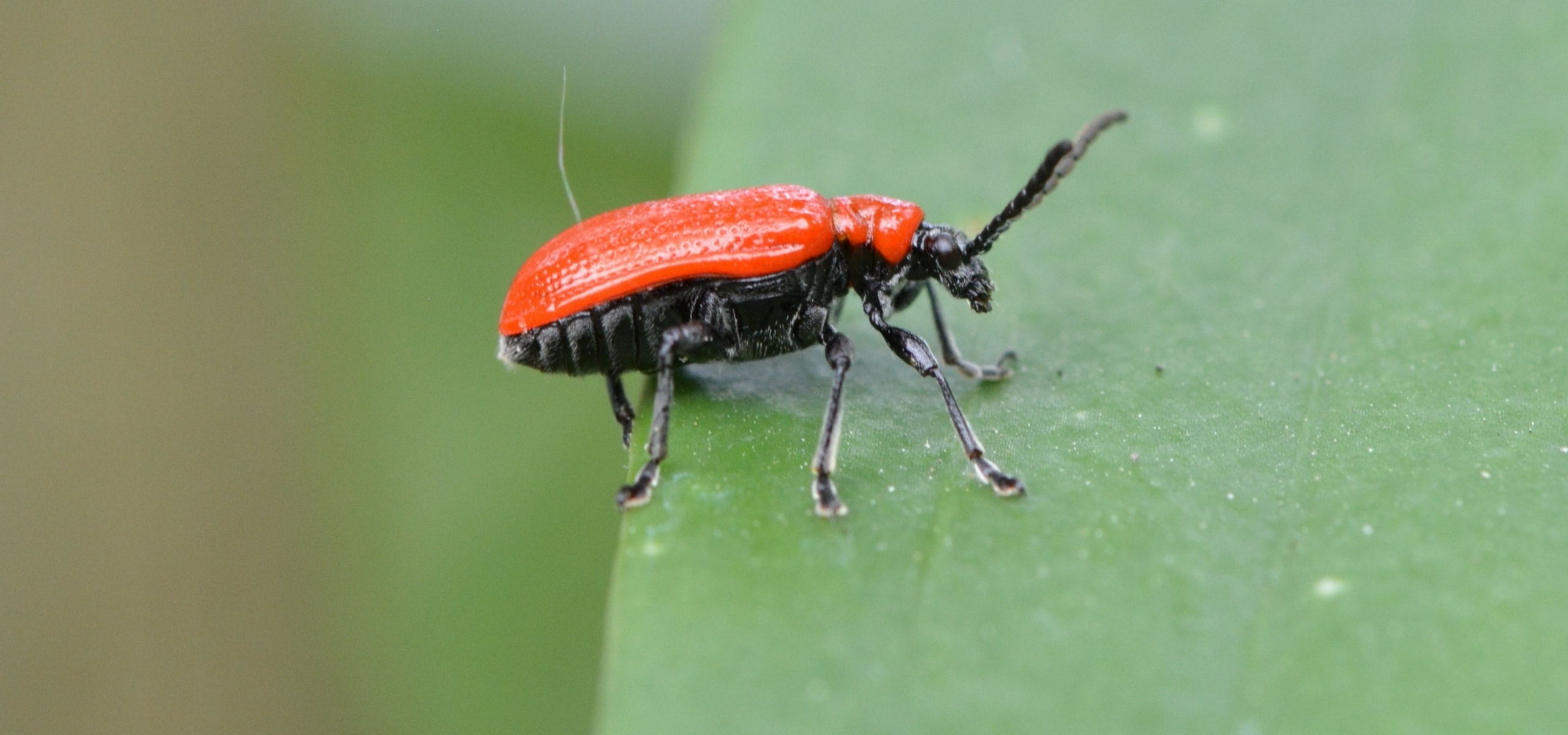
This lily likes slightly humiferous and moist soils, limestone is not a problem if the soil is rich. Plant it in partial shade or non-scorching sun, preferably in October or in spring, burying the bulbs 15 cm (6in) deep in a pocket of soil mixed with leaf soil. You can surround them with a pocket of sand to protect them from rot, and slug attacks. Mark the planting location, as vegetation only starts in April. Staking is not necessary. If red lily beetles appear, treat them immediately as their larvae can devour all the leaves. The most effective method is to catch them manually but be careful as they drop as soon as they are touched, so place a box underneath.
After flowering, it is a good idea to cut the faded flower stems halfway so that the bed remains beautiful during summer. Your lilies will be available from early October. Lilies are very suitable for pot cultivation. Plant 1 to 5 bulbs in a deep pot. Water a little and place your pots frost-free. Bring them out in spring and enjoy them on your terrace!
Planting period
Intended location
Care
Planting & care advice

-
, onOrder confirmed
Reply from on Promesse de fleurs
Recently viewed products
Haven't found what you were looking for?
Hardiness is the lowest winter temperature a plant can endure without suffering serious damage or even dying. However, hardiness is affected by location (a sheltered area, such as a patio), protection (winter cover) and soil type (hardiness is improved by well-drained soil).

The flowering period indicated on our website applies to countries and regions located in USDA zone 8 (France, the United Kingdom, Ireland, the Netherlands, etc.)
It will vary according to where you live:- In zones 9 to 10 (Italy, Spain, Greece, etc.), flowering will occur about 2 to 4 weeks earlier.
- In zones 6 to 7 (Germany, Poland, Slovenia, and lower mountainous regions), flowering will be delayed by 2 to 3 weeks.
- In zone 5 (Central Europe, Scandinavia), blooming will be delayed by 3 to 5 weeks.
In temperate climates, pruning of spring-flowering shrubs (forsythia, spireas, etc.) should be done just after flowering.
Pruning of summer-flowering shrubs (Indian Lilac, Perovskia, etc.) can be done in winter or spring.
In cold regions as well as with frost-sensitive plants, avoid pruning too early when severe frosts may still occur.
The planting period indicated on our website applies to countries and regions located in USDA zone 8 (France, United Kingdom, Ireland, Netherlands).
It will vary according to where you live:
- In Mediterranean zones (Marseille, Madrid, Milan, etc.), autumn and winter are the best planting periods.
- In continental zones (Strasbourg, Munich, Vienna, etc.), delay planting by 2 to 3 weeks in spring and bring it forward by 2 to 4 weeks in autumn.
- In mountainous regions (the Alps, Pyrenees, Carpathians, etc.), it is best to plant in late spring (May-June) or late summer (August-September).
The harvesting period indicated on our website applies to countries and regions in USDA zone 8 (France, England, Ireland, the Netherlands).
In colder areas (Scandinavia, Poland, Austria...) fruit and vegetable harvests are likely to be delayed by 3-4 weeks.
In warmer areas (Italy, Spain, Greece, etc.), harvesting will probably take place earlier, depending on weather conditions.
The sowing periods indicated on our website apply to countries and regions within USDA Zone 8 (France, UK, Ireland, Netherlands).
In colder areas (Scandinavia, Poland, Austria...), delay any outdoor sowing by 3-4 weeks, or sow under glass.
In warmer climes (Italy, Spain, Greece, etc.), bring outdoor sowing forward by a few weeks.
Shipping country and language
Your country of residence may be:
Your country of residence is:
For a better user experience on our website, you can select:
Your shipping country:
-
 Austria
-
 Belgium
-
 Bosnia & Herzegovina
-
 Bulgaria
-
 Croatia
-
 Cyprus
-
 Czechia
-
 Denmark
-
 Estonia
-
 Finland
-
 France
-
 Germany
-
 Greece
-
 Hungary
-
 Iceland
-
 Ireland
-
 Italy
Italy
-
 Latvia
-
 Liechtenstein
-
 Lithuania
-
 Luxembourg
-
 Malta
Malta
-
 Netherlands
-
 Poland
-
 Portugal
-
 Romania
-
 Serbia
-
 Slovakia
-
 Slovenia
-
 Spain
Spain
-
 Sweden
-
 Switzerland
Language:
-
French
-
 English
-
Spanish
-
Italian
-
German
-
Portuguese
-
Dutch
-
Finnish
My Account
Hello
My wish lists
My cart
Log in / Register
Existing customer?
This form is protected by reCAPTCHA - the Google Privacy Policy and Terms of Service apply.
New customer?
Create an account to track your orders, access our customer service and, if you wish, make the most of our upcoming offers.