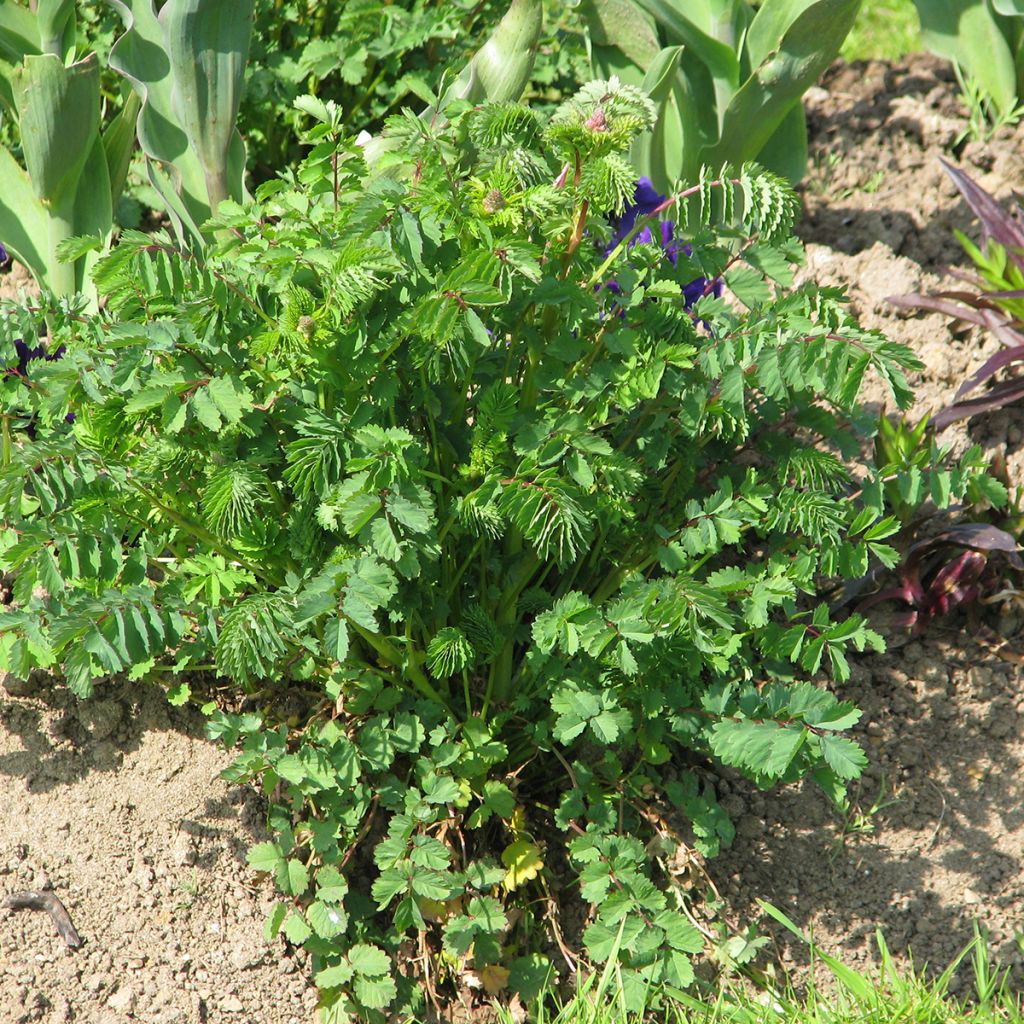
Sanguisorba minor organic seeds - Salad burnett
Sanguisorba minor organic seeds - Salad burnett
Sanguisorba minor
Salad burnet, Garden burnet, Pimpernelle, Toper's plant
Back-to-school special offer!
Get €10 off for every €50 you spend! And get up to €40 off on a single order.
How does it work?
1. Shop your favourites
Add your favourite plants to your basket. For every €50 you spend (excluding delivery charges, store credit and the plastic-free option), you’ll receive a €10 voucher.
€50 spent = €10 voucher
€100 spent = €20 voucher
€150 spent = €30 voucher
€200 spent = €40 voucher
2. Place your order
Once your basket reaches one of the spending thresholds, place your order. You can even choose your delivery date!
3. Receive your voucher
As soon as your order has been shipped, you’ll receive an email containing your personal voucher code and its value.
4. Use it on your next order
Your voucher is valid for 90 days from the date you receive it. It can be used once only, on a new order worth at least the value of the voucher, excluding delivery charges.
Please note: Vouchers can be combined with other offers, but cannot be split or refunded.
Home or relay delivery (depending on size and destination)
Important: You may be charged customs duties by your country’s customs authorities upon delivery.
Schedule delivery date,
and select date in basket
This plant carries a 6 months recovery warranty
More information
We guarantee the quality of our plants for a full growing cycle, and will replace at our expense any plant that fails to recover under normal climatic and planting conditions.
Description
Organic Salad Burnet seeds, Sanguisorba minor in Latin, will introduce a characterful aromatic and culinary perennial to the garden, as lovely as it is tasty. It offers light, finely cut foliage and quite an original flowering. The young leaves, with a slight cucumber flavour, delicately perfume salads, herb sauces or refreshing drinks. Very hardy, drought-resistant and undemanding, this little plant finds a place in the vegetable patch, naturalistic borders and dry gardens. Sow it in March and April. Harvest from June to August.
Salad Burnet is refreshing and has a recognised medicinal use. Used externally for cuts; internally it is anti-diarrhoeal and aids digestion. Its active principles are flavonoids, vitamin C, ursolic acid and the tannins in the root. Its flowers are also edible. Its use should be supervised by a professional and is not recommended for pregnant women.
Harvesting: harvest as needed. For fresh use, choose young leaves. This cutting stimulates the plant and encourages new shoots. Cut off the inflorescences to extend the leaf harvesting period.
Storage: You can dry the leaves, but the flavour fades during storage. When they become crumbly, transfer to an airtight container. You can also preserve them in vinegar or freeze them.
The gardener's little tip: To have very tender leaves, water the burnet well.
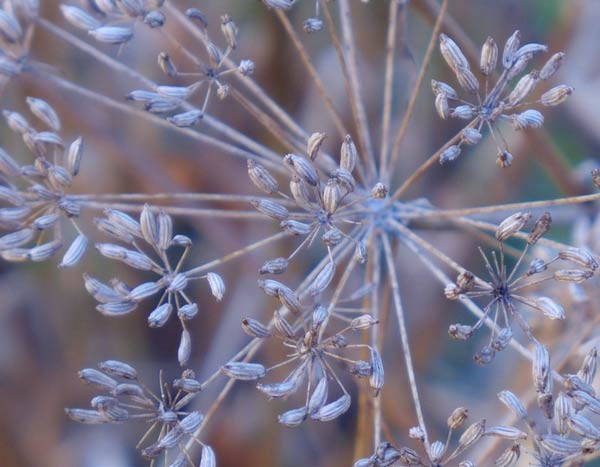
Salad burnet belongs to the Rosaceae family. It is a herbaceous perennial, semi-evergreen in winter, which develops a deep taproot. At maturity, each plant forms a clump 30 to 40cm wide. Fine upright stems 40 to 60cm tall bearing ovoid flower heads emerge from the centre from May to August. The leaves are made up of numerous rounded and toothed leaflets, medium green on top, more glaucous on the underside. The inflorescences group together female flowers with red stigmas, and at the base, pendulous male flowers with yellow stamens. The fruits are small tetragonal achenes, contained in a hardened calyx which aids natural dispersal.
Sanguisorba minor is native to a large part of Europe, North Africa and western Asia as far as the Himalayas, where it grows in dry meadows, calcareous grassland, roadsides and sunny rockeries, often on poor, stony, very well-drained soils. Naturalised in many temperate regions, it remains non-invasive in the garden, content to self-seed here and there.
This traditional plant was cultivated from the Middle Ages for its culinary and medicinal uses and was said to feature in the King's vegetable garden at Versailles. In Germanic countries, its leaves are still used in the famous Frankfurt green sauce or certain soups.
Organic seeds or 'BIO' seeds come from plants grown using organic farming methods (without the use of phytosanitary products). They undergo no treatment after harvest. These seeds are intended for use in organic market gardening.
Report an error about the product description
Harvest
Plant habit
Foliage
Botanical data
Sanguisorba
minor
Rosaceae
Salad burnet, Garden burnet, Pimpernelle, Toper's plant
Poterium sanguisorba, Poterium minus, Pimpinella minor, Pimpinella sanguisorba.
Western Europe, Southern Europe, North Africa, Himalayas, West Asia
Perennial
Planting and care
Sowing Salad Burnet (Sanguisorba minor)
Preparing for sowing: Before sowing salad burnet, prepare the soil by loosening it to a depth of a few centimetres and carefully weeding. It accommodates all types of soil but prefers light, well-drained ones. Choose a sunny position.
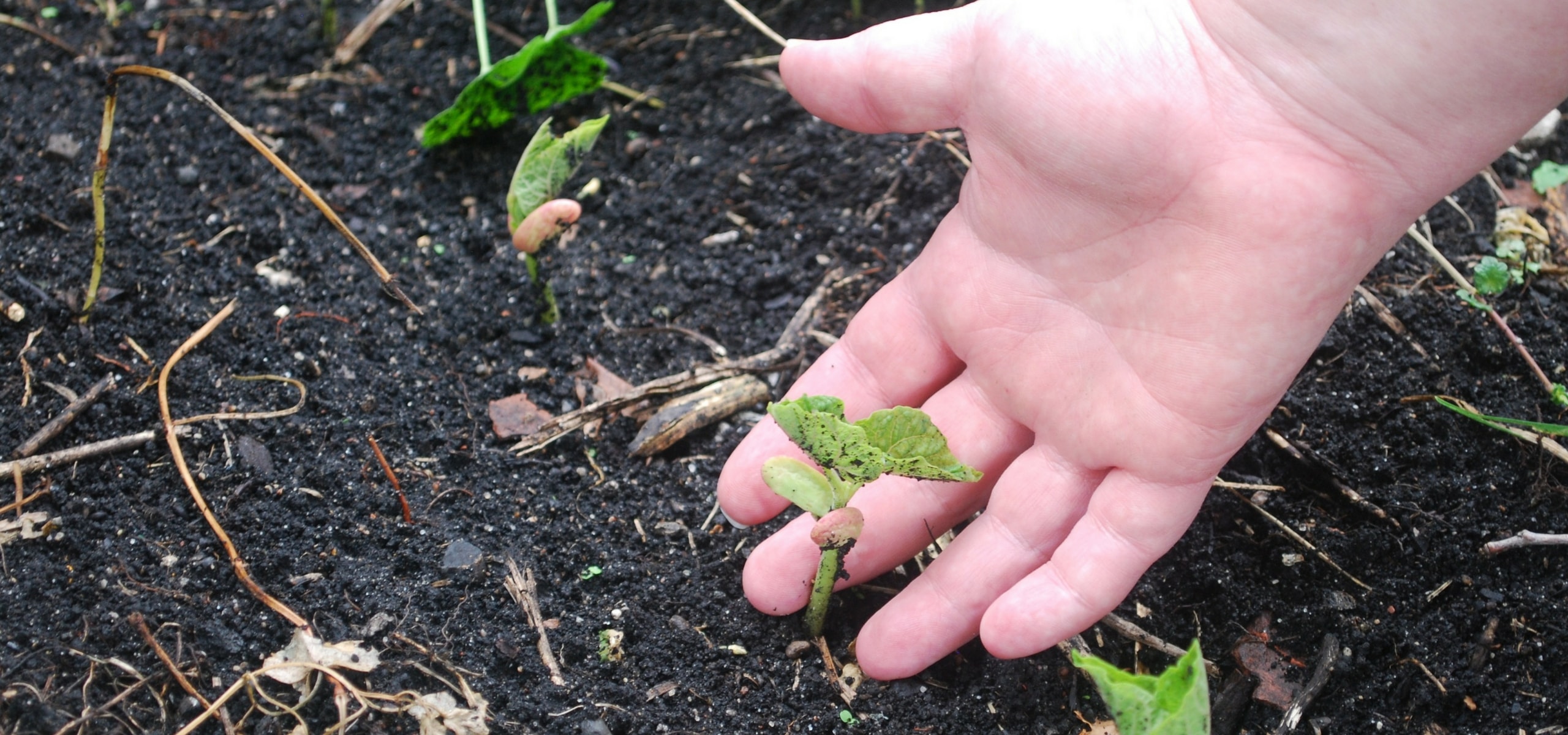
Sowing in open ground: Sow directly in open ground, in rows or broadcast. Cover the seeds with 1/2cm of seed compost and firm down with a rake. Moisten the substrate. Thin out when the young plants are manageable: keep the strongest young plants and leave a spacing of 30cm in all directions.
Care: Salad burnet is not demanding in terms of water. It is hardy and needs little care.
Seedlings
Care
Intended location
Planting & care advice
-
-
-
-
-

-
-
-
This item has not been reviewed yet - be the first to leave a review about it.
Recently viewed products
Haven't found what you were looking for?
Hardiness is the lowest winter temperature a plant can endure without suffering serious damage or even dying. However, hardiness is affected by location (a sheltered area, such as a patio), protection (winter cover) and soil type (hardiness is improved by well-drained soil).

The flowering period indicated on our website applies to countries and regions located in USDA zone 8 (France, the United Kingdom, Ireland, the Netherlands, etc.)
It will vary according to where you live:- In zones 9 to 10 (Italy, Spain, Greece, etc.), flowering will occur about 2 to 4 weeks earlier.
- In zones 6 to 7 (Germany, Poland, Slovenia, and lower mountainous regions), flowering will be delayed by 2 to 3 weeks.
- In zone 5 (Central Europe, Scandinavia), blooming will be delayed by 3 to 5 weeks.
In temperate climates, pruning of spring-flowering shrubs (forsythia, spireas, etc.) should be done just after flowering.
Pruning of summer-flowering shrubs (Indian Lilac, Perovskia, etc.) can be done in winter or spring.
In cold regions as well as with frost-sensitive plants, avoid pruning too early when severe frosts may still occur.
The planting period indicated on our website applies to countries and regions located in USDA zone 8 (France, United Kingdom, Ireland, Netherlands).
It will vary according to where you live:
- In Mediterranean zones (Marseille, Madrid, Milan, etc.), autumn and winter are the best planting periods.
- In continental zones (Strasbourg, Munich, Vienna, etc.), delay planting by 2 to 3 weeks in spring and bring it forward by 2 to 4 weeks in autumn.
- In mountainous regions (the Alps, Pyrenees, Carpathians, etc.), it is best to plant in late spring (May-June) or late summer (August-September).
The harvesting period indicated on our website applies to countries and regions in USDA zone 8 (France, England, Ireland, the Netherlands).
In colder areas (Scandinavia, Poland, Austria...) fruit and vegetable harvests are likely to be delayed by 3-4 weeks.
In warmer areas (Italy, Spain, Greece, etc.), harvesting will probably take place earlier, depending on weather conditions.
The sowing periods indicated on our website apply to countries and regions within USDA Zone 8 (France, UK, Ireland, Netherlands).
In colder areas (Scandinavia, Poland, Austria...), delay any outdoor sowing by 3-4 weeks, or sow under glass.
In warmer climes (Italy, Spain, Greece, etc.), bring outdoor sowing forward by a few weeks.
Shipping country and language
Your country of residence may be:
Your country of residence is:
For a better user experience on our website, you can select:
Your shipping country:
-
 Austria
-
 Belgium
-
 Bosnia & Herzegovina
-
 Bulgaria
-
 Croatia
-
 Cyprus
-
 Czechia
-
 Denmark
-
 Estonia
-
 Finland
-
 France
-
 Germany
-
 Greece
-
 Hungary
-
 Iceland
-
 Ireland
-
 Italy
Italy
-
 Latvia
-
 Liechtenstein
-
 Lithuania
-
 Luxembourg
-
 Malta
Malta
-
 Netherlands
-
 Poland
-
 Portugal
-
 Romania
-
 Serbia
-
 Slovakia
-
 Slovenia
-
 Spain
Spain
-
 Sweden
-
 Switzerland
Language:
-
French
-
 English
-
Spanish
-
Italian
-
German
-
Portuguese
-
Dutch
-
Finnish
My Account
Hello
My wish lists
My cart
Log in / Register
Existing customer?
This form is protected by reCAPTCHA - the Google Privacy Policy and Terms of Service apply.
New customer?
Create an account to track your orders, access our customer service and, if you wish, make the most of our upcoming offers.