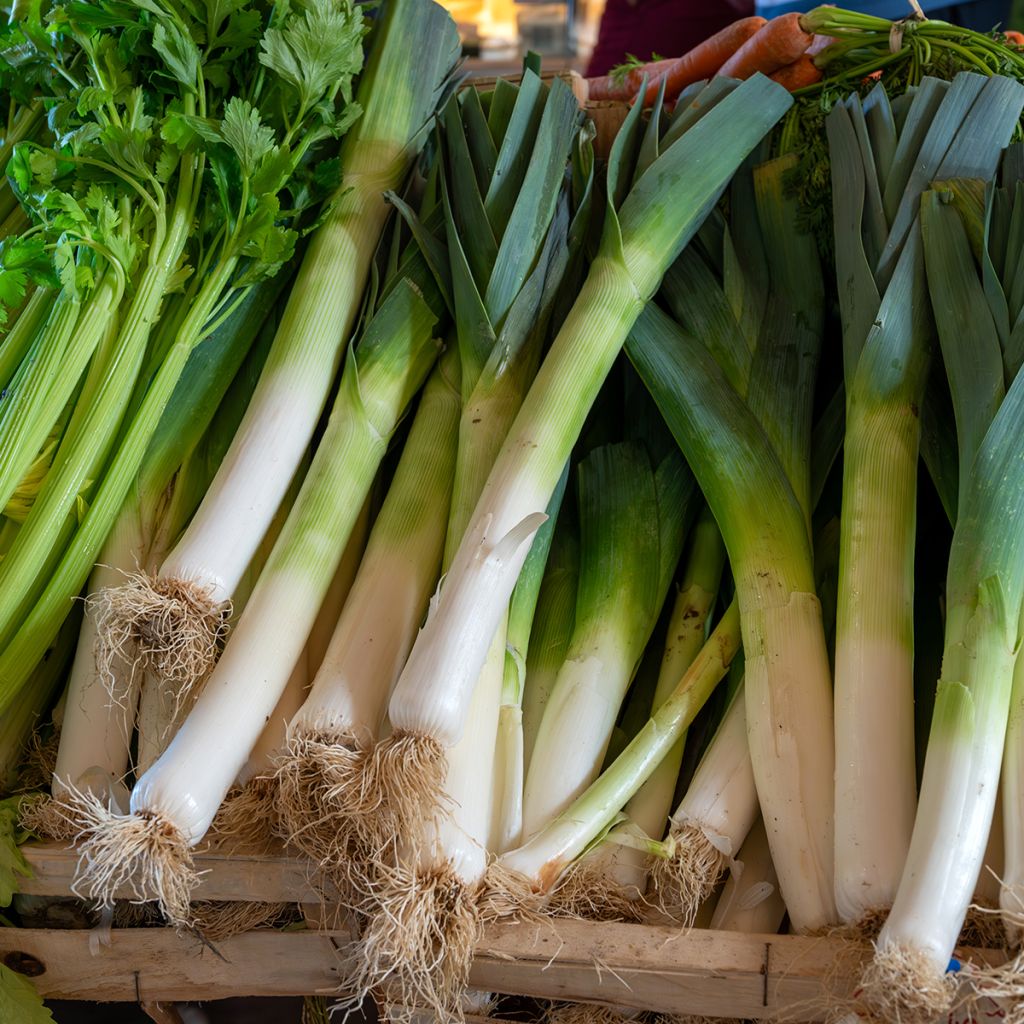
Leek Atal
Leek Atal
Allium ampeloprasum var. porrum Atal
Leek
Back-to-school special offer!
Get €10 off for every €50 you spend! And get up to €40 off on a single order.
How does it work?
1. Shop your favourites
Add your favourite plants to your basket. For every €50 you spend (excluding delivery charges, store credit and the plastic-free option), you’ll receive a €10 voucher.
€50 spent = €10 voucher
€100 spent = €20 voucher
€150 spent = €30 voucher
€200 spent = €40 voucher
2. Place your order
Once your basket reaches one of the spending thresholds, place your order. You can even choose your delivery date!
3. Receive your voucher
As soon as your order has been shipped, you’ll receive an email containing your personal voucher code and its value.
4. Use it on your next order
Your voucher is valid for 90 days from the date you receive it. It can be used once only, on a new order worth at least the value of the voucher, excluding delivery charges.
Please note: Vouchers can be combined with other offers, but cannot be split or refunded.
Home or relay delivery (depending on size and destination)
Important: You may be charged customs duties by your country’s customs authorities upon delivery.
Schedule delivery date
and select date in basket
This plant carries a 6 months recovery warranty
More information
We guarantee the quality of our plants for a full growing cycle, and will replace at our expense any plant that fails to recover under normal climatic and planting conditions.
Description
The 'Atal' leek is a winter variety renowned for its long, very white bole, as well as its regular and uniform growth. Hardy down to –20 °C and not very susceptible to common diseases, it provides reliable harvests even during harsh winters. It is easy to grow, suitable for both beginner gardeners and market gardeners. In the kitchen, its tender, finely oniony flesh is perfect for preparing soups and broths as well as gratins, quiches or leek fondues. Sow from January to May and harvest from September to March.
The 'Atal' leek belongs to the botanical family of Amaryllidaceae. The botanical species Allium ampeloprasum, the ancestor of the cultivated leek, is native to Mediterranean and Near Eastern regions. Widespread from the eastern Mediterranean basin to the Middle East, it can still be found growing wild in dry meadows, fallow land and cultivated edges. The 'Atal' cultivar was obtained through selection in France in the second half of the 20th century, with the aim of creating a winter leek that was hardy, productive and disease-resistant.
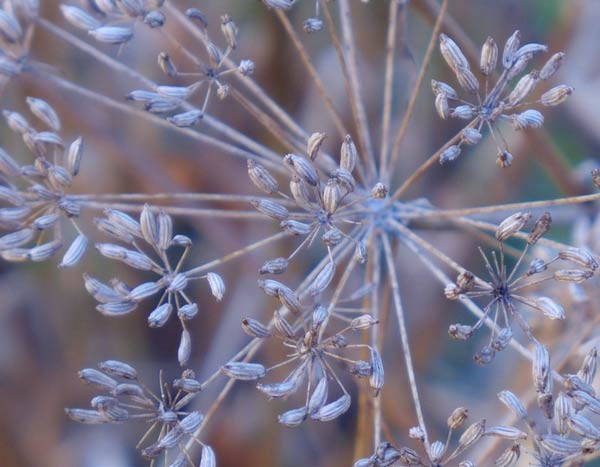
It is a herbaceous biennial vegetable plant grown as an annual, with an erect habit, reaching 40 to 70 cm in height. The pseudo-trunk (or bole) is formed by the tight overlapping of the foliar sheaths; it measures up to 3 cm in diameter, is nicely cylindrical and white over a great length. The leaves are ribbon-like, flat, linear, greyish-green, and evergreen in winter. In the second year, if the plant is not harvested, it sends up a robust flower stalk, 1 m to 1.5 m tall, bearing a spherical umbel inflorescence 5 to 10 cm in diameter in summer, composed of numerous small star-shaped flowers ranging from greenish-white to pale lilac, slightly fragrant, very nectar-rich and visited by pollinating insects.
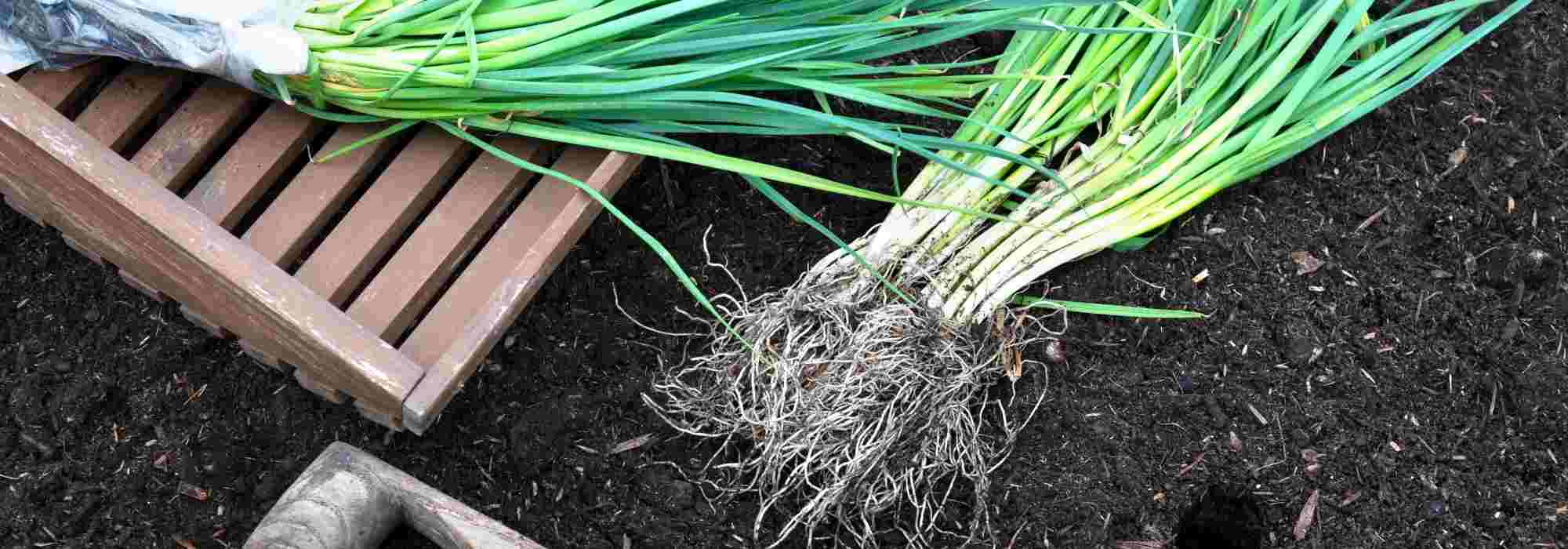
The harvest period for the 'Atal' leek runs from September to March. The best method is to gently lift the young plants with a garden fork to preserve the bole, then remove excess soil and cut the foliage to 5 cm above the white part for storage. Leeks can be stored in a trench in the garden, in well-drained soil, or in a cool, damp cellar for several weeks.
In the kitchen, 'Atal' stands out for its tender texture and mild flavour, without bitterness. It can be eaten cooked, in soups, veloutés, fondues, gratins, quiches, or paired with white meats and fish. The green leaves can be used to flavour stocks and court-bouillons.
Low in calories and rich in fibre, leek is good for digestion and a balanced diet. It provides essential vitamins like K, C and provitamin A, as well as minerals beneficial for muscles and bones. Its natural antioxidants, including sulphur compounds, help protect the heart and cells.
In the vegetable garden, the 'Atal' leek likes deep, humus-rich, well-drained soil, exposed to full sun. An application of mature compost before planting promotes bole vigour.
Sow in a nursery or directly in a row, between January and May, then transplant the young plants when they are the size of a pencil, burying the bole slightly to encourage blanching. Earthing up during growth increases the length of the "white" part.
The gardener's little tip: pair leeks with carrots. Carrot fly detests leeks, and the leek moth is not fond of carrots! Tomatoes, lettuces, celery, dill and strawberry plants are also good companion plants for leeks, but leeks dislike the presence of their cousin the onion, as well as beetroot and beans.
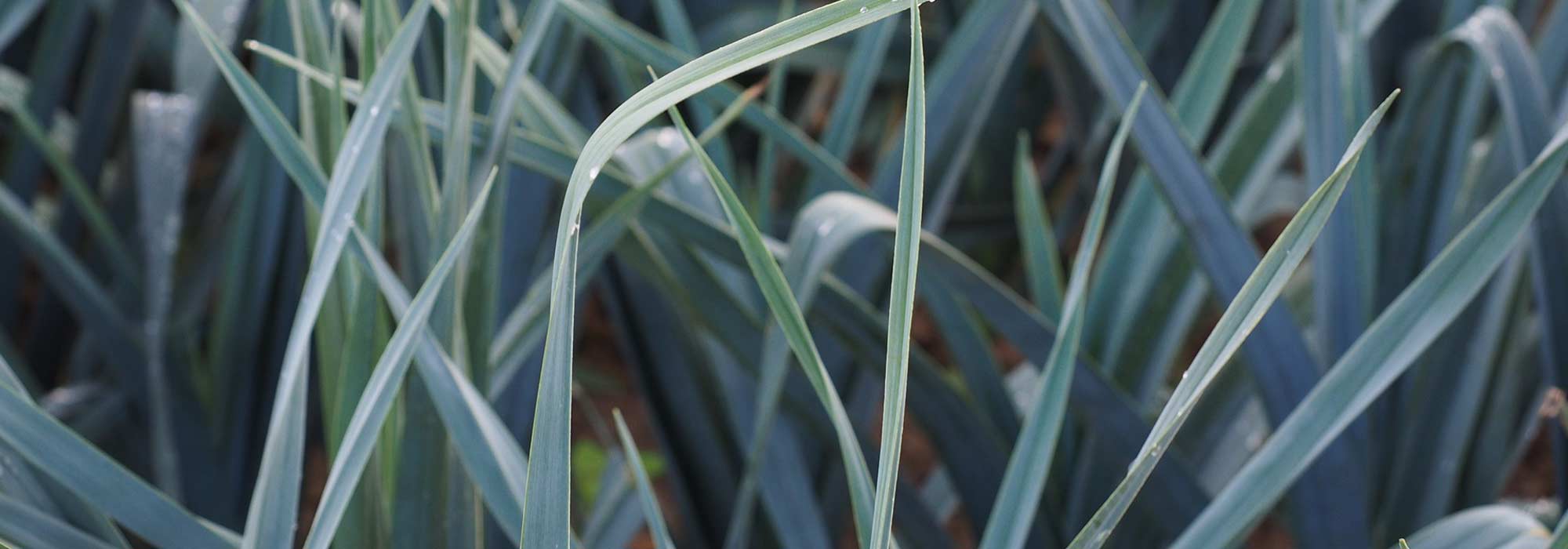
To know if a leek needs watering, simply check its foliage: if it stands up straight, all is well, it is not thirsty. If its foliage wilts and flops over to the side, it needs water.
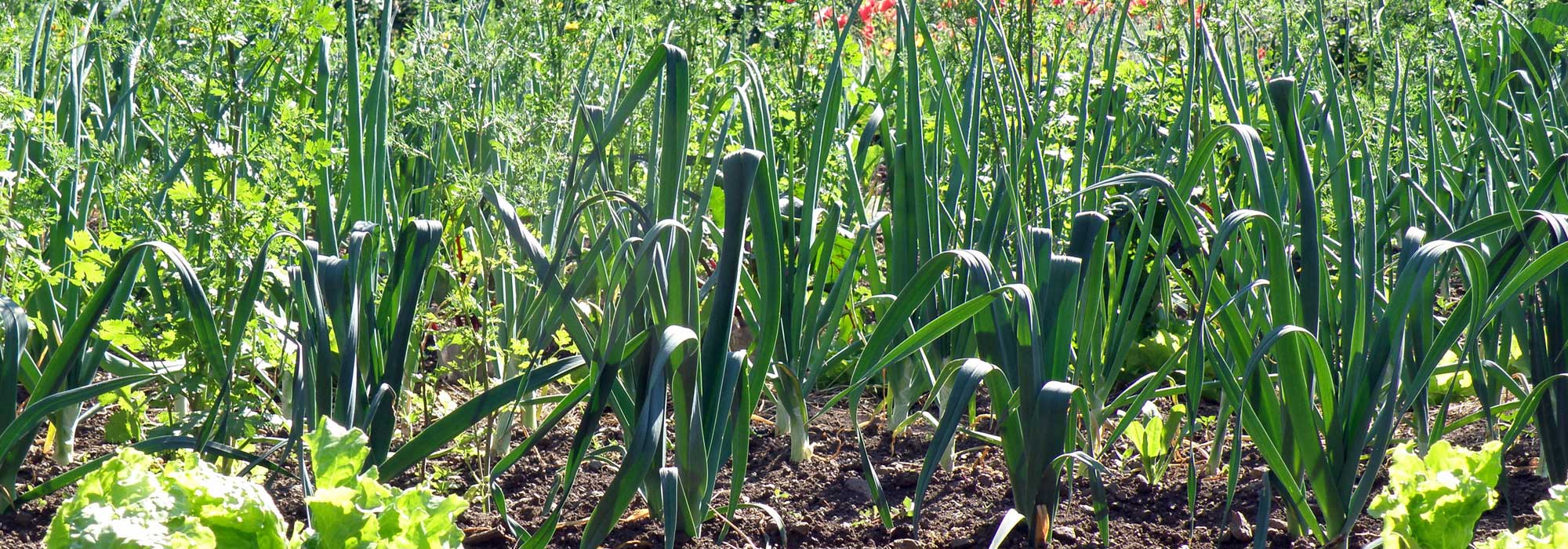
Leek Atal in pictures
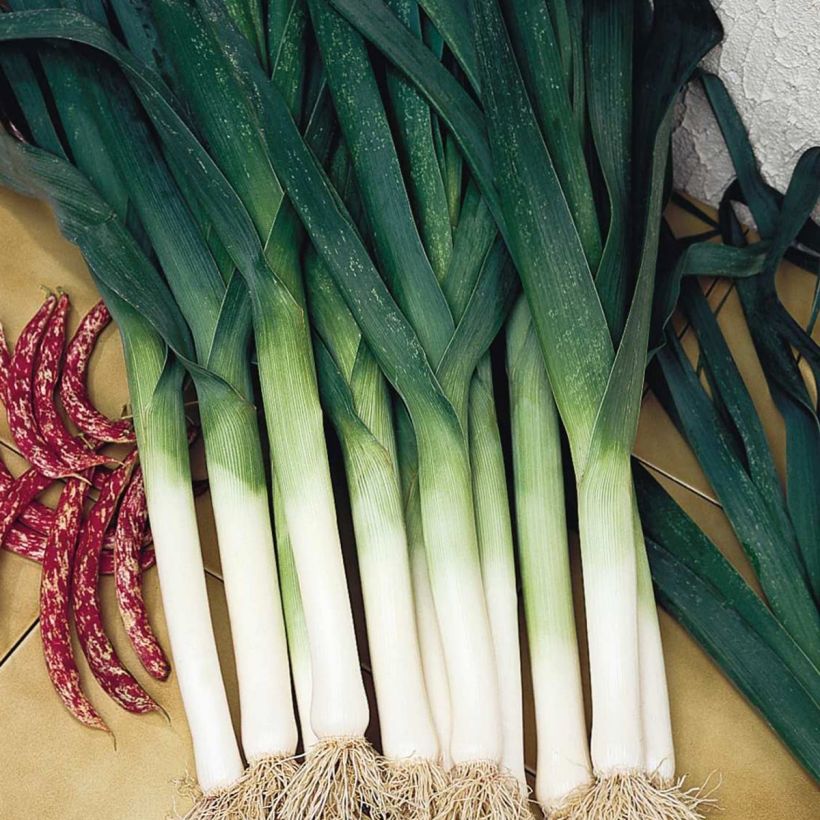
Harvest
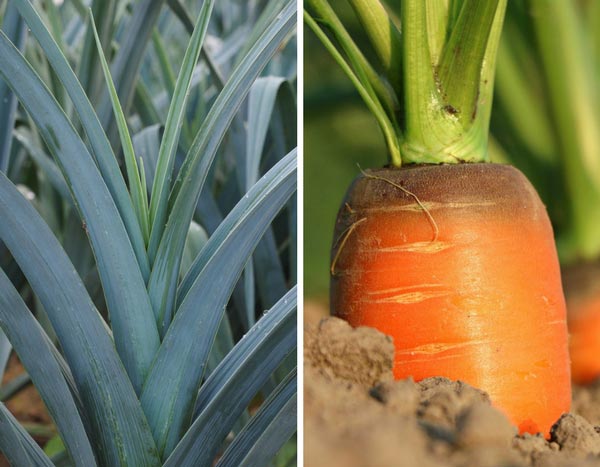
Plant habit
Foliage
Botanical data
Allium
ampeloprasum var. porrum
Atal
Amaryllidaceae
Leek
Poireau Atal, Poireau cultivé Atal, Asperge du pauvre, Porreau, Poirette, Poireau d’hiver Atal
Cultivar or hybrid
Biennial
Planting and care
Cultivation of 'Atal' Leek:
Leeks are considered winter vegetables. This is partly true, however there are a number of summer leeks. The leek's growth cycle is quite long, occurring in several phases.
Soil preparation: leeks appreciate rich, deep soils enriched with organic matter. However, be careful, the soil must have been enriched several months in advance, as they don't like recently fertilised soil. Choose a location with plenty of sun in generally moist soil that you have previously loosened.
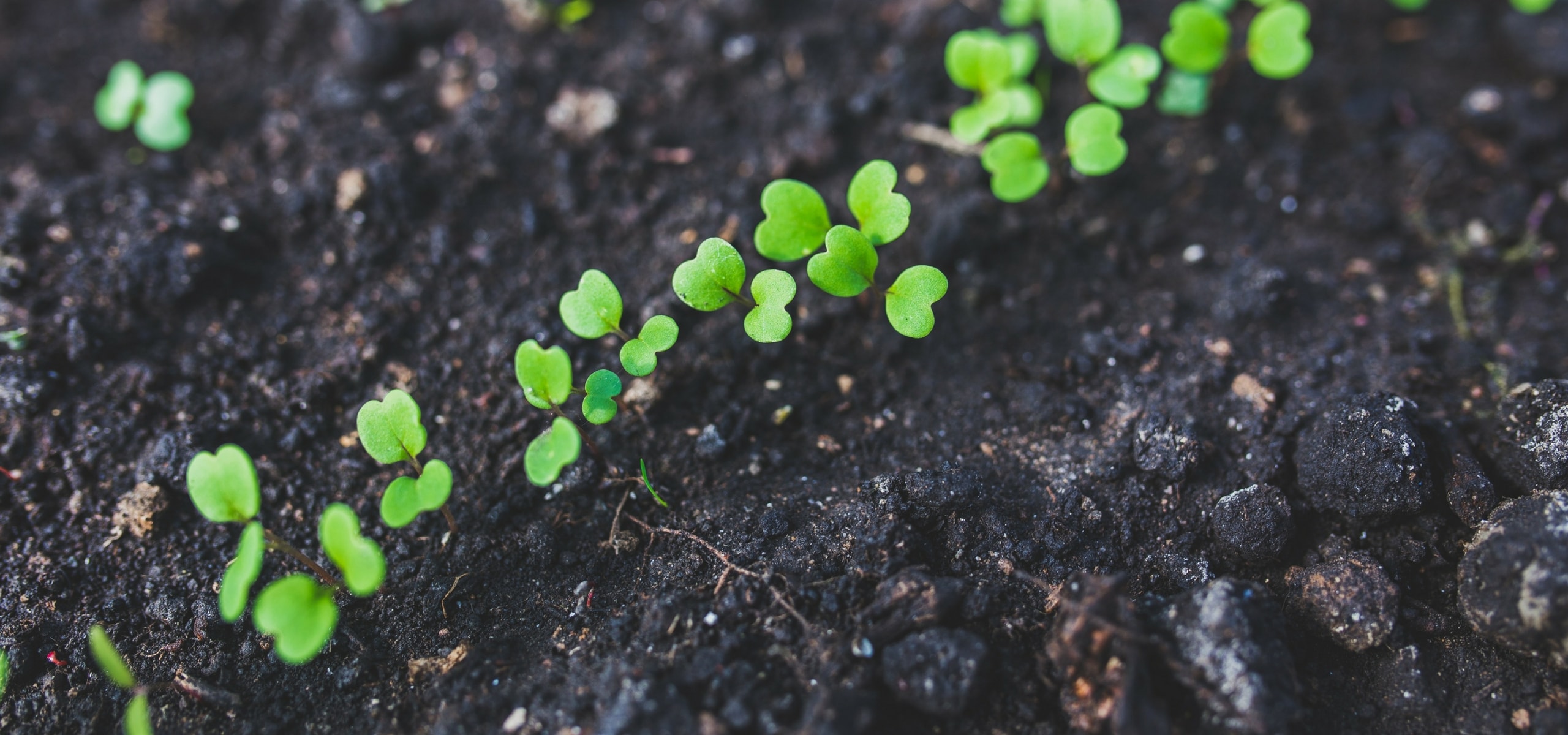
Sowing: dig a furrow 2 cm deep and sow finely, one to two seeds per cm. Fill the furrow with seed compost and then lightly firm with a rake. This can be done from February to May under cover, depending on the climate (cold frame, tunnel, etc.). Germination will take between two weeks and three weeks. Transplant once the plant has reached about fifteen cm in height and is the thickness of a pencil. Beforehand, it is advisable to carefully lift the young plants and leave them to dry out on the soil and in the shade for the space of two days. This aims to remove the leek's scent and thus avoid attacks from onion fly.
Transplanting: before transplanting, it is necessary to 'dress' the leek. 'Dressing' means cutting the roots 2 to 3 cm below the bulb and at the same time cutting the young leaves a few cm above the bole. The objective is twofold: removing the roots allows for better rooting by stimulating it, and cutting the leaves prevents too rapid evaporation.
Next, prepare holes about fifteen cm deep, spaced 15 to 20 cm apart in all directions. Insert your young plants into them. The white part must be completely buried. Water generously with a watering can rose, which will close the holes around the leek boles. These plants need soil rich in nitrogen. You can place fresh grass cuttings between the rows. After a period ranging from two weeks to a month, the plants grow and strengthen. Then you can earth them up to keep the bole as protected from light as possible so that it remains white and tender.
Heeling-in: there are summer varieties and winter varieties depending on their hardiness and the period when leeks should be sown. Autumn sowings are to be harvested only in spring. This means that some of them will spend the winter outside. In regions with harsh winters, it is sometimes necessary to heel-in leeks, that is, to gather them in a place protected from the wind and place them in the ground at an angle before proceeding with a new transplanting in spring.
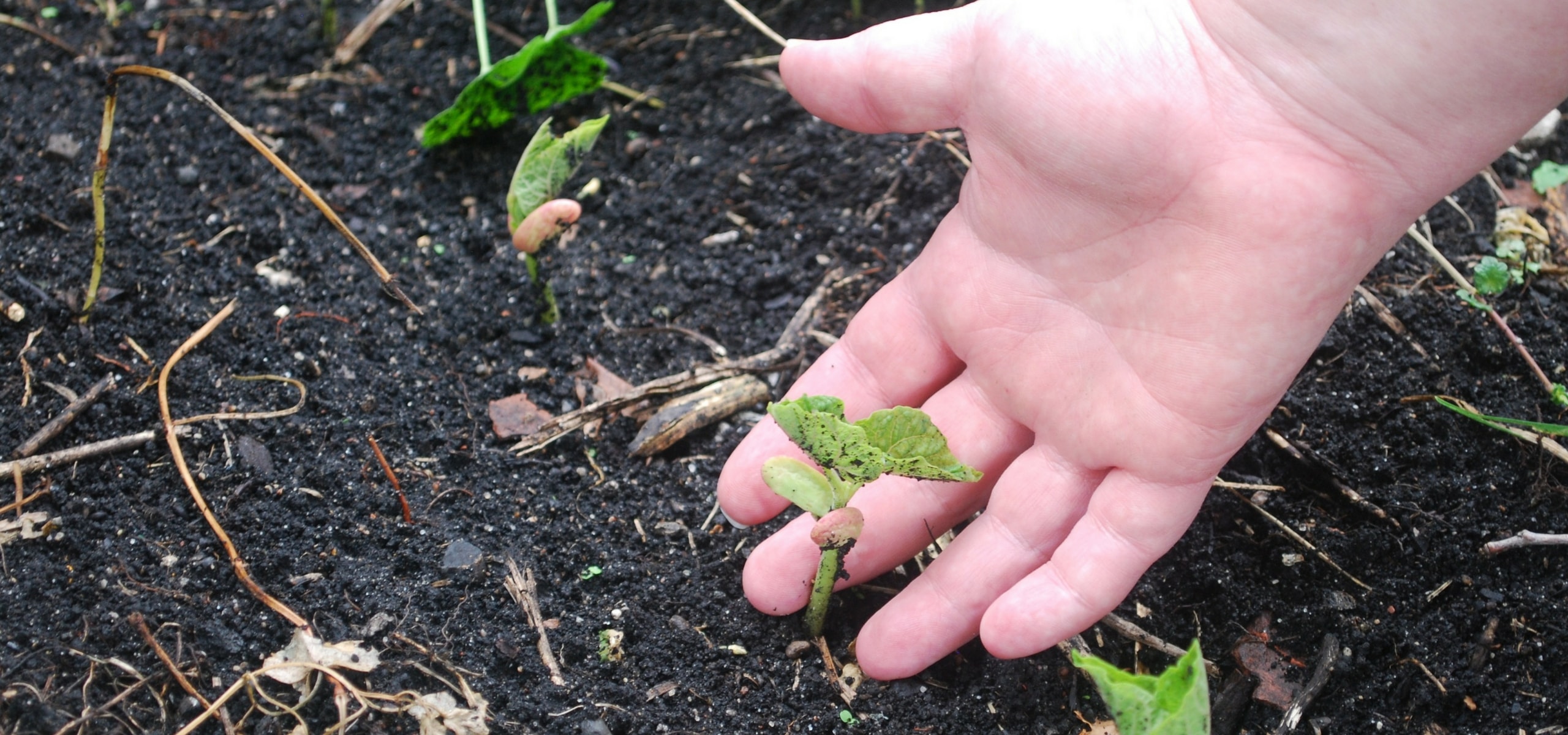
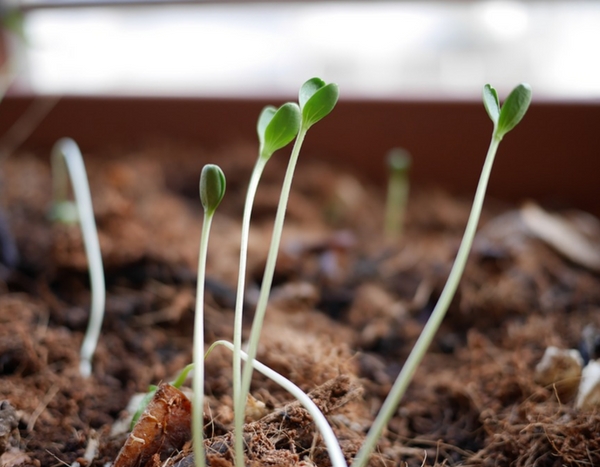
Seedlings
Care
Intended location
Planting & care advice
-
-
-
-

-
-
-
-
This item has not been reviewed yet - be the first to leave a review about it.
Recently viewed products
Haven't found what you were looking for?
Hardiness is the lowest winter temperature a plant can endure without suffering serious damage or even dying. However, hardiness is affected by location (a sheltered area, such as a patio), protection (winter cover) and soil type (hardiness is improved by well-drained soil).

The flowering period indicated on our website applies to countries and regions located in USDA zone 8 (France, the United Kingdom, Ireland, the Netherlands, etc.)
It will vary according to where you live:- In zones 9 to 10 (Italy, Spain, Greece, etc.), flowering will occur about 2 to 4 weeks earlier.
- In zones 6 to 7 (Germany, Poland, Slovenia, and lower mountainous regions), flowering will be delayed by 2 to 3 weeks.
- In zone 5 (Central Europe, Scandinavia), blooming will be delayed by 3 to 5 weeks.
In temperate climates, pruning of spring-flowering shrubs (forsythia, spireas, etc.) should be done just after flowering.
Pruning of summer-flowering shrubs (Indian Lilac, Perovskia, etc.) can be done in winter or spring.
In cold regions as well as with frost-sensitive plants, avoid pruning too early when severe frosts may still occur.
The planting period indicated on our website applies to countries and regions located in USDA zone 8 (France, United Kingdom, Ireland, Netherlands).
It will vary according to where you live:
- In Mediterranean zones (Marseille, Madrid, Milan, etc.), autumn and winter are the best planting periods.
- In continental zones (Strasbourg, Munich, Vienna, etc.), delay planting by 2 to 3 weeks in spring and bring it forward by 2 to 4 weeks in autumn.
- In mountainous regions (the Alps, Pyrenees, Carpathians, etc.), it is best to plant in late spring (May-June) or late summer (August-September).
The harvesting period indicated on our website applies to countries and regions in USDA zone 8 (France, England, Ireland, the Netherlands).
In colder areas (Scandinavia, Poland, Austria...) fruit and vegetable harvests are likely to be delayed by 3-4 weeks.
In warmer areas (Italy, Spain, Greece, etc.), harvesting will probably take place earlier, depending on weather conditions.
The sowing periods indicated on our website apply to countries and regions within USDA Zone 8 (France, UK, Ireland, Netherlands).
In colder areas (Scandinavia, Poland, Austria...), delay any outdoor sowing by 3-4 weeks, or sow under glass.
In warmer climes (Italy, Spain, Greece, etc.), bring outdoor sowing forward by a few weeks.
Shipping country and language
Your country of residence may be:
Your country of residence is:
For a better user experience on our website, you can select:
Your shipping country:
-
 Austria
-
 Belgium
-
 Bosnia & Herzegovina
-
 Bulgaria
-
 Croatia
-
 Cyprus
-
 Czechia
-
 Denmark
-
 Estonia
-
 Finland
-
 France
-
 Germany
-
 Greece
-
 Hungary
-
 Iceland
-
 Ireland
-
 Italy
Italy
-
 Latvia
-
 Liechtenstein
-
 Lithuania
-
 Luxembourg
-
 Malta
Malta
-
 Netherlands
-
 Poland
-
 Portugal
-
 Romania
-
 Serbia
-
 Slovakia
-
 Slovenia
-
 Spain
Spain
-
 Sweden
-
 Switzerland
Language:
-
French
-
 English
-
Spanish
-
Italian
-
German
-
Portuguese
-
Dutch
-
Finnish
My Account
Hello
My wish lists
My cart
Log in / Register
Existing customer?
This form is protected by reCAPTCHA - the Google Privacy Policy and Terms of Service apply.
New customer?
Create an account to track your orders, access our customer service and, if you wish, make the most of our upcoming offers.