Idesia polycarpa var. vestita
Idesia polycarpa var. vestita
Idesia polycarpa var. vestita
Idesia polycarpa var. vestita
Idesia polycarpa var. vestita
Idesia polycarpa var.vestita
Igiri tree
Back-to-school special offer!
Get €10 off for every €50 you spend! And get up to €40 off on a single order.
How does it work?
1. Shop your favourites
Add your favourite plants to your basket. For every €50 you spend (excluding delivery charges, store credit and the plastic-free option), you’ll receive a €10 voucher.
€50 spent = €10 voucher
€100 spent = €20 voucher
€150 spent = €30 voucher
€200 spent = €40 voucher
2. Place your order
Once your basket reaches one of the spending thresholds, place your order. You can even choose your delivery date!
3. Receive your voucher
As soon as your order has been shipped, you’ll receive an email containing your personal voucher code and its value.
4. Use it on your next order
Your voucher is valid for 90 days from the date you receive it. It can be used once only, on a new order worth at least the value of the voucher, excluding delivery charges.
Please note: Vouchers can be combined with other offers, but cannot be split or refunded.
Why not try an alternative variety in stock?
View all →
Available in 1 sizes
Available in 1 sizes
Available in 1 sizes
Available in 1 sizes
Available in 1 sizes
Available in 1 sizes

Available in 1 sizes
Available in 1 sizes
Available in 1 sizes
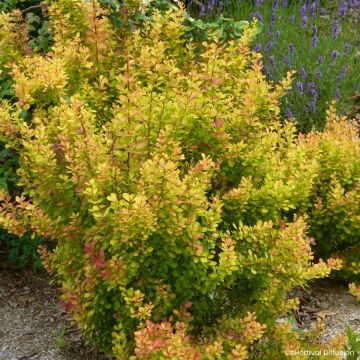
Available in 1 sizes
This plant carries a 24 months recovery warranty
More information
We guarantee the quality of our plants for a full growing cycle, and will replace at our expense any plant that fails to recover under normal climatic and planting conditions.
Would this plant suit my garden?
Set up your Plantfit profile →
Description
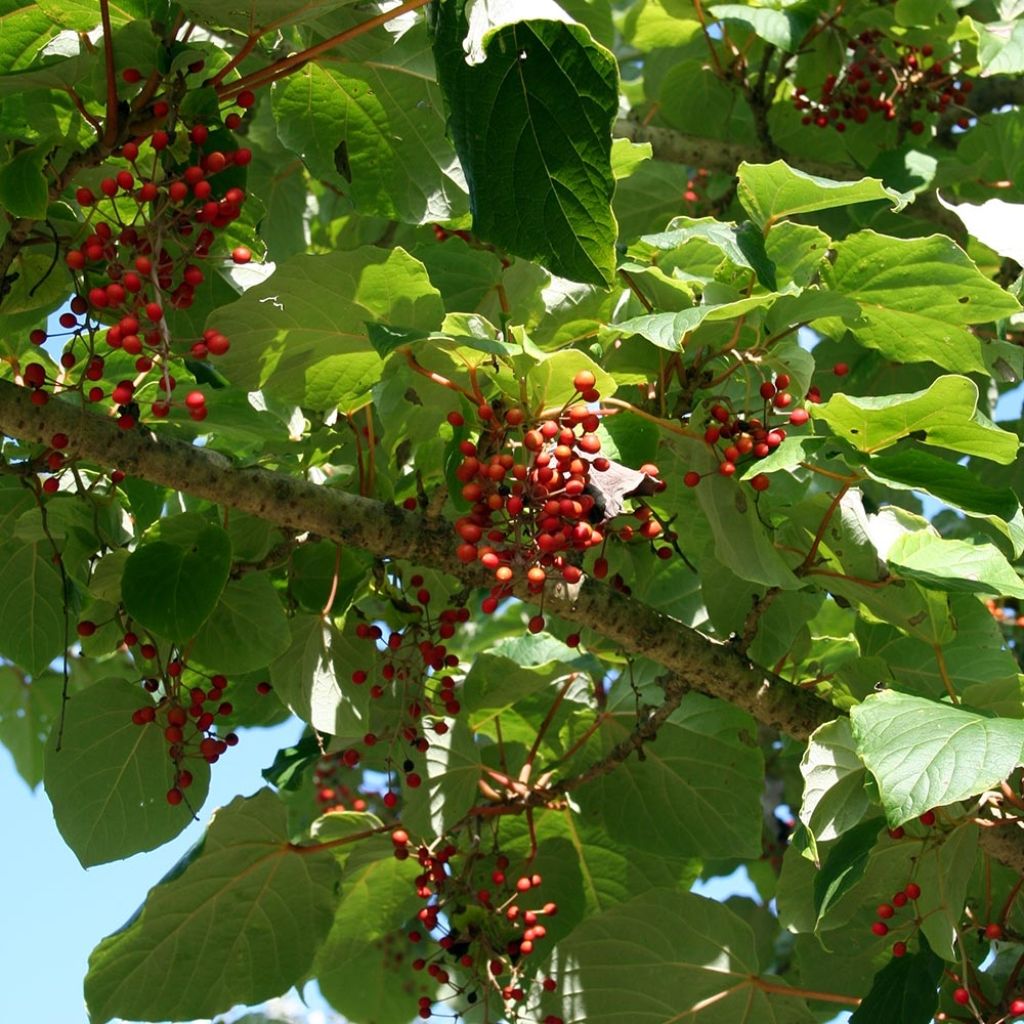
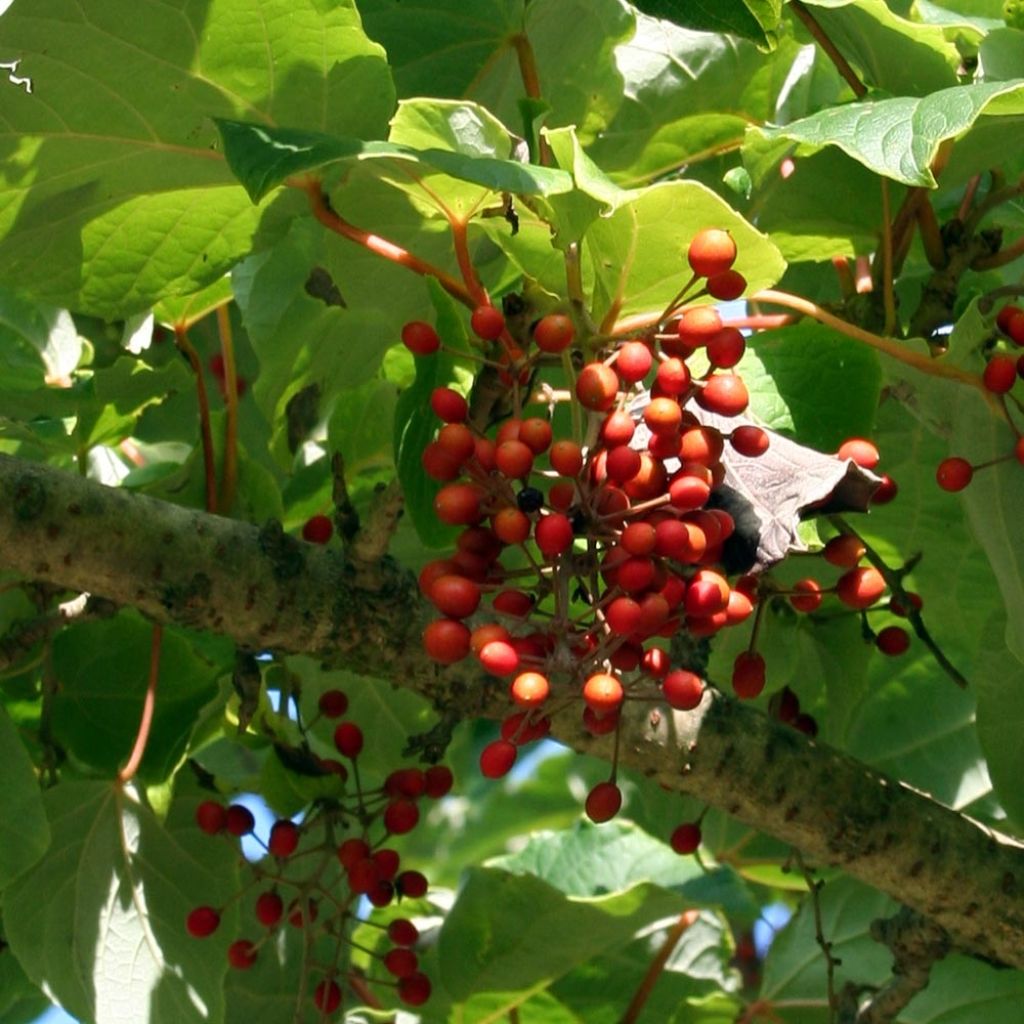
Idesia polycarpa var. vestita is distinguished from the type species mainly by its slightly villous leaves on top, and longer petioles. It is a magnificent medium-sized deciduous tree with a beautiful silhouette. It is endowed with splendid foliage, whose large heart-shaped leaves provide pleasant shade. At the beginning of summer, it adorns itself with pendulous panicles of small greenish-yellow flowers with a sweet fragrance. The flowers are highly popular with bees. Clusters of decorative red berries follow, which persist for much of the winter. It is advisable to plant both a male tree and a female tree to achieve a fragrant flowering and fruiting. A superbly decorative and ornamental tree. With its exotic look, it is ideal for creating a Japanese atmosphere!
The only species of the genus, Idesia polycarpa is a beautiful fast-growing deciduous tree with a superb habit. Occasionally, it produces several trunks, which can be pruned to keep only on. This will create a regular crown. It is native to the forests of central and western China, Korea, Japan, and Taiwan, and belongs to the Salicaceae family, just like poplars.
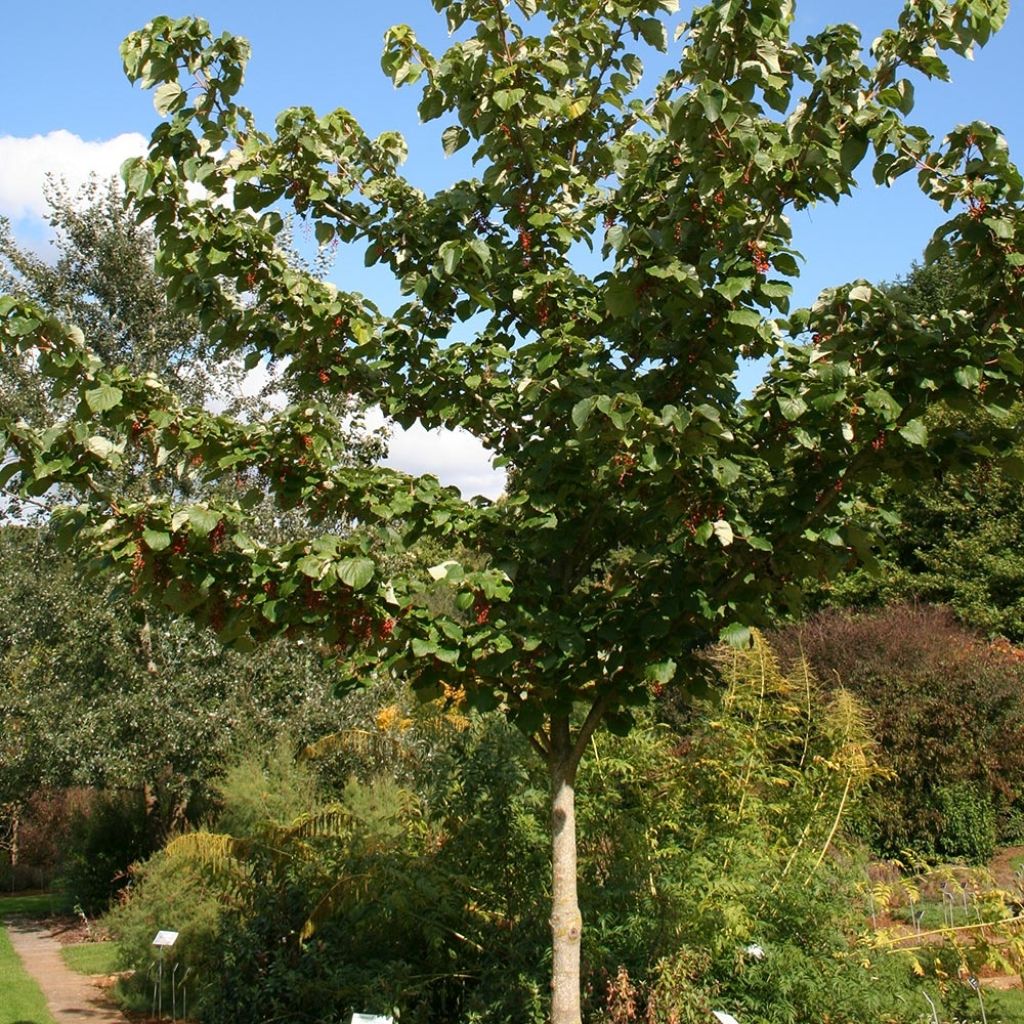
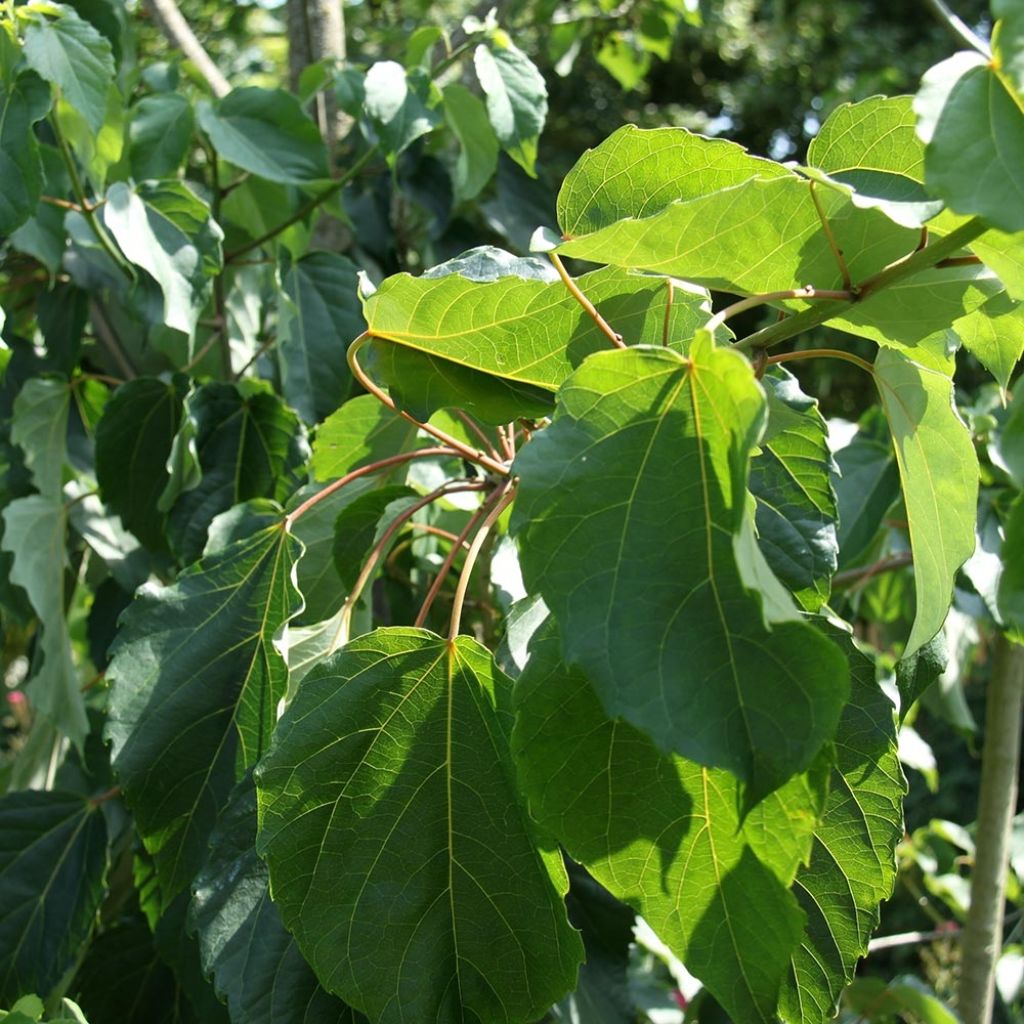
Idesia is characterised by a broadly conical crown, a spreading habit, and tiered and horizontal branches. It measures about 12m (39ft) high and 8m (26ft) wide at maturity. Its straight trunk, not exceeding 50cm (20in) in diameter, has smooth and white bark in young subjects, green-grey in mature trees with very tight lenticels. It displays beautiful glossy foliage, which is light green in spring, before turning a beautiful dark green, with a glaucous back. Its foliage takes on lovely pale-yellow shades in autumn. The large heart-shaped and slightly dentate leaves, 10 to 20cm (4 to 8in) long, are carried by long purple petioles, measuring over 4cm (2in) long, producing a superb contrast with the autumnal yellow. From May to July, pendulous clusters of small yellow-green, nectar-rich, fragrant flowers appear. These large panicles measure 10 to 20cm (4 to 8in) long. Plant both a male and a female subject to obtain a fruiting after flowering, although we have observed under certain climates female subjects capable of fruiting without the help of males. The male flowers have numerous stamens, as long as the sepals, and are larger than the female flowers, but the latter are fragrant. Following pollination carried out by foraging insects, the female inflorescences give way to large trailing clusters of particularly decorative spherical purplish-red berries, which persist on the tree for much of winter. These fruits are edible both raw and cooked.
An exceptionally ornamental and decorative tree, with its foliage, its scented summer flowering, and its remarkable winter fruiting. Plant Idesia polycarpa var. vestita in the garden in a sunny or semi-shaded situation, in rather rich, neutral to acidic, moist but well-drained soil. Its foliage provides beautiful, light and clear shade. It can be placed alone, but also under the cover of larger trees, or with Japanese maples, large hydrangeas, Fothergilla and Euodia daniellii. Perennial plants of semi-shade will find their place at its base as well as spring or summer flowering bulbs. With its medium size, it is well suited to small gardens. Of Asian origin, it will fit perfectly in a Japanese or exotic-looking garden.
Report an error about the product description
Idesia polycarpa var. vestita in pictures
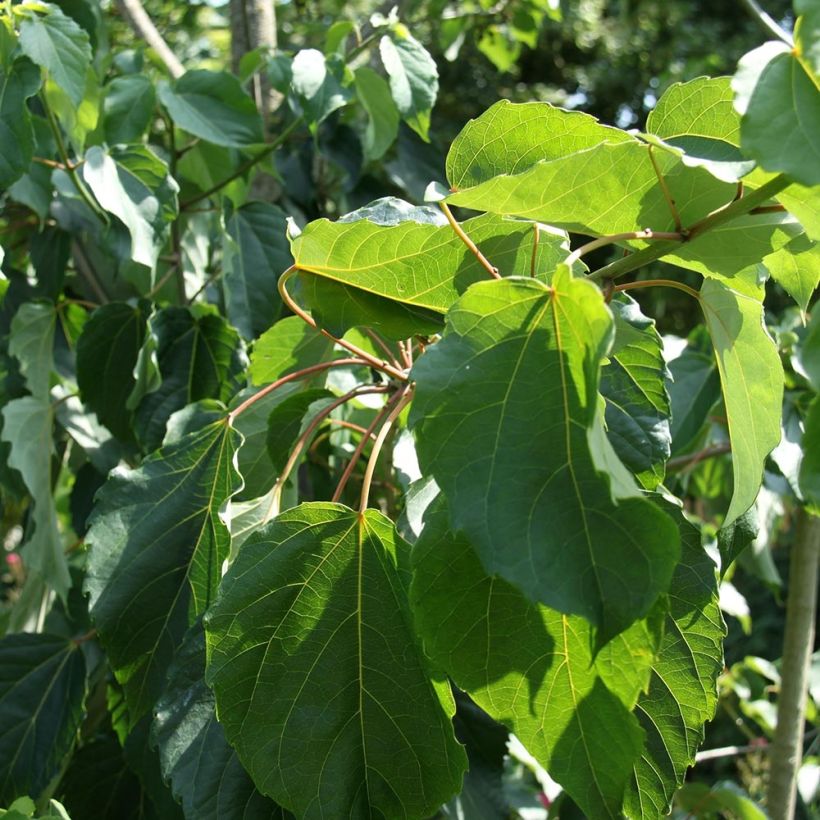
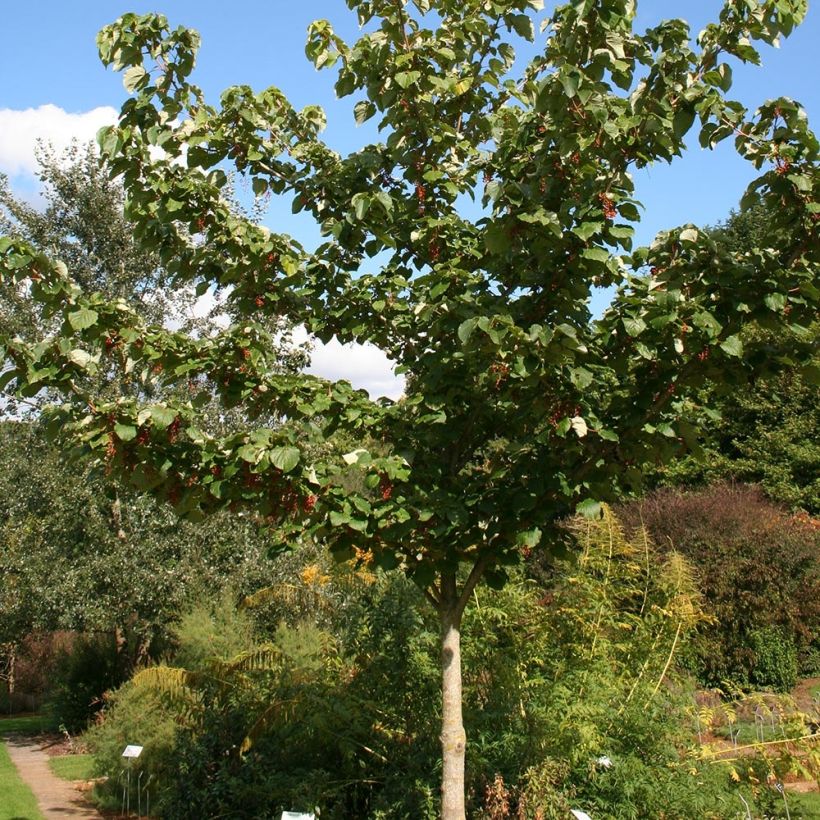
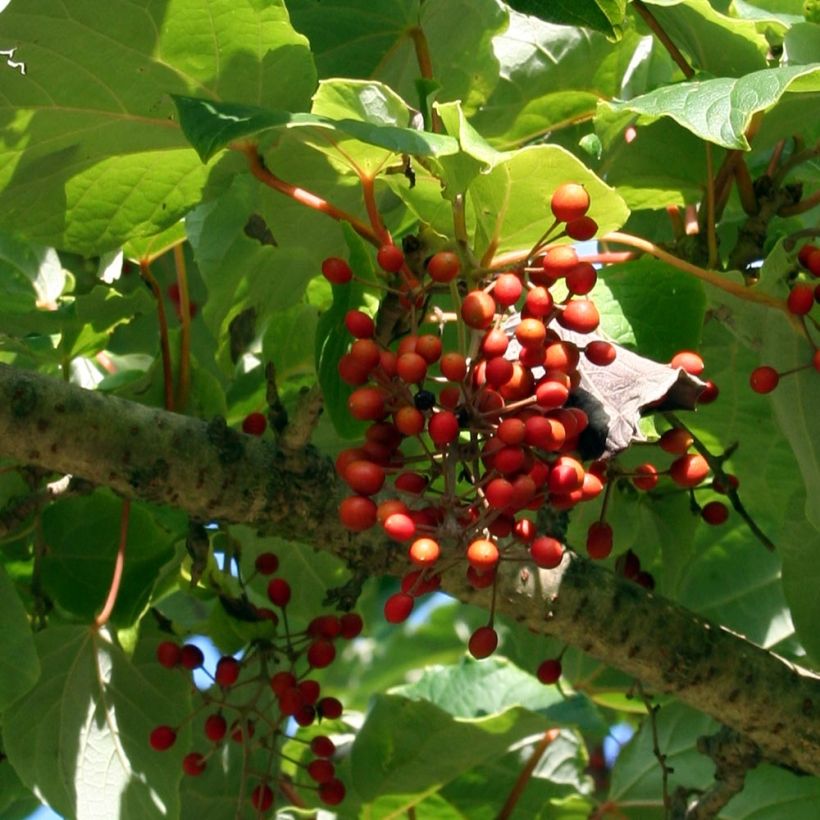
Plant habit
Flowering
Foliage
Botanical data
Idesia
polycarpa
var.vestita
Salicaceae
Igiri tree
Southeast Asia
Planting and care
Plant in spring or autumn in neutral to slightly acidic, fairly fertile, moist but well drained soil. It prefers a sunny or semi-shaded exposure. It is hardy to -15°C (5°F), but its young shoots can sometimes be damaged by late frosts. After a long and warm summer, it will be more robust and more resistant to winter cold, as the heat allows its wood to harden.
Planting period
Intended location
Care
Planting & care advice
-
-
-
-

-
-
-

-
This item has not been reviewed yet - be the first to leave a review about it.
Recently viewed products
Haven't found what you were looking for?
Hardiness is the lowest winter temperature a plant can endure without suffering serious damage or even dying. However, hardiness is affected by location (a sheltered area, such as a patio), protection (winter cover) and soil type (hardiness is improved by well-drained soil).

The flowering period indicated on our website applies to countries and regions located in USDA zone 8 (France, the United Kingdom, Ireland, the Netherlands, etc.)
It will vary according to where you live:- In zones 9 to 10 (Italy, Spain, Greece, etc.), flowering will occur about 2 to 4 weeks earlier.
- In zones 6 to 7 (Germany, Poland, Slovenia, and lower mountainous regions), flowering will be delayed by 2 to 3 weeks.
- In zone 5 (Central Europe, Scandinavia), blooming will be delayed by 3 to 5 weeks.
In temperate climates, pruning of spring-flowering shrubs (forsythia, spireas, etc.) should be done just after flowering.
Pruning of summer-flowering shrubs (Indian Lilac, Perovskia, etc.) can be done in winter or spring.
In cold regions as well as with frost-sensitive plants, avoid pruning too early when severe frosts may still occur.
The planting period indicated on our website applies to countries and regions located in USDA zone 8 (France, United Kingdom, Ireland, Netherlands).
It will vary according to where you live:
- In Mediterranean zones (Marseille, Madrid, Milan, etc.), autumn and winter are the best planting periods.
- In continental zones (Strasbourg, Munich, Vienna, etc.), delay planting by 2 to 3 weeks in spring and bring it forward by 2 to 4 weeks in autumn.
- In mountainous regions (the Alps, Pyrenees, Carpathians, etc.), it is best to plant in late spring (May-June) or late summer (August-September).
The harvesting period indicated on our website applies to countries and regions in USDA zone 8 (France, England, Ireland, the Netherlands).
In colder areas (Scandinavia, Poland, Austria...) fruit and vegetable harvests are likely to be delayed by 3-4 weeks.
In warmer areas (Italy, Spain, Greece, etc.), harvesting will probably take place earlier, depending on weather conditions.
The sowing periods indicated on our website apply to countries and regions within USDA Zone 8 (France, UK, Ireland, Netherlands).
In colder areas (Scandinavia, Poland, Austria...), delay any outdoor sowing by 3-4 weeks, or sow under glass.
In warmer climes (Italy, Spain, Greece, etc.), bring outdoor sowing forward by a few weeks.
Shipping country and language
Your country of residence may be:
Your country of residence is:
For a better user experience on our website, you can select:
Your shipping country:
-
 Austria
-
 Belgium
-
 Bosnia & Herzegovina
-
 Bulgaria
-
 Croatia
-
 Cyprus
-
 Czechia
-
 Denmark
-
 Estonia
-
 Finland
-
 France
-
 Germany
-
 Greece
-
 Hungary
-
 Iceland
-
 Ireland
-
 Italy
Italy
-
 Latvia
-
 Liechtenstein
-
 Lithuania
-
 Luxembourg
-
 Malta
Malta
-
 Netherlands
-
 Poland
-
 Portugal
-
 Romania
-
 Serbia
-
 Slovakia
-
 Slovenia
-
 Spain
Spain
-
 Sweden
-
 Switzerland
Language:
-
French
-
 English
-
Spanish
-
Italian
-
German
-
Portuguese
-
Dutch
-
Finnish
My Account
Hello
My wish lists
My cart
Log in / Register
Existing customer?
This form is protected by reCAPTCHA - the Google Privacy Policy and Terms of Service apply.
New customer?
Create an account to track your orders, access our customer service and, if you wish, make the most of our upcoming offers.