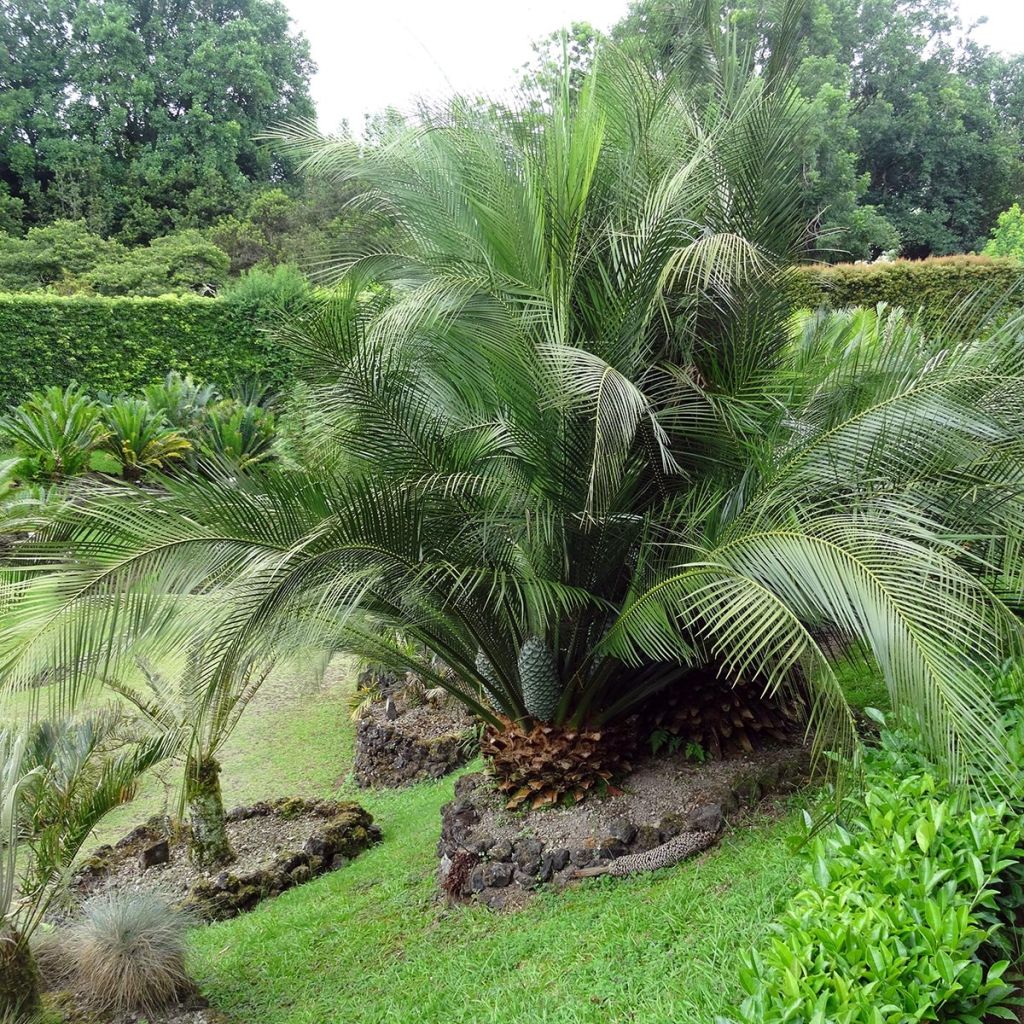
Macrozamia communis
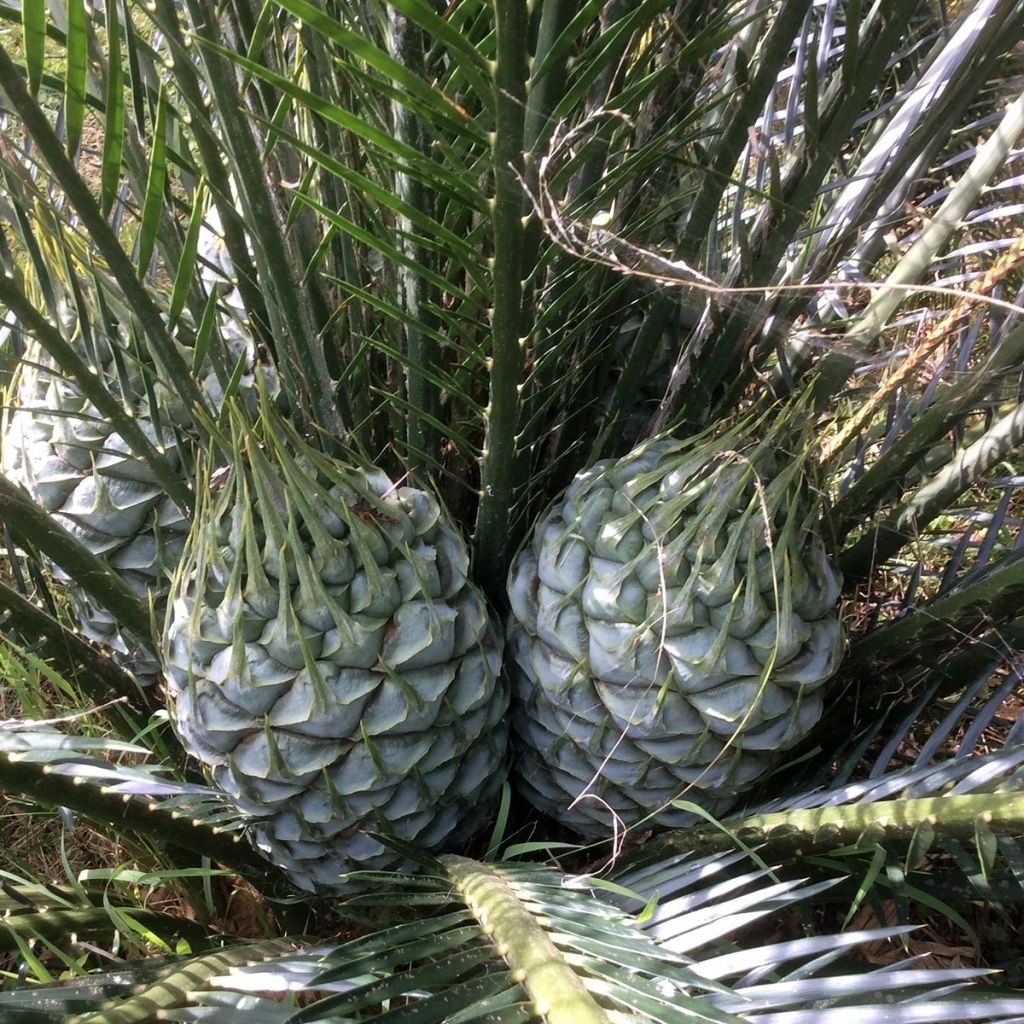
Macrozamia communis
Macrozamia communis
Macrozamia communis
Burrawang Tree
Back-to-school special offer!
Get €10 off for every €50 you spend! And get up to €40 off on a single order.
How does it work?
1. Shop your favourites
Add your favourite plants to your basket. For every €50 you spend (excluding delivery charges, store credit and the plastic-free option), you’ll receive a €10 voucher.
€50 spent = €10 voucher
€100 spent = €20 voucher
€150 spent = €30 voucher
€200 spent = €40 voucher
2. Place your order
Once your basket reaches one of the spending thresholds, place your order. You can even choose your delivery date!
3. Receive your voucher
As soon as your order has been shipped, you’ll receive an email containing your personal voucher code and its value.
4. Use it on your next order
Your voucher is valid for 90 days from the date you receive it. It can be used once only, on a new order worth at least the value of the voucher, excluding delivery charges.
Please note: Vouchers can be combined with other offers, but cannot be split or refunded.
Why not try an alternative variety in stock?
View all →
Available in 1 sizes
Available in 1 sizes
Available in 1 sizes
Available in 1 sizes
Available in 1 sizes
Available in 1 sizes
Available in 1 sizes
Available in 1 sizes
Available in 1 sizes
Available in 1 sizes
This plant carries a 24 months recovery warranty
More information
We guarantee the quality of our plants for a full growing cycle, and will replace at our expense any plant that fails to recover under normal climatic and planting conditions.
Would this plant suit my garden?
Set up your Plantfit profile →
Description
Macrozamia communis is both biologically close to cycads and physically similar to palm trees. Surviving from ancient geological times, this plant is still relatively uncommon in our gardens despite its undeniable exotic charm and its superior cold resistance compared to Cycas revoluta. It slowly forms a thick, rough, short trunk, bearing a crown of long, slightly arched leaves that are graceful like feathers, and divided into very fine leaflets with a glossy grey-green colour. It can be grown in the ground wherever temperatures rarely fall below -8°C (17.6 °F). This Macrozamia will also thrive in a large pot that can be stored indoors during colder winters.
Macrozamia communis belongs to the Zamiaceae family, which includes around 238 species native to tropical and warm temperate regions of Africa, Australia, and South America. It is a very ancient botanical family with evident archaic characteristics. This species is native to Southeast Australia, more specifically the Eucalyptus forests of New South Wales. In the wild, this plant can form large colonies of plants. Its resistance to cold is estimated at -8/-10°C (17.6/14 °F) for mature subjects. The foliage is burned at -5°C (23 °F), but the stump is capable of regrowth in spring if it has been protected by mulch. It is a dioecious plant, with distinct male and female plants. All parts of the plant are toxic if eaten.
Under our climates, this plant will rarely exceed 2m (6 ft 7 in) in all directions. Its growth is slow to very slow depending on the growing conditions. Anchored to a partially underground thickened, woody caudiciform stem, Macrozamia communis develops over time a short stipe, a kind of false trunk with a rough ochre to brown texture, displaying leaf scars. The evergreen foliage, arranged in a concentric rosette, grows at the top of the stipe. The intensely pinnate leaves are quite flexible and measure 1m (3 ft 4 in) to 1.50m (4 ft 11 in) in length and 40cm (15.7 in) in width at maturity. These are divided into countless tough and glossy linear leaflets, tarnishing with age, with a slightly swollen base.
Flowering occurs in summer, after many years of cultivation in the ground, and is very rare in plants grown in pots. The inflorescences appear in the centre of the crown. They take the form of cylindrical green-brown cones, resembling pineapples, measuring 20 to 45cm (7.9 to 17.7 in) in length and covered with scales with spines. The female cones release large light and vivid red seeds when ripe.
Macrozamia communis prefers partial shade and well-drained, humus-rich, and rather moist soil. In the ground, it can be placed in an exotic setting, for example, near a swimming pool, alongside a small palm tree, dwarf banana trees, or small bamboo. However, this plant will reach its full potential when planted on its own. In a contemporary garden, it can be placed above a bed of white pebbles. It will make a magnificent specimen in a conservatory, on a patio or balcony or planted in a carefully chosen large container.
Report an error about the product description
Macrozamia communis in pictures
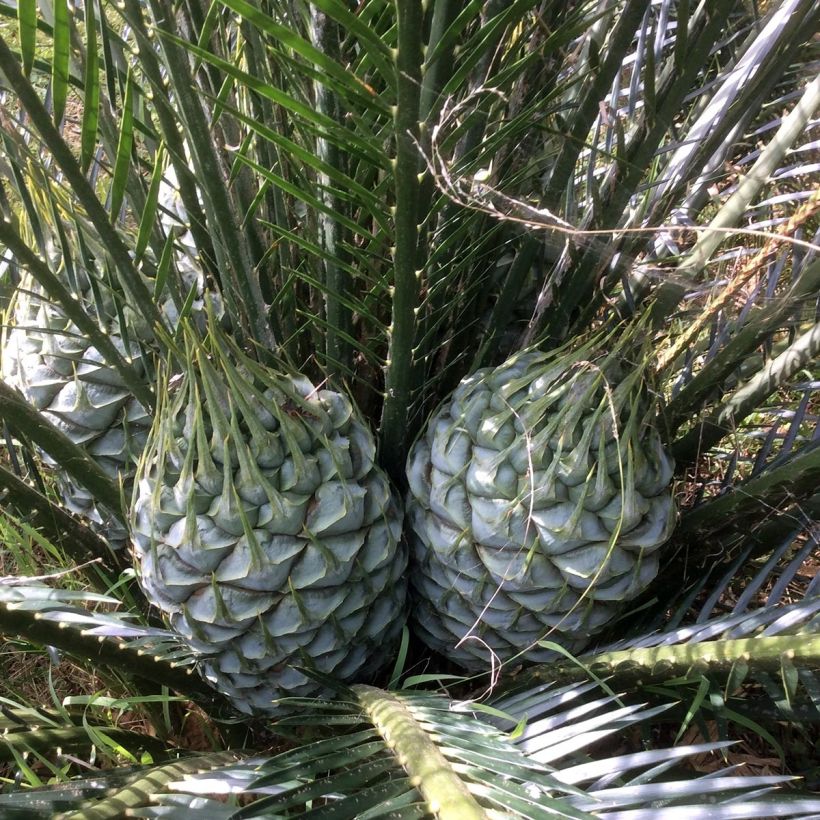
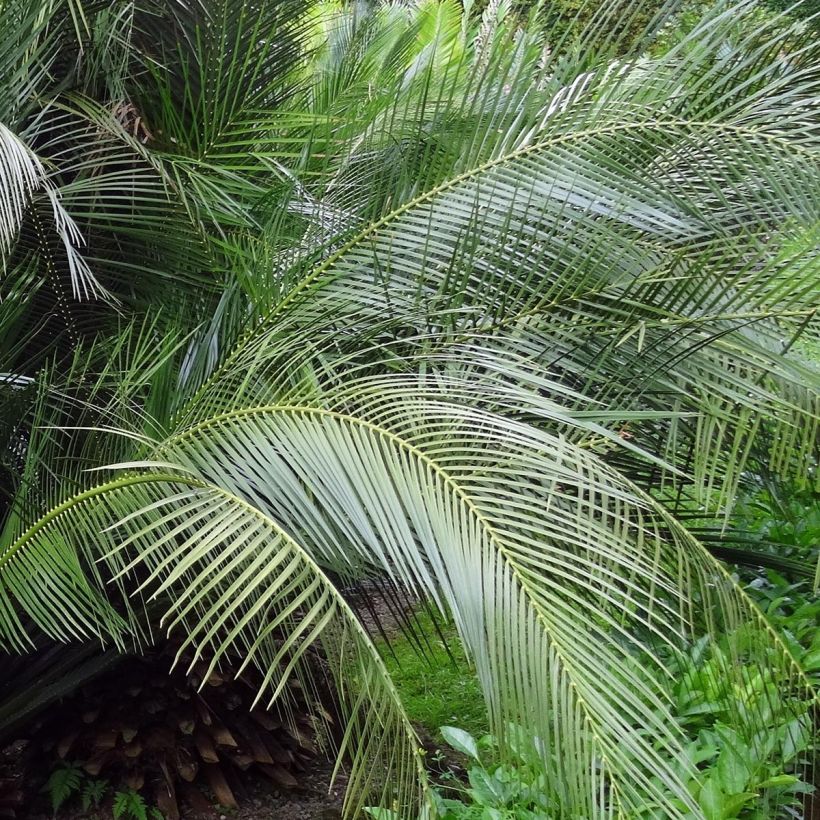
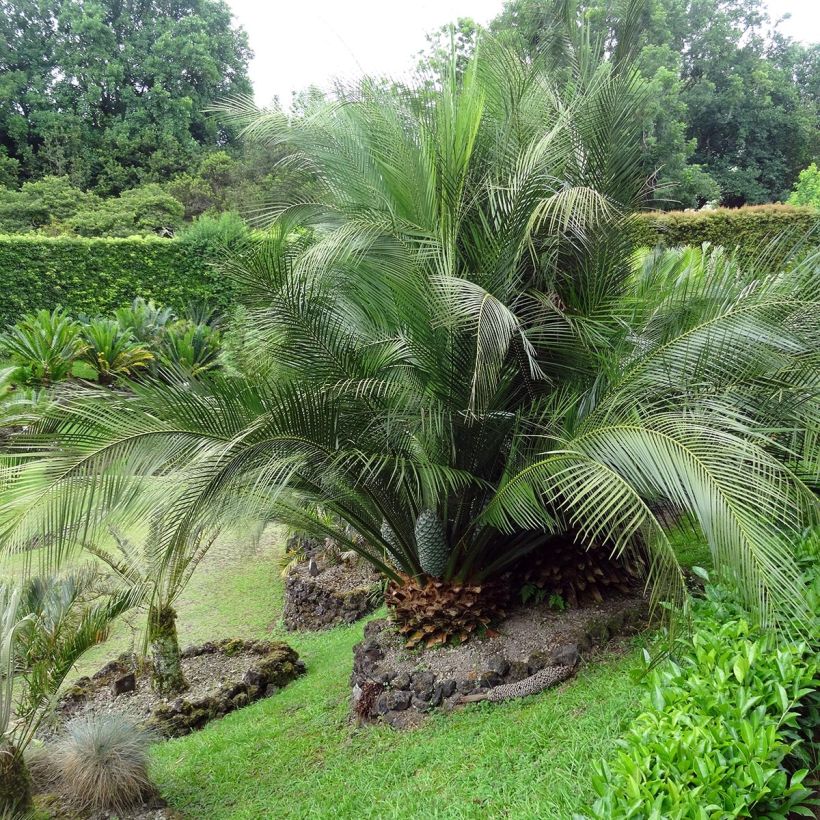
Plant habit
Flowering
Foliage
Botanical data
Macrozamia
communis
Zamiaceae
Burrawang Tree
Australia
Planting and care
Plant Macrozamia in a container in early autumn or spring or in open ground, in milder, coastal regions. Choose a position in semi-shade (no scorching sun) and shelter from prevailing winds. Plant it in a soil rich in humus, well-drained, preferably non-calcareous, remaining slightly moist in summer, rather dry in winter.
Grow common Macrozamia in a large pot, which you can take out on the patio or in the garden in May. It will adapt well to indoor cultivation if the room it is placed in is bright and cool in winter. Greenhouses and conservatories are also very suitable for this plant. Avoid direct sunlight.
Add a layer of gravel, clay pellets or small stones to the bottom of the pot or planting hole, which ideally should be 2 to 3 times the size of the root ball. Then blend a mixture of 1/3 fine garden soil, 1/3 ericaceous soil, and 1/3 sand. Water regularly in summer, allowing the substrate to dry out slightly between waterings. Apply fertilizer throughout the growth period. In winter, this plant will dp better in well-drained soil that does not retain water. In a pot, reduce watering in winter if the ambient temperature is below 15°C (59 °F). Regularly remove leaves that dry up at the base of the stem. Occasionally spray the foliage, especially if the atmosphere is dry.
In a greenhouse or at home, Macrozamia may be attacked by mealybugs and red spiders, indicating a too dry and poorly ventilated atmosphere.
Note:
Macrozamia communis is a particularly toxic plant for herbivores and humans. Keep young children and pets away from their beautiful leaves, strange flowers, or tempting fruits!
Planting period
Intended location
Care
Planting & care advice
-
-
-
-
-
-
-

-
This item has not been reviewed yet - be the first to leave a review about it.
Recently viewed products
Haven't found what you were looking for?
Hardiness is the lowest winter temperature a plant can endure without suffering serious damage or even dying. However, hardiness is affected by location (a sheltered area, such as a patio), protection (winter cover) and soil type (hardiness is improved by well-drained soil).

The flowering period indicated on our website applies to countries and regions located in USDA zone 8 (France, the United Kingdom, Ireland, the Netherlands, etc.)
It will vary according to where you live:- In zones 9 to 10 (Italy, Spain, Greece, etc.), flowering will occur about 2 to 4 weeks earlier.
- In zones 6 to 7 (Germany, Poland, Slovenia, and lower mountainous regions), flowering will be delayed by 2 to 3 weeks.
- In zone 5 (Central Europe, Scandinavia), blooming will be delayed by 3 to 5 weeks.
In temperate climates, pruning of spring-flowering shrubs (forsythia, spireas, etc.) should be done just after flowering.
Pruning of summer-flowering shrubs (Indian Lilac, Perovskia, etc.) can be done in winter or spring.
In cold regions as well as with frost-sensitive plants, avoid pruning too early when severe frosts may still occur.
The planting period indicated on our website applies to countries and regions located in USDA zone 8 (France, United Kingdom, Ireland, Netherlands).
It will vary according to where you live:
- In Mediterranean zones (Marseille, Madrid, Milan, etc.), autumn and winter are the best planting periods.
- In continental zones (Strasbourg, Munich, Vienna, etc.), delay planting by 2 to 3 weeks in spring and bring it forward by 2 to 4 weeks in autumn.
- In mountainous regions (the Alps, Pyrenees, Carpathians, etc.), it is best to plant in late spring (May-June) or late summer (August-September).
The harvesting period indicated on our website applies to countries and regions in USDA zone 8 (France, England, Ireland, the Netherlands).
In colder areas (Scandinavia, Poland, Austria...) fruit and vegetable harvests are likely to be delayed by 3-4 weeks.
In warmer areas (Italy, Spain, Greece, etc.), harvesting will probably take place earlier, depending on weather conditions.
The sowing periods indicated on our website apply to countries and regions within USDA Zone 8 (France, UK, Ireland, Netherlands).
In colder areas (Scandinavia, Poland, Austria...), delay any outdoor sowing by 3-4 weeks, or sow under glass.
In warmer climes (Italy, Spain, Greece, etc.), bring outdoor sowing forward by a few weeks.
Shipping country and language
Your country of residence may be:
Your country of residence is:
For a better user experience on our website, you can select:
Your shipping country:
-
 Austria
-
 Belgium
-
 Bosnia & Herzegovina
-
 Bulgaria
-
 Croatia
-
 Cyprus
-
 Czechia
-
 Denmark
-
 Estonia
-
 Finland
-
 France
-
 Germany
-
 Greece
-
 Hungary
-
 Iceland
-
 Ireland
-
 Italy
Italy
-
 Latvia
-
 Liechtenstein
-
 Lithuania
-
 Luxembourg
-
 Malta
Malta
-
 Netherlands
-
 Poland
-
 Portugal
-
 Romania
-
 Serbia
-
 Slovakia
-
 Slovenia
-
 Spain
Spain
-
 Sweden
-
 Switzerland
Language:
-
French
-
 English
-
Spanish
-
Italian
-
German
-
Portuguese
-
Dutch
-
Finnish
My Account
Hello
My wish lists
My cart
Log in / Register
Existing customer?
This form is protected by reCAPTCHA - the Google Privacy Policy and Terms of Service apply.
New customer?
Create an account to track your orders, access our customer service and, if you wish, make the most of our upcoming offers.