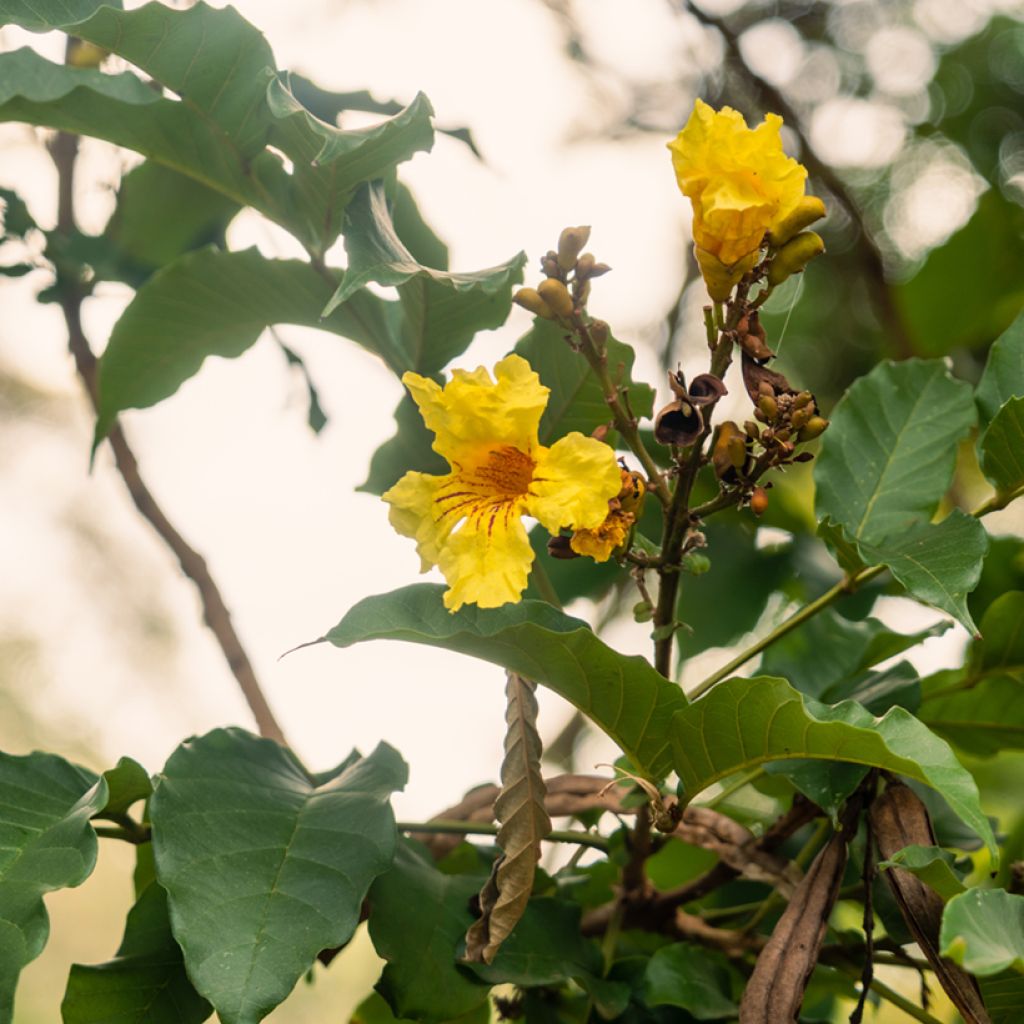
Markhamia lutea - Nile tulip
Markhamia lutea - Nile tulip
Markhamia lutea
Nile tulip, Nile trumpet, siala tree
Back-to-school special offer!
Get €10 off for every €50 you spend! And get up to €40 off on a single order.
How does it work?
1. Shop your favourites
Add your favourite plants to your basket. For every €50 you spend (excluding delivery charges, store credit and the plastic-free option), you’ll receive a €10 voucher.
€50 spent = €10 voucher
€100 spent = €20 voucher
€150 spent = €30 voucher
€200 spent = €40 voucher
2. Place your order
Once your basket reaches one of the spending thresholds, place your order. You can even choose your delivery date!
3. Receive your voucher
As soon as your order has been shipped, you’ll receive an email containing your personal voucher code and its value.
4. Use it on your next order
Your voucher is valid for 90 days from the date you receive it. It can be used once only, on a new order worth at least the value of the voucher, excluding delivery charges.
Please note: Vouchers can be combined with other offers, but cannot be split or refunded.
Why not try an alternative variety in stock?
View all →
Available in 1 sizes
Available in 1 sizes
Available in 1 sizes
Available in 1 sizes
Available in 1 sizes
Available in 1 sizes
Available in 1 sizes
Available in 1 sizes
Available in 1 sizes
Available in 1 sizes
This plant carries a 24 months recovery warranty
More information
We guarantee the quality of our plants for a full growing cycle, and will replace at our expense any plant that fails to recover under normal climatic and planting conditions.
Would this plant suit my garden?
Set up your Plantfit profile →
Description
Markhamia lutea, nicknamed the Nile Tulip or Yellow Markhamia, is a small tropical tree with lush foliage and spectacular flowering originating from East Africa. Its yellow trumpet-shaped flowers bloom throughout summer. Not very tall, it can be grown in a container to adorn a terrace or patio in summer. In winter, it can be moved to a conservatory or a large greenhouse.
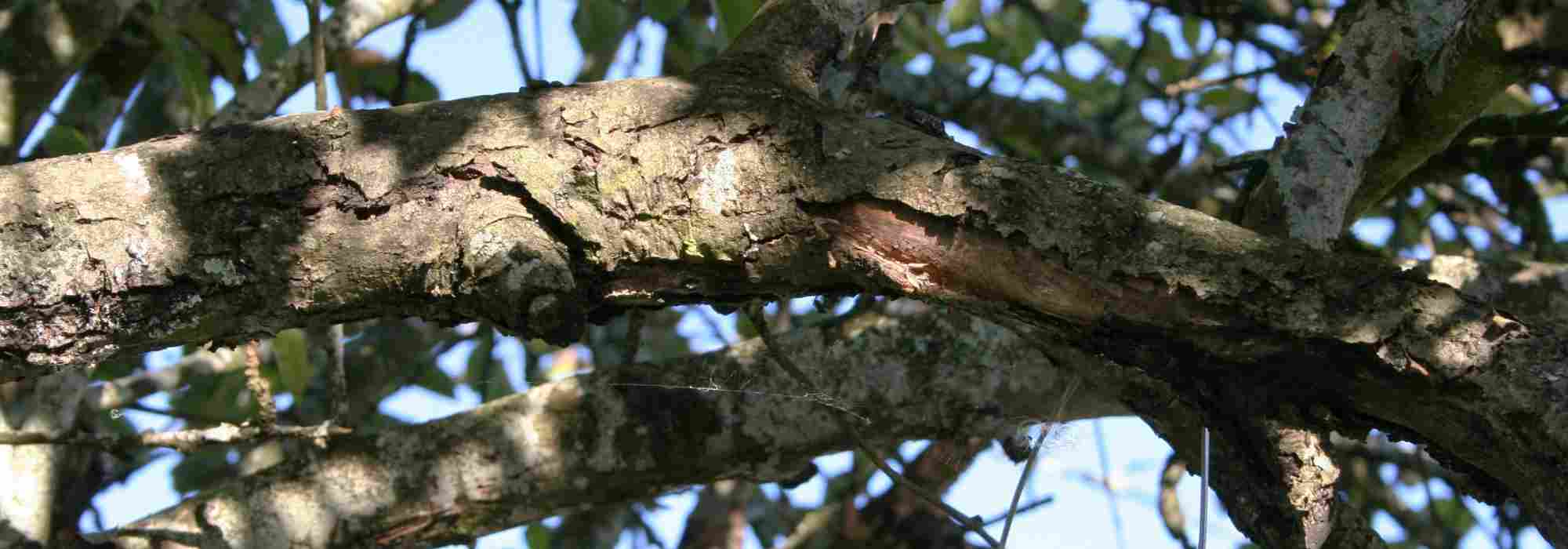
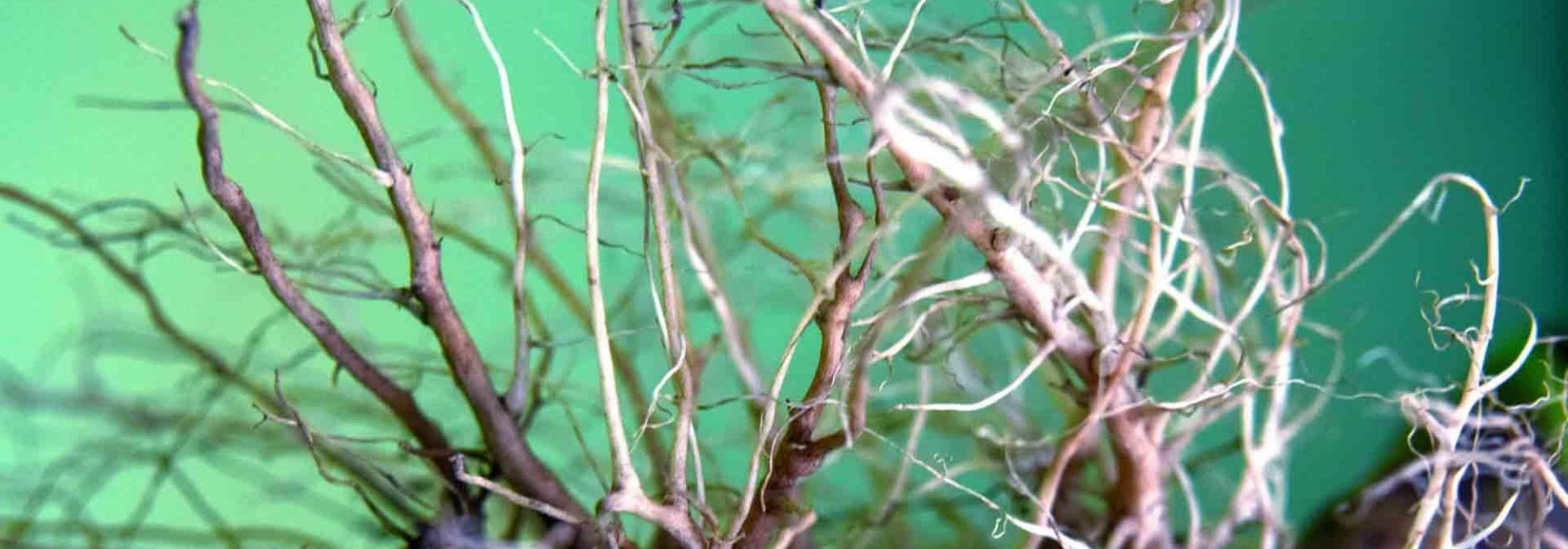
Markhamia lutea belongs to the Bignoniaceae family, just like Blue Jacaranda (Jacaranda mimosifolia). It is a tropical tree native to East Africa, specifically Kenya, Uganda, and Tanzania. It grows naturally in open forests and humid savannas on the high plateaus of these regions. There, it is appreciated both for its ornamental value and the shade it provides, along with its beautiful year-round foliage. This tree, with its slender habit and rounded crown, can reach 6 to 12 m in height in tropical climates but remains smaller when grown in a pot. In a 60-70-litre container, it may grow to 2-3 m tall. Its growth is rapid under optimal conditions. Its trunk is often short and has relatively smooth, grey-brown bark. The foliage of Markhamia lutea is highly ornamental. It consists of large pinnate leaves, which can measure up to 50 cm long. They are made up of several elongated ovate, bright green leaflets, giving the tree a distinctly tropical appearance. They persist year-round in its native range. This tree has a taproot and a spreading root system, allowing it to withstand seasonal drought periods. Its spectacular flowering occurs mainly in spring and summer. The terminal flower clusters are large (5-6 cm long) and display a stunning golden-yellow hue, sometimes streaked with red inside. They are trumpet-shaped and resemble those of the catalpa or the African tulip tree (Spathodea campanulata). They emit a light, sweet fragrance that attracts pollinators, particularly bees and butterflies. After flowering, the tree produces up to 50cm long, pendulous pods. These woody capsules contain numerous winged seeds dispersed by the wind.
Markhamia lutea is not very hardy: it cannot tolerate temperatures below 5°C. It is therefore best grown in a container in our latitudes, allowing it to be overwintered in a conservatory or lightly heated greenhouse. It thrives in full sun and in rich, well-draining, slightly acidic to neutral soil. One may attempt to acclimatise this "Nile Tulip" in the most sheltered gardens. Perfect for creating an exotic garden, it can be planted as a standalone specimen on a lawn or as a backdrop to a lush flower bed. In a container, it will transform a sunny terrace or courtyard. For a spectacular effect, pair it with Albizia julibrissin ‘Summer Chocolate’, whose purple foliage will highlight the golden brilliance of the Markhamia's flowers. It also pairs beautifully with Callistemon citrinus ‘Splendens’, whose bright red bottlebrush flowers add contrast and dynamism to the display. For an even more tropical feel, add a Strelitzia reginae, whose blue and orange flowers will perfectly complement the warm palette of Markhamia lutea.
Report an error about the product description
Plant habit
Flowering
Foliage
Botanical data
Markhamia
lutea
Bignoniaceae
Nile tulip, Nile trumpet, siala tree
Spathodea lutea, Dolichandrone platycalyx, Dolichandrone hildebrandtii, Markhamia platycalyx, Markhamia hildebrandtii
East Africa
Planting and care
Markhamia lutea, or Nile Tulip, is a tropical tree with a few specific requirements.
Container cultivation: In regions with cool to cold winters, growing in pots helps protect Markhamia lutea from temperatures below 5°C, which it tolerates poorly. Choose a large container (at least 50 litres) with drainage holes to prevent excess moisture. Use a well-draining substrate, such as a mix of potting compost, garden soil and sand. Place the pot in a sunny spot sheltered from the cold. Water regularly during the growth period, ensuring the substrate dries slightly between waterings. In winter, reduce watering and bring the pot indoors to a conservatory, unheated greenhouse or bright room where temperatures do not drop below 10°C.
Outdoor cultivation: In very mild climates Markhamia lutea can be planted outdoors. Choose a sunny location, sheltered from prevailing winds. The soil should be deep, fertile and well-draining. Before planting, enrich the soil with well-rotted compost or manure. Water regularly in the first few years to encourage root establishment, then reduce watering once the tree is well-established, as it can tolerate some drought. Protect the plant from cold by applying a thick mulch around its base and, if necessary, covering it with a thick winter fleece on the coldest nights.
Pests and diseases: Mites, particularly red spider mites, or scale insects that colonise the foliage when the air is too dry (in greenhouses or conservatories).
Planting period
Intended location
Care
Planting & care advice
-
-
-
-
-
-
-

-
This item has not been reviewed yet - be the first to leave a review about it.
Recently viewed products
Haven't found what you were looking for?
Hardiness is the lowest winter temperature a plant can endure without suffering serious damage or even dying. However, hardiness is affected by location (a sheltered area, such as a patio), protection (winter cover) and soil type (hardiness is improved by well-drained soil).

The flowering period indicated on our website applies to countries and regions located in USDA zone 8 (France, the United Kingdom, Ireland, the Netherlands, etc.)
It will vary according to where you live:- In zones 9 to 10 (Italy, Spain, Greece, etc.), flowering will occur about 2 to 4 weeks earlier.
- In zones 6 to 7 (Germany, Poland, Slovenia, and lower mountainous regions), flowering will be delayed by 2 to 3 weeks.
- In zone 5 (Central Europe, Scandinavia), blooming will be delayed by 3 to 5 weeks.
In temperate climates, pruning of spring-flowering shrubs (forsythia, spireas, etc.) should be done just after flowering.
Pruning of summer-flowering shrubs (Indian Lilac, Perovskia, etc.) can be done in winter or spring.
In cold regions as well as with frost-sensitive plants, avoid pruning too early when severe frosts may still occur.
The planting period indicated on our website applies to countries and regions located in USDA zone 8 (France, United Kingdom, Ireland, Netherlands).
It will vary according to where you live:
- In Mediterranean zones (Marseille, Madrid, Milan, etc.), autumn and winter are the best planting periods.
- In continental zones (Strasbourg, Munich, Vienna, etc.), delay planting by 2 to 3 weeks in spring and bring it forward by 2 to 4 weeks in autumn.
- In mountainous regions (the Alps, Pyrenees, Carpathians, etc.), it is best to plant in late spring (May-June) or late summer (August-September).
The harvesting period indicated on our website applies to countries and regions in USDA zone 8 (France, England, Ireland, the Netherlands).
In colder areas (Scandinavia, Poland, Austria...) fruit and vegetable harvests are likely to be delayed by 3-4 weeks.
In warmer areas (Italy, Spain, Greece, etc.), harvesting will probably take place earlier, depending on weather conditions.
The sowing periods indicated on our website apply to countries and regions within USDA Zone 8 (France, UK, Ireland, Netherlands).
In colder areas (Scandinavia, Poland, Austria...), delay any outdoor sowing by 3-4 weeks, or sow under glass.
In warmer climes (Italy, Spain, Greece, etc.), bring outdoor sowing forward by a few weeks.
Shipping country and language
Your country of residence may be:
Your country of residence is:
For a better user experience on our website, you can select:
Your shipping country:
-
 Austria
-
 Belgium
-
 Bosnia & Herzegovina
-
 Bulgaria
-
 Croatia
-
 Cyprus
-
 Czechia
-
 Denmark
-
 Estonia
-
 Finland
-
 France
-
 Germany
-
 Greece
-
 Hungary
-
 Iceland
-
 Ireland
-
 Italy
Italy
-
 Latvia
-
 Liechtenstein
-
 Lithuania
-
 Luxembourg
-
 Malta
Malta
-
 Netherlands
-
 Poland
-
 Portugal
-
 Romania
-
 Serbia
-
 Slovakia
-
 Slovenia
-
 Spain
Spain
-
 Sweden
-
 Switzerland
Language:
-
French
-
 English
-
Spanish
-
Italian
-
German
-
Portuguese
-
Dutch
-
Finnish
My Account
Hello
My wish lists
My cart
Log in / Register
Existing customer?
This form is protected by reCAPTCHA - the Google Privacy Policy and Terms of Service apply.
New customer?
Create an account to track your orders, access our customer service and, if you wish, make the most of our upcoming offers.