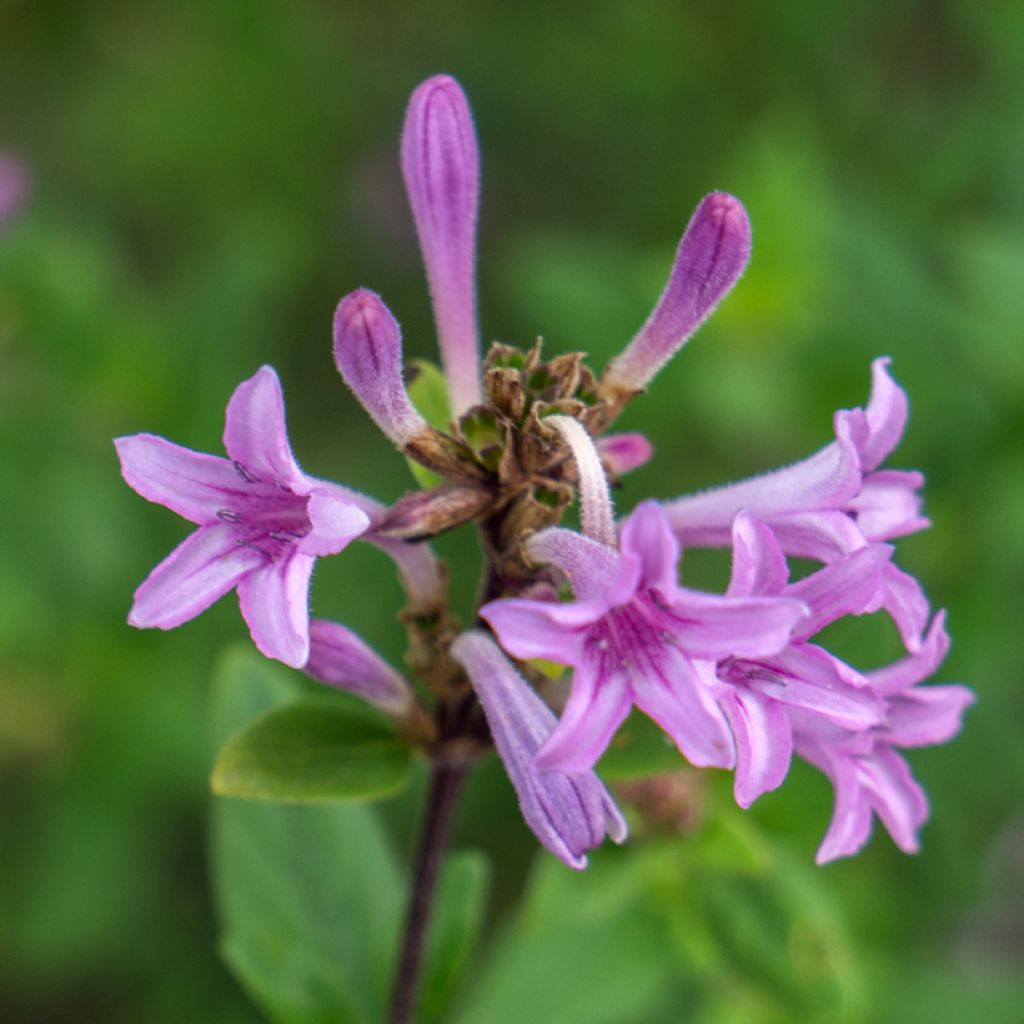
Leptodermis oblonga Summer Stars
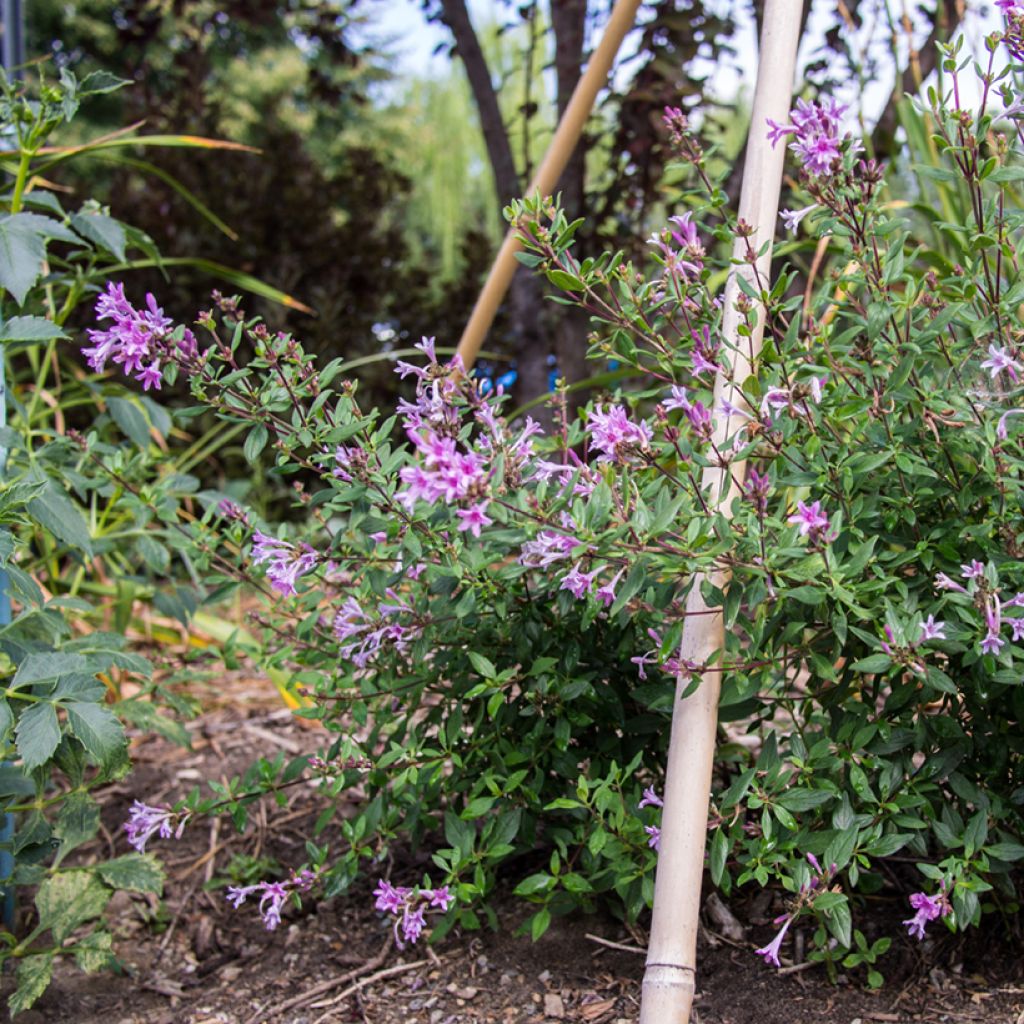
Leptodermis oblonga Summer Stars
Leptodermis oblonga Summer Stars
Leptodermis oblonga Summer Stars
Very good plant in a pot, which has grown really well.
patricia, 21/05/2025
Back-to-school special offer!
Get €10 off for every €50 you spend! And get up to €40 off on a single order.
How does it work?
1. Shop your favourites
Add your favourite plants to your basket. For every €50 you spend (excluding delivery charges, store credit and the plastic-free option), you’ll receive a €10 voucher.
€50 spent = €10 voucher
€100 spent = €20 voucher
€150 spent = €30 voucher
€200 spent = €40 voucher
2. Place your order
Once your basket reaches one of the spending thresholds, place your order. You can even choose your delivery date!
3. Receive your voucher
As soon as your order has been shipped, you’ll receive an email containing your personal voucher code and its value.
4. Use it on your next order
Your voucher is valid for 90 days from the date you receive it. It can be used once only, on a new order worth at least the value of the voucher, excluding delivery charges.
Please note: Vouchers can be combined with other offers, but cannot be split or refunded.
Why not try an alternative variety in stock?
View all →
Available in 1 sizes

Available in 1 sizes

Available in 1 sizes
Available in 1 sizes

Available in 1 sizes
Available in 1 sizes
Available in 1 sizes
Available in 1 sizes

Available in 1 sizes
Available in 1 sizes
This plant carries a 24 months recovery warranty
More information
We guarantee the quality of our plants for a full growing cycle, and will replace at our expense any plant that fails to recover under normal climatic and planting conditions.

Would this plant suit my garden?
Set up your Plantfit profile →
Description
The Leptodermis oblonga 'Summer Stars' is a beautiful find for the garden or patio. It is a small deciduous shrub with pretty, bright green foliage as a backdrop for the long, bluish-purple flowering. From June to September, small trumpet-shaped flowers bloom, spreading a pleasant fragrance. Resistant to cold, this compact shrub is easily grown in a pot to decorate a terrace or balcony throughout the summer. In the garden, it adapts to most soils as long as they are moist, as it does not like dry conditions. It is easy to grow and perfect for small gardens in sunny or semi-shaded locations.
Leptodermis is a little-known member of the Rubiaceae family, which includes over 600 genera and 10,000 species. This extensive family includes plants in all climates, such as the tropical Coffee plant, the wild Bedstraw of our countryside, or the Cephalanthus with its astonishingly ornamental flowers. Leptodermis oblonga is native to Asia, growing naturally in central China, Mongolia, and northern Vietnam. Its English vernacular name, Baby Lilac Bush, accurately describes the dwarf lilac-like appearance of this compact shrub with fragrant flowers.
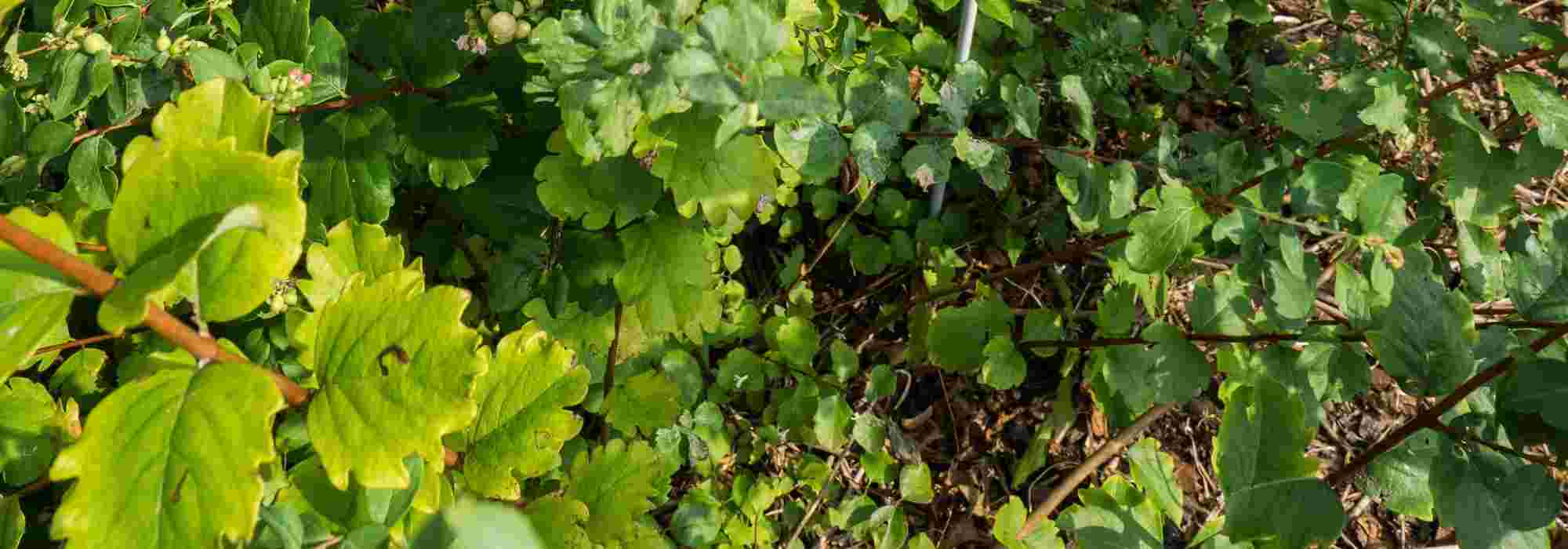
'Summer Stars' is a horticultural variety that is still relatively uncommon in gardens, but it should become more popular as it is as charming as it is easy to grow. This relatively slow-growing shrub reaches maturity after 5 to 8 years of cultivation at approximately 50 to 60 cm in height and width. It forms an upright and spreading clump, giving it a more or less spherical habit. The brown branches are thin and dense and bear numerous sessile (without petiole) leaves grouped in whorls. Proportionate to the shrub's size, these leaves are small, measuring 3 to 4 cm long, with a lanceolate shape and a beautiful green colour. In late spring, tubular trumpet-shaped flowers appear, consisting of five fused petals that open at the tip. The same length as the leaves, they are grouped in five to seven units at the ends of the branches. Their colour varies from mauve lilac to bluish-purple and is well complemented by the bright green foliage. Blooming until September, they emit a pleasant fragrance and attract bees, butterflies, and other pollinators.
Growing in good, well-drained garden soil with a tendency to be moist, Leptodermis oblonga 'Summer Stars' is easy to cultivate. This shrub exudes a romantic charm, perfectly expressed in a beautiful glazed decorative pot or raw earth. The garden will find its place at the edge of a flower bed, alongside perennial plants or other shrubs. Plant some clumps of Daylilies with it, allowing you to create cheerful contrasts of shapes and colours, as the range available is rich in varieties, each more beautiful than the next. The Dicentra 'Pink Diamonds', a Bleeding Heart with stylishly patterned pink flowers enhanced by finely cut bluish-green foliage, will also be a perfect companion for your Leptodermis. In the background, the small Sambucus 'Cherry Lace' with its exceptionally finely cut dark foliage and beautiful glossy appearance will complete your scene. Blooming before the Leptodermis, it will offer you lovely bouquets of pink flowers.
Report an error about the product description
Leptodermis oblonga Summer Stars in pictures
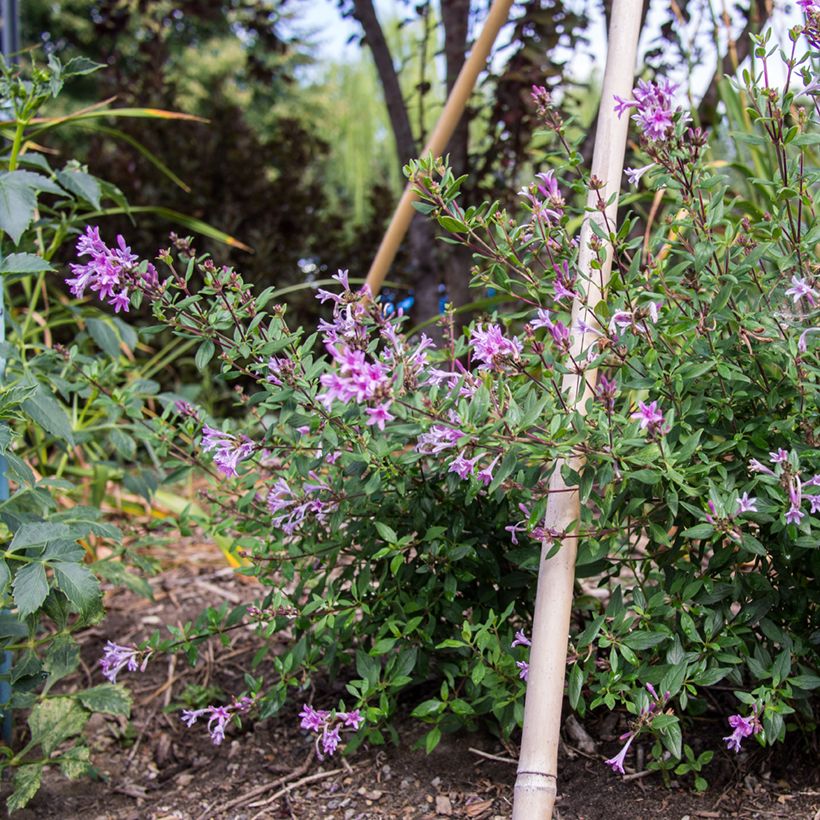
Plant habit
Flowering
Foliage
Botanical data
Leptodermis
oblonga
Summer Stars
Rubiaceae
Cultivar or hybrid
Planting and care
The Leptodermis oblonga 'Summer Stars' grows in the sun or under light shade provided by taller bushes, providing it with some atmospheric humidity. It needs moist but well-drained soil, as it does not appreciate dryness. However, the chemical nature of the soil does not matter to it, as it adapts well to acidic, neutral, or limestone soils. Soak the root ball in a bucket of water for fifteen minutes to ensure it is well saturated, and dig a hole 50 cm wide and deep during this time. Add planting compost to the existing soil (50/50), position the root ball, fill in around it, and water thoroughly. Provide additional water during the first two years and dry periods after that. This bush tends to sucker, which can be interesting if you place it in an area where it has room to spread. However, if you integrate it into a well-maintained flowerbed, avoid planting fragile plants around it, as you will disturb their roots when removing the suckers.
You can also plant your Leptodermis in a pot to enhance your patio or balcony. Choose one with a diameter of about 45 cm, either made of thick terracotta or "double-skinned" if made of plastic (two layers separated by an air gap) to provide thermal insulation and prevent the roots from overheating in summer.
Planting period
Intended location
Care
Planting & care advice
-
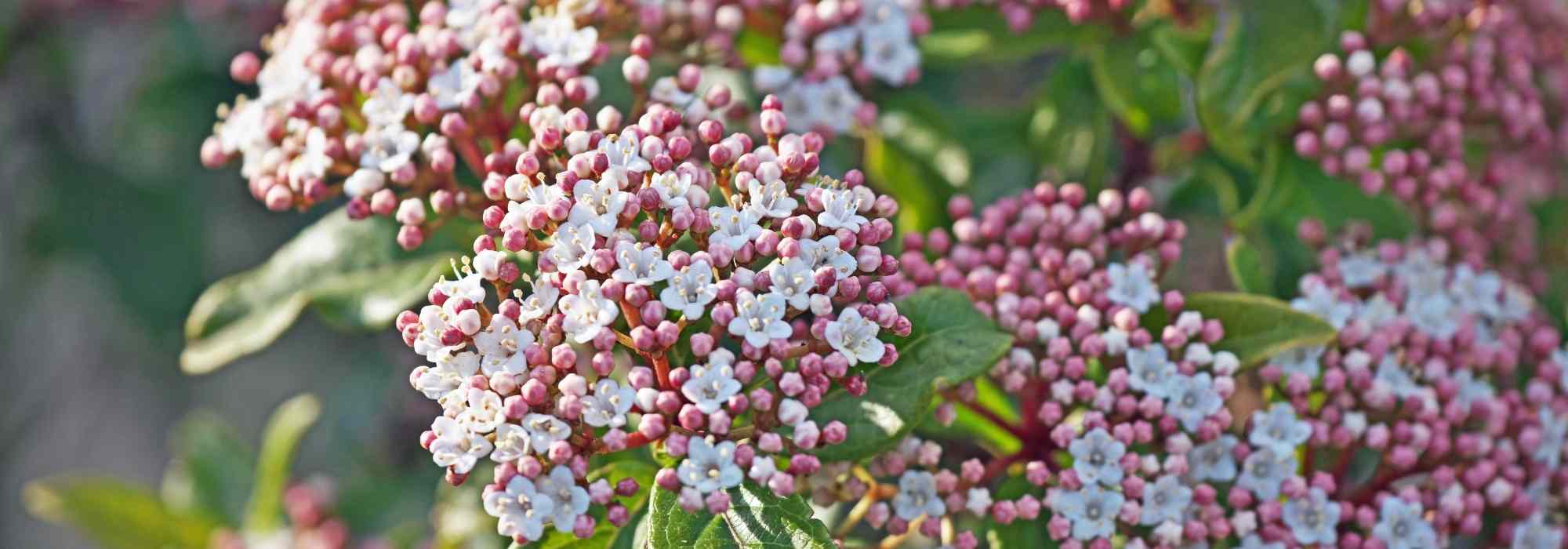
-
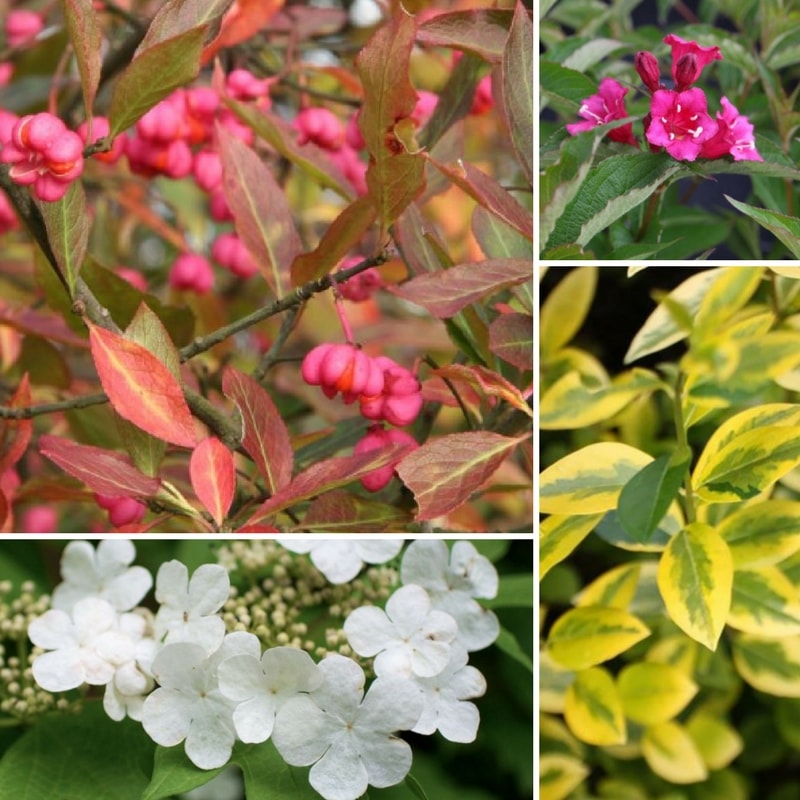
-
-

-
-
-

-
-
, onOrder confirmed
Reply from on Promesse de fleurs
Recently viewed products
Haven't found what you were looking for?
Hardiness is the lowest winter temperature a plant can endure without suffering serious damage or even dying. However, hardiness is affected by location (a sheltered area, such as a patio), protection (winter cover) and soil type (hardiness is improved by well-drained soil).

The flowering period indicated on our website applies to countries and regions located in USDA zone 8 (France, the United Kingdom, Ireland, the Netherlands, etc.)
It will vary according to where you live:- In zones 9 to 10 (Italy, Spain, Greece, etc.), flowering will occur about 2 to 4 weeks earlier.
- In zones 6 to 7 (Germany, Poland, Slovenia, and lower mountainous regions), flowering will be delayed by 2 to 3 weeks.
- In zone 5 (Central Europe, Scandinavia), blooming will be delayed by 3 to 5 weeks.
In temperate climates, pruning of spring-flowering shrubs (forsythia, spireas, etc.) should be done just after flowering.
Pruning of summer-flowering shrubs (Indian Lilac, Perovskia, etc.) can be done in winter or spring.
In cold regions as well as with frost-sensitive plants, avoid pruning too early when severe frosts may still occur.
The planting period indicated on our website applies to countries and regions located in USDA zone 8 (France, United Kingdom, Ireland, Netherlands).
It will vary according to where you live:
- In Mediterranean zones (Marseille, Madrid, Milan, etc.), autumn and winter are the best planting periods.
- In continental zones (Strasbourg, Munich, Vienna, etc.), delay planting by 2 to 3 weeks in spring and bring it forward by 2 to 4 weeks in autumn.
- In mountainous regions (the Alps, Pyrenees, Carpathians, etc.), it is best to plant in late spring (May-June) or late summer (August-September).
The harvesting period indicated on our website applies to countries and regions in USDA zone 8 (France, England, Ireland, the Netherlands).
In colder areas (Scandinavia, Poland, Austria...) fruit and vegetable harvests are likely to be delayed by 3-4 weeks.
In warmer areas (Italy, Spain, Greece, etc.), harvesting will probably take place earlier, depending on weather conditions.
The sowing periods indicated on our website apply to countries and regions within USDA Zone 8 (France, UK, Ireland, Netherlands).
In colder areas (Scandinavia, Poland, Austria...), delay any outdoor sowing by 3-4 weeks, or sow under glass.
In warmer climes (Italy, Spain, Greece, etc.), bring outdoor sowing forward by a few weeks.
Shipping country and language
Your country of residence may be:
Your country of residence is:
For a better user experience on our website, you can select:
Your shipping country:
-
 Austria
-
 Belgium
-
 Bosnia & Herzegovina
-
 Bulgaria
-
 Croatia
-
 Cyprus
-
 Czechia
-
 Denmark
-
 Estonia
-
 Finland
-
 France
-
 Germany
-
 Greece
-
 Hungary
-
 Iceland
-
 Ireland
-
 Italy
Italy
-
 Latvia
-
 Liechtenstein
-
 Lithuania
-
 Luxembourg
-
 Malta
Malta
-
 Netherlands
-
 Poland
-
 Portugal
-
 Romania
-
 Serbia
-
 Slovakia
-
 Slovenia
-
 Spain
Spain
-
 Sweden
-
 Switzerland
Language:
-
French
-
 English
-
Spanish
-
Italian
-
German
-
Portuguese
-
Dutch
-
Finnish
My Account
Hello
My wish lists
My cart
Log in / Register
Existing customer?
This form is protected by reCAPTCHA - the Google Privacy Policy and Terms of Service apply.
New customer?
Create an account to track your orders, access our customer service and, if you wish, make the most of our upcoming offers.